
14 min 32 sec
Distancing: How Great Leaders Reframe to Make Better Decisions
Discover how psychological distancing helps leaders overcome ego-driven bias and tunnel vision. Learn practical techniques to step outside your own perspective, enabling clearer thinking and more effective, objective decision-making under pressure.
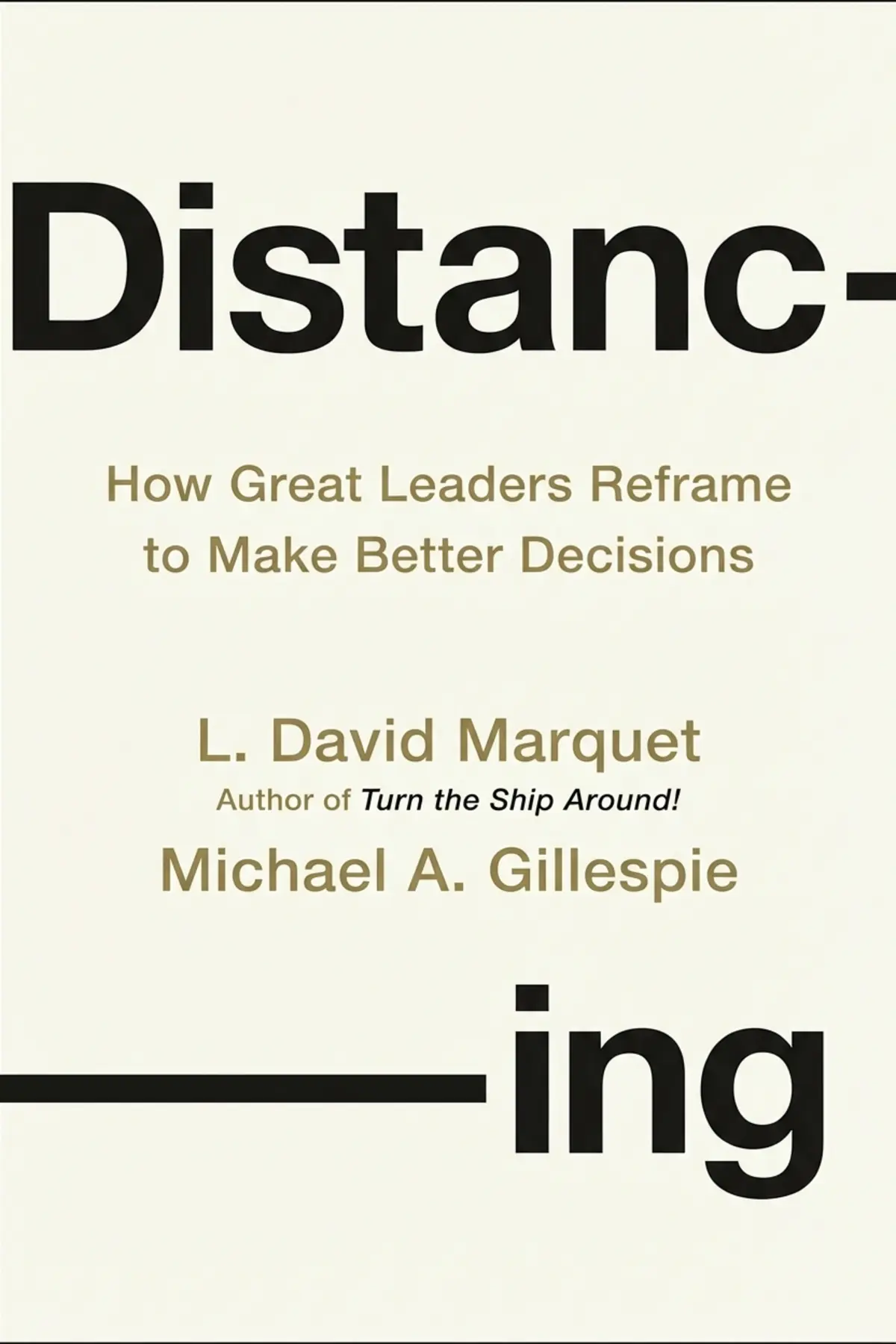
Table of Content
1. Introduction
1 min 37 sec
Have you ever looked back at a past decision and wondered, “What was I thinking?” In the heat of the moment, everything felt so urgent and personal. You felt the weight of your reputation on your shoulders, and the pressure seemed to narrow your vision until you could only see one possible path forward. This experience is common to all of us. Whether you are leading a corporation, managing a family, or navigating a personal crisis, there are moments when your sense of self becomes your greatest liability. When we are deeply immersed in a situation, we often lose the ability to see the forest for the trees. Our ego steps in to protect us from perceived threats, and ironically, this protective instinct often leads us toward the very mistakes we are trying to avoid.
This script explores the transformative power of a psychological concept known as distancing. It is the art of stepping outside your immediate story to gain a clearer, more objective view of reality. We will explore why our brains are hardwired to prioritize self-protection and how that biological drive can lead to catastrophic errors in judgment. More importantly, we will uncover practical, science-backed strategies to shift from an “immersed” state of mind to a “distanced” one.
By the end of this journey, you will understand the hidden costs of self-consciousness and how to navigate around them. You will learn to view your challenges through the eyes of a coach, a stranger, or even your future self. This isn’t just about making better business choices; it’s about developing a level of emotional and cognitive flexibility that allows you to remain calm, focused, and wise, even when the stakes are at their highest. Let’s begin by looking at what happens when we lose this distance and allow our immersed selves to take the wheel.
2. The Perils of the Immersed Self
3 min 05 sec
When we view the world through a narrow lens of self-protection, our judgment falters, leading to a dangerous psychological state called tunnel vision.
3. Adopting New Personas for Clarity
2 min 55 sec
Stepping into a different identity allows us to bypass our own biases and access objective wisdom that is normally hidden by our ego.
4. Utilizing Spatial and Observational Distance
2 min 40 sec
By changing our mental vantage point, we can transform how we perceive conflict and emotional pain, moving from reliving to learning.
5. Bridging the Gap with Temporal Distancing
2 min 51 sec
Connecting with our future selves helps us prioritize long-term values over short-term fears and temporary emotional states.
6. Conclusion
1 min 24 sec
The journey from self-immersion to distancing is perhaps the most important psychological shift a person can make. We have seen how the immersed self, driven by a need for ego-protection, can lead to tunnel vision and poor judgment. Whether it’s a pilot in a cockpit or a CEO in a boardroom, the lack of distance is what leads to catastrophic errors. But we have also seen that we aren’t victims of our biology. We have the tools to step back.
By adopting different personas, we can bypass our own biases. By moving to the “balcony,” we can see the broader patterns of our lives and conflicts. And by connecting with our future selves, we can ensure our actions today align with the legacy we want to leave behind. Distancing isn’t about being cold or unfeeling; it’s about being clear-eyed. It’s about recognizing that you are more than your current emotions and more than your immediate reputation.
As you move forward, try to catch yourself in those moments of immersion. When you feel that tightening in your chest or that narrow focus on being right, take a breath. Step onto the balcony. Consult your inner coach. Write that letter from the future. The wisdom you need is already within you; distancing is simply the lens that allows you to see it. By practicing these techniques, you will find yourself leading with more composure, deciding with more clarity, and living with more purpose.
About this book
What is this book about?
Distancing explores the critical psychological phenomenon of self-immersion and how it limits our potential. When we are too close to a problem, our ego takes over, narrowing our vision and causing us to prioritize reputation over results. This book provides a roadmap for breaking free from this mental trap by cultivating a distanced perspective. Through various techniques—such as adopting new personas, utilizing spatial vantage points, and projecting into the future—readers learn how to access a wiser, more objective version of themselves. The authors combine military leadership experience with psychological research to show how distancing can improve everything from high-stakes negotiations to long-term career planning and emotional resilience.
Book Information
About the Author
L. David Marquet
L. David Marquet is a former US Navy captain who graduated at the top of his Naval Academy class and commanded a nuclear submarine before becoming a global leadership consultant and speaker. He has authored several influential leadership books, including the bestselling Turn the Ship Around! and Leadership Is Language. Michael A. Gillespie serves as an associate professor of psychology at the University of South Florida, where he conducts research on organizational psychology, leadership, and psychological measurement.
Ratings & Reviews
Ratings at a glance
What people think
Listeners describe the book as an outstanding manual for enhancing decision-making, while one review mentions it offers a functional blueprint for individual and corporate evolution. Furthermore, the text provides beneficial perspectives, with one listener drawing attention to the scientifically supported method of moving past ego and bias. Listeners also value how accessible the writing is, with one noting its ideal application for both personal growth and professional advancement.
Top reviews
Kiattisak
Finally, a self-help book that respects the reader's time by getting straight to the point without hundreds of pages of filler. "Distancing" is a clear, actionable guide for anyone looking to improve their judgment by putting ego and bias aside. I loved the striking real-life examples that ranged from nuclear submarines to chip manufacturing and even sports. These anecdotes make the cognitive science feel much more grounded and easy to grasp. The method is immediately actionable—you don't need a workshop to start using these techniques today. Not gonna lie, I was skeptical about how much "being somewhere else" could help. It works. It’s a high-value, low-time-investment read that I highly recommend for personal and professional development. Thank you to the authors for this brilliant guide.
Show moreWipada
As someone who appreciates evidence-based strategies, I found the collaboration between Marquet and Gillespie to be a masterclass in synthesis. They turn complex neuroscience into actionable tools that anyone can use to navigate career crossroads or team dynamics. I’ve read many books on decision-making, but the way they frame distancing as a specific, learnable skill is unique. The book is packed with striking real-life examples that illustrate how these techniques work across different cultures and industries. I particularly liked the focus on becoming less reactive and more intentional. The book is short enough to read in a single weekend but dense enough with insights that you’ll want to keep it on your desk for reference. If you liked "Turn the Ship Around," you will find this to be a thoughtful and practical follow-up.
Show moreWanida
Decision fatigue is a real problem in my line of work, so this framework arrived at the perfect time. I’ve enjoyed L. David Marquet’s other writing, and "Distancing" is another worthwhile addition to his bibliography. The authors advocate for a counterintuitive approach: stepping outside of yourself to gain objectivity. I particularly connected with the "Be Sometime Else" practice, which forces you to imagine your future self looking back on a current choice. It’s a powerful way to reduce daily anxiety and shift into a wiser perspective. Frankly, the writing style is exceptionally clear and straight to the point, likely the result of very careful editing. It’s a short, sweet, and efficient read that offers grounded strategies for intentional thinking. I plan on gifting this to my management team.
Show moreCooper
Frankly, I didn't expect a book written by a former Navy Captain to feel so much like a modern manual on Stoicism. By separating yourself from the raw emotions of the moment, you can make a more rational choice rather than reacting impulsively. This book artfully blends neuroscience with practical leadership insight to show us how to become our own coaches. The three core strategies—self-distancing, spatial distancing, and temporal distancing—provide a solid framework for creating that mental gap in different contexts. It is a rather short book, which I appreciate, as it doesn't bury the lead in fluff. All the points are backed with academic research, making it feel more like a serious tool than just another self-help piece. It’s a great guide for becoming more self-aware and less reactive in high-stakes environments.
Show moreYongyut
Ever wonder why you give great advice to others but struggle to make your own choices? This book tackles that exact problem through psychological distancing. Marquet and Gillespie have created a transformative guide that helps you view your life through a broader, wiser lens. The "Be Someone Else" technique, which involves adopting the role of a coach, was a game-changer for my morning planning sessions. I found the writing clear and the research references neatly arranged, which is always a plus for a non-fiction book. My only minor gripe is that some of the reflection exercises felt a bit repetitive by the end of the book. Still, the message is timely and empowering. It’s a fantastic resource for anyone aiming to reduce daily anxiety and move toward more intentional living.
Show moreMay
Picked this up on a whim after seeing a summary of the "Be Sometime Else" technique online, and I’m glad I did. It’s an excellent book for anyone who wants to learn how to make better decisions as a person, not just as a manager. The writing is incredibly clear and straight to the point, which makes it an entertaining read despite the heavy scientific underpinnings. I found the exercises scattered throughout the text to be surprisingly effective at shifting my perspective on a few nagging work issues. In my experience, most leadership books are far too long, but this one is short, sweet, and efficient. It’s a grounded, empowering strategy for clear and courageous thinking. While it might feel a bit like a Stoic primer at times, the modern psychological context makes it feel fresh and applicable to current life.
Show moreAndrei
After being a huge fan of "Turn the Ship Around," I went into this with very high expectations that weren't entirely met. Look, the book explains how one can make better decisions by distancing ourselves from the immediate heat of a situation, which is a valuable lesson for any leader. Marquet and Gillespie break this down into three types of distancing: self, spatial, and temporal. While the framework is solid, there wasn't anything truly revolutionary in here for me. It served more as a well-written reminder of why I already use certain perspective-shifting techniques to avoid reactive choices. The psychology is sound, and the academic research is definitely there, but the actionable steps felt a bit thin in certain chapters. It's a good, concise book for someone new to cognitive behavioral concepts, but seasoned leaders might find it a bit basic.
Show morePatcharaporn
The blending of cognitive science and leadership theory here is solid, but something felt missing for me during the read. Michael Gillespie brings a lot of psychological depth to Marquet’s practical leadership experience, which makes the evidence-based approach feel very credible. The "Be Someone Else" strategy is particularly helpful for those of us who struggle with ego-driven reactions in the workplace. However, the book focuses heavily on the how and not enough on the when. Truth is, not every situation requires a deep psychological distance; sometimes you just need to act. Without more specific criteria for when to deploy these mental exercises, the advice can feel a bit one-size-fits-all. It is definitely a thoughtful and empowering book, but I would have liked more discussion on the potential downsides of over-analyzing every decision.
Show moreSamart
Look, I think the core message of this book could have probably been an insightful long-form essay rather than a full hardcover. While I appreciate the science-backed skill of putting ego aside, the three practices of being someone, somewhere, or sometime else felt a bit stretched out. That being said, the "Be Sometime Else" chapter alone is worth the price of admission for chronic procrastinators or impulsive deciders. Marquet's voice is distinct. The inclusion of Gillespie’s psychological expertise ensures the advice isn't just anecdotal. It’s a good reminder to see things from a different perspective, even if it isn't exactly revolutionary for people who have studied leadership before. I'd give it a solid three stars for its readability and the occasional "aha" moment.
Show moreBunyarit
Is one vocabulary word really worth an entire book? While Marquet is a legend in leadership circles for his previous work, I found "Distancing" to be a bit of a stretch. The concept of illeism—speaking about oneself in the third person—is fascinating, but it doesn't quite carry the weight of an entire volume. To be fair, the writing is punchy and the Navy submarine anecdotes are always a highlight, but I felt the core message was repeated too often. It’s a decent reminder to step back, yet it lacks nuanced guidance on exactly when these techniques are necessary versus when they might actually hinder quick decision-making. If you’ve already practiced mindfulness or basic Stoicism, most of this will feel like common sense dressed up in new terminology. It is a quick read, but not quite the revelation I was hoping for.
Show moreFeatured in
Readers also enjoyed
A Year with Peter Drucker: 52 Weeks of Coaching for Leadership Effectiveness
Joseph A. Maciariello
A High-Performing Mind: Strengthen Your Mind and Live Your Best Life
Andrew D. Thompson
Abundance: The Inner Path to Wealth
Deepak Chopra

Acting with Power: Why We Are More Powerful Than We Believe
Deborah Gruenfeld
All In: How Great Leaders Build Unstoppable Teams
Mike Michalowicz
AUDIO SUMMARY AVAILABLE
Listen to Distancing in 15 minutes
Get the key ideas from Distancing by L. David Marquet, plus 5,000+ more titles in English and Thai.
- 5,000+ titles
- Listen as much as you want
- 7-day free trial
- Cancel anytime







