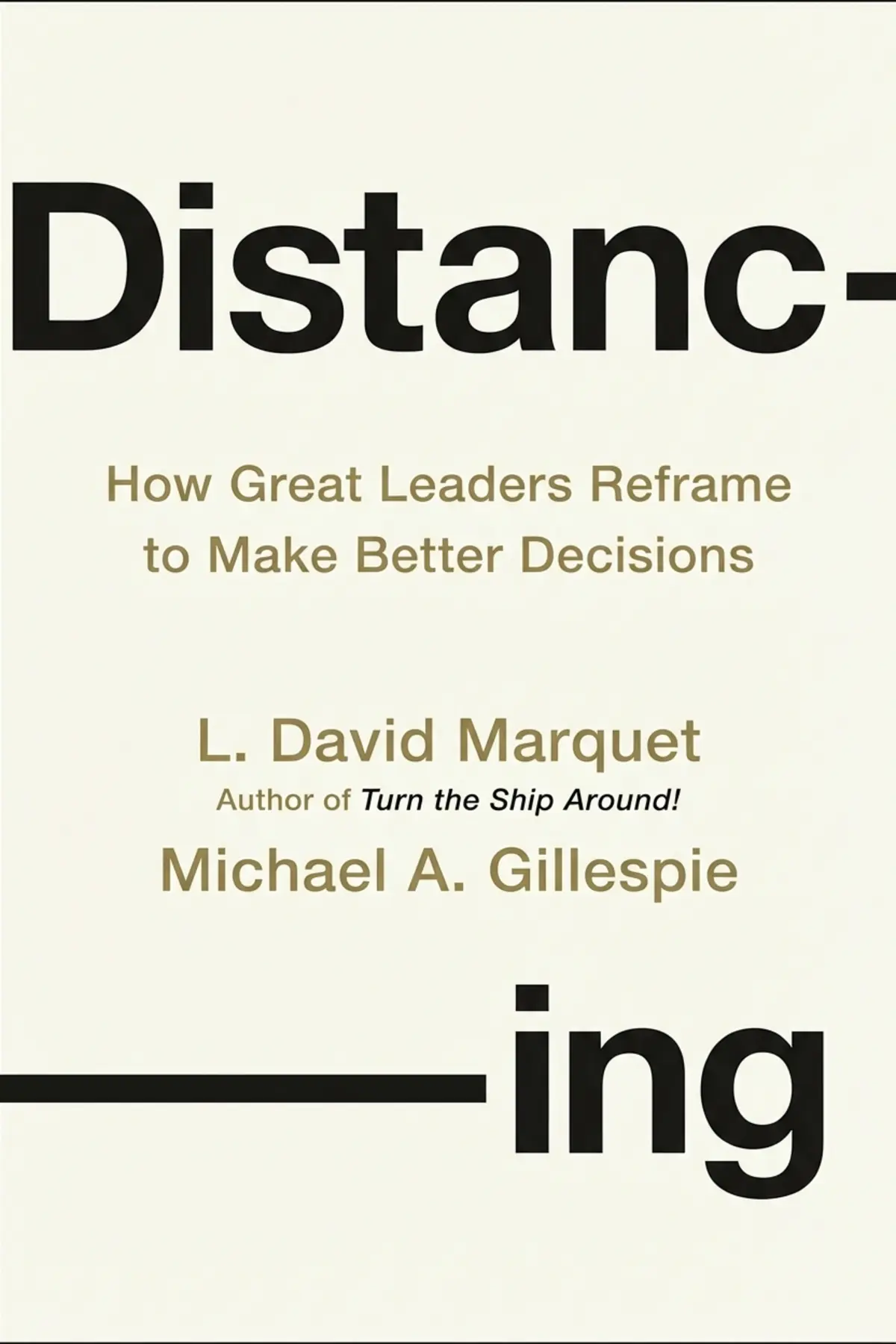
Distancing: How Great Leaders Reframe to Make Better Decisions
L. David Marquet
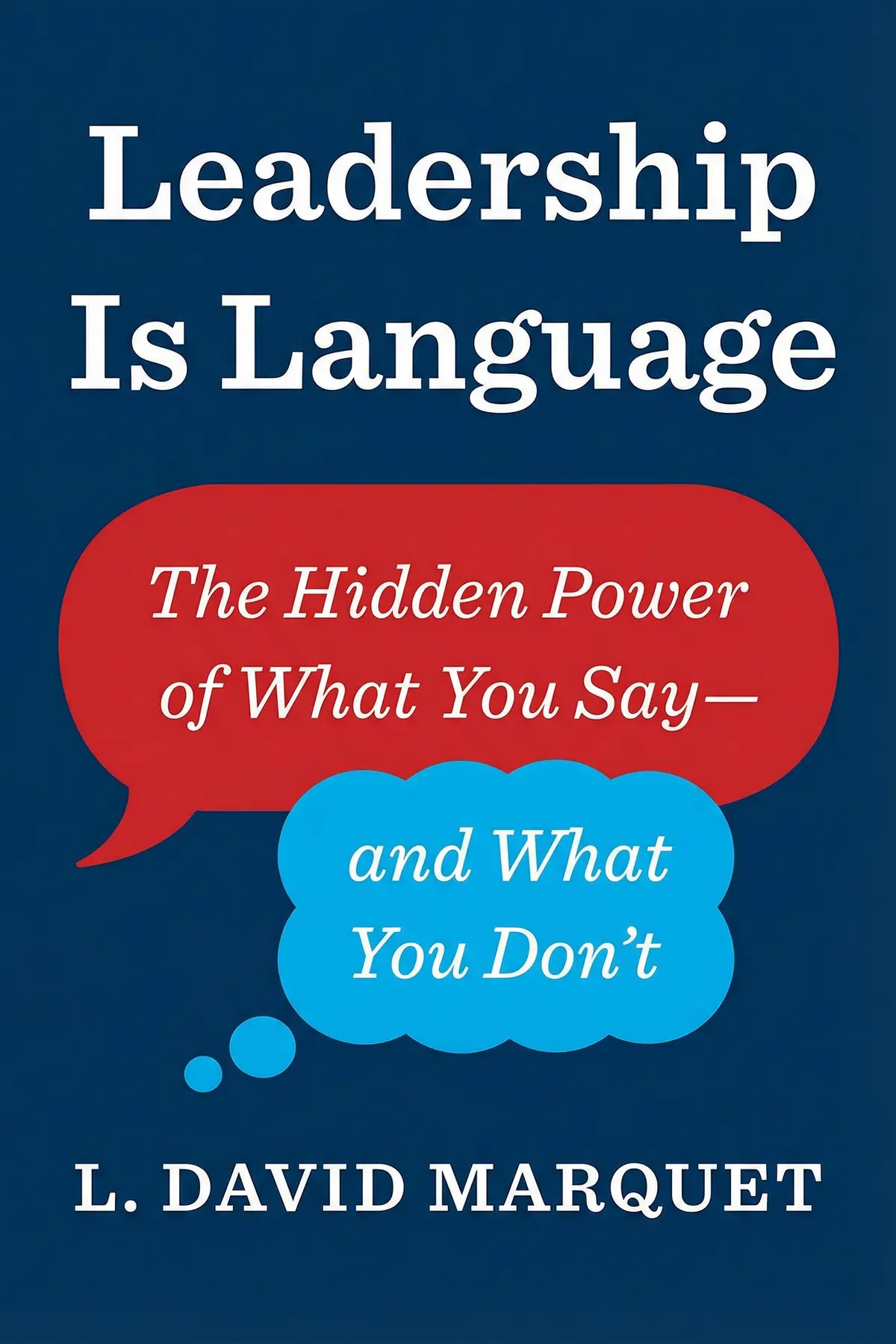
Leadership Is Language explores how shifting from Industrial Age communication to modern, collaborative dialogue can empower teams, improve decision-making, and foster an environment of psychological safety and high performance.
2 min 02 sec
Think back to the last time you were in a meeting where something felt ‘off,’ yet nobody said a word. Perhaps there was a looming deadline, or maybe the person in charge seemed so certain of the path forward that questioning them felt like an act of rebellion. This silence isn’t just a social awkwardness; it is often a symptom of a deeply rooted, century-old problem in the way we lead.
In Leadership Is Language, L. David Marquet invites us to look at the very foundation of how we communicate at work. He points out a startling reality: much of our professional vocabulary was forged in the year 1911. During that era, the goal of management was to maximize the efficiency of steel mills and factories. The solution back then was to separate the ‘thinkers’ from the ‘doers.’ The thinkers made the plans, and the doers followed them without question. Variability was the enemy; consistency was the god.
But we no longer live in a world of predictable assembly lines. We live in a world of high-speed innovation, unpredictable markets, and complex human dynamics. Yet, many of our leadership habits—and especially our language—remain stuck in that 1911 mindset. We still use binary questions that demand a ‘yes’ or ‘no.’ We still focus on ‘obeying the clock’ rather than ‘controlling the clock.’ And most dangerously, we still foster environments where people are more afraid of being wrong than they are of a catastrophe occurring.
Throughout this summary, we are going to explore how to break free from these Industrial Age traps. We will look at real-world tragedies, from shipwrecks to oil rig disasters, to see what happens when the old playbook fails. More importantly, we will discover a new way of speaking that encourages diversity of thought, fosters deep commitment, and allows every member of a team to act with the agency of a leader. By the end, you’ll see that changing your language isn’t just about choosing different words—it’s about changing the entire culture of your organization to be more resilient, more creative, and ultimately, more human.
2 min 44 sec
Discover how a century-old management philosophy still dictates how we treat employees today and why the split between thinkers and doers is killing modern innovation.
2 min 46 sec
Explore the tragic final moments of the El Faro to understand how ‘yes or no’ questions can prevent teams from speaking up when it matters most.
2 min 28 sec
The Deepwater Horizon disaster reveals the terrifying reality of what happens when employees are more afraid of breaking protocol than of a literal explosion.
2 min 32 sec
Learn from a Victorian-era polymath why your team’s collective average is almost always smarter than your smartest individual leader.
2 min 51 sec
Moving from ‘Tell me if you need help’ to ‘How helpful would I be?’ can change the entire power dynamic of your team—and ensure your projects succeed.
2 min 40 sec
The 2017 Oscars fiasco was a failure of the ‘obey the clock’ mindset. Learn how to ‘control the clock’ to avoid your own high-profile errors.
2 min 34 sec
The success of the movie Frozen proves that when a team moves from proving their worth to improving their work, the results can be world-changing.
1 min 54 sec
As we come to the end of this journey through *Leadership Is Language*, the throughline should be clear: the world has changed, and our words must change with it. We can no longer afford the luxury of a workplace divided into those who think and those who do. Such a split is not only inefficient in a fast-paced world; it is fundamentally dehumanizing and, as we have seen, potentially dangerous.
The transition from an Industrial Age leader to a modern leader is a transition from a ‘commander’ to a ‘facilitator.’ It’s about moving away from the need to be right and moving toward a desire to be curious. It means trading in your declarations of certainty for questions of inquiry. It means realizing that your most important job isn’t to make sure the work gets done, but to ensure that the environment is one where the work *can* be done with intelligence, safety, and heart.
Here is your actionable path forward. Tomorrow, when you walk into your workplace, try one simple experiment. When a decision needs to be made, don’t ask for a ‘yes’ or ‘no.’ Instead, ask your team to vote on a scale of one to five. Watch what happens. You’ll likely find that the quietest person in the room has a ‘two’ while the most vocal has a ‘five.’ Don’t try to argue them into a five. Instead, ask the ‘two’ what they are seeing that others might be missing.
This small shift in language is the first step toward a cultural revolution. It signals that you value their brain more than their hands. It builds the psychological safety that leads to innovation. And ultimately, it builds a team that doesn’t just follow you because they have to, but because they are committed to a shared journey of constant improvement. The language of leadership is no longer about giving orders; it’s about opening doors. Now, go out and start asking the questions that will lead your team to greatness.
Have you ever wondered why, despite our modern technology and advanced management degrees, many workplaces still feel like they are stuck in the early 1900s? Leadership Is Language addresses this exact disconnect. It argues that the way we speak to one another at work is a leftover relic of the Industrial Revolution, designed for a time when 'thinkers' sat in offices and 'doers' worked on assembly lines. This book promises to dismantle those outdated hierarchies by providing a new vocabulary for the twenty-first century. By following the insights of L. David Marquet, you will learn how to replace binary questions with open-ended inquiry, how to move from blind compliance to genuine commitment, and how to create the psychological safety necessary for a team to adapt to a rapidly changing world. It’s not just about being polite; it’s about survival in a complex economy. Whether you are leading a small creative team or a massive industrial operation, this book provides the linguistic tools to transform followers into proactive leaders, ensuring that everyone's voice is heard and every brain is engaged.
L. David Marquet is a renowned leadership expert who served for 28 years in the United States Navy. He is most famous for his leadership of the nuclear-powered submarine, the USS Santa Fe. Under his command, the vessel made a legendary turnaround, moving from the worst-performing ship in the fleet to the absolute best. He detailed this experience in his 2013 bestseller, Turn the Ship Around! Following his naval career, Marquet became a consultant, helping global businesses implement his leader-leader model.
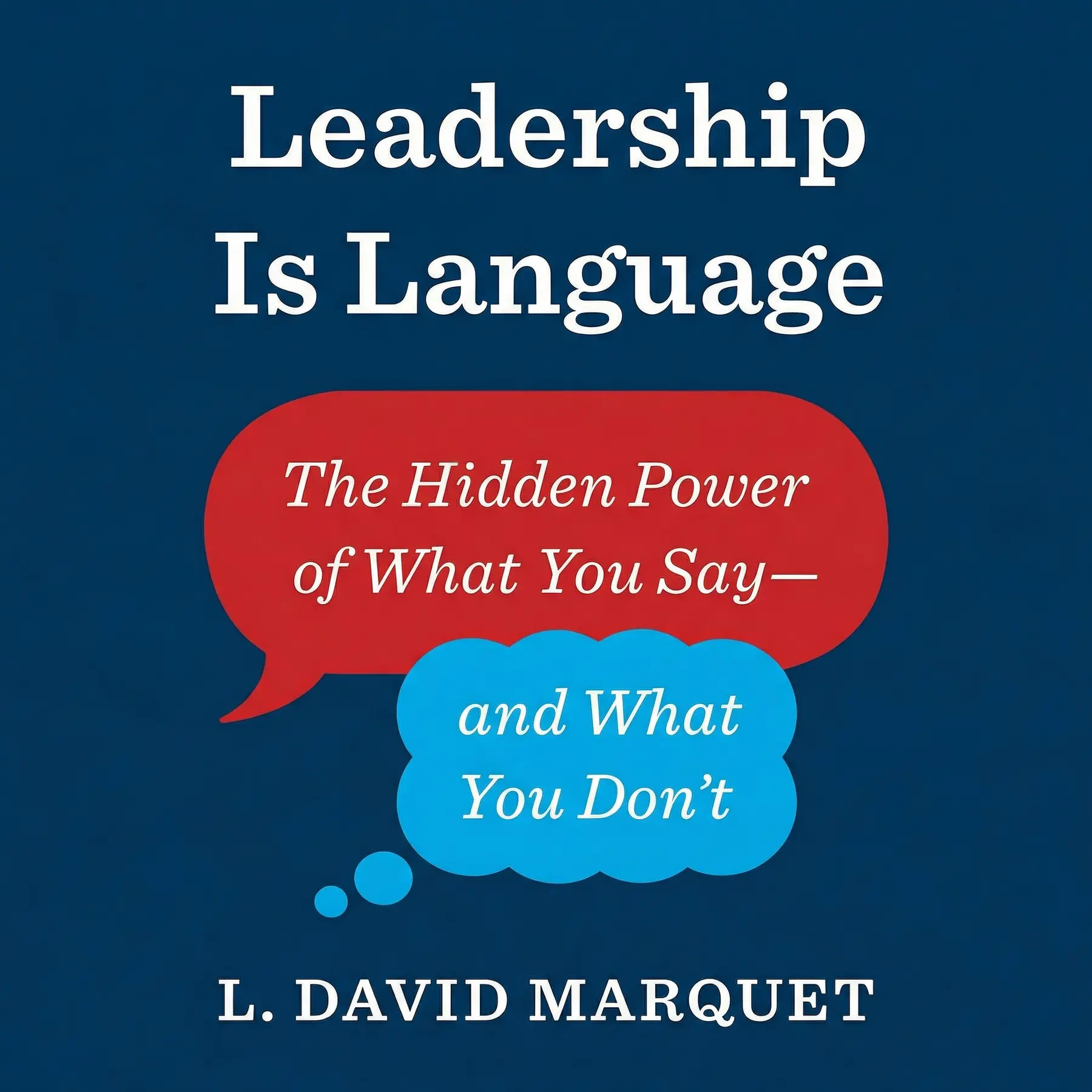
Listeners find this work to be a vital resource for leadership development, observing that authentic leadership stems from human connection and skillful communication. The content earns praise for its clear illustrations and real-world utility, as listeners appreciate the accessible writing style and language-centric strategy. Reactions to the book's length are varied, with several listeners noting that the text feels a bit long.
Leadership Is Language offers a profound shift in perspective for anyone stuck in a top-down management rut. Marquet moves beyond the 'leader-follower' model and explores how our specific word choices dictate the psychological safety of our teams. By focusing on the connection between language and action, he provides a practical guide for fostering an environment where every voice carries weight. I particularly enjoyed the distinction between 'red work' and 'blue work,' which helped me realize how often we prioritize blind execution over critical thinking. The book is remarkably easy to read, with clear examples that demonstrate how a simple change in phrasing can stop a team from blindly following a disastrous path. This is a must-read for those who want to move away from an efficiency-only mindset to one that values innovation and human connection.
Show moreEver wonder why your team stays silent during meetings even when you ask for feedback? This book explains exactly why your current language is likely shutting them down. Marquet’s insights on removing anchoring bias and leading with vulnerability are absolute game-changers for any manager. I started implementing the 'vote first, talk later' approach he recommends, and the variability of ideas in our brainstorming sessions has skyrocketed. The transition from coercive leadership to collaborative decision-making isn't just a 'nice to have' anymore; it's essential for survival in a complex market. The way he breaks down the need to unlearn the Industrial Age efficiency mindset is brilliant. I’ve already bought copies for my entire executive team. This isn't just about being 'nice'—it’s about being effective through better communication and genuine connection with your people.
Show morePicked this up on a whim and was immediately struck by how much our 'efficiency' mindset actually hampers innovation. We’ve been trained to value the clock above all else, but Marquet argues that this is a relic of the past that kills creativity. The shift from 'obey the clock' to 'control the clock' has changed how I schedule our production sprints. By building in deliberate pauses for 'blue work,' we’ve actually avoided several expensive errors. The language of invincibility is a trap many leaders fall into, but this book gives you the tools to be vulnerable and, ironically, more respected. It’s an essential guide for anyone who wants their team to be more than just a set of hands. Truly, a masterclass in how to speak so that people actually want to contribute their best work.
Show moreWow. This book completely changed how I phrase questions to my direct reports. Instead of asking 'is it safe?'—which invites a yes/no response—I now ask 'how safe is it?' to encourage nuance and honesty. It sounds like a small thing, but the result has been a much more open and collaborative team environment. Marquet’s focus on avoiding the 'invulnerability' trap is exactly what modern leadership needs. We need doers who are also deciders. The book is filled with clear, actionable plays that I could use the very next day in the office. If you want to build an organization where people feel a sense of purpose and autonomy, you need to read this. It is easily one of the most practical leadership books I have encountered in years.
Show moreThe El Faro case study serves as a chilling backdrop for the entire book, illustrating exactly what happens when leadership language fails. Marquet uses the 2015 cargo ship tragedy to show how binary questions and an 'obey the clock' mentality lead to disaster. It’s a powerful way to frame his methodology. I found the 'control the clock' concept especially relevant to my own work; we are so often rushing that we forget to pause and reflect. My only real gripe is that the book feels a bit long. Some sections iterate on the same point three or four times, which made my attention wander. However, the core 'plays'—like asking 'how sure are you?' instead of 'are you sure?'—are brilliant and immediately applicable. It’s a solid methodology-focused follow-up to his first book.
Show moreAfter hearing so much buzz, I finally dove into the red work vs. blue work framework. Personally, I found the breakdown of 'doing' versus 'thinking' to be a very helpful way to audit my own weekly schedule. The book is at its best when it provides specific linguistic alternatives to traditional, deterministic commands. Instead of seeking compliance, Marquet teaches us how to seek commitment. The advice to 'shorten the cycles' and celebrate small completions really resonates with how modern projects actually function. I did feel the 'playbook' structure was a little contrived at times, almost like he was trying too hard to make it sound like a sports strategy. Still, the underlying message about psychological safety and inviting dissent is incredibly important. It’s a very practical manual for leaders who want to stop being the 'decider' and start being a facilitator.
Show moreAs someone navigating a mid-level management role, I found the emphasis on moving away from binary language to be a complete eye-opener. Marquet explains how words like 'can't' versus 'don't' change the internal power dynamic of a team. It’s about creating an 'improve' mindset rather than a 'prove' mindset, which is something my department desperately needed. I really appreciated the specific examples of how to solicit uncomfortable perspectives without making people feel attacked. Some might say this is just Agile in disguise, but honestly, the focus on the actual words we use makes it feel more actionable than most high-level philosophy books. It does run a bit long, and the industrial-age history lesson felt a little unnecessary after a while, but the overall impact on my leadership style has been very positive. Definitely worth a read.
Show moreFrankly, while the message is solid, much of this feels like Agile principles rebranded for a corporate audience that hasn't kept up with the times. If you are already familiar with Lean or Scrum, you might find yourself thinking, 'I've heard this before,' just with different terminology like 'red and blue work.' The author spends a significant amount of time critiquing Taylorism and the Industrial Age, which is a bit of a stretch in a modern context. It feels like he is trying to reinvent a wheel that has been spinning for twenty years. To be fair, the specific focus on linguistic 'plays' is helpful for tactical improvement, but the book is quite repetitive. You could probably get most of the value just by reading the summary boxes at the ends of the chapters. It’s a good refresher, but not exactly the 'new hotness' it claims to be.
Show moreTruth is, the book could have been half its length without losing any of the actual substance. Marquet is clearly a brilliant leader, but this volume suffers from some serious editing issues. The constant reiteration makes the reading experience feel like a treadmill—lots of movement, but you keep seeing the same scenery. I also struggled with some of the stereotyping regarding 'old-school' managers. That said, I can't deny that there are some great nuggets hidden in here. The advice on how to 'control the clock' to allow for reflection is something I’ve started using with my team. It’s a decent read for this phase of my career as I try to navigate larger projects, but be prepared to skim through the repetitive bits to find the real value. It’s a 3-star book with 5-star ideas buried inside.
Show moreLooking back at 'Turn the Ship Around,' I had high hopes, but this sequel felt oddly disjointed and somewhat privileged. Marquet suggests that if your boss doesn’t listen, you should just quit for the sake of your health, which is a breathtakingly naïve take for people who actually need their paychecks to survive. The structure is also a bit of a mess. He jumps between various examples and returns to them later without a clear narrative thread, making the whole experience feel like a collection of disparate thoughts rather than a cohesive guide. Not gonna lie, the constant repetition in the gray 'summary' boxes felt like filler. While the concept of improving rather than proving is a nice sentiment, the execution of this book lacks the rigor and clarity that made his previous work so impactful. It was a struggle to finish.
Show more
Hamilton Helmer

Margaret Heffernan
Joseph A. Maciariello
AUDIO SUMMARY AVAILABLE
Get the key ideas from Leadership Is Language by L. David Marquet, plus 5,000+ more titles in English and Thai.