
21 min 42 sec
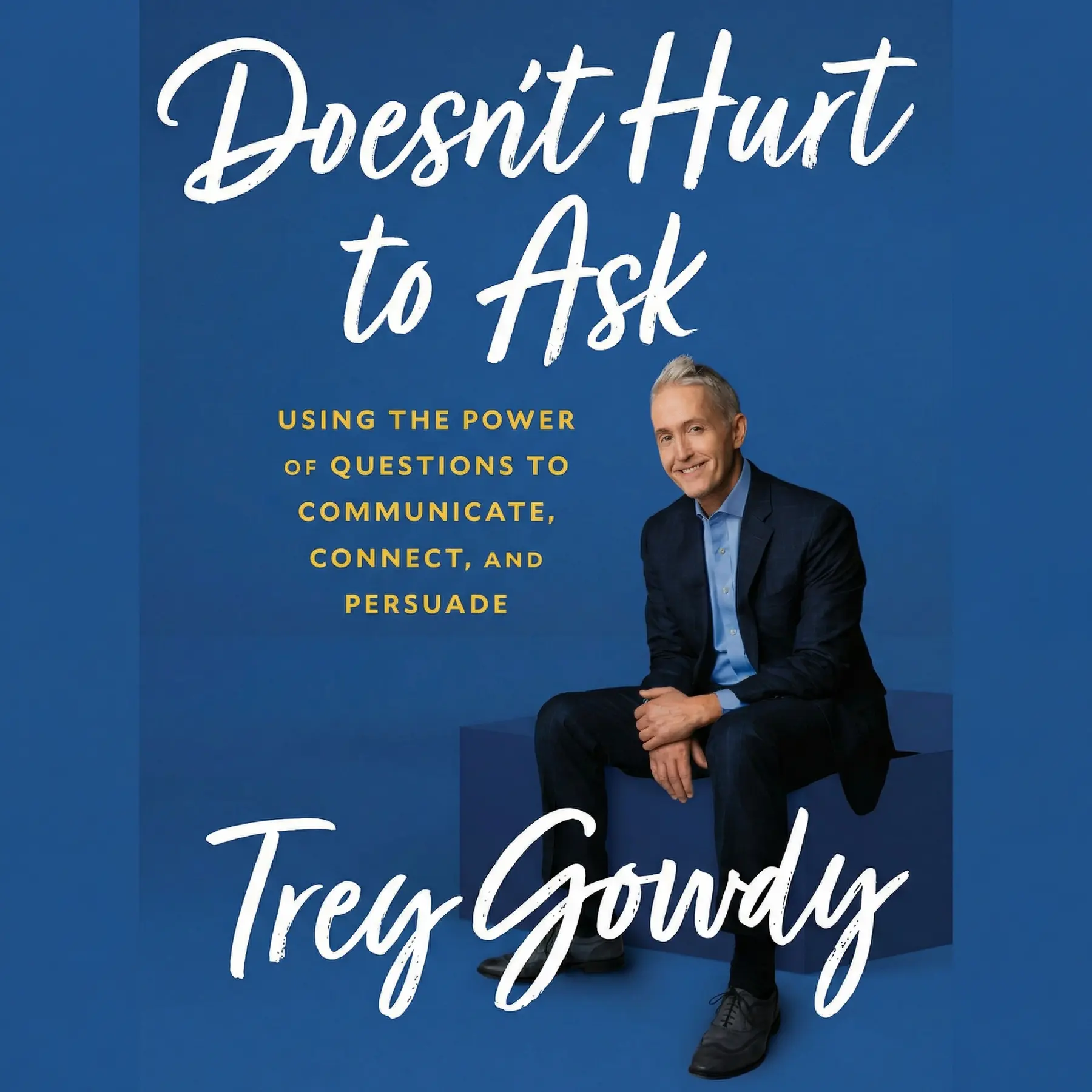
Doesn’t Hurt to Ask: Using the Power of Questions to Communicate, Connect, and Persuade
By Trey Gowdy
A deep dive into the art of communication, this guide explains how asking the right questions can be more persuasive than making forceful assertions in both personal and professional settings.
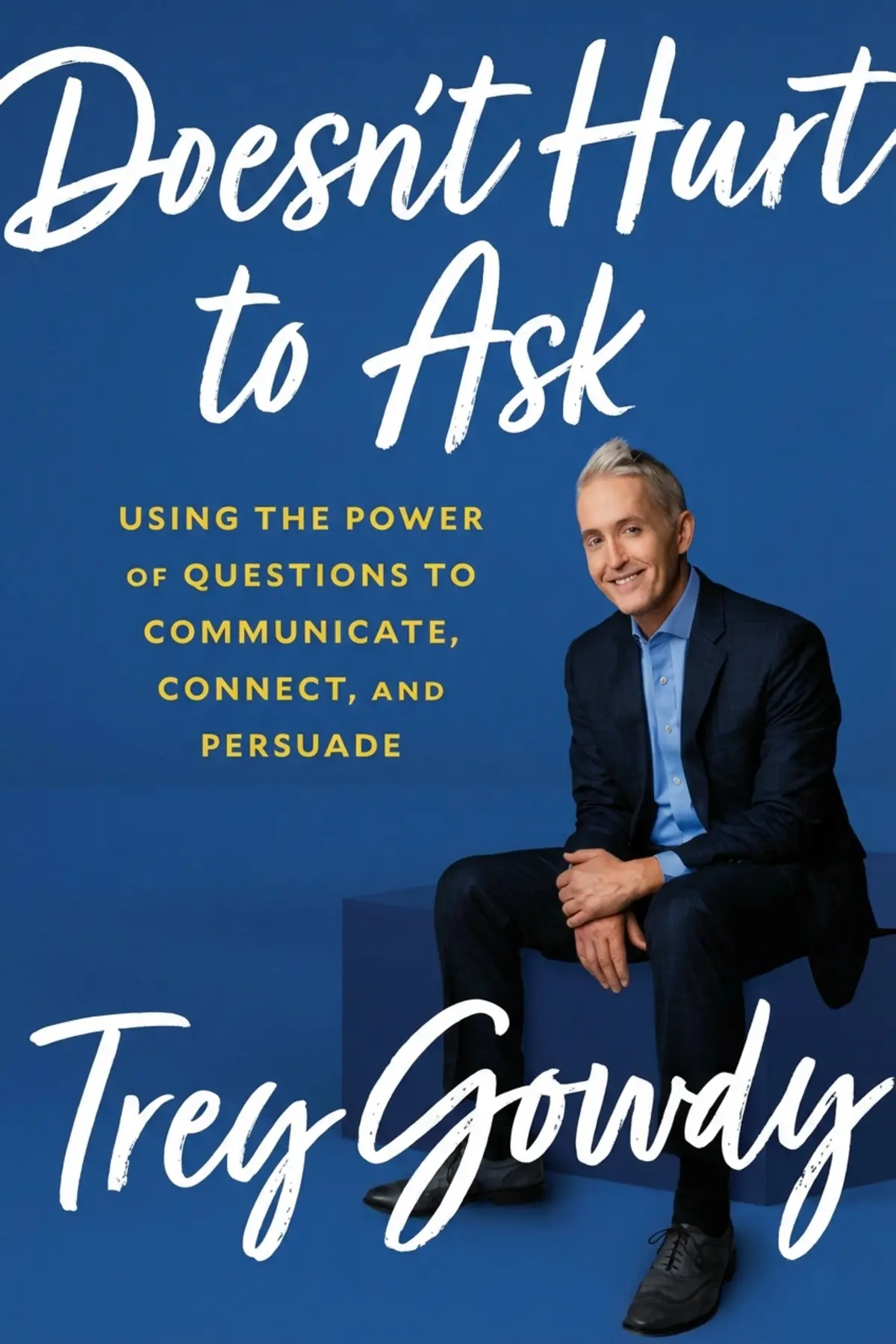
Table of Content
1. Introduction
1 min 58 sec
We have all been there: standing in the middle of a heated debate, armed with a mountain of facts, a clear logical path, and a burning desire to make the other person see things our way. Usually, our instinct is to dump all that information at once. We believe that if we just state the truth loudly enough or clearly enough, the other person will have no choice but to surrender to our logic. But as anyone who has ever argued about politics at a holiday dinner knows, that rarely happens. Instead, people dig in their heels. They get defensive. The more facts you throw at them, the more they find reasons to ignore you.
In the world of high-stakes litigation and political maneuvering, there is a man who learned a different way. Trey Gowdy, a former federal prosecutor and congressman, spent years in environments where the goal was persuasion. Through those experiences, he discovered that the most powerful tool in any communicator’s arsenal isn’t the statement; it’s the question.
This summary is about moving away from the ‘annihilation’ model of debate and toward a model of advocacy and connection. It’s about understanding that persuasion is a subtle art form, one that requires patience, empathy, and a strategic mind. The central throughline here is simple yet profound: by asking the right questions at the right time, you allow your conversation partner to reach the conclusion you want them to reach on their own terms. When people believe they have discovered a truth themselves, they are far more likely to embrace it than if that same truth was forced upon them.
Over the next few minutes, we’re going to explore how to harness this power. We’ll look at how to set realistic goals for your conversations, how to use different types of questions to navigate different social waters, and how to maintain your integrity so that your words actually carry weight. Whether you’re trying to land a new job, convince a spouse to see your side of a household issue, or navigate a complex business negotiation, the techniques we’ll discuss will give you a new way to move the needle in your direction without creating unnecessary conflict. Let’s begin by rethinking what it actually means to win an argument.
2. The Strategic Superiority of Questions
2 min 29 sec
Discover why asking a question is more effective than making a statement and how it can lead others to persuade themselves without even realizing it.
3. Defining Success and Knowing Your Audience
2 min 12 sec
Learn to set achievable goals for persuasion and why understanding your ‘jury’ is the first step to any successful communication.
4. The Nuance of Question Types
2 min 22 sec
Explore the different categories of questions and how to use them to either open a conversation or pin down a specific point.
5. The Sincerity Paradox
2 min 15 sec
Learn why authenticity is the foundation of persuasion and how to avoid the ‘credibility killers’ that can ruin your argument.
6. Impeaching an Argument Through Logic and Character
2 min 15 sec
Understand the three methods of undermining an opposing view and how to use them strategically without resorting to personal attacks.
7. The Art of Refining Your Words
2 min 21 sec
Discover how the precision of your language, the power of repetition, and the tactic of repackaging can solidify your persuasive power.
8. What to Do When You're Losing
2 min 13 sec
No one wins every argument. Learn the four ‘last-resort’ strategies to minimize damage and pivot when your case is falling apart.
9. Persuasion as a Two-Way Street
2 min 00 sec
Understand that the goal of communication is connection, not conquest, and why you must be willing to be persuaded yourself.
10. Conclusion
1 min 37 sec
As we wrap up our look at the power of questions, let’s bring everything back to the core idea: communication is an act of advocacy. Whether you are advocating for a business proposal, a change in family dynamics, or a political belief, your most effective weapon is the inquiry. By moving away from the ‘bombardment’ method of debate and toward the ‘questioning’ method, you respect the other person’s intelligence and give them the space to reach the right conclusion themselves.
We’ve covered a lot of ground today. We discussed how to set realistic goals—aiming for 30 percent instead of 100 percent agreement. We looked at the difference between softball and hardball questions and why the word ‘why’ is so foundational. We explored the absolute necessity of sincerity and the dangers of hypocrisy and lying. And we looked at how to handle ourselves when the tide of the argument turns against us.
The takeaway is this: the next time you find yourself in a disagreement, take a breath. Instead of launching into a speech, ask a question. Use that question to understand where the other person is coming from and to gently point out a different path. And remember, the best arguments start strong. The author’s final piece of advice is to start with your best fact, weave it into your very first question, and then keep your second-best fact in reserve for the final blow. By structuring your communication with intention and humility, you can become a powerful force for change in your own life and in the lives of those around you. It truly doesn’t hurt to ask; in fact, it might be the only thing that actually works.
About this book
What is this book about?
Communication often feels like a battle of wills, where the person with the loudest voice or the most facts wins. However, this summary explores a different approach: the power of the question. Drawing on experiences from the courtroom and the halls of Congress, the text illustrates how inquiry can nudge others toward a new perspective without triggering their natural defenses. Listeners will learn the strategic difference between various types of questions, how to maintain sincerity and credibility, and what to do when an argument starts to fail. The promise of the book is that by mastering these techniques, you can advocate for your beliefs more effectively, whether you are negotiating a business deal, navigating a family dispute, or seeking a career advancement. It is a masterclass in gentle yet firm influence.
Book Information
About the Author
Trey Gowdy
Trey Gowdy is a former federal prosecutor and district attorney from South Carolina. In 2010, he was elected to Congress, where he chaired the House Committee on Oversight and Government Reform and the Select Committee on Benghazi. With his friend Tim Scott, he co-authored the New York Times best seller Unified – How Our Unlikely Friendship Gives Us Hope for a Divided Country.
Ratings & Reviews
Ratings at a glance
What people think
Listeners find this book captivating and straightforward, praising the educational insights into the craft of asking questions to influence others. The presentation is approachable; one listener highlights the conversational delivery, while others enjoy the lighthearted, humorous moments. Listeners admire the personable feel of the content—one review specifically mentions the author’s moral compass—and find the overall message quite stimulating.
Top reviews
Hom
This book provides a masterclass in the subtle art of the query, written with the sharp precision you’d expect from a former prosecutor. Gowdy manages to strip away the complex jargon of the courtroom and present a blueprint for everyday communication that feels remarkably accessible to everyone. I appreciated his focus on the 'moral compass' of persuasion; it’s not about manipulation but about seeking truth through better questioning. While the heavy focus on legal anecdotes might slow down some readers, I found his storytelling both humorous and incredibly grounded. It’s rare to find a book that balances professional tactics with such a personable, conversational tone. Whether you are arguing a case or just trying to navigate a family dinner, the strategies here are genuinely thought-provoking and immediately applicable to real-life situations.
Show moreTitiluck
Finally got around to finishing this, and I’m struck by how much heart Gowdy poured into these pages. It’s far more than just a list of tactics; it’s a reflection on integrity and how we treat one another through our words. Look, the guy knows how to tell a story, and his humor shines through even when he's discussing heavy topics from his prosecution days. I found the section on 'knowing your audience' to be a game-changer for my own professional presentations. It feels like you’re sitting across from a mentor having a long, meaningful conversation over coffee. It’s rare to find an instructional book that is this engaging without being dry or overly academic. Highly recommend this to anyone who wants to communicate with more purpose and a stronger moral footing.
Show morePalm
Ever wonder why some people always seem to get the answers they want while others struggle to be heard? This book breaks down that mystery with a mix of Southern charm and legal brilliance. Gowdy’s approach is refreshing because he doesn't just tell you to be loud; he tells you how to be strategic and thoughtful. The chapter on listening was particularly eye-opening for me. His writing style is so easy to understand that I flew through it in a single weekend. While he does get into the weeds of legal procedures, those stories serve as the perfect laboratory for his theories on persuasion. It’s an instructive, funny, and deeply personable guide that I’ve already started recommending to my colleagues who struggle with public speaking and confidence.
Show morePornthip
Wow, Trey Gowdy really delivered a punchy and surprisingly funny look at how we talk to each other. I loved how he used his high-stakes career to illustrate simple points that anyone can use in their personal life. The book is incredibly easy to read and doesn't get bogged down in technicalities, despite the author's extensive legal background. His focus on using questions to uncover the truth is a much-needed perspective in today's polarized climate. It’s a thought-provoking read that leaves you feeling more equipped to handle difficult conversations with family or bosses. If you want a book that is both instructive and genuinely entertaining, this is definitely the one for you. Five stars for the humor alone!
Show morePornpimon
After hearing Gowdy speak on several podcasts, I was eager to see if his writing style matched his verbal wit. To be fair, the book definitely leans more toward a memoir than a standard self-help guide on communication. He spends a lot of time recounting specific cases from his time in Congress and as a prosecutor, which is fascinating if you like law. However, I can see how some might feel he drifts too far away from the core 'how-to' advice at times. The practical takeaways regarding burden of proof and audience expectations are absolute gold, though. Even if you aren't a law nerd, his insights on how to frame a question to get to the heart of a matter are worth the price of admission. It just requires sifting through a bit of political scenery.
Show moreTanyaporn
As someone who works in a high-stakes corporate environment, the advice on 'asking your way to a conclusion' was surprisingly effective. Gowdy translates his trial experience into a manual for anyone who needs to move people toward a specific goal. Truth is, I expected it to be a bit more partisan given his background, but he stays focused on the mechanics of communication throughout most of the text. The prose is conversational and moves quickly, though I’ll admit some of the legal stories ran a little long for my taste. Still, the core lessons on building a case and understanding the 'bar of proof' are incredibly useful for business. It’s a solid addition to the shelf for anyone looking to sharpen their rhetorical teeth without feeling like they’re reading a textbook.
Show moreTen
Gotta say, the transition from the courtroom to the living room in this book is handled with a surprising amount of grace. Gowdy focuses on the 'art' of the question, which is something most of us take for granted in our daily interactions. Frankly, there were moments where the political context felt a bit heavy for a book ostensibly about communication, but he usually manages to bring it back to the central theme. The advice is practical and grounded in real-world experience rather than abstract psychology. I particularly appreciated the distinction between persuading someone and merely winning an argument. It’s a nuanced take that encourages the reader to consider their long-term relationships over short-term victories. A few sections felt slightly repetitive, but the overall message about effective inquiry is quite powerful.
Show morePichaya
Picked this up after a recommendation from a friend in the legal field and I wasn't disappointed by the content. Gowdy’s conversational tone makes even the more complex ideas regarding 'the burden of proof' feel manageable and relatable for a non-lawyer. I did feel that the book was a bit heavily weighted toward his own career anecdotes, which might be a turn-off if you aren't a fan of memoirs. However, the underlying lessons on how to frame your objectives before you ever open your mouth are vital. He emphasizes the importance of a moral compass in all our interactions, which is a refreshing take in a genre often filled with manipulative tactics. It's a solid 4-star read that offers great insights into the psychology of questioning and persuasion.
Show moreSureerat
Not what I expected when I picked this up looking for a general guide on better conversation. The title suggests a broad look at persuasion, but in reality, it’s mostly a collection of war stories from a prosecutor’s career. Personally, I found the constant legal framing a bit exhausting because I wanted more niche secrets for everyday life rather than 'how to cross-examine your spouse.' The writing is certainly clear and Gowdy is a charismatic narrator, but the connection between his courtroom tactics and office politics felt stretched thin in several chapters. It’s a decent read for fans of the author or those interested in the legal field, but for the average person seeking communication skills, it might feel a bit too niche. A bit more editing to make it shorter would have been better.
Show moreKrisada
In my experience, the effectiveness of a communication book relies on its ability to translate theory into practice, and this one mostly succeeds but with caveats. I’ve read a lot of books on communication, and while Gowdy is a gifted storyteller, I often felt like I was reading his autobiography rather than a guide to persuasion. If you aren't interested in the inner workings of a prosecutor's mind or the halls of Congress, you might find yourself skimming through several chapters. To be fair, his 'persuasive tools' are logically sound and very easy to follow, but they aren't necessarily revolutionary. It’s a good book, just not a great one if you’re looking for high-level rhetorical theory. It feels very much like 'How to Argue 101' for the general public, which is fine, but it didn't quite hit the mark for me.
Show moreReaders also enjoyed

AUDIO SUMMARY AVAILABLE
Listen to Doesn’t Hurt to Ask in 15 minutes
Get the key ideas from Doesn’t Hurt to Ask by Trey Gowdy, plus 5,000+ more titles in English and Thai.
- 5,000+ titles
- Listen as much as you want
- 7-day free trial
- Cancel anytime







