
27 min 13 sec
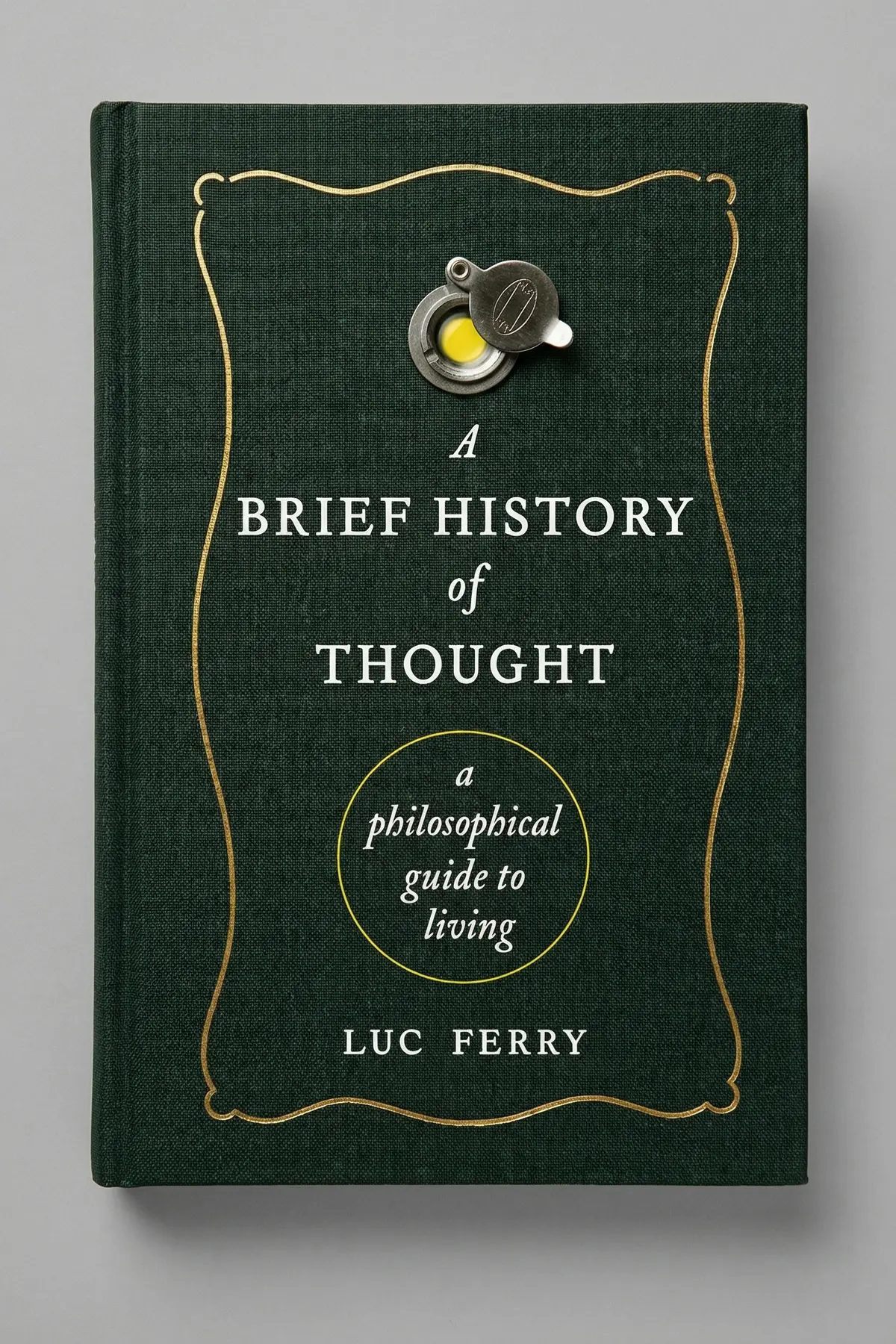
Doing Philosophy: From Common Curiosity To Logical Reasoning
Doing Philosophy explores the rigorous methods of modern philosophical inquiry. It reveals how logical analysis, thought experiments, and conceptual clarification provide essential tools for understanding the world and refining our critical thinking.
Table of Content
1. Introduction
2 min 02 sec
In our modern age, we are surrounded by the triumphs of science. From the devices in our pockets to the life-saving breakthroughs of medicine, the empirical method seems to have a monopoly on truth. Because of this success, a common narrative has emerged: that philosophy is a relic of the past—a quaint, perhaps even useless, endeavor that has been replaced by the harder, faster, more reliable machinery of the laboratory. But this perspective overlooks the reality of what it means to actually do philosophy in the twenty-first century.
The truth is that while science tells us how the physical world behaves, it often relies on foundational concepts and logical structures that it cannot test on its own. This is where the work of the philosopher becomes vital. Far from being a series of unanswerable daydreams, philosophy is a rigorous discipline of the mind that uses specialized techniques to sharpen our concepts, test our theories, and explore the limits of logic itself.
In this exploration of Doing Philosophy, we are going to look at the toolkit of the modern thinker. We will see how philosophy transitioned from being the ‘mother of all sciences’ to finding its own specialized niche in the study of language and logic. We will discover how a simple story about an invisible ring or a hypothetical zombie can provide as much data as a chemical reaction. And we will see how the work done in quiet offices at universities like Oxford and Yale actually paved the way for the digital world we live in today.
Our journey through these ideas will show that the boundary between science and philosophy is much more porous than we think. We’ll learn that to think clearly about the future, we have to master the tools that allow us to question our most basic assumptions. Whether you are curious about the nature of free will or the origins of the computer, the insights ahead will provide a blueprint for a more precise way of seeing the world. Philosophy isn’t just something you study; it is something you do, and the techniques we’re about to cover are designed to help you do it better.
2. The Relationship Between Philosophy and Science
2 min 54 sec
Are philosophers and scientists really that different? We explore how the two fields share a common history and why the most general questions require a specific kind of inquiry.
3. The Power of the Linguistic Turn
2 min 34 sec
Sometimes progress isn’t about discovering new facts, but about clarifying the language we use. Discover how the focus on words changed the way we solve problems.
4. Thought Experiments as Mental Laboratories
2 min 42 sec
How can a story about a mythical ring or a mindless zombie prove a point? Learn why the imagination is one of a philosopher’s most rigorous tools.
5. The Art and Etiquette of Argumentation
2 min 35 sec
Why do philosophers seem to enjoy being attacked? We look at the combative but productive nature of philosophical debate and its historical roots.
6. The Necessity of Systematic Doubt
2 min 26 sec
Socrates and Descartes famously doubted everything. Learn why questioning the ‘obvious’ is a productive strategy rather than just a way to be difficult.
7. Tracking Philosophical Progress and Innovations
2 min 28 sec
Think philosophy hasn’t changed since Ancient Greece? Discover how logical breakthroughs in the 20th century literally built the computer age.
8. Methodological Rigor and the Scientific Overlap
2 min 31 sec
Philosophy isn’t just about opinions. We dive into the shared standards of rigor that make philosophy as ‘scientific’ as any other academic field.
9. The Trap of Historical Preoccupation
2 min 27 sec
Is philosophy too obsessed with its own past? We examine why focusing on history can sometimes hold the discipline back from its scientific potential.
10. Philosophy as the Spirit of Every Discipline
2 min 45 sec
Philosophy isn’t just for philosophers. Discover how economists, physicists, and biologists use philosophical methods to break through their own boundaries.
11. Conclusion
1 min 49 sec
As we have seen, doing philosophy is far from a passive or outdated activity. It is a rigorous, technical, and essential science of the mind. Throughout our look at Timothy Williamson’s insights, we have discovered that while the natural sciences provide us with the data of the world, philosophy provides the logical scaffolding that makes that data meaningful. From the ‘linguistic turn’ that sharpened our tools of communication to the thought experiments that act as our mental laboratories, philosophy offers a specific set of techniques for navigating complexity.
We’ve learned that progress in philosophy is real—just look at how the logic of the 20th century became the code of the 21st. We have also seen that the most important work in any field often begins with a philosophical question. When we challenge our most basic assumptions, we aren’t being difficult for the sake of it; we are ensuring that the foundations of our knowledge are secure.
The throughline of all these ideas is simple: clarity and logic are not just academic goals; they are practical necessities for anyone who wants to think for themselves. To apply these lessons, start by looking at your own certainties. Choose a conviction you hold deeply—perhaps a belief about justice, or even a simple expectation about how the world works. Now, try to play the philosopher. Ask yourself: ‘What do I actually mean by the words I’m using?’ Run a thought experiment where your belief is tested by a hypothetical scenario. Look for the logical links in your reasoning. By subjecting your own thoughts to this kind of systematic scrutiny, you don’t just become a better debater—you become a clearer, more rigorous thinker in every area of your life. Philosophy is an active pursuit, and today is a perfect day to start doing it.
About this book
What is this book about?
Doing Philosophy offers a compelling defense of philosophy as a rigorous, systematic, and evolving field of study. In an age dominated by the prestige of the natural sciences, it is easy to assume that the ancient practice of philosophy has been left behind in the armchair. However, this work argues that philosophy is not in competition with science; rather, it provides the logical foundation upon which all specialized knowledge is built. The book promises to strip away the stereotypes of the eccentric or irrelevant philosopher, replacing them with a vision of the discipline as a sharp, technical, and indispensable tool for navigating reality. By exploring the linguistic turn, the utility of imaginative thought experiments, and the evolution of logic into computer programming, the text demonstrates that philosophy is a forward-looking pursuit. It invites listeners to look beyond the history of ideas and engage with the active, methodical processes that philosophers use to clarify confusing concepts, test the boundaries of possibility, and build the intellectual frameworks of the future.
Book Information
About the Author
Timothy Williamson
Timothy Williamson is a professor of logic at Oxford University and currently serves as the A. Whitney Griswold Visiting Professor of Philosophy at Yale University. He is a prolific author whose influential works, such as The Philosophy of Philosophy, have gained international recognition and have been translated into numerous languages. Beyond his academic books, he is a frequent contributor to major intellectual publications, including The New York Times and The Times Literary Supplement.
Ratings & Reviews
Ratings at a glance
What people think
Listeners find this work to be a structured and skillfully composed survey of the "philosopher's toolbox" and the methods used in the field. They value the author's logical case for philosophy being a disciplined science linked to other areas of study, with one listener mentioning how it helped "systematise my understanding" of intricate subjects. Additionally, listeners point out the concise and straightforward prose, making it a high-quality primer for those starting their studies. Although some have mixed feelings about the author’s occasionally biased look at opposing perspectives, they also state that the book offers a helpful overview of the ways philosophy employs logic and thought experiments to examine reality.
Top reviews
Akira
Picked this up while researching my senior thesis on metaphilosophy, and it turned out to be exactly what I needed. Williamson provides a brilliantly organized overview of the methods we use to interrogate the world, from common sense to complex thought experiments. I love how he defends philosophy as an autonomous discipline that still manages to stay interconnected with other sciences. The writing is incredibly economical; he doesn't waste a single word, which is a rare trait among academic philosophers. Not gonna lie, I was worried it would be too dense, but the chapters on disputing and comparing theories were surprisingly easy to follow. This is a must-read for any serious student who wants to understand the actual mechanics of philosophical inquiry.
Show moreBook
Wow, this was a refreshing take on what philosophy can and should be in the modern age. Williamson avoids the usual jargon-heavy nonsense to deliver a clear, logical defense of the discipline as a methodical branch of inquiry. I especially liked the section on how we compare theories using simplicity and coherence as metrics. It’s a great summary of epistemology that doesn't feel like it's talking down to the reader. To be fair, some sections on logic were a bit intense, but they serve the larger goal of showing how philosophy governs all forms of argumentation. If you want to know why philosophy still matters today, read this book. It’s a concise, powerful argument for the continued relevance of the field.
Show moreAubrey
Timothy Williamson offers a compelling argument that philosophy should be viewed as a rigorous, methodical science rather than just abstract musing. I found the chapter on thought experiments particularly enlightening because it bridges the gap between scientific observation and philosophical intuition. While the writing is incredibly clear and economical, some might find his rejection of non-analytic traditions a bit dismissive. To be fair, he doesn't claim to cover every single school of thought, focusing instead on the 'philosopher's toolbox' of logic and evidence. It really helped me organize my thoughts on how we use language to explore the world. If you're a student looking for a solid introduction to methodology, this is an excellent place to start.
Show moreSamira
After hearing so much about Williamson's work, I finally dove into this short introduction. He starts with common sense, showing how even the most complex theories begin with the way things seem to be. It’s a very grounded approach that makes the 'scary' parts of philosophy, like formal logic, feel much more manageable. The explanation of how we use 'inference to the best explanation' to decide between rival theories was a highlight for me. In my experience, most introductory books get bogged down in history, but this stays focused on the actual 'doing' of the subject. I did wish there was more on ethics, but I suppose you can't cover everything in a book this slim.
Show moreJonathan
Finally got around to reading this and I'm impressed by how much Williamson packs into such a small volume. He really breaks down the philosopher's toolbox, explaining how we use experiments—mostly of the 'thought' variety—to find counterevidence for established theories. It’s fascinating to see how philosophy and natural science are interconnected, both aiming for a better understanding of the world through evidence. The way he compares the use of intuition in philosophy to observation in science helped clarify some concepts I’ve always found a bit fuzzy. It’s not a perfect book, as it definitely favors the analytic tradition over anything else, but it’s remarkably clear. I'd recommend it to anyone who wants a no-nonsense guide to how modern philosophers actually think.
Show moreRatchanee
The chapter on how philosophy studies the language and concepts we use to communicate was particularly helpful for me. Williamson shows that philosophy isn't just about arguing for the sake of arguing; it's a methodical way to ensure our scientific and everyday inquiries are actually coherent. Gotta say, seeing the connections between philosophy and fields like computer science and linguistics made the subject feel much more 'real' to me. He does a great job of explaining how thought experiments function as a form of virtual laboratory for the mind. While he could have spent a bit more time on the 'why' behind some of these methods, the 'how' is covered brilliantly. It’s a tidy, well-written overview that serves as an excellent starting point for beginners.
Show moreGabriel
Ever wonder what philosophers actually do all day? This book provides a decent look into the 'tools' of the trade, though I'll admit the heavy emphasis on formal logic gave me some unpleasant flashbacks to my undergrad years. Williamson is clearly a master of his craft, writing with a precision that makes complex topics feel accessible. However, the book feels a little one-sided, almost as if he’s ignoring any branch of philosophy that doesn't fit into his specific scientific paradigm. Look, I appreciate the clarity, but the lack of diverse perspectives makes it feel more like a manifesto than a neutral textbook. It's a useful read for understanding one specific methodology, but don't expect a balanced view of the entire field.
Show moreMethinee
As a systematic guide to the field, this book succeeds, but it is definitely a dry read. Williamson argues that philosophy is a science that studies the concepts and language we use to communicate about our reality. While I appreciate the rigor of his arguments, I found the tone a bit clinical for my taste. Truth is, I missed the more 'human' side of philosophy that deals with the meaning of life rather than just the laws of logic. It’s a great resource for anyone who wants to learn the specific methodology of analytic philosophy, but it might bore those looking for something more poetic. It’s certainly a valuable addition to a student's library, even if it doesn't inspire much passion.
Show moreKanchana
A solid, though somewhat limited, introduction to how philosophy operates. Williamson claims that philosophy is a science with a specific methodology, but I’m not sure there’s actually a consensus on that among his peers. By ignoring the many philosophers who see the field as more of an art or a historical dialogue, he presents a very specific, one-sided view. Personally, I found the chapter on logic to be a bit too dismissive of the need for deeper justification. It’s a well-organized book and his writing style is very economical, making it a quick read. However, I left feeling like I’d only seen one corner of a very large and diverse building. Good for students, but take his 'scientific' claims with a grain of salt.
Show moreDen
The author’s insistence that philosophy is merely a 'science' feels incredibly narrow and ultimately self-defeating. Williamson lists dozens of disciplines like psychology and economics as vital partners to philosophy, yet he completely ignores the historical foundation of theology. By treating logic as something that needs no transcendental justification, he builds his entire house on sand. Frankly, the tone comes off as a bit arrogant, dismissing centuries of thought that don't align with his 'modest' view of the world. It’s well-written in a technical sense, but it lacks the depth of spirit I expect from a true philosophical inquiry. It felt more like a manual for a computer program than a deep dive into the mysteries of human existence.
Show moreReaders also enjoyed
A Guide to the Good Life: The Ancient Art of Stoic Joy
William B. Irvine

A Little History of Philosophy
Nigel Warburton
A Theory of Justice
John Rawls
Anarchy, State, and Utopia
Robert Nozick
Antifragile: Things That Gain from Disorder
Nassim Nicholas Taleb
Areopagitica: Philosophy)
John Milton
AUDIO SUMMARY AVAILABLE
Listen to Doing Philosophy in 15 minutes
Get the key ideas from Doing Philosophy by Timothy Williamson, plus 5,000+ more titles in English and Thai.
- 5,000+ titles
- Listen as much as you want
- 7-day free trial
- Cancel anytime







