We Are the Weather: Saving the Planet Begins at Breakfast
Jonathan Safran Foer
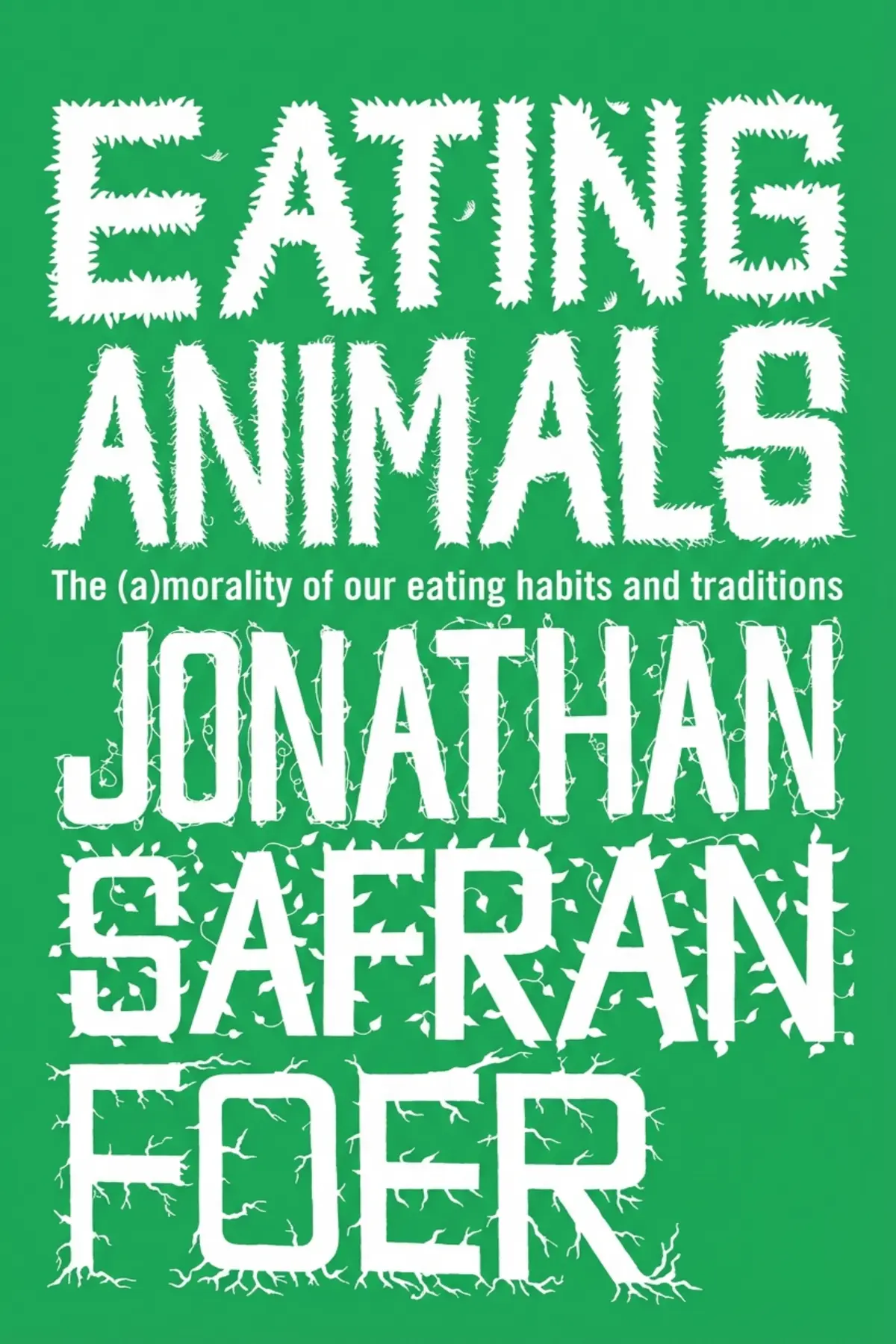
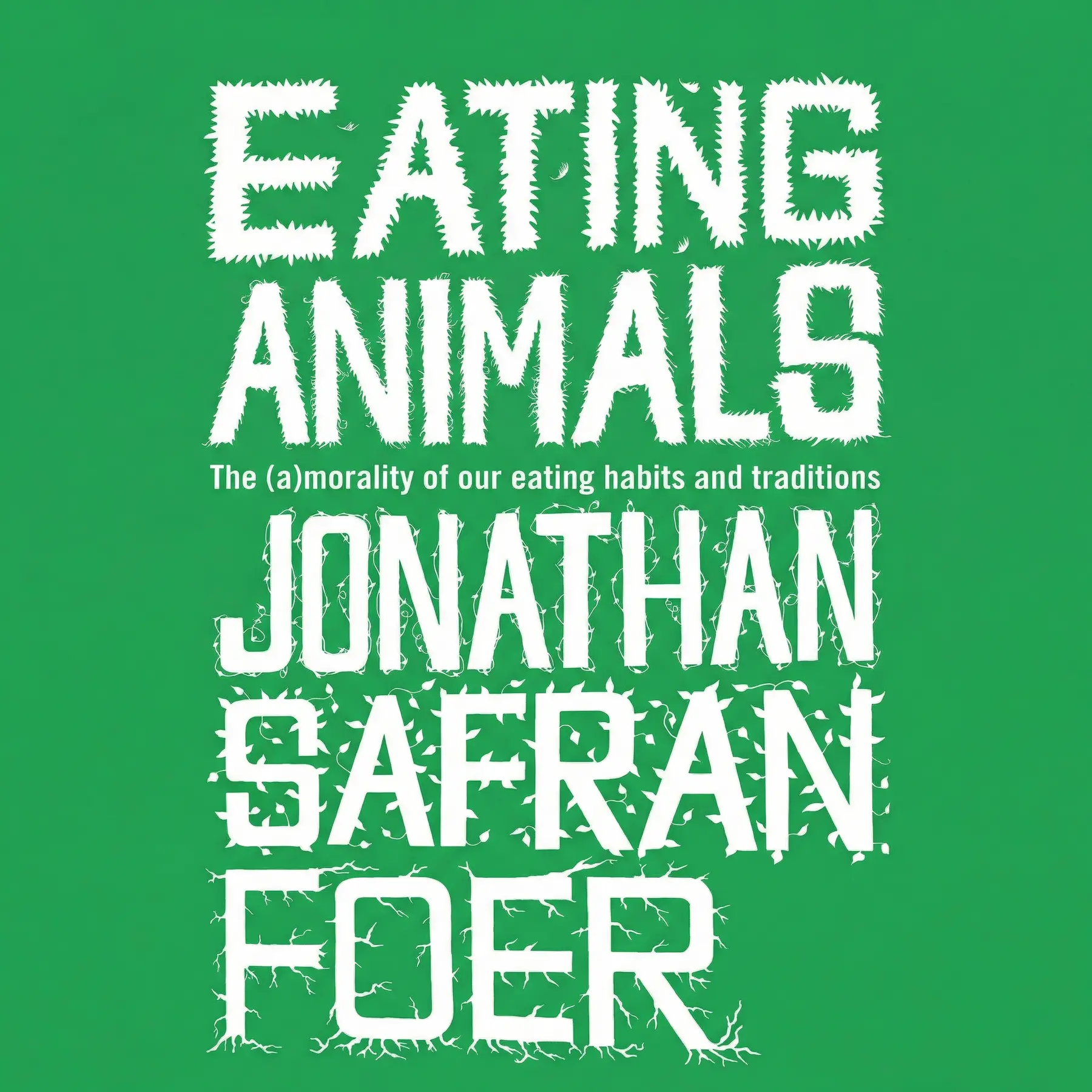
Eating Animals explores the hidden realities of factory farming, investigating the ethical, environmental, and health consequences of our modern meat industry and challenging the traditions that dictate our dietary choices.
1 min 46 sec
When we think about the food on our dinner plates, most of us carry a specific, almost nostalgic image in our minds. We imagine a red barn, a wide-open pasture, and a farmer who knows his animals by name. It is a comforting vision of harmony between humans, nature, and the creatures that sustain us. But according to Jonathan Safran Foer, this image is a carefully maintained fiction. In the modern world, the gap between the story we are told and the reality of how meat is produced has become a vast, dark chasm.
Foer’s journey into this world didn’t begin as a political crusade, but as a personal one. Faced with the responsibility of feeding his newborn son, he began to ask the questions we often avoid: Where does this meat come from? How was this animal treated? And what does it mean for our future? What he discovered was an industrial system that has sacrificed ethics, health, and the environment at the altar of efficiency. From the windowless sheds of poultry farms to the polluted waterways surrounding hog facilities, the reality of factory farming is a far cry from the pastoral myth.
In this summary, we will explore the throughline of Foer’s investigation: the idea that our eating habits are not just personal preferences, but moral and environmental statements. We will look at the systematic cruelty embedded in the production of chicken, pork, and seafood, and examine how the meat industry exerts its influence over our laws and our health. Finally, we will confront the philosophical contradiction of why we cherish some animals while systematically industrializing the suffering of others. This is an invitation to look behind the curtain and reconsider the true cost of the food we consume.
2 min 07 sec
The picturesque farm of our imagination has been almost entirely replaced by an assembly-line system driven solely by the logic of industrial efficiency.
2 min 10 sec
Industrial poultry farming has created a species on artificial life support, where extreme growth rates lead to physical collapse and questionable food safety.
2 min 06 sec
Highly intelligent and social, pigs are subjected to extreme confinement that thwarts their every natural instinct, leading to profound suffering.
2 min 07 sec
Industrial fishing and aquaculture are devastating aquatic ecosystems through indiscriminate killing and the spread of disease in crowded sea pens.
1 min 55 sec
The high-pressure environment of the slaughterhouse doesn’t just hurt animals; it erodes the humanity of the workers who operate the machines.
1 min 59 sec
Livestock production is a leading driver of climate change and local pollution, creating toxic waste that our ecosystems cannot absorb.
2 min 03 sec
The meat industry uses its immense lobbying power to shape regulations and create legal loopholes that protect even the most abusive practices.
1 min 49 sec
The low price of meat at the supermarket is an illusion maintained by shifting the true costs of production onto taxpayers and future generations.
2 min 06 sec
Factory farms are the perfect breeding ground for new and deadly viruses, making the next global health crisis a virtual certainty.
1 min 54 sec
We treat dogs as family and pigs as food, despite their similar intelligence and capacity for suffering, revealing a deep lack of logic in our traditions.
2 min 04 sec
While labels like ‘humane’ or ‘organic’ offer some comfort, the systemic reality of the industry makes avoiding meat the most effective way to effect change.
1 min 23 sec
The journey through Eating Animals is not an easy one. It forces us to look into the windowless sheds and toxic lagoons that our society would prefer to keep hidden. Jonathan Safran Foer’s investigation reveals that the modern meat industry is built on a foundation of systematic cruelty, environmental destruction, and public health risks. The central throughline of the book is that the ‘cheap meat’ we enjoy is a lie—the costs are simply being paid elsewhere: by the animals who suffer, the workers who are dehumanized, the communities whose water is poisoned, and the future generations who will face the consequences of antibiotic resistance and climate change.
Ultimately, this is a book about the power of the individual. While the scale of factory farming is vast, it exists only because of the choices we make at the grocery store and the restaurant. Foer doesn’t just present us with a list of horrors; he presents us with an opportunity for agency. By questioning the traditions we’ve inherited and looking past the marketing myths of the meat industry, we can begin to reclaim our relationship with food. Whether it is through a total commitment to vegetarianism or a radical reduction in meat consumption, the call is the same: to act with awareness and to ensure that our habits reflect our humanity. The true cost of what we eat is far higher than the price tag suggests, but the power to change the system begins with every single bite.
When novelist Jonathan Safran Foer became a father, he found himself haunted by a fundamental question: What do we feed our children, and why? This curiosity sparked a deep investigation into the origins of our meat, leading him far away from the idealized imagery of storybook farms and into the windowless reality of industrial agriculture. Eating Animals is the result of that journey, offering a comprehensive look at how the shift from traditional husbandry to high-speed factory production has fundamentally changed our relationship with food. Through a blend of investigative reporting and philosophical inquiry, the book examines the massive scale of animal suffering, the ecological devastation caused by concentrated waste, and the looming threat of global pandemics bred in unsanitary sheds. It dismantles the marketing myths of the meat industry, revealing how regulatory gaps and economic shortcuts allow for practices that most consumers would find abhorrent. Ultimately, the book serves as a call to conscience, urging listeners to align their eating habits with their values and consider whether the convenience of cheap meat is worth the profound costs to our planet, our health, and our humanity.
Jonathan Safran Foer is a celebrated American novelist based in New York. He gained international acclaim for his best-selling works of fiction, including Everything is Illuminated and Extremely Loud & Incredibly Close. His transition into non-fiction with Eating Animals was motivated by the birth of his first son, as he sought to understand the moral and practical implications of the food he was providing for his family.
Jonathan Safran Foer
Listeners find this work deeply educational and extensively researched, offering reflective content that prompts serious contemplation. The writing style is approachable and emotionally gripping, and listeners describe it as a compelling read that provided them with fresh insights. They value the narrative technique, with one listener pointing out how the book gently introduces the subject matter through an interesting story.
Wow. This wasn't the preachy lecture I expected from a book about veganism. Foer approaches the massive, tangled web of factory farming with the curiosity of a journalist and the heart of a father. He doesn’t just throw statistics at you like a weapon; instead, he invites you into his kitchen and his family history. There were moments when the descriptions of industrial slaughterhouses made me physically recoil from the page. Still, the narrative voice remains so engaging that you find yourself turning chapters late into the night. It’s a gut-wrenching read that forces you to acknowledge the cognitive dissonance required to eat a burger in 2024. While I’m not sure I can go full vegan yet, I’ll never look at a grocery store chicken the same way again.
Show morePicked this up after hearing it was the reason Natalie Portman went vegan; the impact of Foer’s prose is undeniable. He manages to weave together a memoir-style narrative with some of the most disturbing investigative journalism I have ever encountered. The way he describes the 'estrangement' we have from our food is incredibly poignant and hit me right in the gut. We want the product, but we are terrified of the process that brings it to our table. I loved the inclusion of different voices, from animal rights activists to the traditional farmers trying to survive in a corporate world. It isn’t just a book about what we eat; it’s a book about the stories we tell ourselves to justify our choices. This is mandatory reading for anyone who considers themselves an ethical consumer.
Show moreNot what I expected from a novelist, but Foer's investigative journalism is as sharp and evocative as his fiction. He takes a topic that usually triggers an immediate 'not interested' response and turns it into a compelling, page-turning story. By focusing on his own journey as a new father wanting to make the right choices for his son, he grounds the horrifying statistics in a relatable reality. The interviews with family-run farm owners were particularly enlightening, providing a stark contrast to the soulless industrial complexes that dominate the market. It’s a brilliant, multifaceted look at how our dietary habits define our humanity. Even if you don’t change your diet overnight, you will certainly change how you think about the living creatures that end up on your plate.
Show moreAfter hearing so much buzz about this book, I finally dove in and realized the 'shame' Foer discusses is something we all carry. We know something is wrong with our food system, but we avoid the specifics because knowledge requires action. This book takes away that excuse. The chapter on the environmental impact of industrial fishing was especially devastating for me, as I always thought fish was the 'safe' choice. Foer’s writing is accessible and emotional without being whiny or overly aggressive. He doesn't tell you what to do; he just shows you the reality and asks if you can live with it. It’s rare to find a book that actually changes your day-to-day behavior, but this one did it for me. I’m officially transitioning to a plant-based diet, and I feel more at peace for it.
Show moreThis book is a masterclass in how to present uncomfortable truths without immediately alienating the reader. Instead of shouting from a soapbox, Foer uses a quiet, reflective tone that makes you feel like you’re having a late-night conversation with a concerned friend. He tackles the massive environmental impact of factory farming—specifically the methane emissions and water contamination—in a way that feels urgent but grounded in data. I was particularly struck by the sections on how we treat different species so disparately, treating dogs as family while ignoring the sentience of pigs. The writing is accessible, moving, and deeply researched without ever feeling like a dry academic textbook. It is a powerful call to action that emphasizes moral responsibility over simple convenience. We owe it to ourselves to at least be aware of the systems we support.
Show moreEver wonder why we draw such a sharp line between the pets in our living rooms and the food on our plates? Foer dives deep into this cultural hypocrisy, and frankly, his arguments are hard to ignore. The research presented here is staggering, covering everything from the environmental destruction of manure lagoons to the horrific practice of de-beaking chicks. I appreciated that he didn't just talk to activists; he actually interviewed traditional, small-scale farmers who are also disgusted by the current industrial system. My only minor complaint is that the philosophical tangents sometimes felt a bit repetitive. However, the core message is incredibly powerful and well-documented. It is a thought-provoking piece of investigative journalism that stays with you long after you finish the final page.
Show moreAs a long-time meat eater, I approached this with a significant amount of trepidation and defensive armor. I didn’t want to be told that my lifestyle was immoral, yet Foer’s gentle, storytelling approach slowly wore me down. He addresses the 'I don't want to hear it' reaction head-on, acknowledging that most of us choose ignorance because the truth is simply too uncomfortable to bear. The section on the history of the Thanksgiving turkey was particularly eye-opening and surprisingly funny. It’s a well-researched book that feels more like a memoir than a manifesto, which makes the disturbing facts much easier to digest. Truthfully, I’m still eating meat, but I’ve started sourcing everything from a local butcher who can vouch for the farm's conditions. This book definitely opened my eyes to the realities of the industry.
Show moreLook, I’ve always been skeptical of 'foodie' manifestos, but Foer really caught me off guard with this one. He doesn't just attack the industry; he explores the deep-seated cultural traditions that make meat-eating so central to our identities and families. The book is remarkably balanced, giving space to a vegan who designs slaughterhouses and a farmer who truly loves his animals. It makes the 'factory' part of factory farming seem like the real villain, rather than the act of eating meat itself. There were a few chapters where the writing felt a bit overly stylized, which is typical for Foer, but it didn't detract from the message. It's a page-turner that forces you to think about the logistics of your dinner. It certainly makes a compelling case for why the status quo is completely unsustainable.
Show morePersonally, I found the book's structure a bit disjointed, jumping from family anecdotes to brutal data points without a smooth transition. One minute you are laughing at a quirky story about his grandmother, and the next you are reading about piglets being mutilated without anesthesia. It’s incredibly jarring. I expected a more linear argument, perhaps a clearer path for those of us who want to eat ethically but aren't ready to give up meat entirely. He gives some space to heritage farmers, yet those sections felt like an afterthought compared to the factory farm horror stories. It is definitely an informative piece of work, but the lack of a cohesive 'middle ground' solution left me feeling more frustrated than inspired. It's worth a read for the facts alone, just be prepared for a bumpy narrative ride.
Show moreThe descriptions of slaughterhouse practices were so gratuitously graphic that I found myself skimming large sections just to keep my stomach settled. While I understand the author's intent is to shock the reader into awareness, the sheer volume of misery becomes numbing after a while. I was looking for a more balanced philosophical inquiry into the ethics of consumption, but this felt more like a targeted exposé on the worst possible actors in the industry. It’s clearly well-researched, yet the tone occasionally veers into a moral superiority that rubbed me the wrong way. For someone already familiar with the basics of factory farming, there isn’t much new here beyond the emotional manipulation. I appreciate the effort to spark a conversation, but the execution was too heavy-handed for my personal taste.
Show moreAUDIO SUMMARY AVAILABLE
Get the key ideas from Eating Animals by Jonathan Safran Foer, plus 5,000+ more titles in English and Thai.