
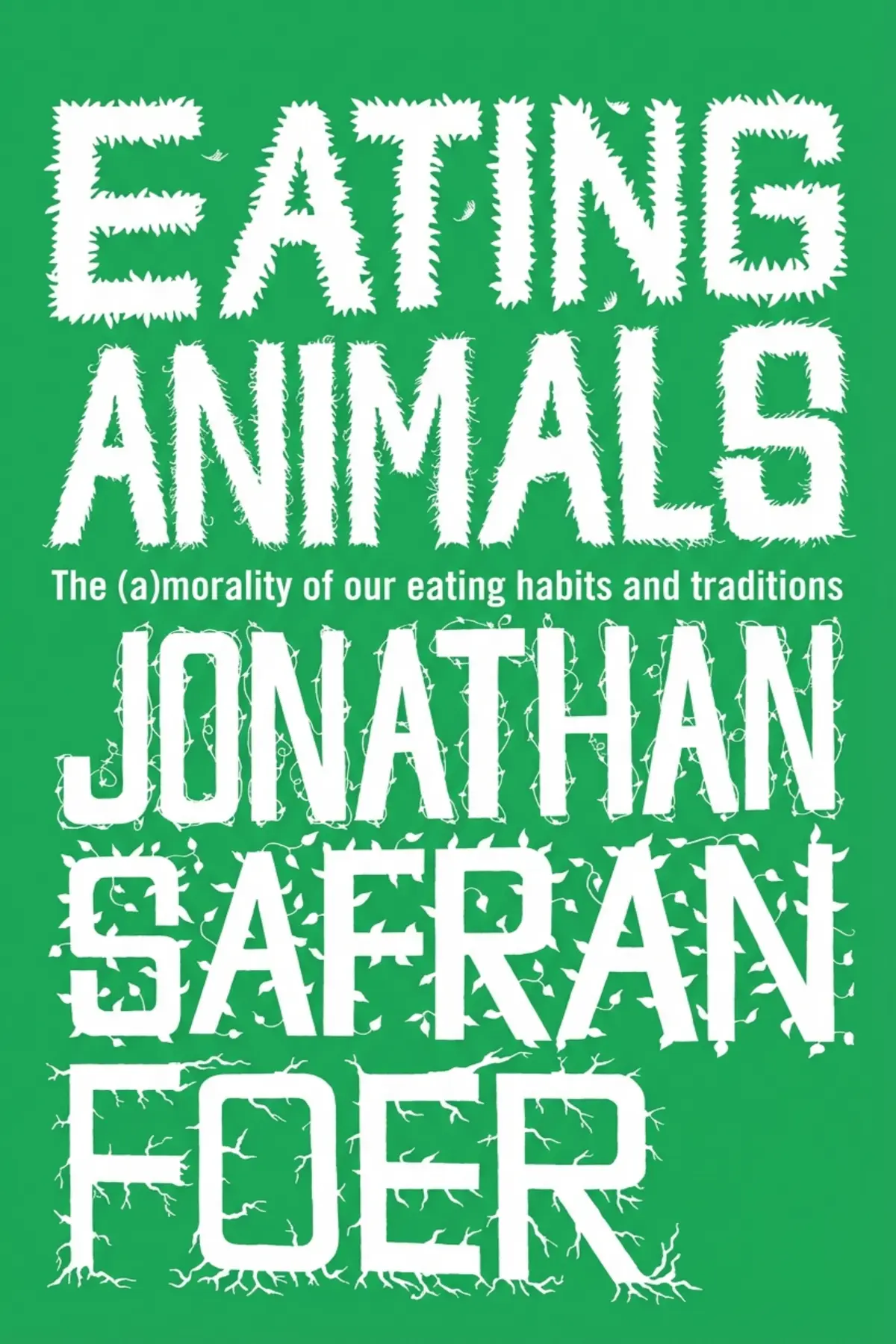
Eating Animals
Jonathan Safran Foer
This exploration of the climate crisis highlights the surprising link between global warming and our dinner plates, offering a practical, habit-based strategy for individuals to help save the planet through mindful eating.
1 min 52 sec
We live in a strange moment in history where we are simultaneously drowning in information and parched for a sense of direction. Almost everyone you meet today will agree that climate change is a pressing reality. We see the headlines about record-breaking heatwaves, we watch footage of historic floods, and we hear the warnings from scientists that the clock is ticking. Yet, for most of us, there is a profound disconnect between what we know in our heads and how we live our lives. We feel the weight of the world’s problems, but when it comes to taking action, we often find ourselves stuck. Why is it so difficult to move from awareness to actual, tangible change?
This gap between knowledge and action isn’t necessarily a failure of character; it’s a failure of narrative and biology. The crisis we face is so vast, so complex, and so terrifying that our minds often refuse to truly believe what we know to be true. We are given contradictory advice and told that the problem is too big for any one person to solve. But what if the most effective weapon we have is something we encounter three times every single day? In this exploration, we’re going to look at the powerful throughline connecting the global climate to the food on our plates.
Over the course of this summary, we will uncover why the story of our planet is so hard for us to grasp and how our evolutionary history has left us ill-equipped for this specific kind of threat. We will pull back the curtain on the massive role that industrial animal farming plays in environmental destruction—a role that is often left out of the major headlines. Finally, we will explore a practical, achievable path forward that doesn’t require us to be perfect, but does require us to be intentional. It’s a strategy that begins not with a massive political overhaul, but with what you choose to eat for breakfast.
2 min 51 sec
Discover why the human brain struggles to connect with the complex and diffuse story of climate change, lacking the clear heroes and villains found in historical social movements.
2 min 45 sec
Explore the evolutionary reasons why humans are hardwired to react to immediate physical dangers while remaining dangerously indifferent to the slow-moving, abstract threat of global warming.
2 min 19 sec
Learn why agricultural emissions, particularly from meat production, are often ignored in environmental discussions despite being as damaging as the entire fossil fuel industry.
2 min 30 sec
Examine how individual choices and corporate responsibility are not mutually exclusive, using historical examples like the polio vaccine to show how grassroots and top-down efforts work together.
2 min 36 sec
Delve into the specific environmental damage caused by industrial farming, from the carbon released during deforestation to the heat-trapping power of methane and nitrous oxide.
2 min 30 sec
Discover a practical and non-elitist approach to climate activism: reducing animal products during breakfast and lunch to significantly lower your personal carbon footprint.
2 min 31 sec
Understand the urgency of ‘runaway climate change’ and the ethical responsibility we have to protect the planet’s most vulnerable populations and future generations.
1 min 47 sec
The challenge of climate change is often presented as a choice between total sacrifice or total indifference. But as we have seen, there is a powerful middle ground. The story of our planet’s future is still being written, and while the plot currently looks grim, the ending is not yet set in stone. We have explored how our own biology and the lack of a clear narrative make it difficult to feel the urgency of the crisis, but we have also seen that we possess the rational tools to overcome those hurdles.
Industrial animal farming stands as one of the most significant contributors to the warming of our world, yet it is also the area where we have the most immediate personal power. By shifting our habits—specifically by choosing plant-based options for breakfast and lunch—we can significantly reduce our demand for the resources that are driving deforestation and greenhouse gas emissions. This isn’t about achieving a state of moral perfection; it’s about becoming a ‘pragmatic activist.’ It’s about recognizing that small, collective changes are the fuel for larger systemic shifts.
As you move forward, remember that the most important thing you can do is to start. Don’t worry about being the perfect environmentalist. Instead, focus on the doable actions that fit into your life. Whether it’s taking one less flight a year, carpooling when possible, or simply leaving the dairy and meat off your breakfast plate, these choices add up. We are the weather, in the sense that our collective behavior creates the climate we live in. By changing our habits, we can literally change the forecast for the future. The next time you sit down to eat, remember that you aren’t just nourishing yourself—you are making a decision about the future of the Earth.
We Are the Weather addresses the psychological and structural barriers that prevent us from taking meaningful action against climate change. While many of us acknowledge the reality of the environmental crisis, we often feel paralyzed by the scale of the problem or misled by incomplete information. Jonathan Safran Foer argues that one of the most significant yet overlooked contributors to global warming is industrial animal agriculture, which rivals the fossil fuel industry in its destructive impact. The book’s central promise is that we don’t need to become perfect activists or total vegans to make a difference. Instead, by making a simple, manageable shift in our daily routines—specifically, by abstaining from animal products for breakfast and lunch—we can collectively exert a massive influence on the planet's future. It combines scientific data with a deep investigation into human psychology, explaining why we find it so hard to believe in a crisis that is already happening, and how we can use our unique capacity for reason to protect the world for future generations.
Jonathan Safran Foer is an acclaimed American novelist and nonfiction writer whose work often explores complex ethical themes. His previous venture into the world of food ethics, the nonfiction book Eating Animals, became a New York Times bestseller and was later adapted into a documentary that earned the Environmental Media Association Award in 2019. Beyond his writing, Safran Foer serves as a board member for Farm Forward, a non-profit organization dedicated to promoting sustainable eating practices.
Jonathan Safran Foer
Listeners find the writing both skillful and eye-opening, with one noting the inclusion of deeply moving statistics. The storytelling is compelling, and one listener mentions that it explores half a century of global history. The work also emphasizes practical impact, with one review highlighting how people can take concrete steps to help the Earth. However, its accessibility earns varied responses, as some find it effortless to get through while others feel differently.
Foer has a way of making the abstract feel visceral and immediate. This book isn't just a collection of dry facts; it is a heart-wrenching look at our collective responsibility toward the future. I was particularly moved by the statistics regarding methane emissions from livestock, which are far more damaging than most people realize. The idea that we can start saving the planet at breakfast by simply avoiding animal products until dinner is incredibly empowering. It makes a massive, terrifying problem feel manageable for the average person. Frankly, the narrative style—which weaves in half a century of global history—kept me engaged from the first page to the last. This is an essential read for anyone who wants to take real action today.
Show moreThis isn't your typical dry science book about global warming, and that is exactly why it works so well. Foer focuses on the gap between 'knowing' something and actually 'believing' it enough to act. The historical context provided is brilliant, showing how humanity has made massive sacrifices in the past to survive. It’s a wake-up call that doesn't just scream at you but asks you to look in the mirror. I found the 'facts' section in the middle to be incredibly illuminating and terrifying all at once. If you feel paralyzed by the scale of the ecological crisis, please read this. It turns a global catastrophe into a series of small, daily choices we can actually control.
Show moreWow, I wasn't expecting a book about the weather to leave me so deeply moved and reflective. The way Foer connects our current crisis to the stories of our ancestors and the legacy we leave for our children is stunning. He doesn't just give you a list of things to do; he asks you what kind of person you want to be. I’ve already started the 'no meat before dinner' challenge and it feels great to finally be doing something tangible. The heart-wrenching statistics about the Amazon and factory farming are impossible to ignore once you've read them. This is a brave, poetic, and deeply necessary book for our time. Everyone should read this and then talk about it with their families.
Show moreAfter reading this, my morning routine has completely changed for the better. Foer makes a compelling argument that individual choices, especially what we put on our plates, are the most immediate tools we have. The statistics are staggering—cows would be the third-largest greenhouse gas emitter if they were a country! I appreciated his honesty about how difficult it is to be perfect, even if some critics call it hypocrisy. The book feels like a conversation with a friend who is just as worried and confused as you are. It’s a quick read, but the emotional weight of his letter to his children will stay with me for a long time. Change is hard, but this book makes it feel possible.
Show moreSafran Foer approaches the environmental crisis through the lens of human psychology rather than just policy, which I found refreshing. He understands that humans are not rational creatures who change just because we see a graph. The stories about his grandmother and the history of WWII added a necessary layer of humanity to a subject that often feels cold. Not gonna lie, some parts are a bit slow, but the overall impact is strong. It challenges the reader to stop waiting for a hero and to start being the change through something as simple as a meal. The focus on individual impact is a great starting point for those of us feeling overwhelmed by corporate greed.
Show moreTruth is, the formatting of this book makes it a remarkably quick and engaging read despite the heavy subject matter. I enjoyed the essay-style chapters and the directness of the fact-based sections. Some people might find Foer’s personal interjections annoying, but I found them quite humanizing. We are all hypocrites in some way when it comes to the environment, and he is just brave enough to put it in print. The book highlights how we’ve moved from the first flight to the moon in less than a century. It reminds us that we are capable of radical transformation when we actually commit. It's a call to action that starts in the kitchen, and I think that’s a powerful place to begin.
Show moreEver wonder why we have all the facts about the environment but still refuse to change our habits? That is the core question Foer tries to answer here. While the historical analogies, like the construction of Liberty ships during WWII, were fascinating, the book frequently goes off on strange tangents. Some of the comparisons to the Holocaust felt a bit misplaced and even tasteless to me. Look, the 'no animal products before dinner' rule is a great, practical tip that I’ve started implementing myself. However, the structure of the book is erratic, jumping from anecdotes to rants without much flow. It is a thought-provoking meditation, but it definitely needed a tighter edit to avoid being so repetitive.
Show morePicked this up because I loved Eating Animals, but this one is a bit of a mixed bag for me. On one hand, the information about how animal agriculture drives deforestation and methane levels is absolutely eye-opening. On the other hand, the prose is so repetitive that I felt like I was reading the same three points over and over again. Foer’s struggle with his own diet is honest, I suppose, but it also makes the book feel a bit unfocused and apologetic. I liked the 2/3 vegan suggestion because it's realistic for most families. Still, I wish there had been more discussion on how to organize for larger political changes. It’s an okay read, just don't expect a structured scientific analysis.
Show moreI really wanted to like this book, but it felt more like a personal diary than a coherent call to action. Jonathan Safran Foer spends so much time discussing his own internal guilt and his occasional hamburger cravings that the actual science of climate change gets pushed to the background. To be fair, the message about animal agriculture is vital, yet the writing is so meandering and repetitive that I lost interest by the halfway mark. He admits he still eats meat because he likes it, which makes his 'preaching' feel incredibly hypocritical and self-serving. Instead of focusing on systemic change or political pressure, we get 200 pages of the author wrestling with his own soul. It is far too self-indulgent for such a serious topic.
Show moreWhile the central message is undeniably vital, the execution is deeply flawed and often frustrating. Foer’s writing style in this one is just too experimental for my taste, especially the long section where he interviews his own soul. It comes across as pompous and vain rather than relatable or enlightening. He spends pages and pages on metaphors about the war and Jan Karski, which are interesting, but they don't always connect back to the climate in a meaningful way. If you’re looking for a book full of actionable science and policy ideas, this isn't it. It's mostly just JSF talking about JSF. I support his goals entirely, but the delivery here actually does the environmental movement a disservice.
Show more
Carl Safina
Mark Kurlansky
Richard A. Oppenlander

William McDonough
James Salzman
Sandrine Dixson-Decleve
Jonathan Safran Foer
AUDIO SUMMARY AVAILABLE
Get the key ideas from We Are the Weather by Jonathan Safran Foer, plus 5,000+ more titles in English and Thai.







