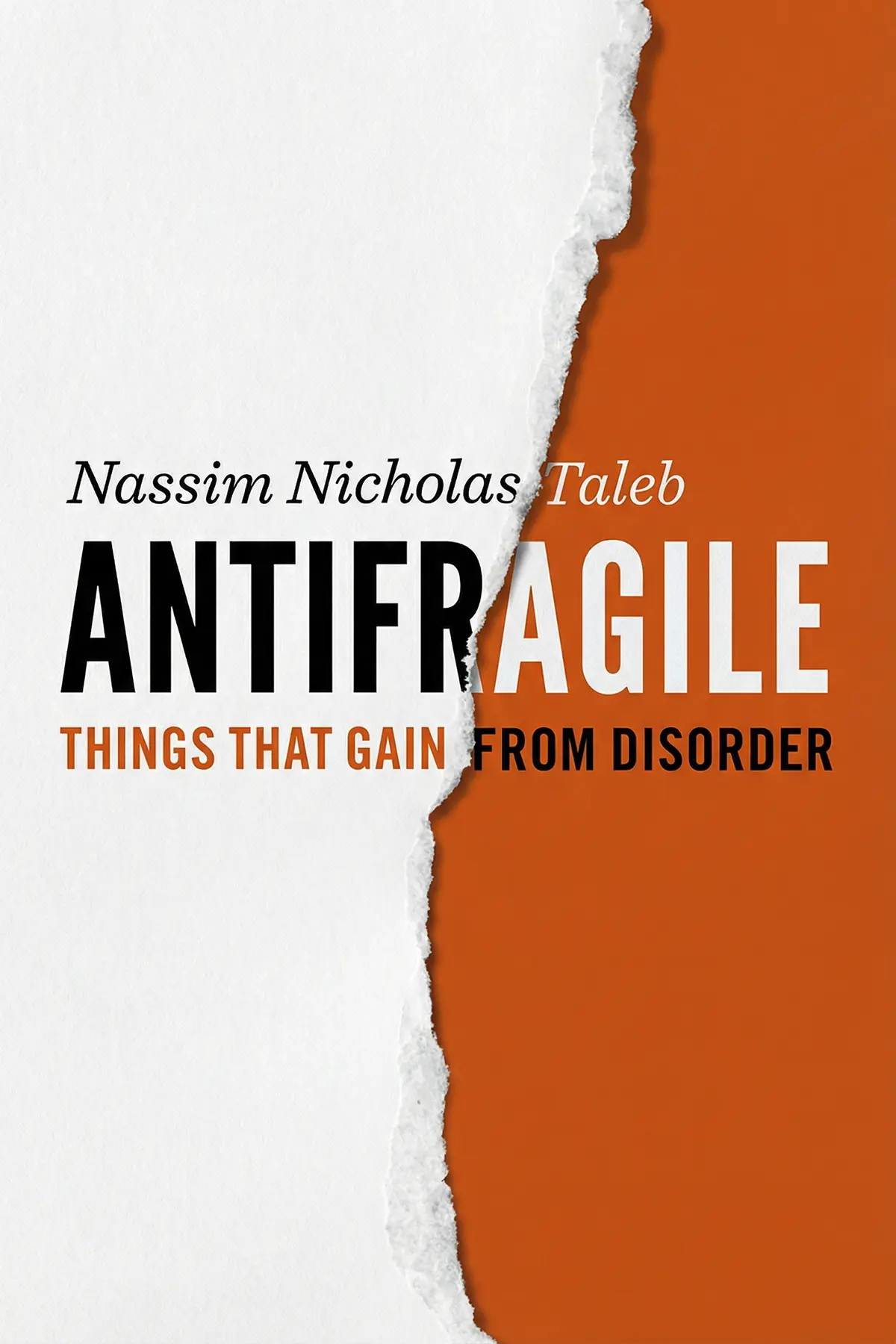
Antifragile: Things That Gain from Disorder
Nassim Nicholas Taleb
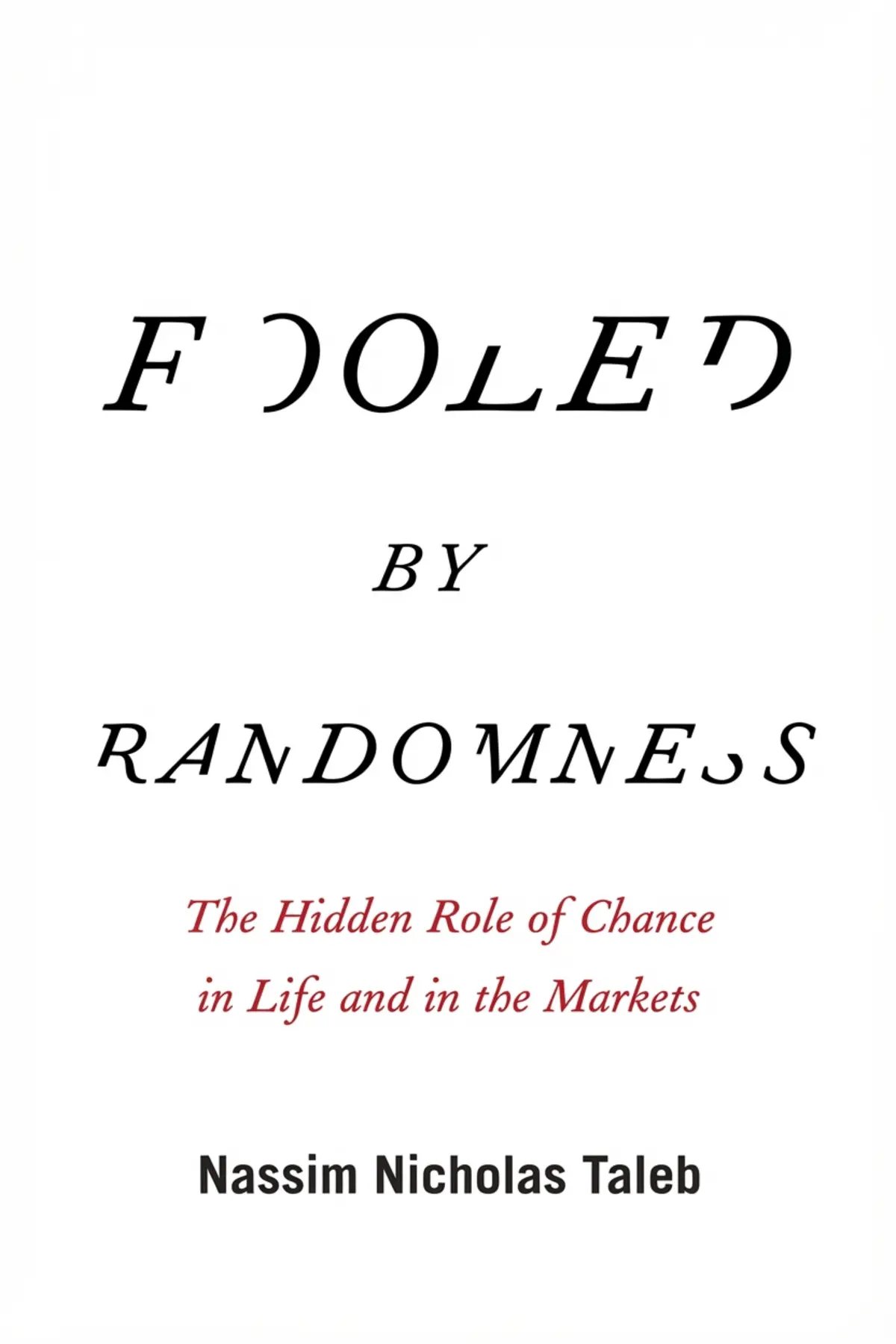
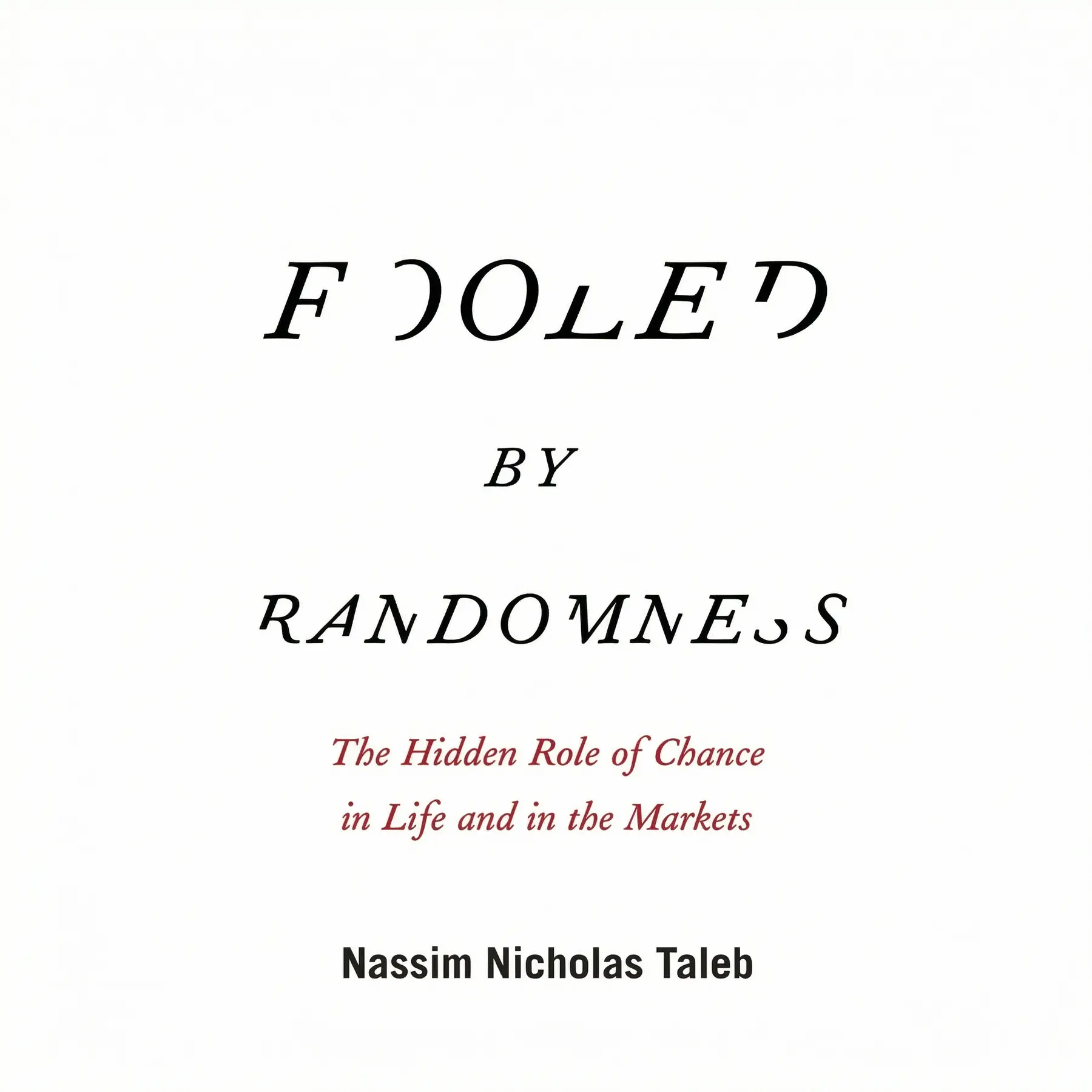
Fooled by Randomness explores the profound impact of luck and probability on success, challenging our tendency to mistake random chance for skill and offering a framework for navigating an unpredictable world.
1 min 39 sec
We like to think of the world as an orderly place where hard work, intelligence, and deliberate strategy lead directly to success. It is a comforting narrative. It suggests that if we simply follow the right steps, we can guarantee a positive outcome. But what if much of what we perceive as ‘achievement’ is actually just the result of a silent, invisible force? That force is randomness.
In this exploration, we dive into the heart of probability and the many ways human beings are systematically ‘fooled’ by the luck of the draw. We tend to look at a successful person—whether they are a CEO, a trader, or an entrepreneur—and assume their position is the result of superior skill. We ignore the graveyard of equally skilled people who did the exact same things but were simply unlucky. This tendency isn’t just a minor mistake; it’s a fundamental flaw in how we interpret reality.
Over the course of this summary, we will look at why our brains are so poorly equipped to handle probability. We will see how ‘lucky idiots’ can rise to the top of the financial world, how our emotions can hijack our logic, and why our obsession with daily news and stock fluctuations actually makes us less informed. The throughline here is a call for intellectual humility. By acknowledging the massive role of chance, we can learn to protect ourselves from devastating ‘rare events’ and find a more stoic, dignified way to live in an unpredictable world. Let’s begin by unmasking the illusion of skill in the places we least expect to find it.
2 min 16 sec
What if the most successful people in high-stakes fields aren’t actually more skilled, but simply the luckiest survivors of a massive, random experiment?
2 min 07 sec
Discover why even a thousand pieces of evidence can’t prove a theory right, while one single unexpected event can bring the entire house down.
2 min 11 sec
Why the best products and ideas don’t always win, and how a tiny, random advantage can lead to a massive, long-term monopoly.
2 min 08 sec
Learn why our brains are hardwired for quick survival decisions rather than the complex, probabilistic logic needed for the modern world.
1 min 52 sec
How our feelings provide the necessary nudge to make choices, and how to protect our logic from being hijacked by them.
1 min 49 sec
Why our ability to explain the past gives us a false sense of security about the future, and how to spot the ‘noise’ in data.
2 min 01 sec
Explore why ‘what is likely to happen’ is often the wrong question to ask when the stakes of the ‘unlikely’ are catastrophic.
2 min 07 sec
How to live a dignified life in a chaotic world by distinguishing between meaningless information and the true signals of reality.
2 min 01 sec
As we wrap up our journey through the unpredictable landscapes of *Fooled by Randomness*, the central lesson is clear: we are far less in control than we think. From the ‘lucky idiots’ of Wall Street to the path-dependent history of the keyboard you type on, randomness is the silent architect of our world. We have seen how our own biology—our shortcuts, our emotions, and our pattern-seeking brains—actually makes it harder for us to see the truth. We are programmed to see order where there is only chaos and to see skill where there is only luck.
But this realization shouldn’t be cause for despair. Instead, it should be a source of liberation. When we stop pretending that we can predict every ‘black swan’ or explain every market wiggle, we can start to build lives that are more resilient. We can learn to distinguish between the ‘noise’ of the 24-hour news cycle and the ‘signal’ of long-term trends. We can learn to make ‘asymmetric bets’ where we protect ourselves from huge losses while leaving the door open for huge, lucky gains.
The ultimate takeaway is a shift toward Stoicism. We must accept that randomness is a fundamental law of the universe. It will bring us unexpected joys and, eventually, unexpected hardships. In both cases, our task is to remain grounded. Enjoy the harmless beauty of a random sunset or a well-turned phrase, but keep a cold, analytical eye on the risks that could destroy you. By mastering our own reactions and maintaining our dignity, we ensure that even if we are fooled by randomness, we are never broken by it. Take this perspective with you: be humble in your successes, be graceful in your failures, and always, always keep an eye out for the black swan.
Have you ever wondered why some people seem to strike gold repeatedly while others, seemingly more talented, struggle to gain traction? This exploration of chance suggests that the answer often lies in the hidden forces of randomness. We live in a world that craves order and logic, leading us to invent stories of skill and determinism to explain what is, in reality, pure luck. By examining the high-stakes world of financial markets and the psychological traps of the human mind, this summary reveals how our biological wiring and cultural narratives conspire to keep us blind to the role of probability. The promise of this work is not just a lesson in statistics, but a fundamental shift in how you perceive your own successes and failures. You will learn why the past is a poor predictor of the future, how emotions both help and hinder our decision-making, and why the most successful people are often just the luckiest survivors of a chaotic system. Ultimately, it provides the intellectual tools to distinguish between meaningful signals and distracting noise, encouraging a more stoic and rational approach to the uncertainties of life.
Nassim Nicholas Taleb is an academic, author, and investor who has spent his life trying to understand the true nature of luck, uncertainty, and knowledge. His later book The Black Swan also became a bestseller, and he is considered one of the top intellectuals on the planet. The author has written Fooled by Randomness partially based on his own experiences and interactions as a Wall Street trader.
Nassim Nicholas Taleb
Nassim Nicholas Taleb
Nassim Nicholas Taleb
Listeners find this work exceptionally profound, with one listener remarking on how it delivers a fresh outlook on life. Additionally, they view it as a must-read for anyone in investing and value its captivating, intellectually stimulating quality. The book is further praised for its exploration of chance, fascinating ideas, and meaningful message. Nevertheless, opinions on the prose and accessibility are split; while some consider the writing style engaging and clear, others observe that it is difficult to navigate and written in a tortuous manner.
This book genuinely reshaped how I view every success story I see in the news. Taleb offers a mind-bending perspective on how much of what we call 'skill' is actually just a lucky run in a world of pure noise. Frankly, it’s a difficult pill to swallow if you fancy yourself a self-made genius, but his breakdown of how humans crave patterns where none exist is essential reading. He has a particular disdain for journalists and MBAs that is quite amusing, though I can see why it would rub some the wrong way. The central message—that we are all at the mercy of the unseen—is powerful enough to overcome his occasional arrogance. This isn't just about financial markets; it's a fundamental lesson in intellectual humility. Life is a lot more random than we want to admit, and this book provides the tools to finally start seeing those hidden risks.
Show morePicked this up on a recommendation and I was absolutely floored by the philosophical depth. It’s rare to find a finance book that references Heraclitus and Karl Popper with such frequency and ease. Taleb argues that we live in a world of 'black swans'—unpredictable events with massive consequences—and that our reliance on normal distributions is a dangerous mistake. Gotta say, his arrogance actually adds to the charm for me; it feels like he’s shouting the truth from the rooftops while everyone else is still asleep. The way he describes the 'noise' of the daily news cycle versus the 'signal' of long-term data has completely changed my media consumption habits. This is more than a book about trading; it’s an epistemological guide for navigating an uncertain life. Highly recommended for those who like their non-fiction with a side of biting wit.
Show moreThe section on the Russian physicist Yuri and the chess match was worth the price of the book alone. It perfectly illustrates Taleb’s point about the difference between being 'analytical' on paper and being able to handle real-world uncertainty. Personally, I found this to be one of the most engaging books I've read in years because it challenges the very foundation of how we measure success. We are so used to attributing wealth to merit that we forget the role of the lucky coin toss. Taleb’s investment strategy of buying 'insurance' against rare events is fascinating, even if he is quite smug about his own methods. It’s a mind-bending read that forces you to question your own luck. If you are an investor, you simply cannot afford to skip this. It’s essential, provocative, and deeply poetic.
Show moreWow. I didn't expect a book about randomness to be this entertaining. Taleb is an iconoclast in the truest sense, and he takes a sledgehammer to the established wisdom of the financial industry. The overarching message—that 'shit happens' and we are rarely prepared for it—is delivered with such conviction that it’s hard not to be convinced. He provides a new perspective on life that values caution and the recognition of our own cognitive limitations. Even the parts that felt like a rant were fun to read because his wit is so sharp. It’s essential reading for anyone trying to navigate the modern world without being misled by the 'noise' of everyday life. This is easily one of the most important books on my shelf now.
Show moreAfter hearing so much hype about the Incerto series, I finally dove into the first volume. The truth is that Taleb’s writing style is a bit tortuous and he definitely doesn't suffer fools gladly, but the core concepts are incredibly insightful. His explanation of Monte Carlo simulations and the way he distinguishes between signal and noise really helped clarify why so many 'experts' fail when the environment changes. I found the sections on the psychology of trading to be the most engaging parts of the narrative. It’s not the easiest read because he tends to ramble about his personal preferences, yet the underlying logic is robust. You have to look past the ego to get to the brilliance. It’s a necessary wake-up call for anyone who thinks they can predict the next big market move with a simple spreadsheet.
Show moreEver wonder why people who seem incompetent often end up at the top of the heap? Taleb’s exploration of the 'survivorship bias' provides a cynical but necessary answer: they just happened to be the ones the random walk favored. In my experience, this is one of those books that you have to sit with and digest slowly because the ideas are quite provocative. I especially appreciated the nods to Kahneman and Tversky, as their work on behavioral economics fits perfectly with Taleb’s observations on how our brains are hardwired to fail at probability. The book can be a bit disorganized, and he definitely has an axe to grind with the establishment, but the insights are too valuable to ignore. It makes you realize that most 'expert' advice is just hindsight bias dressed up as wisdom.
Show moreLook, Taleb isn't trying to be your friend; he’s trying to keep you from being a fool. Once you accept that his tone is part of the package, the message is incredibly powerful. The book highlights how we are constantly fooled by short-term wins that are nothing more than random variance. As someone who has worked in finance, I’ve seen exactly the kind of 'pancake' personalities he describes—people who think they are geniuses right up until the moment their strategy blows up in their face. It’s a great introduction to the theory of probability without getting bogged down in too much calculus. He makes a cogent argument that our emotions often short-circuit our rationality, making us seek patterns where there is only chaos. It’s a solid 4-star read that would be a 5 if it were a bit more focused.
Show moreAs someone who has read 'The Drunkard's Walk,' I found this to be a much more aggressive and personal take on the same subject matter. Taleb focuses specifically on the high-stakes world of trading, which makes the examples feel much more urgent. His writing is often described as tortuous, and I'd agree that it isn't the smoothest prose, but the ideas have a way of sticking in your brain. He emphasizes that we cannot calculate the risk of things that have never happened before—the 'unknown unknowns.' While I occasionally grew tired of his constant interjections about his personal philosophy and his disdain for the 'hordes,' the chapters on hindsight bias were truly revelatory. It’s a dense, somewhat frustrating, but ultimately rewarding experience. Just be prepared for a lot of normative commentary along with your statistics.
Show moreTo be fair, the core idea here is brilliant, but the execution left me wanting more substance and less anecdote. I struggled with the way Taleb constantly belittles others to make his point. We get it: journalists are entertainment and MBAs are superficial. Do we need it repeated in every chapter? The section on 'Solon’s Warning' was a highlight, yet it felt like the book was stretching a magazine article's worth of insight into a full-length volume. Some of the narrative felt badly composed and repetitive, which made it a bit of a slog to finish. I don’t disagree with his criticisms of the financial world, but I wish he had spent more time on the 'useful' models rather than just knocking down straw men. It’s worth a read for the perspective shift, but keep your expectations for the writing style low.
Show moreI'll be blunt: this felt like being trapped in a corner at a party by a guy who thinks he’s the only intelligent person in the room. The author spends an exhausting amount of time telling us that everyone else—especially scientists and traders—is 'devoid' of any real intelligence or practical sense. While the premise that we underestimate randomness is solid, it could have been a twenty-page essay instead of this repetitive, 200-plus page rant. He relies on fantasy scenarios rather than explaining how successful minds actually operate. I found his tone incredibly unlikeable, as he constantly reminds the reader of his own superiority while deprecating 'losers' without any real introspection. If you want a clear book on statistics, go elsewhere. This is mostly just an ego trip with some math sprinkled on top.
Show more
Niall Kishtainy
Steven C. Hayes
William J. Bernstein
Deborah Gruenfeld
Anthony Pratkanis
AUDIO SUMMARY AVAILABLE
Get the key ideas from Fooled by Randomness by Nassim Nicholas Taleb, plus 5,000+ more titles in English and Thai.