Antifragile: Things That Gain from Disorder
Nassim Nicholas Taleb
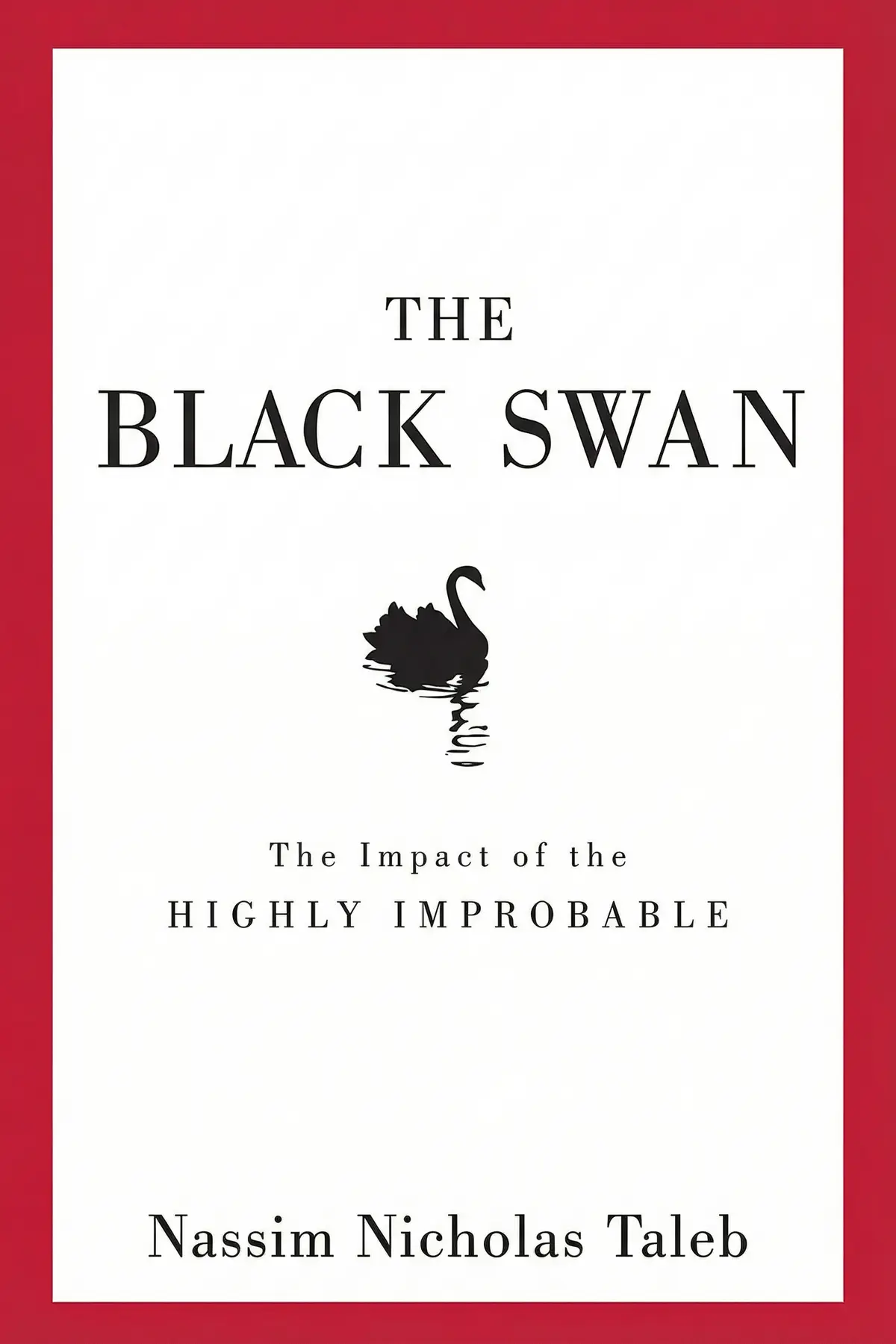
The Black Swan explores how rare, unpredictable events fundamentally shape our world and why our tendency to simplify reality makes us vulnerable to the massive impact of the highly improbable.
1 min 48 sec
Every once in a while, something happens that no one saw coming, yet it changes everything. We look back at these moments—a sudden market crash, a revolutionary invention, or a global conflict—and we find ways to tell ourselves that it was obvious all along. We create stories to make the world feel safe and predictable. But what if our very attempt to make sense of the world is exactly what leaves us exposed to its greatest dangers?
This is the core premise of The Black Swan. It is a study of the ‘highly improbable’ and the massive impact these rare events have on our lives, our economies, and our history. Nassim Nicholas Taleb challenges the way we think about risk and knowledge, suggesting that we are far less prepared for the future than we believe. We spend our lives focusing on the ordinary and the repeatable, but it is the outliers—the events that lie outside the realm of regular expectations—that truly move the needle of human progress and disaster.
In the following minutes, we will explore the logical traps that cause us to miss the big picture. We will look at why our brains are wired to simplify complex information and why that simplification can be a fatal flaw. We’ll also examine the difference between things that are easy to measure and things that are virtually limitless, and how confusing the two can lead to ruin. Most importantly, we will learn how to shift our focus from what we think we know to what we don’t know. By the end of this journey, you will have a new framework for navigating a world where the most important events are the ones you never see coming. Let’s begin by looking at why we are so often blindsided by the impossible.
2 min 19 sec
Discover why the events we consider most unlikely are often the ones that define our reality and how our narrow perspectives create blind spots.
2 min 23 sec
Learn how the weight of a surprise is determined by what you know versus what others know, and how this gap can lead to disaster.
2 min 21 sec
Explore why the past is a treacherous guide for the future and why our brains are lured into a false sense of security by steady patterns.
2 min 12 sec
Uncover how our need for stories distorts our understanding of cause and effect, making complex realities seem overly simple.
2 min 10 sec
Distinguish between the world of limits and the world of extremes, and why applying the rules of one to the other is a recipe for error.
1 min 59 sec
See why treating the unpredictable world like a game with set rules is a dangerous mistake and where the real threats usually hide.
2 min 08 sec
Understand why focusing on what you don’t know is more valuable than clinging to what you do, and how this shift can save you from disaster.
2 min 03 sec
Finalize your understanding by learning how to use your awareness of human limitations to make better, more resilient choices.
1 min 48 sec
In the end, the message of The Black Swan is one of profound humility. We are a species that loves order, and we have spent thousands of years trying to tame the randomness of our environment. But no matter how many models we build or how much data we collect, the outliers will always be there, waiting to disrupt our plans. The throughline of this exploration is that our greatest vulnerability isn’t our lack of knowledge, but our illusion of knowledge. We are most at risk when we are most certain.
To move forward effectively, we must adopt two key habits. First, be deeply suspicious of the word ‘because.’ When someone explains why an event happened, remember that they are likely creating a story in hindsight that ignores the millions of other factors at play. Don’t be married to a single explanation for the present or a single prediction for the future. Instead, keep a wide range of possibilities in your mind at all times. This prevents your worldview from becoming fragile.
Second, make an inventory of your own ignorance. In every major decision, ask yourself what the ‘unknown’ factors are. What would happen if the rules of the game suddenly changed? By focusing on the risks you can’t see, you build a life that is robust. You stop being the turkey and start being the person who understands that the farmer’s kindness isn’t a law of nature. You can’t predict the next Black Swan, but you can ensure that when it arrives, you are the one who is prepared to adapt, survive, and perhaps even thrive in the new reality it creates.
The Black Swan is a deep dive into the philosophy of uncertainty and the limits of human knowledge. It centers on the concept of 'Black Swans'—events that are outliers, carry an extreme impact, and are only explained away after the fact to make them seem predictable. The book argues that our modern systems are built on flawed models that ignore these outliers, leading to catastrophic failures in finance, history, and personal life. Readers are invited to challenge their reliance on historical data and expert predictions. By understanding how the human brain filters information to create comfortable narratives, one can learn to identify where they are most vulnerable. The promise of the book is not to help you predict the next random event, but to help you build a more resilient life and mindset that can withstand and even benefit from the inevitable shocks of a random world.
Nassim Nicholas Taleb is recognized as one of the most prolific and influential contemporary thinkers and economists. He has authored several critically acclaimed works, including Fooled by Randomness, and has contributed numerous essays to various prestigious journals and magazines. Professionally, Taleb serves as a Distinguished Professor of Risk Engineering at the Polytechnic Institute of New York University, where he focuses on the complexities of risk and probability.
Nassim Nicholas Taleb
Nassim Nicholas Taleb
Nassim Nicholas Taleb
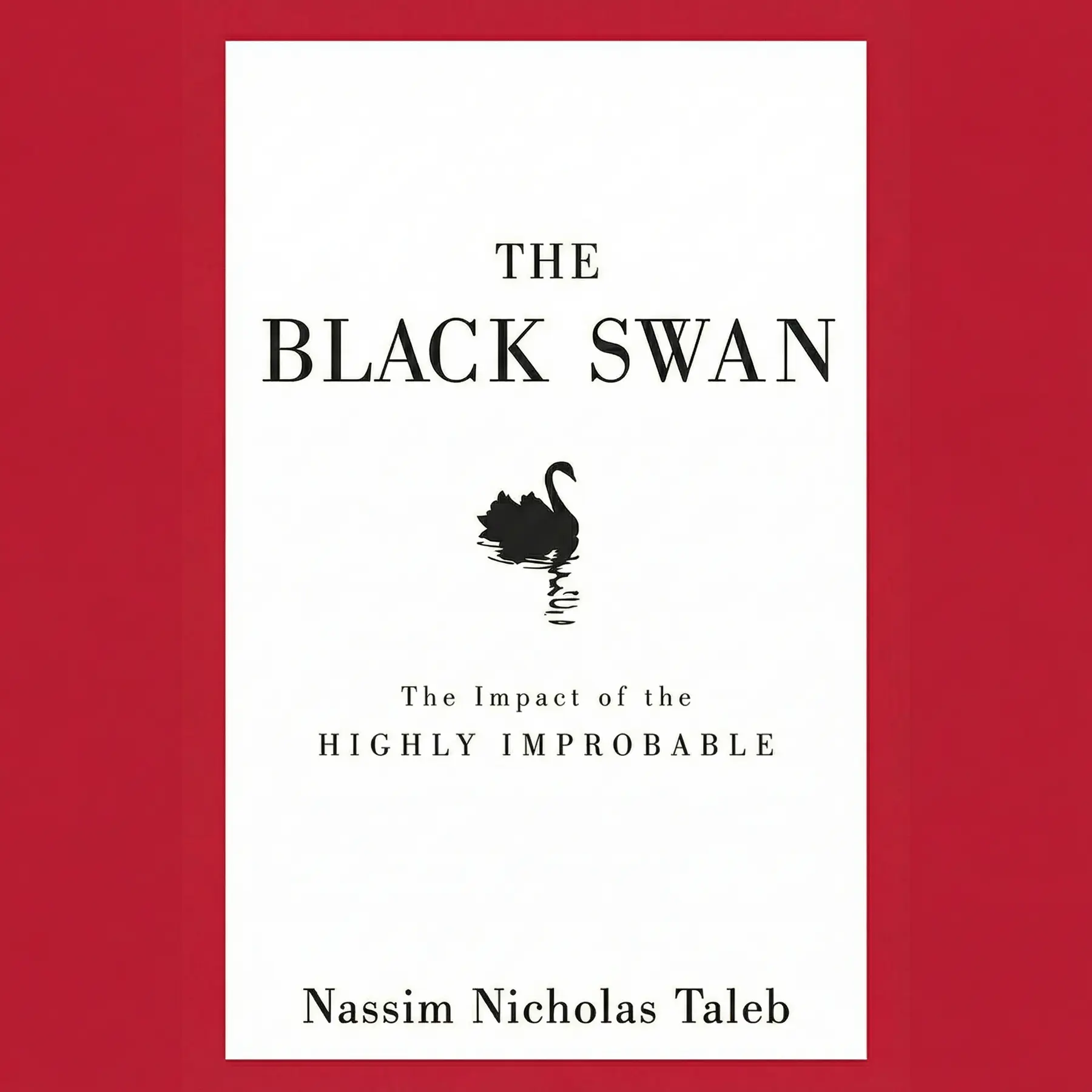
Listeners find the book fascinating and well-researched, with one listener calling it a delightful 200-page read. It provides fresh perspectives on life that can shift your worldview while presenting intriguing ideas about unusual events. Regarding the prose, feedback is mixed; some find it well written, though others describe it as poorly written pompous.
Rarely does a book fundamentally shift how I perceive the architecture of reality. Taleb’s distinction between Mediocristan and Extremistan provides a framework that explains why our modern world is dominated by the improbable and the unknown rather than the predictable average. While some call his tone arrogant, I found it refreshingly unapologetic and deeply well-researched. He challenges the 'nerd knowledge' of those who rely on Gaussian models for complex systems where they simply don't apply. The concept of the 'narrative fallacy' alone is worth the price of admission, forcing you to look at history not as a linear story, but as a series of random shocks. It's a dense, challenging read, but it will undoubtedly change your worldview if you allow it to.
Show moreThe chapter regarding the 'turkey analogy' should be mandatory reading for anyone working in finance or risk management. It perfectly encapsulates the danger of relying on historical data to predict future catastrophes. Taleb argues that we live in 'Extremistan,' where a single observation can disproportionately impact the total, yet we continue to use tools meant for 'Mediocristan.' His critique of the bell curve is particularly stinging and, in my experience, quite accurate. Truth is, many people will hate this book because it attacks the very foundations of their professions. But if you want a perspective that challenges the status quo and offers a new way to see the world, this is it.
Show moreAfter hearing about 'Black Swans' for years in the news, I finally went to the source. This book is a fascinating deep dive into why we are so bad at anticipating the 'unknown unknowns.' Taleb’s writing is punchy, aggressive, and deeply researched, drawing from history, philosophy, and mathematics. He doesn't just present a theory; he offers a completely different worldview that prioritizes robustness over simple efficiency. The way he describes the 'confirmation problem'—our tendency to look only for evidence that fits our existing beliefs—changed how I consume information daily. It’s not an easy read, and he definitely doesn't suffer fools gladly, but it is one of the most important books I've read in years.
Show moreEver wonder why the most massive global events always seem to catch the 'experts' by surprise? This book explains that our brains are basically hardwired to ignore the outlier. Taleb uses the 'turkey analogy'—where a turkey is fed every day until it thinks humans are its best friends, only for Thanksgiving to arrive—to illustrate how we mistake past safety for future security. It's a chilling but necessary perspective on risk management. Frankly, I think some of the math-heavy sections could have been streamlined, but the philosophical implications are huge. It makes you realize just how much of our success is actually just luck disguised as skill. A bit abrasive, but ultimately very rewarding.
Show morePicked this up after a colleague wouldn't stop raving about 'Extremistan' and the limitations of the bell curve. I didn't expect to be so captivated by a book on statistics and philosophy, but here we are. Taleb has a way of making complex ideas about randomness feel immediate and vital. He successfully dismantles the idea that we can plan for the future using simple linear projections. While I found his constant jabs at economists a little much, his points about how we 'narrate' the past to make it seem predictable are spot on. It’s a delightful, if slightly long, read that will make you rethink every 'expert' forecast you see on the news.
Show moreTo be fair, Taleb’s prose can be a bit of an acquired taste, but the core thesis is undeniably brilliant. He argues that we are psychologically and socially ill-equipped to handle unexpected outlier events, which he labels 'Black Swans.' These events are unpredictable, carry a massive impact, and are always explained away after the fact as if they were obvious. I especially appreciated his discussion on 'silent evidence'—the failures and negative results that we never see because they don't survive to tell their stories. The book is a bit bloated and could have benefited from a more structured editor, but the insights into human nature and our flawed understanding of risk are top-tier.
Show moreWow, talk about a wake-up call regarding our reliance on flawed mathematical models. I’ve always felt that the 'experts' in the financial world were just guessing, and Taleb provides the rigorous philosophical backing for that gut feeling. He exposes the 'ludic fallacy'—the mistake of thinking that real-world randomness follows the same neat rules as games of chance like dice or cards. The world is much messier and more dangerous than a casino. Although the author’s tone is undeniably pompous, his logic regarding how we ignore outliers is hard to refute. This book provides a necessary corrective to the over-confidence of our modern, data-driven society. It’s a dense but rewarding intellectual journey.
Show moreLet’s get the obvious out of the way: Taleb is incredibly full of himself. He spends an enormous amount of time belittling anyone with a Ph.D. or a Nobel Prize, which gets repetitive after the first few chapters. However, if you can filter out the ego, there is a core of brilliance here. His breakdown of why we fail to predict massive, outlier events is genuinely fascinating. He explores how we 'anchor' our expectations to the past and ignore the 'silent evidence' of failures that never made it into the history books. It’s a classic case of a 100-page idea stretched into a 300-page book. I’d recommend it for the concepts, but be prepared to trudge through some serious pomposity.
Show moreThe central argument about silent evidence is fascinating, yet I found the constant attacks on Nobel laureates a bit tiresome. Taleb has some excellent points about how we misinterpret randomness, but he often falls into the same 'narrative fallacy' he warns others about. He uses personal anecdotes and stylized stories of fictional characters like 'Yvgenia' to illustrate his points, which sometimes felt more like filler than substance. Not gonna lie, I almost put it down halfway through because of the repetitive nature of the chapters. Still, the distinction between scalable and non-scalable professions is a useful mental model. It’s a mixed bag: high-quality ideas delivered with a very high-maintenance attitude.
Show moreThis was a frustrating slog that felt more like a 300-page diary of a man with a massive chip on his shoulder. NNT (as he calls himself) is clearly intelligent, but he spends so much time tilting at windmills that his actual points get lost in the noise. He rails against 'platonicity' and the narrative fallacy while simultaneously using cherry-picked anecdotes to prove his own narrative. For a book that claims to be scientific, it relies heavily on 'hand-waving' and casual dismissals of entire academic fields. It’s poorly written, repetitive, and frankly quite mean-spirited toward anyone who disagrees with his specific brand of skepticism. There are better books on probability that don't require dealing with this much condescension.
Show more
Richard Wiseman
Andrew Ross Sorkin
Ha-Joon Chang
Niall Kishtainy
AUDIO SUMMARY AVAILABLE
Get the key ideas from The Black Swan by Nassim Nicholas Taleb, plus 5,000+ more titles in English and Thai.