
Antifragile: Things That Gain from Disorder
Nassim Nicholas Taleb
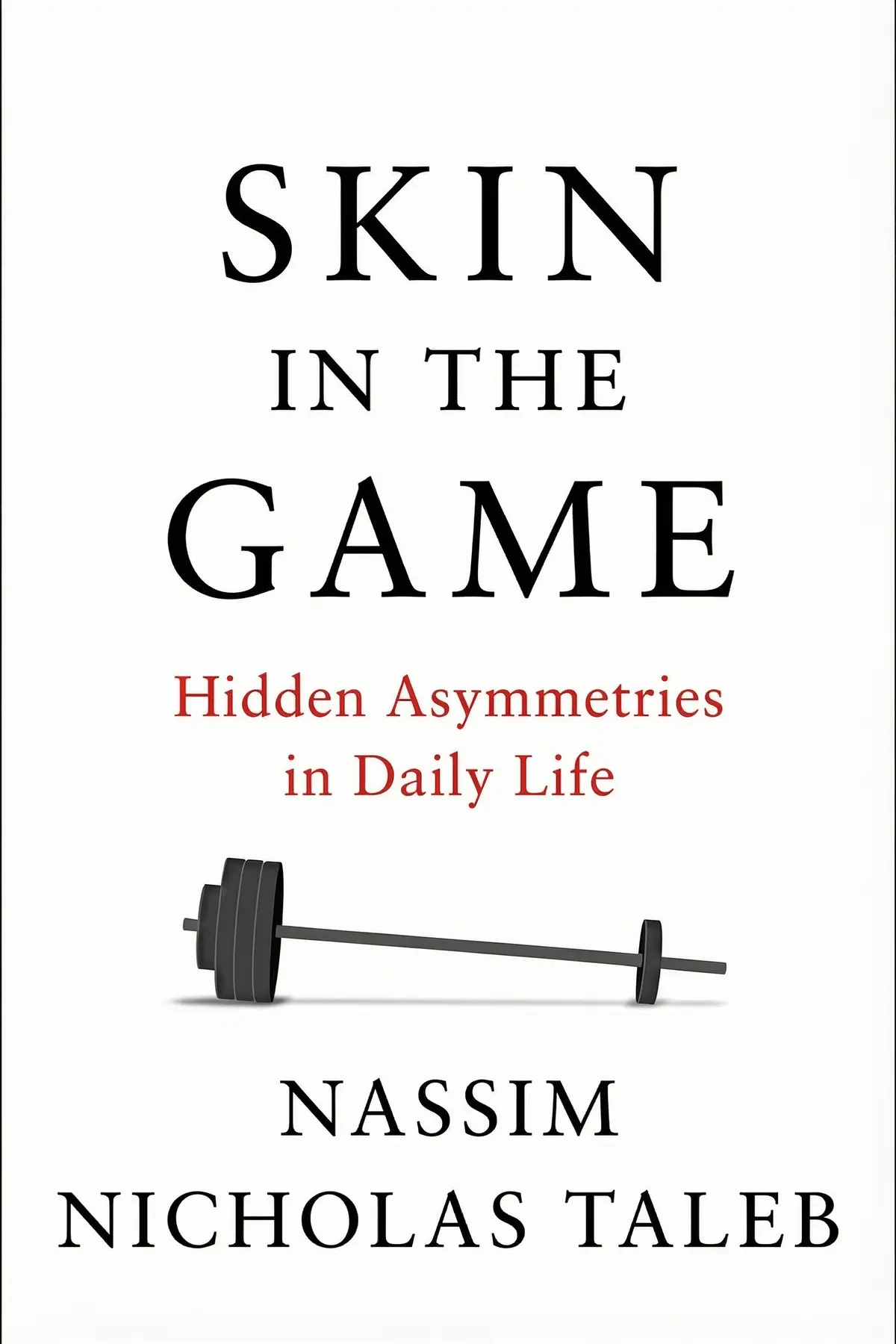
Explore the vital role of personal risk in creating a fair and functional society. This summary reveals why shared stakes are necessary for ethical behavior, effective leadership, and reliable decision-making.
1 min 43 sec
Every day, we navigate a world of invisible forces that dictate the outcomes of our interactions. When you walk into a store, visit a clinic, or listen to a political speech, there is a hidden architecture of risk and knowledge at play. Usually, we think about these moments in terms of what we stand to gain. But there is a more important question we often forget to ask: What does the other person stand to lose? This is the core of having skin in the game. It is the idea that the person giving advice or making a decision should be physically or financially exposed to the consequences of their actions.
In this exploration of Nassim Nicholas Taleb’s work, we are going to look at the throughline of symmetry. Symmetry is the balance of a relationship. It is the measure of whether a situation is fair or whether one person is taking advantage of a hidden advantage. Most of the problems we see in modern society—from economic crashes to political frustration—stem from a lack of this symmetry. When people are insulated from the fallout of their own choices, they behave differently. They take risks they shouldn’t, and they pass the bill to someone else.
As we move through these ideas, we will uncover how small, stubborn groups can change the habits of the entire world, why the most professional-looking person in the room might be the least competent, and why the very concept of an ’employee’ is built on a specific kind of dependency. This isn’t just a book about finance or risk management; it is a guidebook for identifying the ethical and practical imbalances that shape our lives. By the end, you’ll have a new way to analyze the world—one that prioritizes reality over abstraction and accountability over image.
2 min 46 sec
Discover why withholding information in a transaction isn’t just a clever business tactic, but a fundamental breach of ethics that disrupts the balance of society.
2 min 39 sec
A surprising look at how a tiny percentage of the population can dictate the choices and habits of the entire majority through simple social persistence.
2 min 30 sec
Uncover the psychological trade-offs of the modern workplace and how companies ensure loyalty by limiting their workers’ personal freedom.
2 min 35 sec
Why society naturally respects entrepreneurs while resenting highly-paid bureaucrats, and what this reveals about our innate sense of fairness.
2 min 44 sec
Learn why the person who looks the least like a typical expert might actually be the most qualified person for the job.
2 min 41 sec
How having too much money can actually lead to a lower quality of life by removing the natural feedback loops that guide our true preferences.
1 min 37 sec
As we wrap up our journey through these ideas, the central message becomes clear: accountability is the only thing that keeps the world turning fairly. We have seen how the absence of skin in the game leads to ethical rot, where advisors hide risks from those they claim to help. We’ve discovered that true power doesn’t always rest with the many, but often with the few who are most willing to stand their ground. We have explored the domesticating nature of the modern workplace and the way we misjudge competence by focusing on appearances rather than results.
The throughline of all these concepts is the need for symmetry. Whether you are dealing with a doctor, a politician, or a financial advisor, you must ask yourself if their interests are truly aligned with yours. Are they going to suffer if they are wrong? If the answer is no, then their advice—no matter how well-packaged or professional it looks—is fundamentally suspect.
In your own life, you can apply this by looking for ‘feedback loops.’ If you want to get better at something, you need to be exposed to the consequences of your mistakes. Don’t hide from risk; embrace the kind of risk that forces you to stay sharp and honest. Avoid the trap of the ’empty suit’ by focusing on what you can actually do, rather than how you appear. And finally, remember that a life without stakes is a life without meaning. By putting your skin in the game, you aren’t just protecting yourself from being scammed; you are engaging with the world in the most authentic and responsible way possible. Step out of the abstractions and into the arena where your actions actually matter.
Skin in the Game explores the fundamental necessity of risk-sharing in human interactions. It argues that for any system to be stable and just, those making the decisions must also be the ones who suffer the consequences if those decisions fail. Without this shared risk, or 'skin in the game,' systems become prone to corruption, inefficiency, and intellectual dishonesty. The book deconstructs various aspects of daily life—from the way we buy products and view the wealthy to how corporate employees are managed and how minorities influence social norms. It challenges the reader to look past superficial labels and professional images to find the underlying asymmetries of risk that govern our world. The ultimate promise of the book is a clearer, more rigorous lens through which to view reality, allowing for better analysis of who to trust and how to navigate a complex, often imbalanced society.
Nassim Nicholas Taleb is a scholar, statistician and former investment banker. He is the bestselling author of the 2007 book Black Swan.
Nassim Nicholas Taleb
Nassim Nicholas Taleb
Nassim Nicholas Taleb
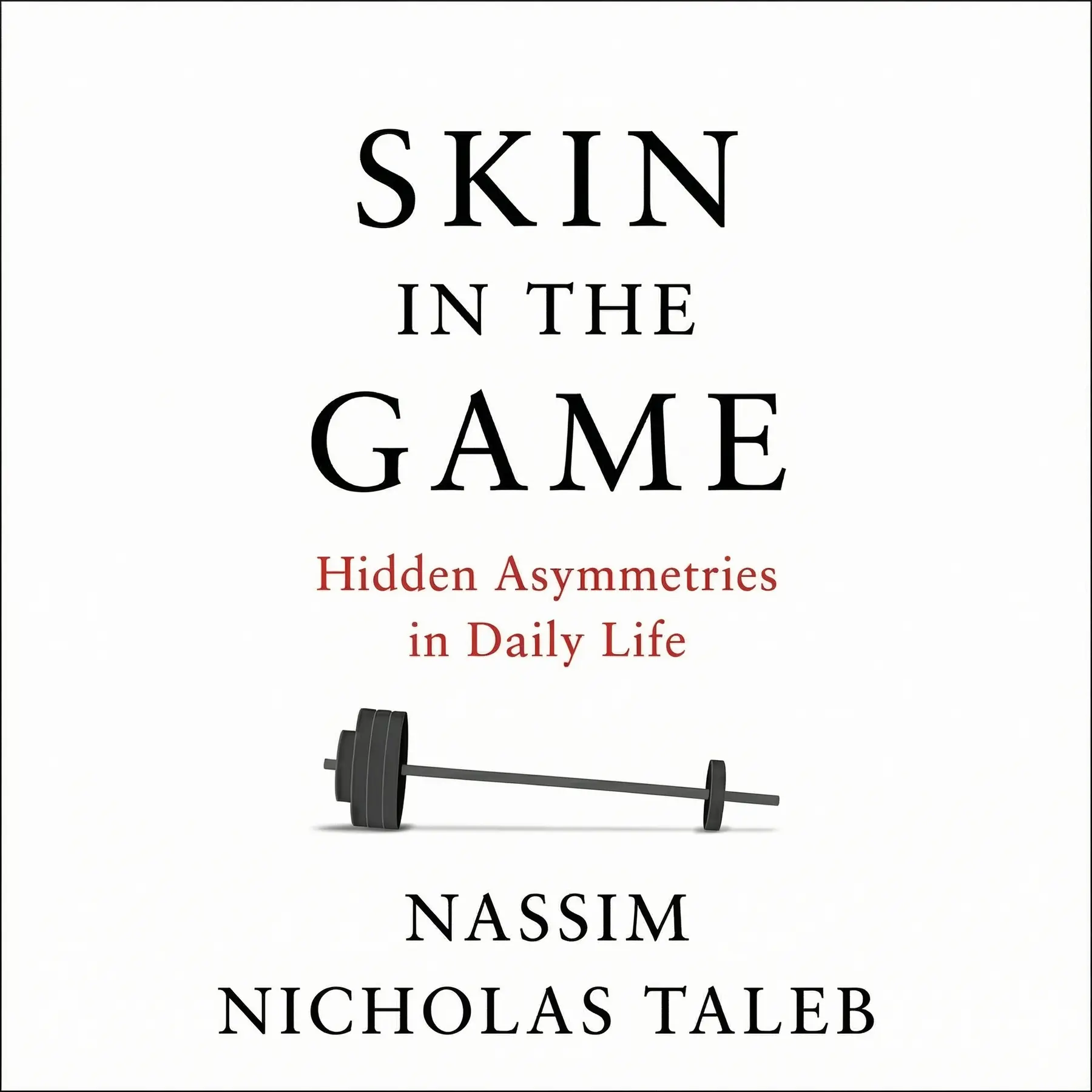
Listeners find the work to be a superb experience packed with deep wisdom and insights, particularly valuing its role as an impressive conclusion to the Incerto series. The narrative style draws varied reactions, with some considering it brilliantly crafted while others claim it is poorly written, and listeners have differing views on its level of complexity. Ultimately, listeners regard the book as a rewarding investment of both time and money.
This book is the perfect capstone to the Incerto series, providing a visceral punch to the gut regarding how we assign value to expertise. Taleb argues that for any system to function, those making the decisions must suffer the consequences of their mistakes. It is a refreshing, hard-edged take on ethics that moves beyond mere words into the realm of real-world survival. While his tone is undeniably aggressive and even mean-spirited at times, the core logic is difficult to refute. If you don't have skin in the game, you are essentially a parasite on the system. The insights on ergodicity and risk sharing make this a mandatory read for anyone tired of 'experts' who never lose a dime when they’re wrong.
Show moreFinally got around to finishing this, and it completely reframed how I view professional advice and social structures. The concept that a small, intransigent minority can dictate the preferences of a flexible majority is one of those 'aha' moments that explains so much of modern politics. Taleb is at his best when he’s explaining why decentralized systems are more robust than top-down masterplans. He values practice over theory, which might irritate the university crowd, but it rings true for anyone who has actually built something. It’s an unsentimental look at how the world really works. This isn't just a book about economics; it's a manual for living a life of integrity and courage.
Show moreWow, Taleb doesn't pull any punches here, and honestly, our society desperately needs this reminder that talk is cheap unless there's a penalty for being wrong. This book isn't just about finance; it's a deep dive into the ethics of risk-sharing. I loved the sections on how religion and ancient laws were designed to ensure that everyone had a stake in the community. His 'hard-edged' style is a refreshing change from the nebulous jargon of most business books. He makes a compelling case that experience is the only true teacher and that theory is often just a mask for incompetence. It’s a brilliant, provocative read that rewards those willing to engage with his confrontational style.
Show moreAs someone who works in finance, I found Taleb's dissection of the 'Intellectual Yet Idiot' (IYI) class to be both hilarious and deeply unsettling. The book is somewhat disorderly, jumping between ancient history and complex probability theory, but the underlying message about accountability is crystal clear. He effectively shows why we should distrust people who give advice for a living without facing any downside. Look, the man is an asshole—he takes shots at Steven Pinker for no apparent reason—but his brilliance is undeniable. The technical appendix adds a layer of depth for the math-inclined, while the main text remains accessible for the casual reader. It's a fantastic, thought-provoking conclusion to his life's work.
Show moreEver wonder why systems seem to rot despite having 'experts' at the helm? Taleb provides the answer through the lens of ergodicity and risk transfer. He argues that we have created a class of decision-makers who are insulated from the results of their actions, which prevents learning and invites catastrophe. The writing style is definitely abrasive, and he has a strange obsession with belittling people like Steven Pinker. However, if you can look past the arrogance, the insights into 'convex tinkering' and the precautionary principle are invaluable. It’s a hard-hitting book that forces you to question the credentials of every talking head on the news. It’s not an easy read, but it’s an essential one for understanding systemic fragility.
Show moreNot what I expected after 'The Black Swan', but this feels much more practical and grounded in the messy reality of human behavior. Taleb explores how symmetry in human affairs—sharing both upside and downside—is the only way to ensure fairness. The book is definitely quirky and jumps around quite a bit, making it feel more like a conversation with a brilliant, grumpy polymath than a textbook. I appreciated the glossary in the back, as he introduces a lot of new terminology that can be confusing at first. While I don't agree with every extreme position he takes, he definitely makes you think about your own exposure to risk. It’s a fantastic read for those who value wisdom over data.
Show moreSkin in the Game serves as a necessary corrective for a world dominated by bureaucrats who never have to live with the consequences of their mistakes. Taleb’s writing is punchy, unsentimental, and frequently hilarious in its bluntness. He masterfully connects probability theory to everyday ethics, showing why decentralized systems are far superior to centralized ones. I found his arguments about the precautionary principle to be particularly relevant in today’s high-stakes geopolitical environment. Some of the diversions into his personal feuds are unnecessary and distract from the main thesis, but the overall message is too important to ignore. This is a must-read for anyone who wants to understand the hidden asymmetries that drive our world. A solid finish to the Incerto.
Show moreTo be fair, while the core thesis about accountability is revolutionary, the presentation feels like a collection of angry blog posts stitched together without an editor. Taleb is clearly a genius, but his inability to present ideas without constant personal attacks on academics is exhausting. He reviles 'thinkers' while being an intellectual himself, creating a weird paradox that he never quite resolves. His definition of rationality as whatever promotes survival is interesting but feels a bit narrow in practice. There are flashes of brilliance here, especially regarding the Lindy effect and the minority rule. However, you have to dig through a lot of vitriol and repetition to find the real gems. It's a worthwhile investment of time, but expect to be annoyed.
Show moreThe chapter on the minority rule was absolutely brilliant, yet I struggled with the author’s tendency to dismiss anyone with a PhD as a fraud. There is a lot of wisdom here about the 'intelligence of time' and the Lindy effect, but it’s buried under layers of condescension. Personally, I think he makes a solid point about why we should be cautious of advice from people who don't face penalties for being wrong. But his insistence that no good ideas come from academia is just demonstrably false. The book is a bit of a mess structurally, often contradicting its own logic about what constitutes rational behavior. It’s a thought-provoking exercise, but it would have been much better with a more humble approach.
Show moreWhat started as a promising exploration of risk quickly devolved into a mean-spirited rant against every academic Taleb happens to dislike. The book lacks a coherent structure, often feeling like a stream-of-consciousness airing of grievances rather than a serious philosophical work. He makes broad, sweeping generalizations about 'slaves' and 'IYIs' that lack any nuance or data to back them up. Frankly, his constant bragging about his mathematical prowess becomes tiresome when he refuses to show the actual proofs in the narrative. While the idea of skin in the game is intuitive, he adds very little to it beyond repetitive insults. It’s a disappointing end to the Incerto series that prioritizes ego over clear communication.
Show more
Yanis Varoufakis

William B. Irvine
Andrew Ross Sorkin
Nigel Warburton
AUDIO SUMMARY AVAILABLE
Get the key ideas from Skin in the Game by Nassim Nicholas Taleb, plus 5,000+ more titles in English and Thai.







