
How to Be an Antiracist
Ibram X. Kendi
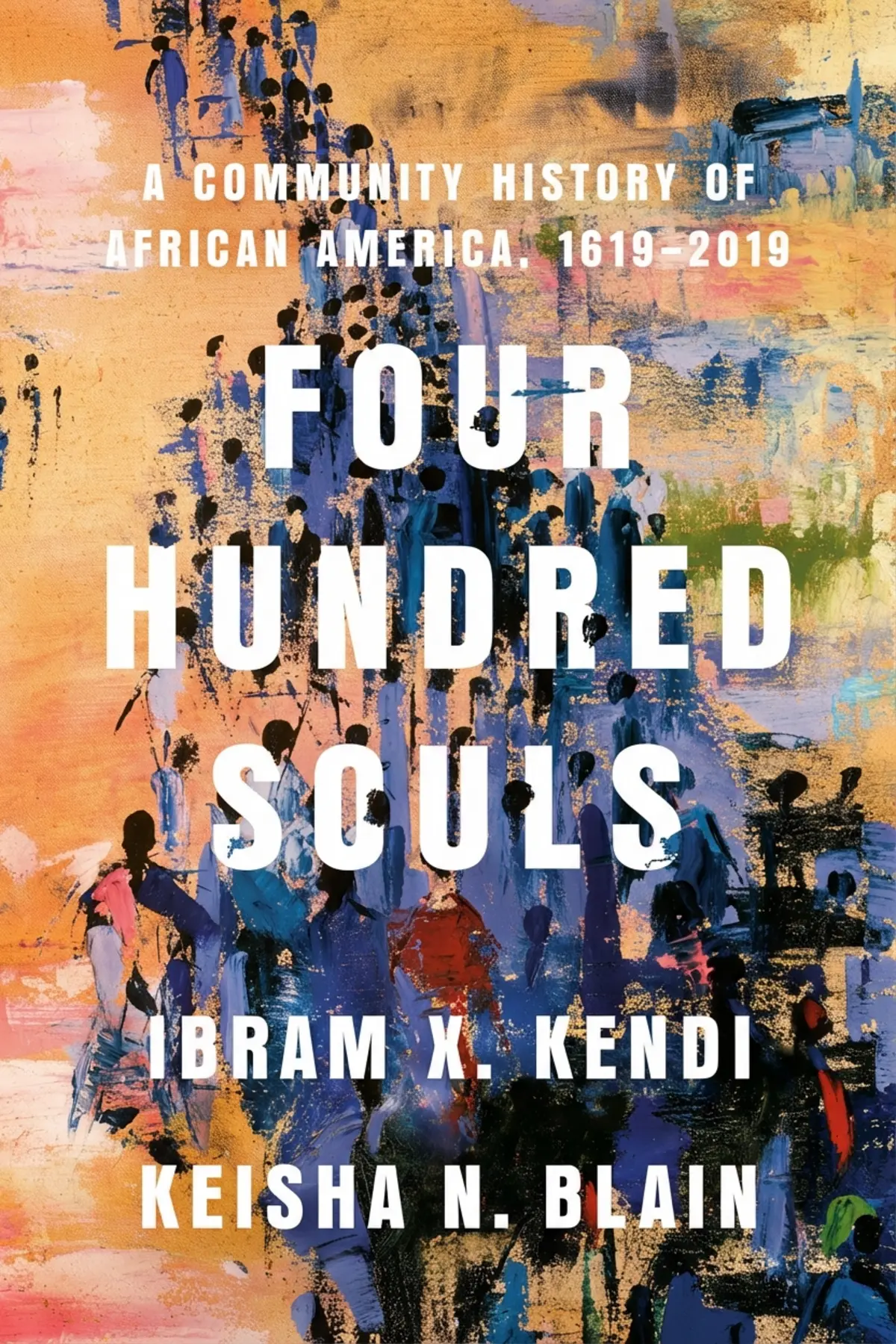
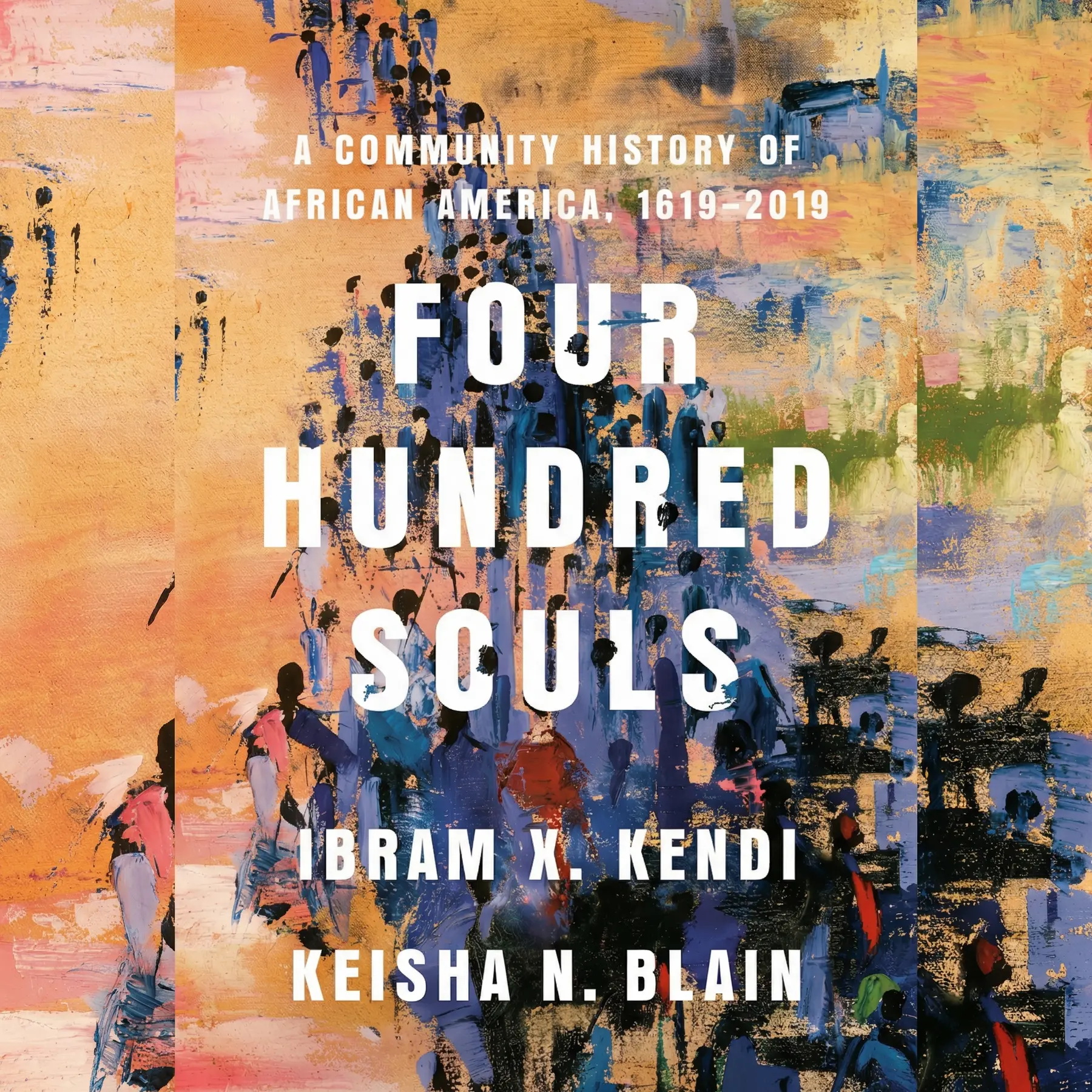
Four Hundred Souls offers a sweeping, communal history of African America from 1619 to 2019. Ninety diverse voices chronicle the persistence, struggle, and cultural brilliance of Black people across four centuries.
1 min 58 sec
The story of a nation is often told through a single, polished lens, yet the true history of America is a vast mosaic composed of millions of individual lives. When we look back at the origins of the United States, we are frequently pointed toward the year 1620 and the arrival of the Mayflower. However, there is another date, just one year earlier, that is arguably even more foundational to understanding the American identity. In 1619, a different ship arrived on the shores of Virginia, carrying a cargo that would change the trajectory of the continent forever. These were the first recorded Africans to be brought to the English colonies, and their arrival marked the beginning of a four-hundred-year journey defined by both profound agony and unyielding hope.
In this exploration of Four Hundred Souls, we aren’t just looking at a dry list of dates and battles. Instead, we are engaging with a community history—a collection of insights from ninety different thinkers who have come together to chronicle the Black experience in America. This journey spans four centuries, from the initial period of colonial enslavement to the contemporary movements for social justice. By weaving together these diverse perspectives, we begin to see a narrative that is much richer and more contested than the one often found in textbooks.
Our goal today is to walk through these four hundred years to understand how the concepts of race and liberty were built alongside one another. We will see how laws were crafted to divide people, how intellectual movements were used to justify cruelty, and how, in every single decade, there was a fierce spirit of resistance. This is a story of how a group of people, brought to a land in chains, became the very conscience of that nation. As we move through these key ideas, notice the throughline: the persistent struggle for humanity in the face of a system designed to deny it. From the tobacco fields of the seventeenth century to the digital activism of the twenty-first, the history of African America is the history of America itself, seen through the eyes of those who have fought most fiercely for its promised ideals.
2 min 13 sec
Two ships arrived on American shores only one year apart, yet they represent two vastly different and conflicting versions of the American dream.
2 min 21 sec
Slavery was not an inevitable outcome of history, but a system deliberately built through specific laws and economic greed.
2 min 20 sec
From the very beginning, the systems of oppression were met with bold acts of defiance and the preservation of culture.
2 min 24 sec
As European thinkers championed reason and equality, Black intellectuals used those same tools to dismantle the myths of racial inferiority.
2 min 21 sec
The birth of a new republic did not lead to the end of bondage; instead, the young United States codified slavery into its very foundation.
2 min 08 sec
In the nineteenth century, Black thinkers established their own platforms to advocate for abolition and define their own collective identity.
2 min 12 sec
The end of the Civil War brought a brief glimpse of true democracy, followed by a century of organized terror and systemic disenfranchisement.
2 min 15 sec
Millions of Black families fled the Jim Crow South, transforming the cultural and political landscape of the American North and West.
2 min 15 sec
In the decades following the traditional Civil Rights Movement, new groups emerged to tackle the complex intersections of race, gender, and class.
2 min 30 sec
In the twenty-first century, a new vanguard has risen to challenge the persistent threat of state violence and systemic neglect.
2 min 03 sec
As we look back over the four centuries of history we’ve explored, it becomes clear that the African American experience is not a separate chapter of the American story—it is the very paper upon which that story is written. We have seen how the arrival of the White Lion in 1619 established a foundation of inequality that the nation is still struggling to overcome. We’ve traced the deliberate construction of racial laws designed to divide the working class and protect the wealthy, and we’ve seen how the high-minded ideals of the Enlightenment were often used to mask the brutality of human bondage.
Yet, through every decade of this history, the throughline has been one of incredible resilience and intellectual brilliance. From the early poets and legal pioneers to the journalists of the Black press and the activists of the Combahee River Collective, Black Americans have consistently used the tools of logic, art, and organization to reclaim their humanity. They have been the ones to hold the United States accountable to its own promises of liberty and justice for all. The story of these four hundred souls is a reminder that progress is not inevitable; it is fought for, inch by inch, by people who refuse to be defined by the limitations placed upon them.
What can we take away from this communal history? Perhaps the most important lesson is that the work of justice is never finished. Each generation faces its own versions of the barriers we’ve discussed—whether it’s the legal segregation of the past or the systemic disenfranchisement of the present. But each generation also inherits a rich legacy of resistance. By understanding the complexity and the continuity of this history, we are better equipped to face the challenges of our own time. The history of Black America is a story of turning pain into power and exclusion into a new, more inclusive vision of what it means to be human. As we move forward, let us remember that we are all part of this ongoing narrative, and that the struggle for a more just and equal world is a torch that must be carried by everyone who believes in the promise of freedom.
Four Hundred Souls reimagines the historical narrative of the United States by centering the African American experience. Edited by Ibram X. Kendi and Keisha N. Blain, this ambitious work assembles ninety different writers, poets, and historians to cover four hundred years of history. Each contributor takes on a five-year period, resulting in a tapestry of perspectives that ranges from the first arrival of enslaved Africans in Virginia to the modern-day Black Lives Matter movement. The book’s promise is to provide a comprehensive and nuanced understanding of how race and racism have been woven into the American fabric. It moves beyond a simple timeline of suffering to highlight the agency, resistance, and intellectual contributions of Black individuals. By exploring pivotal moments—both famous and overlooked—this summary reveals how the Black experience is not a monolith but a rich, complex, and ongoing story of resilience. Listeners will gain a deeper appreciation for the foundational role Black people played in building America and the continued struggle for true equality.
Ibram X. Kendi was the Andrew W. Mellon Professor in the Humanities at Boston University. He served as the founding director of the BU Center for Antiracist Research and has authored several best-selling books, including How to Be an Antiracist and Stamped. Keisha N. Blain is a Professor of Africana Studies and History at Brown University. She is a past president of the African American Intellectual History Society and wrote Set the World on Fire: Black Nationalist Women and the Global Struggle for Freedom.
Ibram X. Kendi
Listeners find this work remarkably readable and expertly written, praising its beautiful prose and thorough content. It serves as an excellent resource for African American history, with one listener noting its wide range of topics. Additionally, they appreciate the poignant collection of narratives and the painful portrayal of the nation's past. The organization of the material is well-received, specifically by one listener who highlighted the layout in five-year increments.
Reading this was like sitting in a grand auditorium and hearing a relay race of the most brilliant minds alive. This isn't just a history book; it's a choir of ninety voices singing a story that has been suppressed for too long. Each five-year segment feels like a focused lens, zooming in on moments like the arrival of the White Lion or the formation of the first Black Baptist church. Some of the prose is absolutely gorgeous, moving from scholarly analysis to something that feels more like a prayer. I found the short chapters helpful for digesting such heavy, heart-wrenching material. It’s a comprehensive look at the Black experience that manages to be both informative and deeply emotional. I came away feeling like I finally understood the continuity of this 400-year journey.
Show moreThe sheer ambition of this project is staggering. To condense four centuries into one volume using ninety different writers sounds like a recipe for chaos, but Kendi and Blain have edited it with such precision. Every five-year increment is a revelation. I particularly loved the section on Denmark Vesey and the exploration of the "Great Migration." The prose is consistently high quality, which is impressive given the number of contributors involved. Truth is, I hadn't realized how many gaps there were in my knowledge regarding the 1600s and 1700s. It’s a heart-wrenching portrayal of US history that doesn't shy away from the trauma but also celebrates the incredible resilience of the community. This book is a landmark achievement.
Show moreEvery student in America needs a copy of this on their shelf. It is a highly readable yet dense collection that serves as a vital corrective to the traditional historical narrative. I was moved to tears multiple times by the stories of survival and creativity in the face of systemic oppression. From the War on Drugs to the Black Power movement, the book covers an incredible breadth of topics without feeling superficial. The five-year layout is a genius way to track the passage of time and show how laws and social movements evolved. Personally, the chapter on Elizabeth Keye was a standout for me. It’s rare to find a history book that feels this alive and urgent. A stunning, necessary piece of work.
Show moreWow, just wow. This is a breathtakingly beautiful and brutal examination of 400 years of African American history. Kendi and Blain have curated something that feels less like a book and more like a living monument. The prose across the various essays is gorgeous, and even though the authors change, the heart of the message remains steady. It’s a comprehensive look at the soul of a nation, capturing everything from the arrival of the White Lion to the modern era of Black Lives Matter. I loved the way it highlighted minor characters who have been lost to the archives. Looking back, I realize how much I didn't know. Highly recommended for anyone who wants a more complete picture of the American story.
Show moreAs someone who loves history, I found this to be one of the most refreshing books I’ve picked up in years. The decision to use a "chorus of voices" was a masterstroke. It prevents the history from feeling like a dry monologue. Instead, you get this vibrant, multi-dimensional view of four centuries. Frankly, the research involved must have been astronomical. I was particularly fascinated by the discussion of the Royal African Company and the role of religion in early slave laws. The writing is sharp, and the 5-year increments make it very easy to read in short bursts. It’s a moving collection of stories that managed to be both educational and deeply personal. It’s easily one of the best non-fiction releases of the decade.
Show moreThere is a profound sense of community within these pages that you just don’t get with single-author history books. This collection of essays and poetry feels like a family tree being unrolled. The way it tracks 400 years in such organized five-year chunks makes the immense scale of the history much more manageable. I was struck by how heart-wrenching some of the earlier passages were, yet there’s a persistent thread of hope and creativity that runs through the whole thing. From the founding of the Silver Bluff Baptist Church to the activism of today, the resilience is palpable. It’s a gorgeous, comprehensive, and essential addition to any library. Not gonna lie, it changed the way I look at US history forever.
Show moreI’ll be the first to admit that I struggled with the structure at first. Because the authors change every few pages, the tone shifts dramatically from academic to poetic to memoir-style. One chapter might be a gut-wrenching account of slavery, while the next is a more detached look at policy or migration. This lack of a single narrative voice makes it a bit disjointed, but honestly, that might be the point. It reflects a communal history rather than a singular one. I learned so much about figures I’d never heard of, like Elizabeth Freeman, and it forced me to unlearn a lot of the "whitewashed" history I was taught in school. It’s an essential source of African American history that covers a massive range of topics. I’d suggest reading the physical copy over the audio, though, just so you can sit with the words longer.
Show moreAfter listening to the audiobook, I have mixed feelings about the format, but the content itself is undeniable. Hearing so many different narrators was a unique experience, though it did get a bit jarring when I was trying to settle into a rhythm. That said, the information is top-tier. I never knew about MumBet or the specific legal battles for freedom in the 17th century. The book does a great job of balancing the well-known events with these smaller, personal stories that changed the course of history. Some of the creative writing takes were a bit outside my comfort zone for a history book, but they kept the "textbook" feel at bay. It’s a massive undertaking that mostly succeeds in bringing 400 years of life to the page.
Show morePicking this up, I wasn't sure if a book with 90 authors could actually work. It’s definitely a bit of a whirlwind. You’re jumping from the 1600s to the 1900s faster than you’d expect, and the tone varies quite a bit. However, the cumulative effect is incredibly powerful. It’s like a mosaic; you have to step back to see the whole picture. Some chapters on topics like the Great Migration or Hurricane Katrina really stood out, while others felt like they were just scratching the surface. It serves as a great starting point for deeper research. I do wish there was a bit more continuity between the essays, but the sheer volume of information provided is worth the occasional choppiness.
Show moreWhile the concept is brilliant, I found the execution to be a bit hit-or-miss for my personal taste. With eighty-plus voices, it’s inevitable that you’ll enjoy some writing styles more than others. Some chapters felt too brief to really dive into the complex topics they were tackling, leaving me wanting more depth. The transitions every five years can feel quite abrupt, especially in the audiobook version where the narrator changes so frequently. It’s definitely a comprehensive source, but the disconnectedness made it hard for me to stay immersed in the "story" of the history. To be fair, I appreciate the diversity of perspectives, but I think a smaller group of contributors might have allowed for a more cohesive flow. It’s an important book, just not a particularly smooth read.
Show more
William J. Bernstein

Ben Macintyre


Charles C. Mann
James Shapiro
AUDIO SUMMARY AVAILABLE
Get the key ideas from Four Hundred Souls by Ibram X. Kendi, plus 5,000+ more titles in English and Thai.







