
A Spy Among Friends: Philby and the Great Betrayal
Ben Macintyre
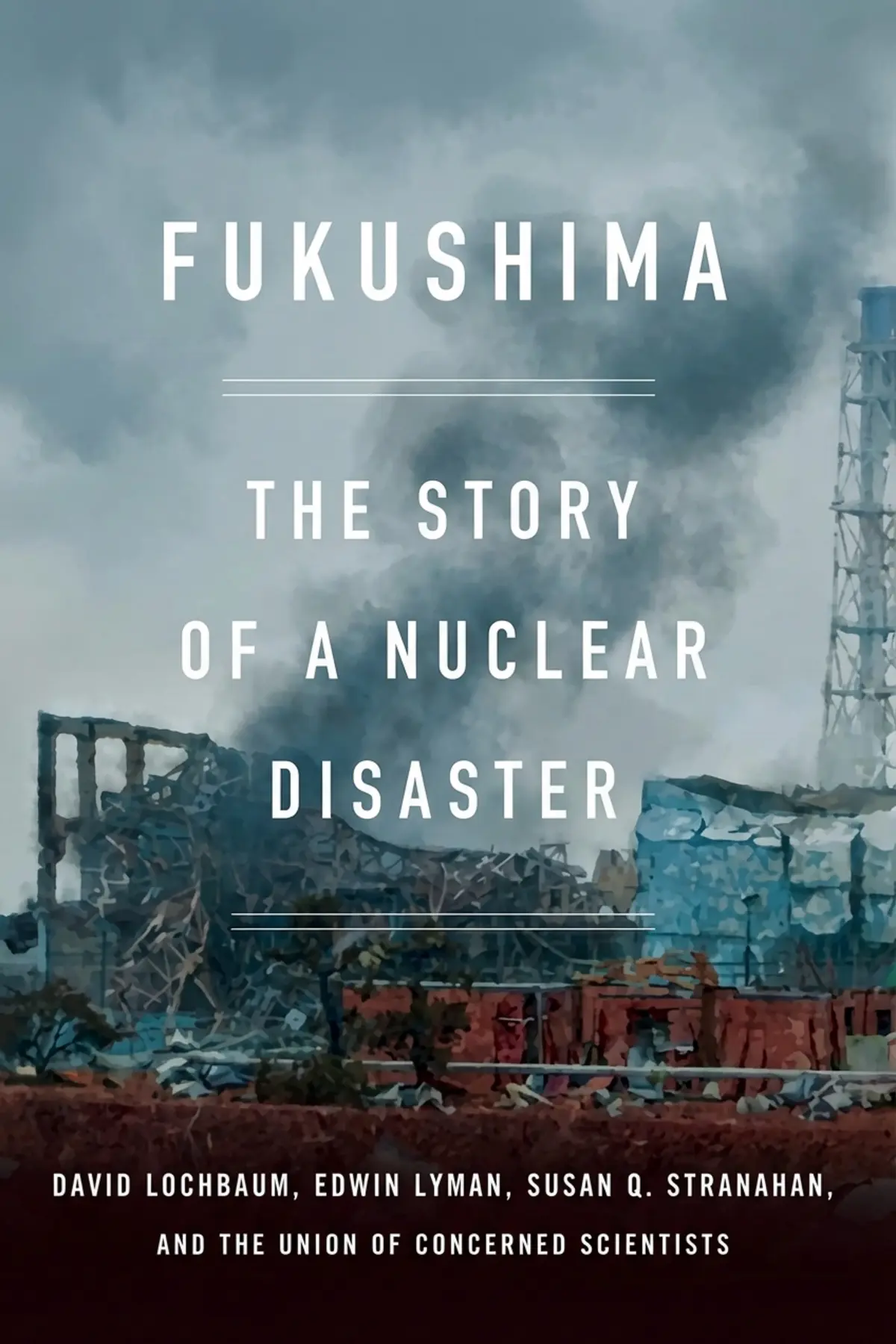
Fukushima offers a harrowing, investigative look into the 2011 nuclear disaster in Japan, detailing the systemic regulatory failures and corporate negligence that transformed a natural catastrophe into a preventable human tragedy.
1 min 46 sec
On March 11, 2011, the world watched in stunned silence as nature unleashed its full fury upon the islands of Japan. It began with an earthquake of such staggering magnitude that it literally shifted the Earth’s axis. But the seismic waves were only the beginning. What followed was a massive tsunami that surged across the Pacific, obliterating coastal defenses and crashing into the Fukushima Daiichi nuclear power plant.
In the days and weeks that followed, the names of the plant’s reactors became synonymous with a modern nightmare: a triple meltdown. While the initial trigger was undeniably a natural disaster, the true catastrophe of Fukushima was a human one. It was a failure of engineering, a failure of regulation, and, perhaps most tragically, a failure of imagination.
This summary delves deep into the investigative report compiled by David Lochbaum, Edwin Lyman, Susan Q. Stranahan, and the Union of Concerned Scientists. We are going to walk through the timeline of those chaotic days, exploring why the backup systems that were supposed to prevent such a disaster failed so completely. We will also look at the cultural and political environment in Japan that allowed safety concerns to be ignored for decades.
Beyond just a historical account, this narrative serves as a cautionary throughline. It asks us to consider whether the lessons of Fukushima have truly been learned, or if the global nuclear industry is simply waiting for the next unavoidable coincidence to strike. By understanding the specific mechanics of the cooling failures and the systemic corruption that kept the public in the dark, we can begin to grasp the real risks inherent in our modern energy infrastructure.
2 min 14 sec
Discover how a massive tectonic shift beneath the ocean floor defied sophisticated warning systems and literally tilted the planet’s axis.
2 min 09 sec
Uncover the series of technical breakdowns that occurred when the tsunami breached the plant’s defenses, leaving operators blind and helpless.
2 min 02 sec
See how a culture of corporate and governmental secrecy kept the public in the dark while a invisible threat spread across the landscape.
2 min 06 sec
Explore the ‘revolving door’ between regulators and the energy industry that led to ignored warnings and silenced whistleblowers.
2 min 13 sec
Witness the massive financial toll and the unprecedented social unrest that followed the contamination of Japan’s food and water.
2 min 11 sec
Learn why the ‘it can’t happen here’ mentality is a dangerous fallacy, especially considering the aging infrastructure in the United States.
1 min 35 sec
The story of Fukushima is a sobering reminder that we cannot negotiate with the laws of physics. Nature will always find the weak points in our designs, and when those designs involve the volatile power of the atom, the margin for error is zero. We’ve seen through this investigation that the 2011 disaster was not an inevitable outcome of a giant earthquake, but the result of a chain of human failures—from the engineers who placed generators in flood zones to the regulators who accepted industry payouts instead of enforcing safety codes.
As we look toward the future of energy, the throughline of this summary is clear: transparency and independence are the only real safeguards against catastrophe. We cannot allow a culture of silence or a ‘revolving door’ between industry and government to dictate the safety of our communities. The whistleblowers who were silenced and the thousands of citizens who lost their homes deserve more than just our sympathy; they deserve a global commitment to real accountability.
Fukushima teaches us that ‘reasonable assurance’ is not enough when the stakes are planetary. It challenges us to look at our own local infrastructures—our dams, our aging power plants, and our regulatory bodies—with a critical and demanding eye. The next disaster may not come from a 9.0 earthquake, but it will surely find the cracks we choose to ignore today. The time to demand higher standards and more robust protections is now, before the next ‘unlikely’ event becomes a tragic reality.
This summary explores the terrifying events surrounding the 2011 earthquake and tsunami that struck the Fukushima Daiichi nuclear power plant. It goes beyond the headlines to examine the technical failures of cooling systems and emergency protocols, the breakdown of communication between plant operators and the public, and the deep-seated corruption within Japan’s nuclear regulatory framework. Listeners will gain a clear understanding of why the disaster was not just an act of nature but a consequence of human hubris. The narrative follows the timeline from the initial seismic shock to the long-term economic and environmental fallout, ultimately questioning the safety of nuclear infrastructure globally. By analyzing the actions of the Union of Concerned Scientists, the book promises to reveal the uncomfortable truth about how close we remain to similar catastrophes today.
David Lochbaum is a leading nuclear expert in the United States and serves as the director of the Nuclear Safety Project for the Union of Concerned Scientists. Edwin Lyman is a senior scientist for the Global Security Program at the Union of Concerned Scientists, with a focus on nuclear safety, terrorism, and proliferation. Susan Q. Stranahan is a veteran journalist who has specialized in energy and environmental reporting for over thirty years, authoring notable works such as Susquehanna, River of Dreams and Beyond the Flames.
Listeners find this book to be thoroughly researched and educational, with one listener emphasizing the in-depth technical breakdowns regarding the Fukushima catastrophe. The prose earns praise for its accessibility and unsettling themes, while one person notes that it serves as a sobering prompt regarding hazards close to home. However, reactions are divided concerning the storytelling approach and nuclear security topics. Furthermore, one listener mentions a deficiency in the book's narrative flow.
Finally got around to reading this essential critique of the nuclear industry’s safety culture and it did not disappoint. The authors provide a meticulous, blow-by-blow account of the mechanical and systemic failures that led to the meltdown. What makes this book stand out is how it connects the dots between the tragedy in Japan and the regulatory environment in the West. They show how cost-benefit analyses often outweigh safety concerns, putting millions at risk. It’s an ugly story, but one that needs to be told. The description of the tsunami waves overtopping the wall is vivid and terrifying. This is more than just a history book; it’s a warning. For anyone who thinks our current reactors are 'failsafe,' this will be a very eye-opening experience.
Show moreWow, this is a chilling look at how we calculate the value of human life in the face of catastrophic risk. The book is impeccably researched and presents every concise detail of the events at Fukushima with frightening clarity. I was particularly struck by the sections on how the NRC ignores accidents that fall outside of their narrow 'design-basis' models. It’s like designing a car that’s only safe if you hit a very specific type of tree. The authors, coming from the Union of Concerned Scientists, clearly know their stuff. Not gonna lie, the last few chapters made me very leery about living downwind from a plant. It’s a comprehensive, readable, and vital piece of investigative journalism that exposes the hubris of the nuclear industry.
Show moreAfter hearing about this book on a podcast, I was eager to dive into the technicalities of the 2011 meltdown, and it exceeded my expectations. The writing style is engaging and surprisingly 'thriller-like' in the beginning, though it transitions into a very serious analytical piece later on. The authors do a wonderful job explaining complex concepts like the RASCAL model and reactor scrams without losing the reader. It is a reminder of the nearby dangers we often ignore for the sake of convenience. While some might find the criticism of the NRC too harsh, the timeline of events presented here makes a very compelling case for reform. It’s an essential read for anyone who wants to understand the true cost of nuclear energy beyond just the price of electricity.
Show morePicked this up looking for a disaster story, but I walked away with a profound fear of regulatory capture. This is a terrifyingly detailed look at how 'design-basis' assumptions can lead to catastrophe when nature doesn't follow the rules. The authors do a fantastic job explaining why the NRC's models are essentially a fraud because they don't account for multi-reactor failures or beyond-design-basis events. The technical explanations are accessible without being dumbed down. Personally, I didn't mind the shift to the American perspective because it makes the disaster feel relevant to my own backyard. It’s a sobering reminder that 'statistically rare' doesn't mean 'impossible.' It is a bit repetitive in parts, especially regarding the regulatory bickering, but the core message is too important to ignore. Essential reading for anyone interested in the energy cocktail.
Show moreEver wonder what’s actually happening behind the gates of those massive cooling towers you drive past on the highway? This book provides a chilling answer. While the narrative is occasionally fragmented—jumping between the fall of 2011 and decades-old U.S. policy—the sheer level of detail is impressive. It exposes the 'too-cozy' relationship between the nuclear industry and its regulators. I found the sections on the cost-benefit analysis of human life particularly disturbing. Frankly, the book is a bit of a wake-up call. It’s not just about what happened in Japan; it’s about the arrogance of thinking we have mastered such a volatile technology. The writing is clear and the research is impeccable. It may be dry during the committee meeting descriptions, but the implications are hair-raising.
Show moreNot what I expected, but perhaps what I needed to read. I went in wanting a survival story and ended up with a deep-dive into the failures of nuclear safety reasoning. The book is very comprehensive on the unfolding of the loss at the plant. It effectively uses the Japanese crisis as a mirror to show the vulnerabilities in American plants, especially those built by GE. Look, it’s a bit technical and the authors definitely have an agenda, but the facts they present about our lack of preparation for 'rare' events are hard to argue with. Some of the organization is confusing, and I wish there was more about the human experience on the ground, but as an expose of failed regulation, it’s top-notch.
Show moreAs someone who follows energy policy, I found the technical breakdown of the Fukushima Daiichi failure to be quite illuminating, even if the second half of the book is a bit heavy-handed. It suffers from a bit of a split personality. The first half is a well-researched, neutral account of the earthquake and the subsequent mechanical failures. However, once the focus shifts to the NRC and U.S. safety standards, the tone shifts dramatically toward bias. Truth is, the extrapolation from a Japanese tsunami to American inland reactors feels forced at times. While the 'spooky' reminders of how close many of us live to these plants are effective, the lack of continuity in the writing style makes it hard to stay engaged. It is informative but definitely has a clear political slant.
Show moreWhy is a book titled 'Fukushima' so strangely obsessed with the United States? The authors constantly interrupt the Japanese narrative to pivot back to American reactor operators and U.S. regulatory squabbles. It feels disjointed. One minute we are discussing a 'vanilla scram'—a term apparently common in the U.S. but hardly relevant to the immediate chaos in Japan—and the next, we are bogged down in measurement inconsistencies. Japan uses the metric system, yet this book flip-flops between feet and meters with zero consistency. It is incredibly distracting for a reader trying to visualize the scale of the tsunami. By the time the book started rehashing Three Mile Island for the hundredth time, I had completely lost interest in the actual Japanese events. The organization is a total mess.
Show moreThe first few chapters really pull you in with a blow-by-blow description of the tsunami hitting the seawall, but then the momentum just dies. What starts as a 'thriller-like' account quickly devolves into a dry, repetitive slog through committee meetings and regulatory jargon. I feel like I could pass an exam on the RASCAL model now because the authors mention its fifty-mile limitation every five minutes. The narrative structure is confusing, jumping from the 2011 disaster to 1970s risk studies and back again without much flow. To be fair, the research is clearly there, but the delivery is incredibly dull. It lacks the human element I was hoping for. It focuses on bureaucratic failures at the expense of the actual people who lived through the meltdown.
Show moreThis book feels more like a political manifesto than a historical account of a tragedy. I expected a deep dive into the technical timeline of the disaster, but instead, I got a relentless lecture on the evils of nuclear power. The authors spend an exhausting amount of time soapboxing about the risks without offering any viable energy alternatives. Are we supposed to just go back to burning coal, which statistically kills far more people through pollution and accidents? It is frustrating because the technical parts are actually quite decent, yet they are buried under layers of agenda-driven rhetoric. The title is essentially bait-and-switch. If you want a neutral history of what happened on the ground in Japan, look elsewhere. This is just the Union of Concerned Scientists grinding an axe against the NRC.
Show moreBen Macintyre

Charles C. Mann

James Shapiro
Andrew Ross Sorkin
Pankaj Mishra

Fay Bound Alberti

Ben Macintyre
AUDIO SUMMARY AVAILABLE
Get the key ideas from Fukushima by David Lochbaum, plus 5,000+ more titles in English and Thai.







