
22 min 23 sec
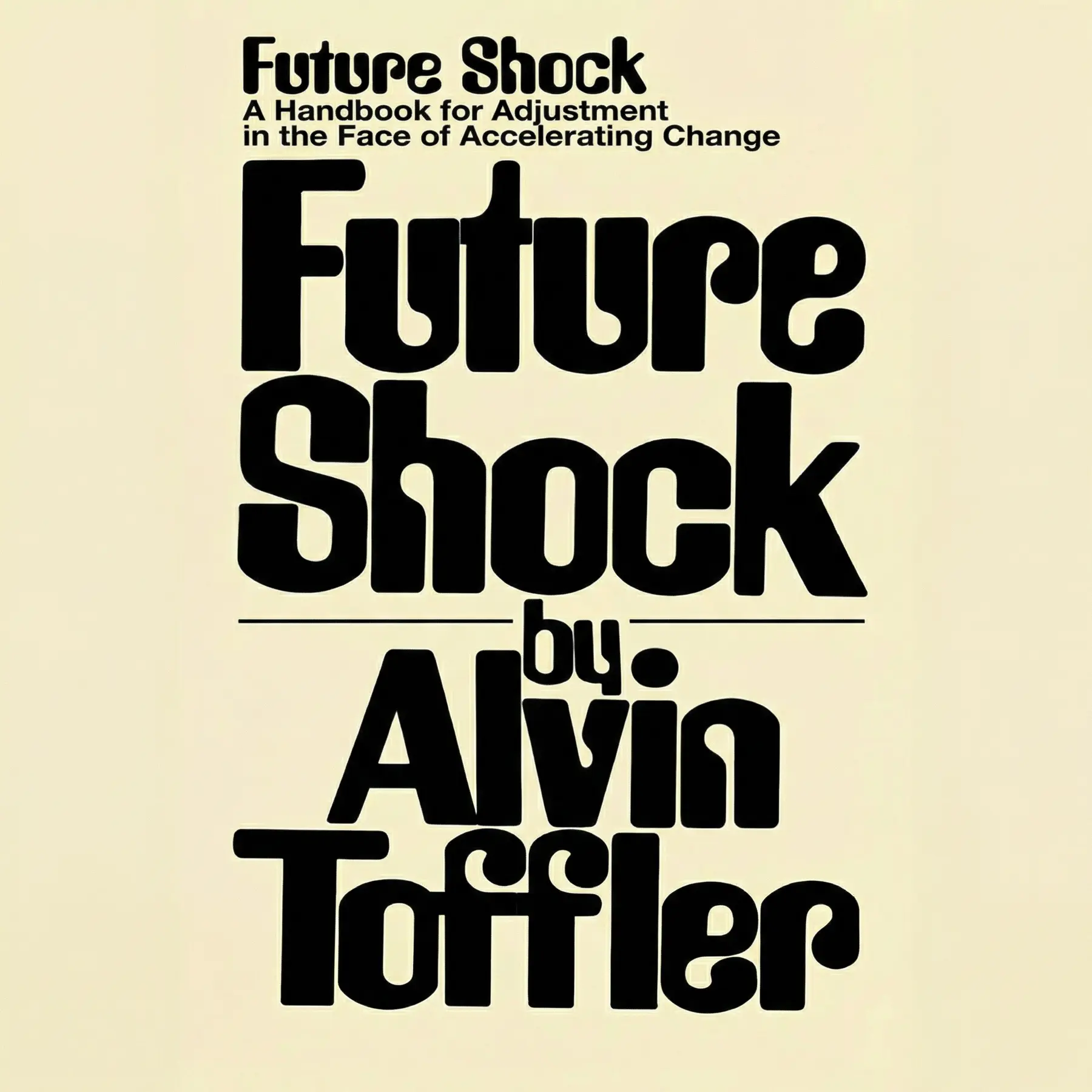
Future Shock
Future Shock examines the psychological and social toll of rapid technological acceleration. It reveals how the overwhelming pace of modern life creates a unique form of distress and provides strategies for adaptation.
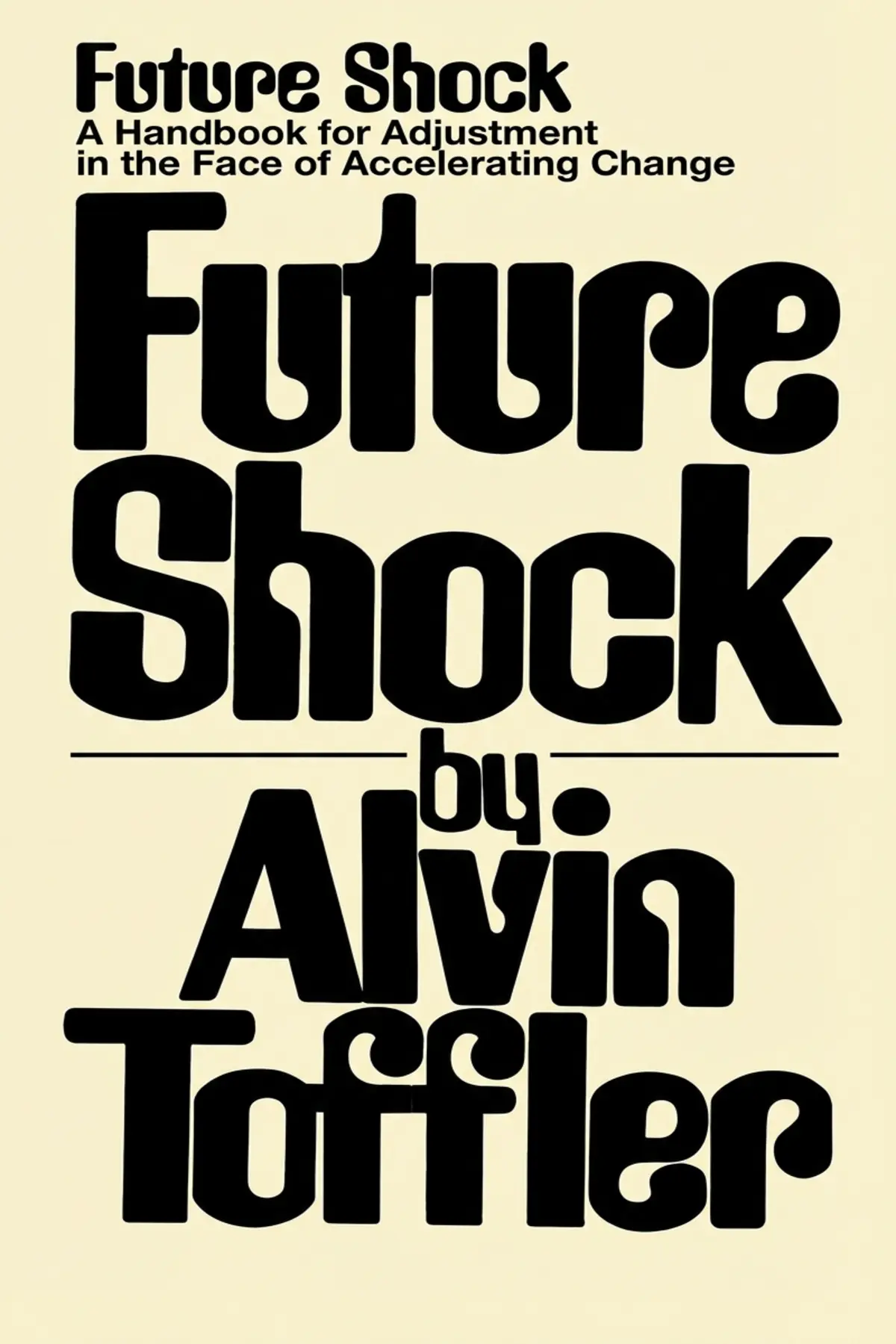
Table of Content
1. Introduction
1 min 51 sec
Imagine waking up in a world where every tool you use, every place you visit, and every social norm you follow has been replaced by something unfamiliar. This isn’t the plot of a science fiction movie; for many people living through the late twentieth and early twenty-first centuries, it is an everyday reality. In 1970, Alvin Toffler released a groundbreaking analysis that gave a name to this specific type of modern anxiety: Future Shock. He argued that we are living through a period of history where change is no longer a gradual process but a violent collision with our psychological boundaries.
Toffler’s core insight was that the human nervous system has a finite capacity for processing novelty. When the rate of change in our environment exceeds our internal speed of adaptation, we experience a form of psychological vertigo. This isn’t just about being annoyed by a new phone interface or a different way of working. It is a deep, systemic distress that affects our physical health, our decision-making abilities, and our very sense of identity.
In this exploration, we are going to look at the three great pillars of this modern condition: transience, novelty, and diversity. We will see how our world has shifted from one of permanence to one of temporary connections. We will examine how the sheer volume of choices we face today can lead to paralysis rather than freedom. Most importantly, we will look at the strategies Toffler proposed to help us anchor ourselves. As we walk through these ideas, the goal is to understand the ‘throughline’ of our current era—the idea that while change is inevitable, falling victim to shock is not. By understanding the mechanics of acceleration, we can begin to build the ‘stability zones’ necessary to navigate an uncertain future with clarity and purpose.
2. The Concept of Future Shock
1 min 51 sec
Discover why the dizzying speed of modern life feels like visiting a foreign country where the rules change every hour, creating a state of psychological vertigo.
3. The Law of Accelerating Change
2 min 05 sec
History is not a steady climb but an ever-steepening curve, where the developments of centuries are now compressed into mere decades.
4. The Rise of Transience
2 min 00 sec
Explore the shift from a world of durable goods and lifelong bonds to a society defined by temporary connections and the throwaway lifestyle.
5. The Nomadic Modern Life
1 min 59 sec
Geographic roots are pulling up as we become a society on the move, where ‘home’ is a fleeting concept and neighborhoods are merely stopovers.
6. The Arrival of Radical Novelty
1 min 51 sec
Innovation is doing more than just improving our lives; it’s creating ‘strange’ new realities that challenge our very definition of what it means to be human.
7. The Burden of Overchoice
1 min 46 sec
Standardization is dead, replaced by an explosion of options that can lead to anxiety and the feeling that we are constantly missing out.
8. Biological and Mental Limits
1 min 47 sec
Despite our incredible ability to adapt, our bodies and minds have breaking points that the modern world is beginning to push to the edge.
9. Maladaptive Coping Mechanisms
1 min 45 sec
When change becomes too much to handle, many of us retreat into denial or obsession, falling into predictable traps of human behavior.
10. The Power of Stability Zones
1 min 42 sec
The secret to surviving a world in flux isn’t changing everything at once, but intentionally maintaining ‘anchors’ that stay the same.
11. Developing Future-Sensing Strategies
1 min 50 sec
Adaptation isn’t just about reacting to the present; it’s about building networks and learning habits that allow you to anticipate what’s coming.
12. Conclusion
1 min 56 sec
As we reach the end of this journey through Alvin Toffler’s vision of the future, the central message remains as urgent today as it was in 1970: we are living through a unique moment in human history. The ‘Future Shock’ Toffler described is no longer a distant warning; it is the atmosphere we breathe. We have seen how the acceleration of change has fueled a culture of transience, where our homes, our tools, and even our social ties have become temporary. We have explored the way radical novelty and an explosion of choice have strained our biological and psychological capacities, leading to a state of collective exhaustion.
However, the throughline of this analysis isn’t one of despair, but of empowerment. By identifying the mechanics of acceleration, we gain the ability to navigate them. We understand now that the feeling of being overwhelmed isn’t a personal failure—it’s a natural biological response to an unnatural pace of life. This realization allows us to stop blaming ourselves and start building the structures we need to survive.
The actionable takeaway is clear: take control of your adaptive pace. Don’t feel pressured to keep up with every innovation or to embrace every new trend. Instead, focus on building your ‘stability zones.’ Identify the anchors in your life—the relationships, routines, and spaces that provide you with comfort—and protect them fiercely. At the same time, cultivate the mental flexibility to learn and unlearn as the world demands. By balancing these two forces—the need for permanence and the necessity of change—you can move through the modern world with a sense of agency. The future will continue to arrive faster than ever, but with these tools in hand, you can meet it on your own terms, transforming the shock of the new into the wisdom of the enduring.
About this book
What is this book about?
Have you ever felt that the world is moving so fast that you can barely keep your footing? That sensation is what Alvin Toffler famously termed future shock. This summary explores the profound collision between the accelerating pace of technological advancement and the biological limits of the human mind and body. It breaks down the shift from a permanent society to a transient one, where our relationships, locations, and even our belongings have become increasingly temporary. The promise of this work is to provide a framework for understanding the chaos of the modern era. You will learn about the concepts of transience, novelty, and overchoice, and how these forces combine to create a sense of disorientation. Beyond diagnosing the problem, the summary offers practical mental strategies—like creating stability zones and practicing selective ignorance—to help you not just survive but thrive in an age of relentless change. It is a guide for anyone feeling overwhelmed by the information age, seeking to regain control over their personal and professional life.
Book Information
About the Author
Alvin Toffler
Alvin Toffler was a renowned American futurist and social theorist who lived from 1928 to 2016. He is best known for his deep explorations of the digital and communications revolutions. Alongside his landmark works Future Shock, The Third Wave, and Powershift, Toffler helped transform how the general public understands the intersection of technology and social change.
Ratings & Reviews
Ratings at a glance
What people think
Listeners find the writing both accessible and mentally stimulating, with one review comparing the experience to reading an action thriller. The book also gains acclaim for its prophetic qualities, with one listener emphasizing its accurate capture of 40 years ago. Additionally, they value its status as a visionary literary achievement, with one listener characterizing it as a must-read for today's democratic citizen. The tempo of the work is praised for the way it tackles shifting technology, and listeners appreciate its integrity, with one review highlighting how it relates to contemporary life. However, perspectives on the book’s overall value for money remain divided.
Top reviews
Sau
Wow, I didn't expect a book from 1970 to feel like such a gut punch in the twenty-first century. Toffler managed to capture the frantic, breathless pulse of the modern era long before the internet even existed. While some chapters are definitely a bit long-winded, the core thesis about the crushing weight of 'overchoice' is incredibly relevant to our digital lives today. Truth is, his description of how we move from 'bureaucracy' to 'ad-hocracy' perfectly mirrors the gig economy and our current corporate chaos. It reads almost like an action thriller because the stakes—the literal survival of the human psyche—are so high. If you want to understand why everyone feels so burnt out and overwhelmed, this is a visionary work that you simply must finish. It's a foundational text for any democratic citizen trying to navigate the rapid rate of change without losing their mind.
Show moreHiroshi
Toffler’s analysis of the 'shattering stress and disorientation' caused by too much change in too short a time is absolute perfection. Even though he wrote this forty years ago, he describes the exact feeling of trying to keep up with social media and shifting moral standards. We are living through the very 'shock' he warned about, where our biology simply cannot keep pace with our technology. I loved the discussion on how we use lifestyles as a way to cope with the problem of having too many options. The book is a mind-stretcher that makes you rethink your attachment to your career and your community. Got to say, the section on 'experiential products' predicted things like VR and high-end gaming with shocking accuracy. This is a must-read for anyone who feels like the world is moving too fast to handle. It provides a survival strategy for a world that has gone completely off the rails.
Show morePierre
This reads less like a dry sociology textbook and more like a high-stakes warning for the human race. Toffler’s ability to articulate the breakdown of traditional structures is just as relevant now as it was when it was first published. I was particularly gripped by the idea that we are losing our 'anchors' as everything around us becomes temporary. The way he describes the search for truth in 'sensation and ecstasy' perfectly predicts our modern obsession with experiences over things. Frankly, the most important takeaway is his warning about 'cognitive dissonance' and how we reject information that challenges our preconceptions. We are seeing that play out every single day in our politics and our media. It is an essential read for anyone worried about the future of their family and their society. Even the parts he got wrong are fascinating because they show the paths we didn't take.
Show moreFah
After hearing about this book for years, I finally sat down with a copy and was blown away by its accuracy. Toffler captures the essence of our 'throwaway' culture and the psychological toll of living in a world of constant novelty. The chapter on education—where he argues we should be teaching kids how to deal with change rather than just memorizing facts—is pure gold. We are still making the mistake of using 'old mentalities' to solve new problems, just as he predicted. The book is crowded with concepts that will make your brain ache in the best possible way. It’s a mind-stretcher that makes you realize no one is really 'in charge' of the technology we are creating. If you can handle the slightly dated references to the 1980s as 'the future,' you will find a wealth of wisdom here. It's a classic for a reason, and it deserves all the praise it gets.
Show moreSureerat
Finally got around to this classic after years of hearing about the general concept, and I was pleasantly surprised by how much still holds up. The way Toffler breaks down change into transience, novelty, and diversity is actually a very helpful framework for looking at our current world. I was especially struck by his points on how temporary our personal relationships have become as we move for work and education. We are essentially becoming nomads again, just with better technology and more anxiety. To be fair, he definitely misses the mark on things like global warming and the rise of mega-capitalism, but his take on 'learning how to learn' is genius. Tomorrow’s illiterate isn’t the person who can’t read, but the one who can’t adapt. It’s a thought-provoking read that forces you to examine your own adaptability in a world that never stops shifting.
Show moreMay
As someone who identifies as a bit of an 'old fogey,' I am currently experiencing exactly what Toffler spoke about decades ago. The revolution in morals and the rapid-fire technological shifts are genuinely disorienting. He was right that the rate of change is exponential, even if we aren't all living as cyborgs yet. Look, the book asks for quite a bit of effort because the prose can be quite thick and academic in its delivery. But there is a massive reward to be had if you persevere through the more 'gruelling' chapters. I particularly enjoyed the sections on how we are replacing traditional bureaucracy with more flexible, temporary organizational structures. It’s a bit scary to see how much of our reality he nailed, from telecommuting to the rise of internet-style 'anti-social' cults. It isn't perfect, but it is certainly a cut above most social commentary you find today.
Show moreChamnong
It is pretty remarkable that this is still in print, though I found the experience of reading it a bit like looking through a time capsule. Some of these old views of our 'now' are eerily prescient, especially regarding the explosion of computer power and the rise of niche subcultures. However, other parts feel completely disconnected from the reality of 2024. He spends so much time on 'embryo emporiums' and bizarre biomedical fantasies while missing the existential threats that actually define our age. The writing is excellent in places, illustrating complex ideas with great examples, but the pacing is wildly uneven throughout. I felt like I was constantly sifting through 1970s social commentary to find the tiny nuggets of wisdom that still apply. It’s a decent read for history buffs, but perhaps a bit dated for someone wanting cutting-edge sociology. I ended up giving my copy away to make some much-needed shelf space.
Show moreViolet
Ever wonder why everything feels so disposable these days, from our plastic forks to our professional identities? Toffler explores this 'transience' with a level of detail that is both fascinating and a little bit exhausting. I found the book to be a mix of brilliant foresight and total nonsense. One minute he is predicting the internet, and the next he’s talking about how we will soon be growing 'super-mammaries' or living in paper clothes. The truth is, the hit rate here is about fifty-fifty, which is still impressive for a book written half a century ago. My main gripe is that the author seems to have a very high opinion of his own uniqueness. He repeats his main points far too often, making the book feel twice as long as it needs to be. It’s a visionary work, but you have to be willing to overlook a lot of 1970s weirdness to get to the good stuff.
Show moreElla
The author is clearly a brilliant guy, but he really needed an editor to cut through the massive chunks of fluff and repetitive segments. Frankly, the chapter on mobility was an absolute slog that could have been summarized in two paragraphs instead of twenty pages. It is unintentionally hilarious to see him predict that we would all be living in underwater communities or wearing paper clothes by now. While he gets the 'vibe' of the future right, the specific hit rate of his predictions is pretty random at best. I found the tone to be a bit too self-important, and the writing style is far too dense for the insights provided. It’s an interesting historical relic, but I’m not sure it offers much value for the money if you’re looking for actual modern solutions. You are better off reading a summary of the 'three pillars' than struggling through the whole volume.
Show moreWanida
Not what I expected at all, and honestly, it hasn't aged nearly as well as the reviews suggest. While the concept of 'future shock' is a great catchphrase, the actual book is a bloated mess of 1970s anxieties and wild guesses. He talks about people having 'adaptational breakdowns' because of too much change, but humans have actually proven to be incredibly resilient. We aren't all suffering from some massive medical epidemic caused by technology; we just have better phones now. The sections on biomedical advances like 'embryo emporiums' felt more like bad sci-fi than serious social science. Personally, I found the writing style to be incredibly dry and the 'mobility' chapter was almost impossible to get through. There are much better, more modern books that cover these same topics without all the outdated baggage. It might have been a best-seller back then, but it feels like a chore to read today.
Show moreReaders also enjoyed
AUDIO SUMMARY AVAILABLE
Listen to Future Shock in 15 minutes
Get the key ideas from Future Shock by Alvin Toffler, plus 5,000+ more titles in English and Thai.
- 5,000+ titles
- Listen as much as you want
- 7-day free trial
- Cancel anytime







