
17 min 01 sec
Genesis: The Story of How Everything Began
A profound journey through the scientific origins of the universe, from the quantum vacuum to the birth of life on Earth, as told by a world-leading particle physicist.
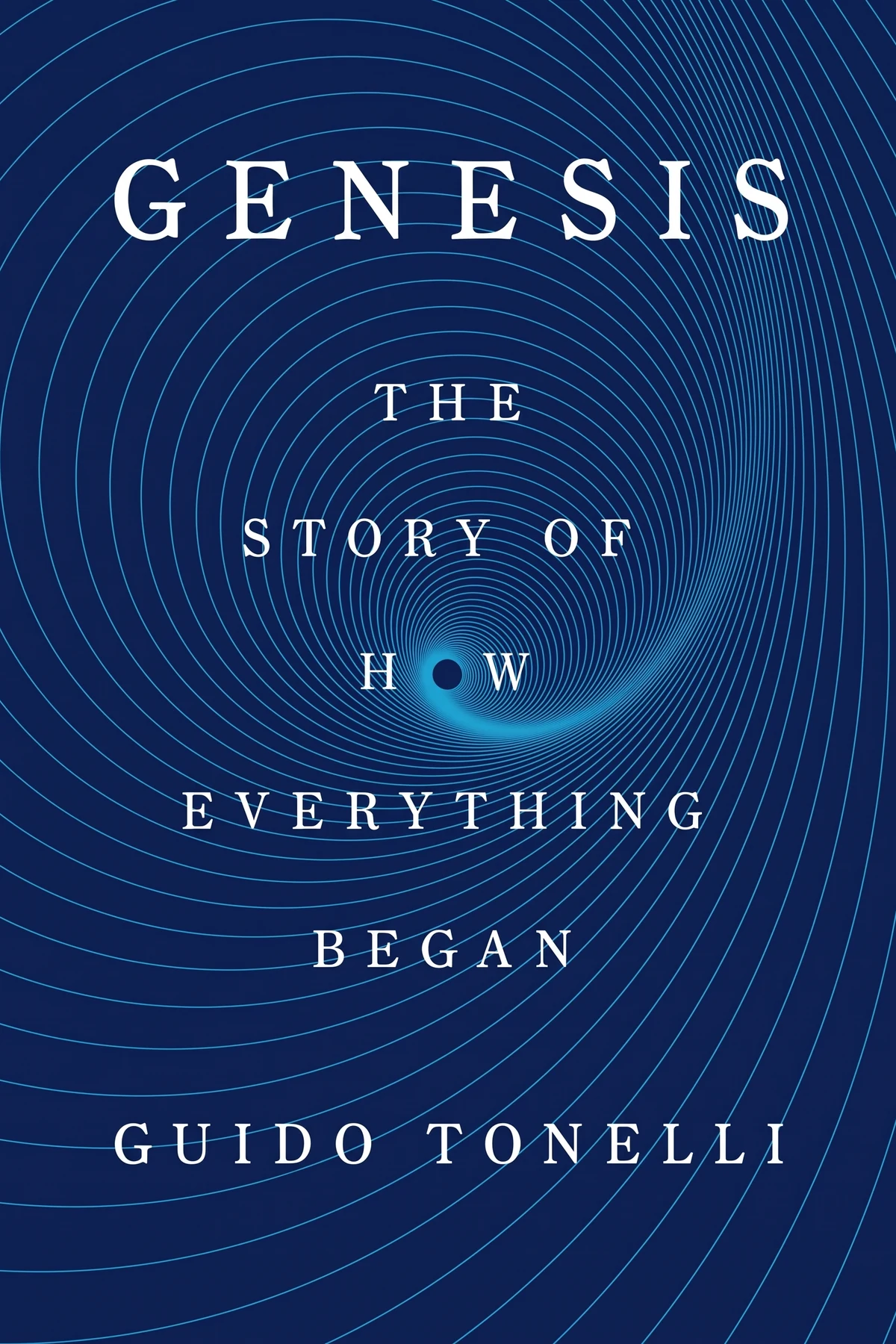
Table of Content
1. Introduction
1 min 32 sec
Every civilization since the dawn of humanity has reached for a way to explain why there is something rather than nothing. We have traditionally used the language of myth and religion to fill the silence of the night sky, creating stories of gods, titans, and divine creators to provide meaning to our existence. Whether it is the ancient Greek epics or the sacred texts of modern faiths, these narratives reflect a deep-seated human need to understand our roots.
However, we are now living in an era where science offers an account of our origins that is just as awe-inspiring as any ancient legend. The real history of the universe—a tale of quantum flickers, exploding giants, and invisible fields—is a masterpiece of natural complexity. This story doesn’t require supernatural intervention to be breathtaking; the bare physical facts of how we came to be are more than enough to satisfy our sense of wonder.
In the following sections, we will walk through the major milestones of this cosmic journey. We’ll look at the very first moments of time, where a mysterious void gave way to a sudden explosion of space. We will examine how invisible particles granted weight to the world, how the first light broke through a primordial fog, and how gravity eventually gathered dust and gas to build the sun and the Earth. This is the scientific story of our genesis—a journey through 13.8 billion years of history that led, eventually, to us.
2. The Emergence of Everything from a Void
2 min 22 sec
What if the entire universe is actually just a transformed state of nothingness? Explore how a tiny quantum ripple triggered an expansion faster than the speed of light.
3. The Higgs Field and the Gift of Mass
2 min 15 sec
Discover the invisible field that shattered the early universe’s uniformity, slowing down particles and allowing the physical world to take shape.
4. The Dawn of Light and Atomic Structure
2 min 10 sec
Follow the transition from a dark, opaque plasma to a transparent cosmos where the very first rays of light were finally able to travel free.
5. Gravity and the Birth of the First Stars
2 min 16 sec
Witness how gravity took the lead, herding clouds of gas into the massive furnaces that would eventually forge the ingredients for life.
6. The Architecture of Galaxies and Black Holes
2 min 27 sec
Look toward the centers of the great galactic spirals to find the sleeping giants that hold billions of stars in their gravitational embrace.
7. The Cradle of the Solar System and Life
2 min 21 sec
Travel to a quiet corner of the Milky Way where a molecular cloud collapsed to form our sun and the rocky world we call home.
8. Conclusion
1 min 38 sec
The story of our origins is a grand arc that stretches from the infinitesimal to the infinite. We have seen how a seemingly empty void possessed the potential to ignite a universe, and how the invisible hand of the Higgs field gave weight and variety to a once-uniform world. We’ve watched as light finally broke through the darkness, and as gravity labored over millions of years to build the first stars and the massive galaxies that house them.
What makes this scientific account so powerful is the realization that we are not separate from these events. Every atom in our bodies was forged in the heart of a star or during the explosive death of a galactic giant. We are the direct result of a specific, 13.8-billion-year sequence of physical transformations. When we look up at the night sky, we aren’t just looking at distant objects; we are looking at our own history.
This perspective offers a profound sense of connection. The quiet period of the Milky Way and the specific conditions of Earth’s formation were the necessary precursors for our existence. As you move forward, consider the incredible odds and the vast lengths of time required to produce a conscious being capable of asking where it came from. The ultimate lesson of this origin story is that the universe is not just something we live in; it is something we are a part of. We are the universe’s way of reflecting on itself, a living testament to the wonders that can emerge from a simple, fluctuating void.
About this book
What is this book about?
This summary explores the grand narrative of our cosmic history. It begins with the infinitesimal fluctuations of a void and follows the universe as it expands faster than light, gains mass via the Higgs field, and eventually clears the primordial fog to let the first light shine. We see how gravity sculpted gas into massive stars, how those stars forged the elements of life, and how galaxies formed around supermassive black holes. Ultimately, it’s a story of how a series of fortunate events in a quiet corner of the Milky Way led to the existence of a planet capable of reflecting on its own birth. It promises a deep understanding of the Big Bang and the fundamental building blocks of reality.
Book Information
About the Author
Guido Tonelli
Guido Tonelli is an acclaimed Italian particle physicist who was a central figure in the landmark discovery of the Higgs boson at CERN. He continues his research as a visiting scientist at CERN and shares his expertise as a professor of General Physics at the University of Pisa.
Ratings & Reviews
Ratings at a glance
What people think
Listeners find the material educational and accessible, with one review highlighting that it is mainly presented through facts and numbers. Furthermore, the scientific depth earns praise, including one listener who portrays it as an outstanding volume on theoretical and astrophysics. However, the prose style draws varied opinions, with some deeming it well-crafted while another mentions it may not be appropriate for general audiences.
Top reviews
Bee
Guido Tonelli has crafted a masterpiece that feels less like a dry textbook and more like a cosmic symphony. Following the "seven days" structure might seem arbitrary to some, but it provides a poetic framework for the incomprehensible scale of the Big Bang and the subsequent 14 billion years of expansion. Personally, I found the intersection of particle physics and ancient mythology to be the book's greatest strength. He describes the void not as nothingness, but as a space of terrifying balance. Some sections on the Higgs Boson are dense, requiring a bit of a background in the subject, yet the prose remains lyrical throughout. It’s a profound meditation on "thauma"—that ancient sense of wonder and terror. While it lacks diagrams, the vividness of the writing usually fills the gaps.
Show moreElla
After hearing so much about Tonelli's role in discovering the Higgs Boson, I picked this up expecting a dry memoir, but what I got was a poetic reconstruction of time itself. He bridges the gap between the scientific and the sacred with remarkable grace. Some might find the lack of a bibliography frustrating, but I think it allows the narrative to flow like a true myth. The way he describes the Earth-Moon collision—and how that chance encounter allowed life to flourish—is nothing short of breathtaking. It makes you feel the wonder that the Greeks talked about. This isn't just a book about physics; it’s a book about what it means to be human in a vast, indifferent, and beautiful universe. Highly recommended for astronomy buffs.
Show moreHana
Finally got around to reading this account of the universe's birth, and the description of the Earth-Moon collision was worth the price of admission alone. Tonelli writes with a zeal that is absolutely infectious. I loved how he explored the "void" not as an empty vacuum, but as a space of pure, unbreakable balance that was eventually disturbed. The prose is dense, sure, but it’s also incredibly rewarding if you’re willing to sit with it. It reminds me of Rovelli’s work, where the physics is treated with a sense of wonder that borders on the religious. It’s a celebration of human curiosity and our relentless need to ask "where did we come from?" A fantastic addition to any science lover's shelf.
Show moreTuck
Ever wonder how the void actually birthed everything we see today? Tonelli attempts to answer this by breaking down billions of years into seven symbolic "days." The book is undeniably informative, grounded in facts and numbers that give it a sense of authority. I particularly enjoyed the deep dive into the first tiny fractions of a second after the Big Bang—a timeframe usually glossed over in other popular science titles. To be fair, the lack of explanatory notes and diagrams makes the more theoretical sections on quantum fluctuations a bit of a slog. You really have to visualize the symmetries yourself. It’s a challenging read that assumes you already know your way around an atom, but the payoff is a much deeper appreciation for our place in the cosmos.
Show moreChan
As someone who devours popular science, I found Tonelli’s take on the Higgs Boson and the early inflation period to be genuinely refreshing. It’s a scholarly thought experiment that imagines how the entire universe was born in seven days. The book focuses heavily on the context of the birth of the universe, providing a special focus on the very first moments of time. While the density of the prose might remind some of a college-level textbook, every section offers a chance to learn something new. My favorite part was the description of the collision between Earth and another heavenly body that formed the moon. Without that collision, we wouldn't be here. It’s a vivid celestial sequence that really sticks with you.
Show moreMaya
Not what I expected from a world-class physicist, but in a mostly good way. Tonelli’s "Genesis" is an ambitious attempt to weave the history of the cosmos into a narrative that mirrors the biblical creation story. The science content is excellent, particularly the bits about the formation of the moon and the specific properties of the Higgs Boson. However, the tone fluctuates wildly. One moment you’re learning about the paroxysmic nature of the early universe, and the next, he’s talking about Elvis or the smiles of girls. It’s a bit jarring. Even so, the lack of a bibliography or notes didn't stop me from enjoying the sheer enthusiasm he brings to the page. It's a solid 4 stars for the unique perspective alone.
Show moreKae
The truth is, I’m still not sure if I learned about astrophysics or if I just sat through a very long, very confusing dinner party story. Tonelli is clearly in the "Carlo Rovelli school" of lyrical science writing, but he doesn't quite have the same knack for simplifying the complex. I found the seven-day structure to be a bit of a gimmick that didn't always align with the actual chronology of the universe. One minute we’re discussing the paroxysmic nature of black holes, and the next we’re on a tangent about Elvis Presley. It’s a bit of a "glass of poop juice" experience at times—messy and hard to swallow. There are flashes of brilliance, especially regarding dark matter, but they are buried under too many unnecessary adjectives.
Show morePiyanart
Look, the science here is clearly top-tier, but the execution feels like a promise unfulfilled. Tonelli’s attempt to mirror the biblical seven days of creation is a clever hook, but the chapters often stray far from that central metaphor. In my experience, the book assumes way too much prior knowledge of Heisenberg and quantum mechanics. Without diagrams to illustrate the "simmetrie," I found myself drifting into a black hole of confusion. The writing is frequently interrupted by weirdly specific diversions into art and music that didn't help me understand the Big Bang any better. It’s an interesting scholarly thought experiment, but it’s definitely not for the average lay reader looking for a simple, facts-only explanation.
Show moreChaiwat
Frankly, I wanted a science book, not a collection of mythological musings and 'smiles of girls.' While Tonelli’s credentials as a particle physicist are beyond reproach, his writing style in this volume is far too colloquial for my taste. The anthropomorphization of particles—treating them like they have feelings or intentions—only served to muddy the waters for me. Instead of clarifying the complex physics behind the Higgs field, the author gets lost in waffling analogies about airport luggage and Italian culture. It felt like the editor took a baguette out of his hand and gave him a pen, but forgot to tell him to stick to the data. If you’re looking for a rigorous, clear scientific breakdown, this isn’t it.
Show moreKamol
This book is an absolute train wreck of mixed metaphors and bizarre tangents that have no business being in a science book. Honestly, whoever decided that Snow White and Greco-Roman penises were the best way to explain the birth of the universe should probably reconsider their career choices. It’s a convoluted mess. Tonelli waffles on for pages about airport luggage and then expects us to understand the complexities of dark matter without a single diagram or index to help us. To be fair, he’s clearly a brilliant scientist, but that doesn't make him a writer. It felt like he was trying to be poetic but ended up just spinning yarns that lead straight into a black hole of boredom. I felt more confused after reading it than I did before I started. I'd give it zero stars if I could.
Show moreReaders also enjoyed

A Life Decoded: My Genome: My Life
J. Craig Venter
A Planet of Viruses
Carl Zimmer
A Short History of Nearly Everything
Bill Bryson
A Thousand Brains: A New Theory of Intelligence
Jeff Hawkins
AUDIO SUMMARY AVAILABLE
Listen to Genesis in 15 minutes
Get the key ideas from Genesis by Guido Tonelli, plus 5,000+ more titles in English and Thai.
- 5,000+ titles
- Listen as much as you want
- 7-day free trial
- Cancel anytime







