
A Liberated Mind: How to Pivot Toward What Matters
Steven C. Hayes
Discover how unprocessed memories dictate your current emotions and behaviors. This guide introduces EMDR techniques to help you rewire your brain, heal from past trauma, and reclaim control over your future.
1 min 42 sec
Have you ever found yourself reacting with intense, inexplicable emotion to a seemingly minor event? Perhaps a specific tone of voice makes your heart race, or a simple mistake at work sends you into a spiral of shame that feels impossible to escape. If you’ve ever wondered why you continue to feel the sting of a negative experience long after the event itself has ended, there is a biological explanation. It isn’t a personal failing or a lack of willpower; rather, it is the result of how your brain is hardwired to store and retrieve information.
In this exploration of Getting Past Your Past, we dive into the revolutionary world of Eye Movement Desensitization and Reprocessing, commonly known as EMDR. We will look at how our brains form automatic connections between memories—often without our conscious awareness. Just as hearing the first line of a common nursery rhyme instantly brings the second line to mind, our brains link current events to past experiences in a split second. Unfortunately, when those past experiences involve trauma or distress, the connections can be deeply unhelpful.
We are going to walk through the mechanics of the brain-mind connection, discovering how “unprocessed” memories act like open wounds that never quite scabbed over. We will explore how these hidden drivers influence everything from our physical health to our most intimate relationships. Most importantly, you will learn practical techniques—from the “butterfly hug” to the “safe place” visualization—that can help you take the driver’s seat in your own life. This is a journey about understanding the inner landscape of your mind and learning how to reshape it for a more empowered, peaceful future.
2 min 16 sec
Uncover how your brain’s storage system keeps old traumas alive and how these frozen moments dictate your adult reactions and self-perception.
2 min 15 sec
Explore the mechanics of EMDR and how simple eye movements or physical tapping can unlock your brain’s natural ability to heal from trauma.
2 min 15 sec
Learn how unresolved psychological trauma can manifest as mysterious physical ailments and how addressing the root memory can provide relief.
2 min 06 sec
Discover how your early life experiences create blueprints for intimacy and how to break the cycle of self-sabotage in your current bonds.
2 min 26 sec
Master simple yet powerful techniques like the Butterfly Hug and Safe Place visualization to manage stress and stay grounded in the present.
2 min 17 sec
Understand the broader impact of personal healing, from improving professional performance to fostering global compassion through small acts of kindness.
1 min 27 sec
As we conclude this journey through the principles of EMDR and the mechanics of our memory networks, the central takeaway is one of profound hope. Your brain is not a static organ; it is a dynamic, living system with an incredible capacity for healing. While the past may have shaped your current perceptions and reactions, it does not have to be a life sentence. By understanding that your triggers are often just echoes of unprocessed memories, you gain the power to change how you experience the world.
You now have a set of tools to begin this work. Whether it is through the simple, grounding rhythm of the butterfly hug, the investigative process of the floatback technique, or the deep, transformative work of professional EMDR therapy, you have the ability to reprocess old pain. You can turn those frozen moments of trauma into neutral chapters of your history—learning from them without being haunted by them.
Remember that healing is often a gradual process. It starts with awareness and continues with small, consistent steps. As you clear out the old emotional debris, you make room for new growth, healthier relationships, and a more authentic sense of self. You have the right to live a life defined by your present choices and your future dreams, rather than your past wounds. Take control of your narrative, embrace the biological power of your brain to heal, and step forward into a life of greater freedom and well-being.
Have you ever wondered why certain situations trigger an overwhelming emotional response that seems out of proportion to the present moment? Getting Past Your Past explores the fascinating link between our brain’s memory networks and our daily psychological well-being. It posits that many of our current struggles—ranging from anxiety and low self-esteem to chronic physical pain and relationship issues—are actually rooted in "unprocessed" memories. These are moments from the past that were so distressing they became frozen in their original state, carrying the same raw emotions and physical sensations they did years ago. The book offers a roadmap for moving beyond these mental roadblocks using Eye Movement Desensitization and Reprocessing, or EMDR. By understanding how the brain heals itself, you can learn to identify the specific childhood experiences or past traumas that are driving your current behavior. Through a combination of professional therapy insights and practical self-help exercises, this summary provides the tools to neutralize old pain and foster a sense of empowerment. The promise is a life no longer dictated by history, but guided by conscious, adaptive choices.
Francine Shapiro was a pioneering American psychologist who developed Eye Movement Desensitization and Reprocessing therapy. In 1987, she noticed that rhythmic eye movements could lessen the intensity of distressing thoughts, a discovery that revolutionized trauma treatment. Shapiro refined these observations into standardized clinical procedures now utilized globally. She also wrote the seminal works EMDR and EMDR as an Integrative Psychotherapy Approach.
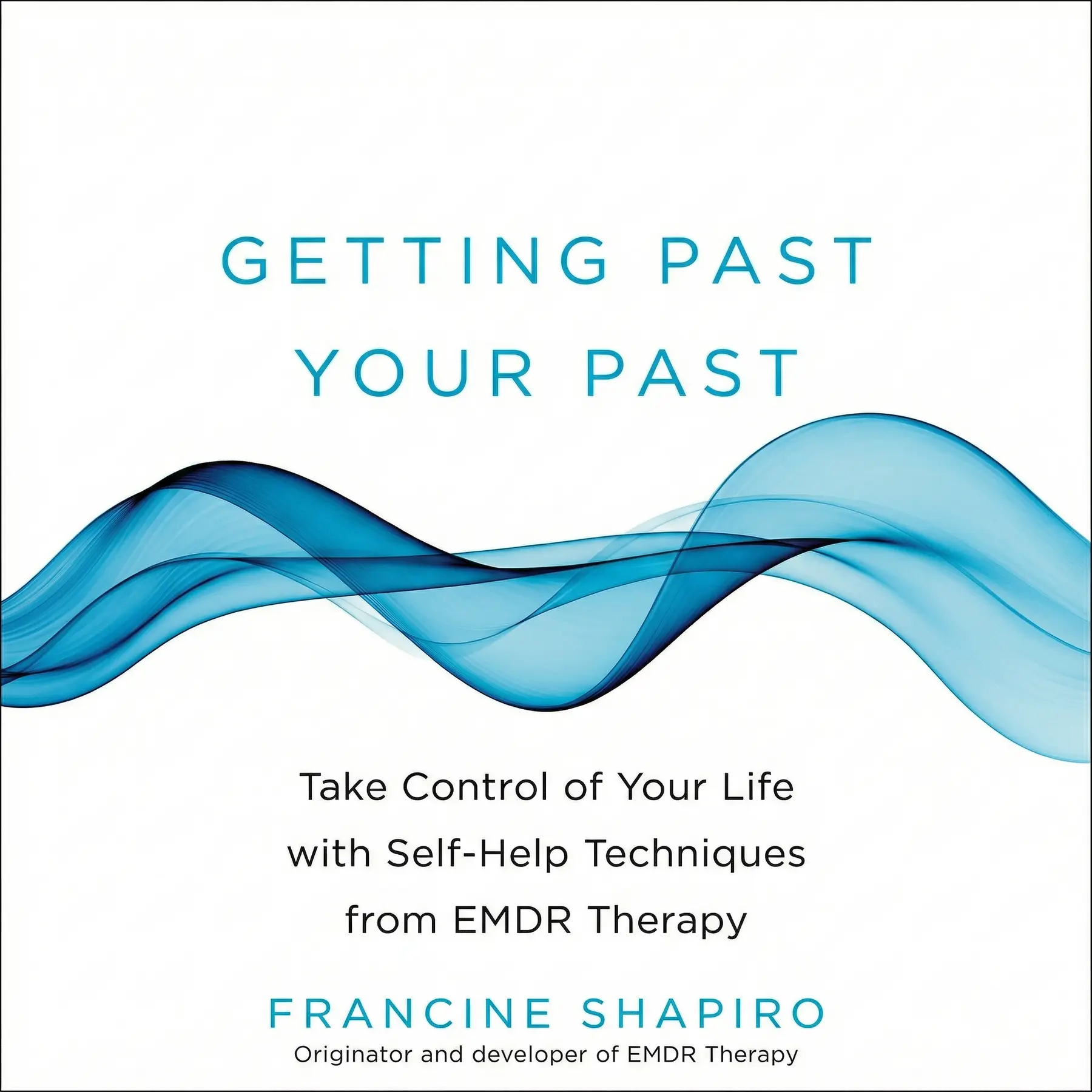
Listeners find this self-help guide very accessible and full of valuable insights regarding EMDR therapy, particularly noting how effective it is for moving past trauma. Written in clear, non-technical language, the work is simple to follow and offers hands-on tools and activities. Listeners characterize it as life-changing for its explanation of emotional processing and believe it is worth many hundred times its price.
Finally, a psychology book that doesn't just circle the drain of my childhood problems without offering a shovel to dig out. Shapiro has a knack for explaining complex neurological processes in layperson's terms, making the 'why' behind our triggers feel manageable rather than mysterious. I found the concept of 'unprocessed memories' to be a total game-changer for my self-understanding. Truth is, I’ve spent thousands on talk therapy, yet this book provided more actionable tools in three hundred pages than years on a couch did. The exercises for identifying sore spots are practical and immediately applicable to daily life. Some might find the case studies a bit repetitive, but they serve to drive home the point that healing is possible for anyone. It’s rare to find a book that feels both scientifically grounded and deeply compassionate. This is worth many hundred times its price if you actually do the work.
Show moreWow, I didn't realize how much of my daily anxiety was actually just an echo of past events I never properly 'filed' away. This book is a life-changing resource for anyone who feels like they are constantly overreacting to small stresses. Shapiro explains that our brains are hardwired for survival and reproduction, which puts our 'fight or flight' responses into a whole new context. The practical tools and breathing exercises helped me ground myself during a particularly rough week. Not gonna lie, some of the stories are heavy, but they illustrate the 'magic' of how the brain can heal itself when given the right bilateral stimulation. It’s well-written and easy to follow, even if you don't have a degree in psychology. I’ve recommended this to three friends already because the insight into emotional processing is just that profound. Truly a must-read for trauma survivors.
Show moreAfter years of traditional talk therapy that felt like pulling teeth, this book provided the 'click' I was desperately searching for. Shapiro's explanation of how trauma is stored in the body, not just the mind, changed my entire approach to healing. I love how she frames emotions as tools for survival; it took away so much of the shame I felt for my 'irrational' fears. The book is packed with practical exercises that helped me identify my own emotional triggers without feeling overwhelmed. Not gonna lie, the car wreck story was heartbreaking, but it showed how even well-meaning parents can leave lasting scars. This book gives you the vocabulary to finally talk about your past in a way that leads to a real future. It’s life-changing and incredibly readable for a science-based book. Five stars for the techniques alone.
Show moreShapiro writes with an accessible, authoritative voice that demystifies how our brains get 'stuck' in the past. To be fair, the title is a bit of a stretch since you still need a professional for full EMDR, but the self-help stabilization techniques are excellent. I particularly appreciated the sections on how our nervous system handles threat versus safety. The book is packed with useful information that helped me map out my own emotional history. My only real gripe is that it drags in the middle with endless case studies that all follow the exact same narrative arc. You read one story about a person overcoming a hurdle, and you’ve basically read them all. Still, the underlying message is powerful. It’s a solid 4-star read for anyone looking to understand their own 'glitches' and start the process of emotional regulation.
Show morePicked this up on a recommendation and I’m pleasantly surprised by how much I actually highlighted for later. The breakdown of the Autonomic Nervous System was the most clear explanation I've ever encountered. Shapiro makes a compelling case for why we can't just 'talk' ourselves out of PTSD. I did find the 'no-blame' perspective a bit tough to stomach at times, especially when the examples involved clear parental negligence. However, I understand the clinical goal is moving forward rather than litigating the past. The writing is a bit dry in spots, and the sheer volume of case studies feels like filler to hit a page count. Despite that, the actual techniques for identifying internal 'nodes' and processing them are top-notch. It’s a very helpful book if you can sift through the repetitive stories to get to the core methodology.
Show moreEver wonder why you overreact to a simple comment from your boss or spouse? This book explains that we all carry ten to twenty 'unprocessed' memories that act like landmines in our current relationships. The truth is, I never realized my current anger was tied to a playground incident from thirty years ago. Shapiro’s approach is compassionate and clinical at the same time. The exercises are practical, though I agree with other reviewers that the title is a bit of a bait-and-switch regarding 'self-help' EMDR. You can't do the actual eye movements safely on your own, but you can do the prep work. The book is packed with useful information that helps you understand the 'why' behind your feelings. It's a bit repetitive, but the core message is incredibly empowering for anyone feeling stuck.
Show moreThe 'no-blame' perspective might be a hard pill for some to swallow, but it’s essential for moving forward according to Shapiro. I struggled with her forgiving tone toward some of the parents in the case studies, yet I see the value in shifting focus from 'who did it' to 'how do I fix it.' This book is a fantastic resource for understanding the mechanics of EMDR therapy. It’s easy to follow and written in a way that doesn't feel condescending to the reader. I found the 'butterfly hug' and other grounding techniques to be very effective for my own anxiety spikes. My only complaint is that the case studies are so numerous they start to blur together by the end of the book. Overall, it's a very helpful guide that provides a realistic roadmap for emotional recovery. Definitely worth a spot on your shelf.
Show moreIs this actually a self-help manual or just a very long brochure for EMDR clinicians? I have mixed feelings because the science is fascinating, but the 'take control of your life' promise feels slightly misleading when every chapter ends with a reminder to find a therapist. Look, the stabilization exercises like the 'Safe Place' imagery are great additions to my mental health toolkit. However, the author’s tendency to gloss over parental failures—like the story of the mother who ignored her daughter’s trauma after a car wreck—felt a bit dismissive. She advocates for a 'no-blame' attitude that might be healthy for some, but felt invalidating to me. The book gets very repetitive after the first hundred pages. If you want a deep dive into the mechanics of EMDR, you're better off looking at clinical papers. It's a decent introduction, but don't expect it to replace a real doctor.
Show moreThe core concepts here are brilliant, but the book could have easily been half as long without losing its impact. Personally, I found the lack of deep neuroscience frustrating because I wanted to know *how* the bilateral stimulation actually affects the amygdala. Instead, we get story after story of 'Person A had a problem, did EMDR, and now they are fine.' It feels a bit like a late-night infomercial after a while. To be fair, the chapters on how we develop our 'worldview' through early experiences were quite eye-opening. I just wish there were more self-care techniques and fewer anecdotes. It’s a good starting point for someone new to the concept of trauma, but seasoned therapy-goers might find it a bit basic. A decent read, just not the 'magic bullet' the cover implies.
Show moreWhile the science behind EMDR is clearly revolutionary, I found the author’s tone regarding certain case studies to be incredibly alienating and problematic. Specifically, her attempts to justify the mother who 'fiercely' spanked her son near the stairs felt like unnecessary apologist drivel. Frankly, for those of us with a history of physical abuse, being told that such actions aren't 'violent' because the parent is otherwise loving is a massive trigger. The book claims to offer self-help techniques, but it's mostly a collection of anecdotes where a therapist does all the heavy lifting. I felt like I was being sold a product I wasn't allowed to use myself. The constant 'no-blame' mantra feels like a way to shield perpetrators under the guise of 'imperfection.' It’s disappointing because the neurological insights are actually quite good. I just couldn't get past the questionable ethics of the presentation.
Show moreSteven C. Hayes
Leanne Maskell

AUDIO SUMMARY AVAILABLE
Get the key ideas from Getting Past Your Past by Francine Shapiro, plus 5,000+ more titles in English and Thai.







