
15 min 40 sec
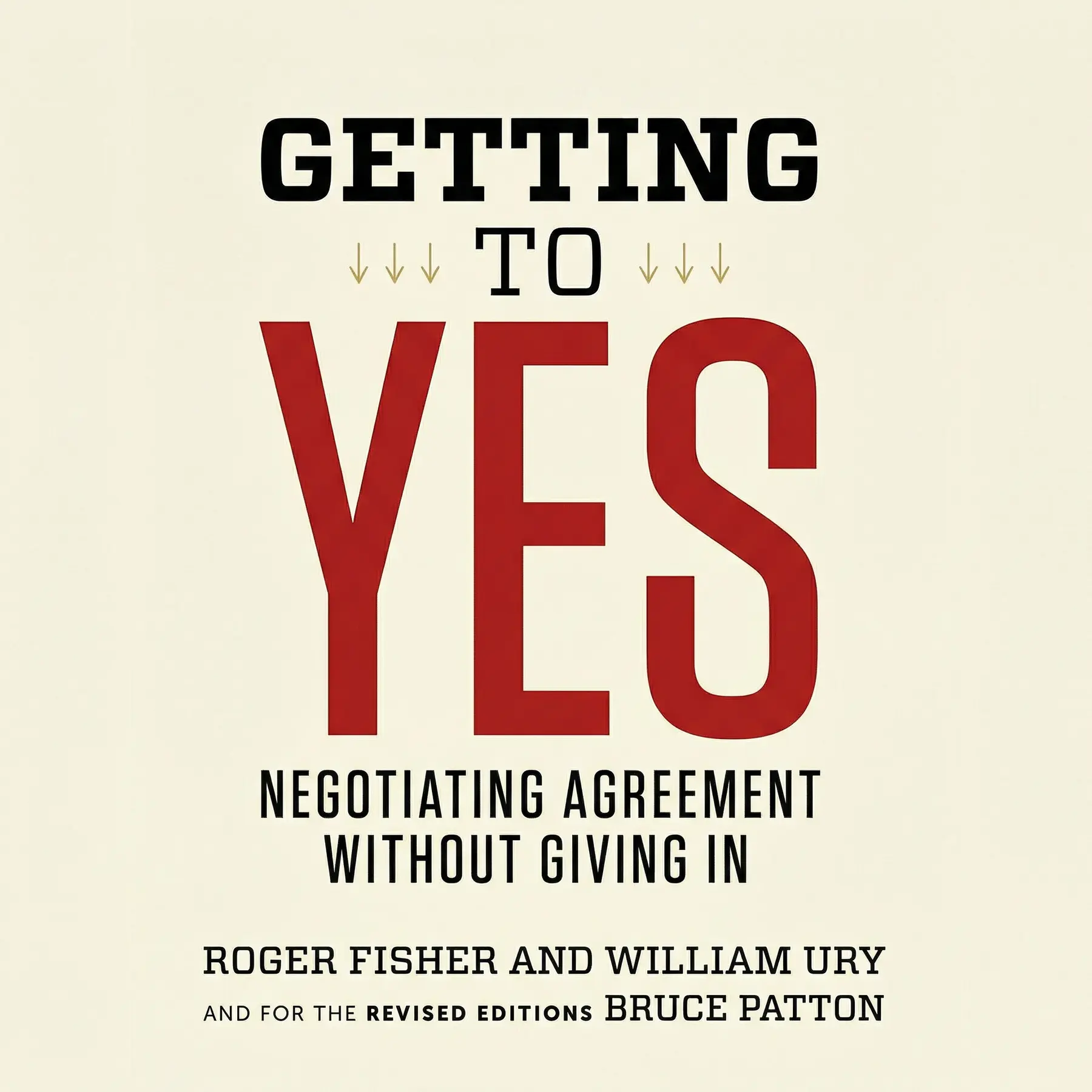
Getting to Yes: Negotiating an Agreement Without Giving In
Discover a transformative approach to negotiation that moves beyond stubborn positioning. This guide offers a framework for reaching fair, mutually beneficial agreements while maintaining healthy relationships and avoiding unnecessary conflict.
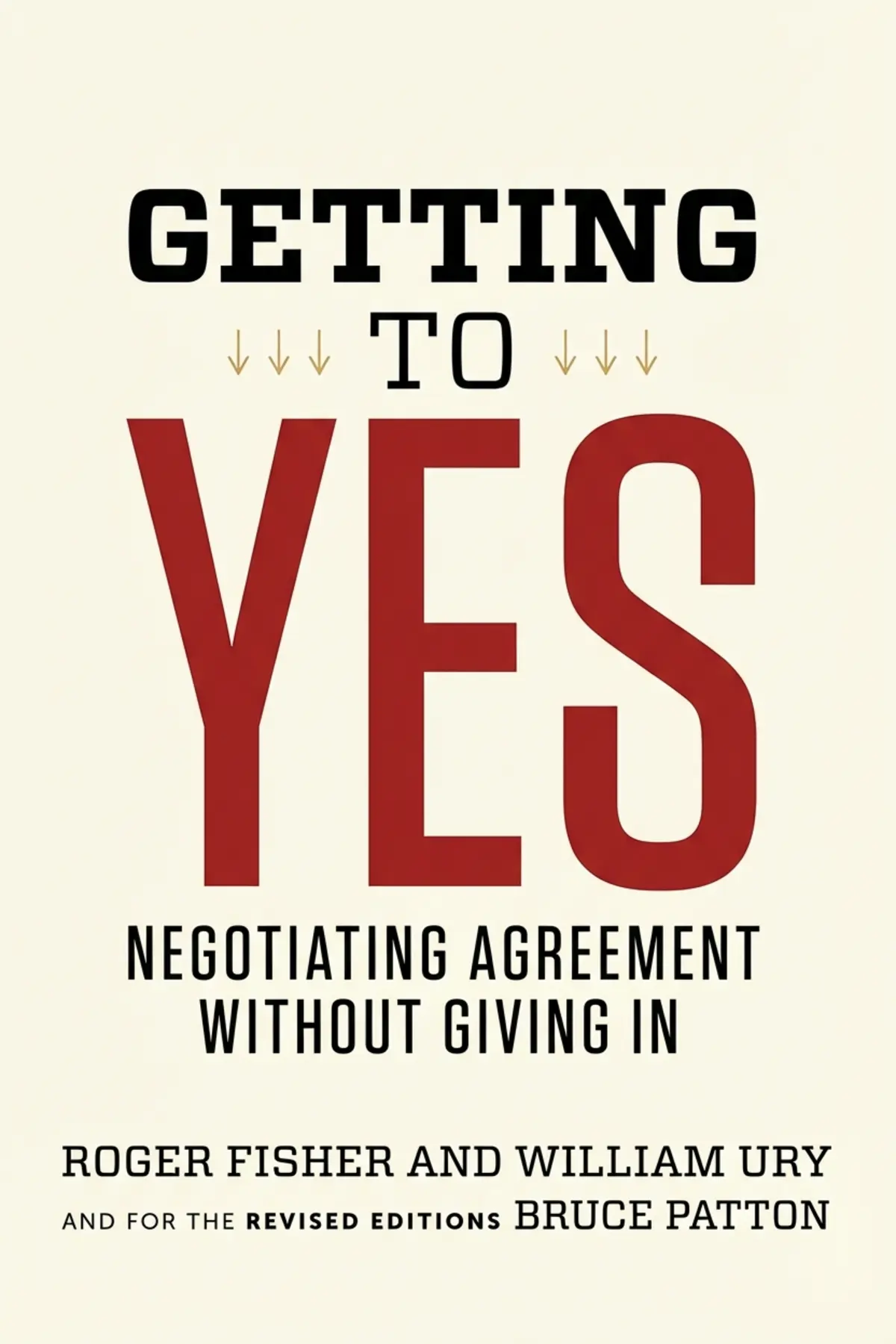
Table of Content
1. Introduction
1 min 34 sec
Think about the last time you had to make a decision with someone else. Perhaps it was a major business deal, or maybe it was something as simple as deciding which movie to watch with a friend. While these scenarios feel vastly different, they are governed by the same fundamental process: negotiation. In the past, our world functioned on a model of top-down command. In families, the father usually made the final call. In companies, the boss’s word was law. But that old, hierarchical world is fading. Today, we live in an era of participation. Decisions are increasingly made through discussion rather than decree. Politicians must negotiate with their constituents, managers must collaborate with their teams, and even parents find that a simple ‘because I said so’ no longer carries weight in the age of instant information.
This shift means that negotiation has become an essential life skill, yet many of us still approach it with an outdated mindset. We often view it as a battle where one person must win and the other must lose. This summary explores a different path, one developed at the Harvard Negotiation Project. It’s called principled negotiation. This method isn’t about being the loudest person in the room or the most stubborn; it’s about finding a way to get what you need without destroying your relationships or your integrity. Throughout this journey, we’ll look at how to separate the people from the problem, how to uncover the hidden motivations that drive every argument, and how to build agreements that stand the test of time. By the end, you’ll see that negotiation isn’t just about haggling over a price—it’s about a new way of interacting with the world to create solutions that benefit everyone involved.
2. The Pitfalls of Positional Bargaining
1 min 33 sec
Entering a negotiation with a fixed stance often leads to a cycle of stubbornness and wasted energy that can destroy the very foundation of a relationship.
3. Distinguishing the Person from the Problem
1 min 39 sec
Every negotiation involves human beings with unique perceptions and emotions that can easily cloud the actual facts of the matter.
4. Focusing on Interests Rather than Standpoints
1 min 41 sec
Looking past what people say they want reveals the underlying needs that can unlock creative and unexpected solutions.
5. Generating Creative Options for Mutual Benefit
1 min 31 sec
Avoid the pressure of finding the one right answer too early by exploring a wide range of possibilities through collaborative brainstorming.
6. Using Objective Criteria as a Shield Against Will
1 min 31 sec
Protect yourself from unfair pressure by insisting that all decisions be based on independent standards rather than just who is more stubborn.
7. The Essential Role of Preparation
1 min 30 sec
A successful negotiation is won long before you sit down at the table, through a deep understanding of the facts and the context.
8. Communication as the Lifeblood of Agreement
1 min 34 sec
Mastering the art of active listening and factual speech prevents the misunderstandings that often derail even the best intentions.
9. Navigating Power Imbalances and Dirty Tricks
1 min 45 sec
Even when faced with an unfair opponent or a more powerful party, you can maintain your integrity by focusing on the process.
10. Conclusion
1 min 22 sec
As we look back at the core tenets of principled negotiation, a clear throughline emerges: the most effective agreements are those built on understanding and fairness rather than force and positioning. We’ve seen that by separating the people from the problem, we can manage the complex web of human emotions that often cloud our judgment. By focusing on interests rather than positions, we unlock a world of creative possibilities that go far beyond simple compromise. And by insisting on objective criteria, we protect ourselves from being bullied and ensure that the final agreement is one that both sides can truly stand behind.
In the end, the goal of ‘Getting to Yes’ is not just to win an argument, but to change the way we resolve conflict in our lives. It’s about moving from a mindset of competition to a mindset of collaboration. This isn’t just a strategy for the boardroom; it’s a framework for better relationships with your coworkers, your friends, and your family. The next time you find yourself in a disagreement, remember that you don’t have to choose between being ‘hard’ or ‘soft.’ You can be principled. You can be firm on the issues while being kind to the people. By doing so, you’ll find that you not only reach better agreements, but you also build a more cooperative and respectful world around you. Now, take these tools and look for your next opportunity to transform a conflict into a conversation.
About this book
What is this book about?
The way we settle disagreements has fundamentally changed as the world moves away from rigid hierarchies toward a more collaborative model. This book introduces the concept of principled negotiation, a method designed to resolve conflicts by focusing on basic interests rather than entrenched positions. It provides a roadmap for navigating the complexities of human emotion, communication breakdowns, and power imbalances. The promise of this approach is that you don't have to choose between being a soft negotiator who gives in or a hard negotiator who damages relationships. Instead, you can learn to be a principled negotiator who is soft on the people but firm on the merits. By following these techniques, you can transform any argument into a joint problem-solving exercise, ensuring that all parties walk away with their core needs met.
Book Information
About the Author
Roger Fisher
Roger Fisher was a distinguished American professor at Harvard Law School and a pioneer in the field of conflict resolution. Alongside his co-authors, he established the Harvard Negotiation Project. William Ury is a renowned anthropologist who serves as a peace negotiator for various global corporations and governments. Bruce Patton is a lecturer at Harvard and a co-founder of Vantage Partners, a consultancy dedicated to helping organizations improve their negotiation strategies.
Ratings & Reviews
Ratings at a glance
What people think
Listeners find this negotiation guide both thorough and highly applicable, offering valuable insights and case studies that improve routine interactions. The material is accessible and clear, featuring direct concepts that are easy to recall. Listeners value its utility in numerous career paths and as an addition to formal negotiation training, highlighting how pertinent the advice is to daily circumstances.
Top reviews
Sing
The concept of the BATNA—Best Alternative to a Negotiated Agreement—is worth the price of admission alone. I picked this up while preparing for a difficult salary discussion and it completely shifted my mindset from 'winning' to 'problem-solving.' The authors argue that you should separate the people from the problem, which sounds easy but is remarkably difficult to execute in the heat of the moment. This book gives you the actual tools to do it. Not gonna lie, some of the scenarios involving international diplomacy felt a bit removed from my daily life, but the core principles are universal. I’ve already started using the 'interests vs. positions' framework when dealing with my kids and it actually works. It’s concise, packed with actionable insights, and manages to be influential without being overly long. If you want to stop feeling like you're getting steamrolled in conversations, you need to read this. It turns negotiation into a collaborative exercise rather than a battle of wills, and that is a powerful shift.
Show moreLucia
Wow, I wish I had read this before my last major lease negotiation. The authors do an incredible job of breaking down the thought process required for a truly principled agreement. One of my favorite tips was to involve the other party in the decision-making process early on, which makes them much more likely to support the final outcome. It’s about building a relationship, not just closing a deal. The book is remarkably concise, which I appreciate as a busy professional. It doesn't have the typical filler you find in modern business bestsellers. The examples, like the two people fighting over a window in a library, are simple but illustrate the 'mutual gain' concept perfectly. It teaches you how to remain calm and focused on the future instead of arguing about the past. I’ve found that even just applying the 'active listening' techniques has improved my interactions with my local mechanic and my spouse. This is essential reading for anyone who wants to navigate life with more grace and effectiveness.
Show moreEleanor
Negotiation is an art, but Fisher, Ury, and Patton provide the science behind it. This book is a masterclass in human psychology and strategic communication. I love the advice about sitting side-by-side instead of across from someone; it’s such a small physical change that completely alters the energy of a room. The authors remind us that we are all human beings with emotions and egos that need to be respected. By showing that you understand their interests, you open a door that positional bargaining usually slams shut. The writing is clear and the principles are simple enough to remember when you're under stress. I particularly enjoyed the section on 'Negotiation Ninjitsu' and using silence as a tool to get better answers. It’s a comprehensive guide that applies to everything from multi-million dollar business deals to deciding where to go for dinner with friends. This book genuinely changed how I view conflict—it's no longer something to avoid, but a problem to be solved together.
Show moreRod
As someone who deals with difficult clients daily, I found this remarkably grounding. The chapter on 'Negotiation Jujitsu' was a standout for me because it teaches you how to handle people who refuse to play by the rules. It’s all about redirecting their energy back toward the problem instead of defending yourself against personal attacks. In my experience, most business books are 90% fluff, but this one is surprisingly dense with real strategy. I particularly liked the advice to 'expand the pie' before trying to divide it, which helps move away from zero-sum thinking. My only real gripe is that the writing can feel a bit clinical at times, which makes the 'principled' approach seem easier than it actually is when emotions are high. Still, it’s a classic for a reason. It provides a shared language for teams to use when navigating internal friction. I’ve recommended it to several colleagues already because the framework is just so easy to remember and apply during a quick meeting.
Show moreOrm
Is it a bit dated? Perhaps, but the underlying logic remains incredibly robust for anyone looking to improve their interpersonal skills. Look, the 'objective criteria' section is much harder to implement in the real world than the book suggests—finding a 'gold standard' for fairness is often the very thing people are fighting about. However, the instruction to focus on interests rather than entrenched positions is a total game-changer. I recently used the technique of asking 'What's the theory behind this proposal?' during a contract dispute and it immediately cooled the room down. It forces the other side to justify their stance with logic instead of just digging in their heels. The book is easy to digest and doesn't waste your time with flowery prose. While I think some of the success stories are a bit too 'neat,' the fundamental shift toward mutual gain is something every professional should strive for. It’s a solid four-star read that I’ll likely revisit when I feel myself getting too defensive in my own negotiations.
Show moreWipada
Picked this up on a recommendation from a colleague and it actually lived up to the hype. The focus on 'reasons' over 'willpower' is a vital lesson for anyone in management. It’s not about who can yell the loudest or hold out the longest; it’s about what makes sense for both parties. I've started using the 'one-text' method for resolving team disputes and it has cut our meeting times in half. By focusing on a single evolving document, you eliminate the back-and-forth ego battles that usually stall progress. Personally, I found the book a bit dry in the middle sections where they go into case studies of international treaties, but the practical tips for daily life are gold. It’s a very helpful guide for organizing your thoughts before a high-pressure conversation. I'll definitely keep this on my shelf as a reference guide for when I need to remind myself to sit on the same side of the table as my 'opponent.'
Show moreJack
After hearing several podcasts mention the 'principled negotiation' style, I decided to dive into the source material. Not gonna lie, I expected it to be more complex, but the simplicity is actually its greatest strength. The authors don't try to teach you how to be a manipulator; they teach you how to be a fair and effective communicator. The 'Five Principles' provide a clear roadmap that takes the guesswork out of difficult conversations. I found the advice to 'insist on using objective criteria' to be particularly helpful for removing the emotion from financial discussions. While some of the language feels slightly dated, the core message of looking for mutual gain is timeless. It’s a quick read, but you’ll find yourself thinking about it for weeks afterward. My only minor complaint is that it can feel a little repetitive, but that might be intentional to ensure the principles stick. Overall, it’s a very practical addition to any professional’s library and a great tool for personal growth.
Show moreRuangrat
Finally got around to this 'classic' after hearing about it in every business seminar for a decade. The truth is, it's a bit of a mixed bag. On one hand, the core tenets like 'separate the people from the problem' are essential for any functioning adult. On the other hand, a lot of the strategies felt very intuitive, almost to the point of being redundant. If you’ve spent any time in a leadership role, you probably do half of this stuff by instinct. To be fair, it is a very quick read and does a great job of organizing those instincts into a repeatable system. I found the section on 'Taming the Hard Bargainer' to be the most useful part, as it gives you specific scripts to use when someone is trying to bully you into a bad deal. However, the tone is a bit too 'polite' for some of the cutthroat environments I've worked in. It’s a good foundational text, but it lacks the psychological depth of more recent books on the subject.
Show moreNina
This book occupies a weird space between a technical manual and a motivational speech. I appreciate the focus on ethics and fairness, which is often missing from negotiation tactics. However, I found the authors' optimism a bit taxing at times. In my experience, there are people who simply want to win at your expense, and 'principled negotiation' can sometimes make you look like an easy target for a shark. The section on BATNA is definitely the highlight, as it gives you the confidence to walk away from a bad deal. But I struggled with the 'objective criteria' part. In many industries, there are no agreed-upon standards, and everything is a battle of wills. The writing is okay, but it definitely feels like it was written by academics who might not spend much time in the trenches of high-stress industrial bargaining. It’s a useful framework for low-stakes life situations, but I’d take some of the 'win-win' rhetoric with a grain of salt.
Show moreJob
I'll be blunt: this felt like a relic from a different era. While I recognize its status as a foundational text, the writing style is incredibly dry and reads more like a tedious manual than a practical guide. To be fair, the authors do present some solid logic regarding principled negotiation, but I found the examples to be overly simplistic and rarely applicable to the messy, high-stakes conflicts I face at work. It carries that classic 'self-help' tone that I personally find grating, where complex human emotions are boiled down to neat little bullet points. Frankly, if you have any degree of social intuition, most of this will feel like common sense dressed up in academic jargon. It’s not that the advice is bad, it’s just that the presentation is so dull it becomes a chore to finish. I struggled to stay engaged past the first fifty pages because it felt like they were repeating the same three points ad nauseam. There are much more modern, engaging books on the market today that cover the same ground without the mid-century stiffness.
Show moreReaders also enjoyed

AUDIO SUMMARY AVAILABLE
Listen to Getting to Yes in 15 minutes
Get the key ideas from Getting to Yes by Roger Fisher, plus 5,000+ more titles in English and Thai.
- 5,000+ titles
- Listen as much as you want
- 7-day free trial
- Cancel anytime







