
Mortality
Christopher Hitchens
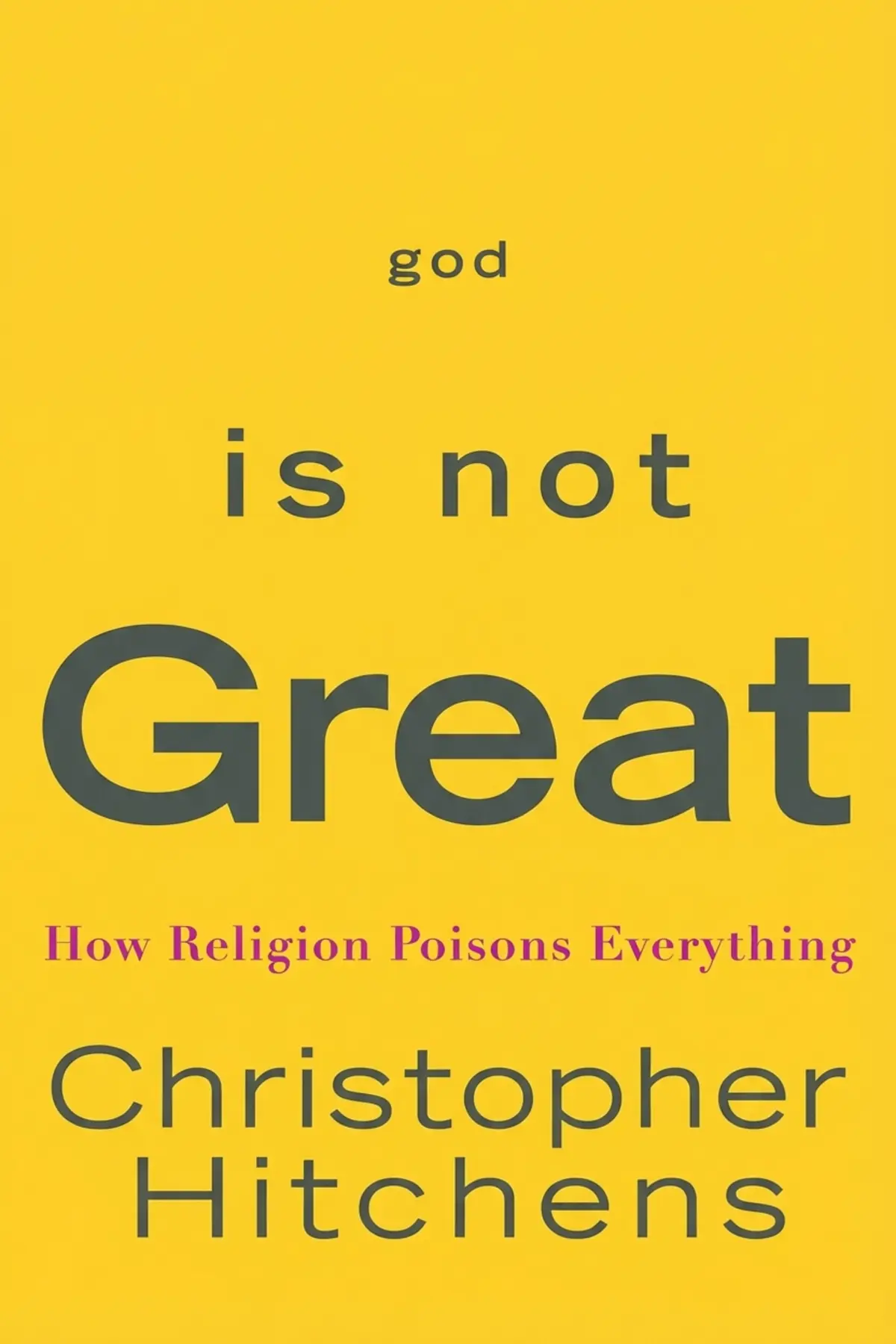
A provocative examination of the harm caused by organized religion, arguing that faith-based systems stifle human progress, promote violence, and contradict scientific reality, ultimately urging a shift toward reason and secularism.
1 min 38 sec
For centuries, the concept of a divine creator has been the bedrock of human civilization, shaping laws, defining morality, and offering a sense of purpose to billions. But what if this foundation is not a solid rock, but a collection of ancient misunderstandings and intentional manipulations? In this exploration, we dive into a forceful challenge to the role of faith in the modern world. The core argument here is that religion is not merely a personal comfort or a harmless tradition; rather, it is a human invention that frequently poisons our ability to think clearly, treat others fairly, and understand the universe as it truly is.
This isn’t just a debate about whether a deity exists. It’s a deeper look at the consequences of organized belief systems. We will trace the human fingerprints all over the world’s most sacred texts and see how these books were curated to serve the interests of power. We’ll look at why miracles seem to vanish the moment we gain the tools to investigate them, and why the claim that religion is the sole source of morality falls apart under scrutiny.
The throughline of our journey is a call for intellectual independence. It suggests that by outgrowing our need for celestial masters, we don’t lose our moral compass; instead, we finally gain the freedom to build a society based on reason, empathy, and scientific truth. This summary will guide you through a rigorous dismantling of long-held dogmas, offering a perspective that prioritizes the human mind over the divine mystery. It is a plea for us to embrace our maturity as a species and leave behind the superstitions that have, for too long, dictated the boundaries of our lives.
2 min 16 sec
Discover how ancient religious texts were actually products of political maneuvering and human error rather than divine inspiration or objective historical recording.
1 min 58 sec
Examine why the so-called supernatural events of the past are disappearing in the light of modern scientific understanding and critical inquiry.
2 min 11 sec
Challenge the idea that religion is the necessary source of human ethics by looking at the immoral practices endorsed by many sacred doctrines.
1 min 53 sec
Compare the structure of religious belief to political dictatorships, highlighting the demand for total obedience and constant surveillance.
1 min 54 sec
Explore how religious traditions often bypass rational consent, focusing specifically on the physical and psychological impact of faith on children.
2 min 00 sec
Analyze why religious belief systems frequently lead to conflict and the suppression of dissenting voices.
1 min 50 sec
Celebrate the legacy of those who challenged religious orthodoxy to advance human knowledge and freedom.
1 min 56 sec
Discover why religion and science are fundamentally at odds, especially when it comes to education and public health.
1 min 51 sec
Understand why the struggle against religious superstition must continue for the sake of human evolution and societal health.
1 min 50 sec
In the final analysis, the message is clear: the era of divine authority must give way to the era of human reason. We have seen how the foundational texts of religion are not celestial gifts, but the messy, often contradictory products of human history. We have explored the way miracles shrink under the light of scrutiny and how the claim that morality requires a deity is both false and dangerous. Religion, in its structure, mirrors the very totalitarian systems we have fought so hard to overcome in the political realm. It demands our children, our thoughts, and our absolute submission.
But the alternative is not a world of cold, empty despair. It is a world of vibrant, intellectual curiosity. By following the path of the freethinkers—those who chose the difficult truth over the easy myth—we have gained the ability to heal diseases, explore the stars, and understand our own history. The real ‘throughline’ of this journey is that we are enough. We do not need a celestial master to tell us how to be good or why the sun rises. We have the capacity for empathy and the tools of science to figure those things out for ourselves.
The actionable takeaway is to cultivate a healthy skepticism. Question the dogmas that are handed to you. Defend the boundary between church and state, and protect the right of children to grow up without fear of eternal punishment. The battle against superstition is a battle for our own maturity. When we stop looking up to the heavens for permission to live, we finally gain the freedom to create a meaningful, moral, and rational life right here on earth. Let the pursuit of truth, wherever it may lead, be our new and only sacred duty.
This summary explores the central arguments of Christopher Hitchens' critique of religious belief. It challenges the notion that religion is the foundation of morality, suggesting instead that it often serves as a tool for oppression and intellectual stagnation. By analyzing sacred texts as man-made artifacts, the book highlights the historical inaccuracies and contradictions that undermine divine claims. Listeners will learn about the parallels between religious structures and totalitarian regimes, the psychological impact of indoctrination on children, and the fundamental incompatibility between scientific inquiry and dogma. The promise of the work is to provide a rational alternative to faith, advocating for a world guided by evidence, curiosity, and human-centered ethics rather than ancient superstitions.
Christopher Hitchens (1949–2011) was a prominent British-American author, journalist, and public intellectual. Known for his sharp wit and confrontational style, he contributed extensively to publications like Vanity Fair, The Atlantic, and The Nation. Throughout his career, he remained a polarizing figure, never shying away from controversial topics ranging from politics to literature and theology.
Christopher Hitchens
Christopher Hitchens
Christopher Hitchens
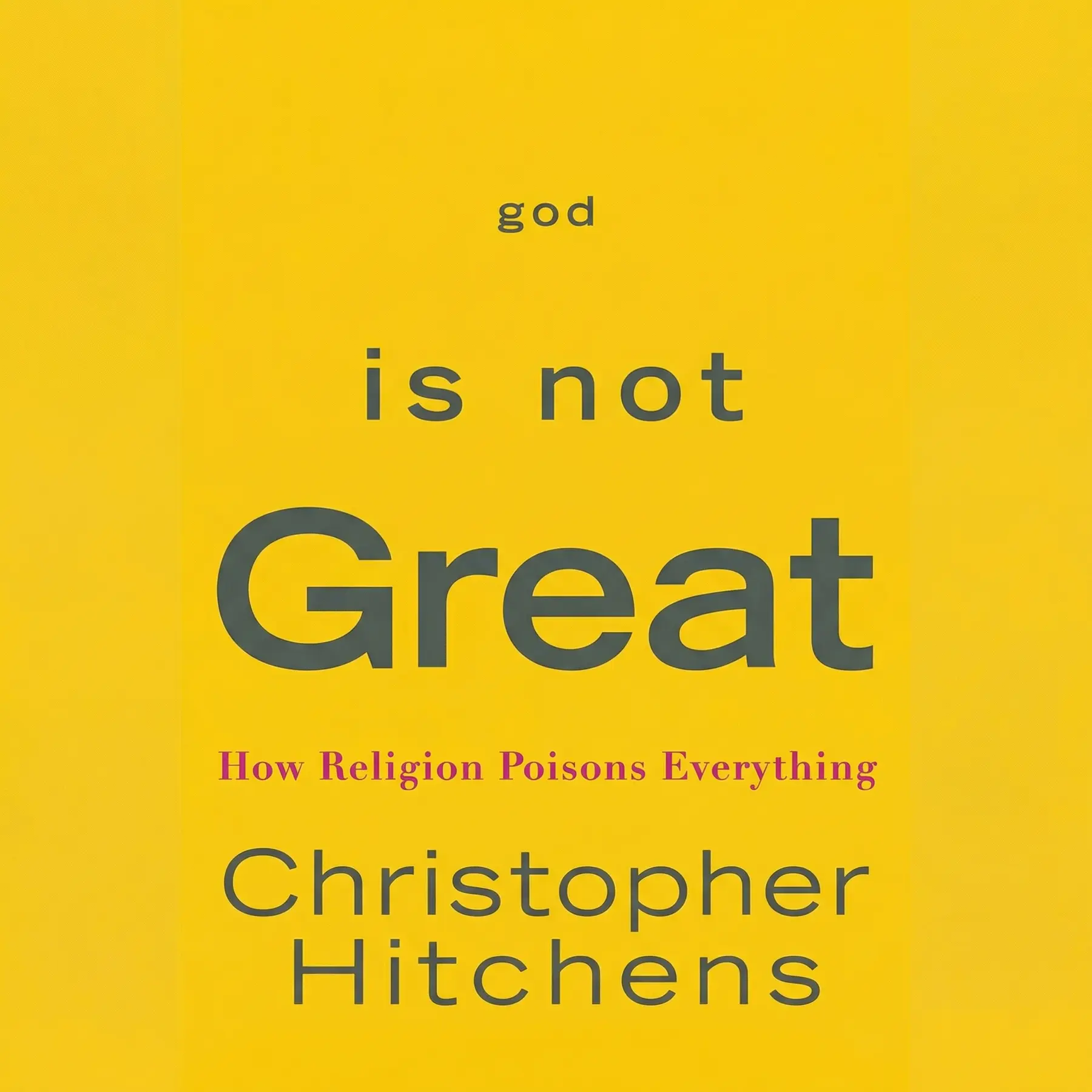
Listeners find this work accessible and meticulously investigated, drawing on extensive historical expertise and thoroughly supported facts. Furthermore, the writing is lauded for its elegant flow, and listeners value how the text inspires independent thought while addressing controversial themes through a humorous lens. The book also earns praise for its sophisticated word choice and expert command of language. Conversely, the tempo draws varied opinions, with some considering the material stimulating whereas others point out its redundancy.
Hitchens was a master of the English language, and it shows on every single page of this polemic. The prose is fluid and the vocabulary is incredibly rich, requiring a dictionary more than once for even well-read individuals. To be fair, he doesn't hold back, but that’s exactly why the book works. He tackles sensitive subjects with a blend of brutal honesty and dark humor that keeps you turning the pages. I loved how he dismantled the idea of 'divine' authority by pointing to the very human flaws in every religious text. Even if you disagree with his core premise, you have to admire the craftsmanship of his arguments. It’s a well-documented journey through the history of human superstition. This book doesn't just ask you to listen; it demands that you think for yourself.
Show moreFinally got around to reading this classic of 'New Atheism,' and I’m kicking myself for waiting so long. Hitchens writes with a fluid prose that makes even the darkest parts of history feel like a gripping thriller. He has this incredible ability to use humor to soften the blow of his most devastating critiques. His arguments about how religion poisons the political landscape are particularly poignant given the current state of the world. It’s a deeply researched piece of work that doesn't just rely on slogans; he backs everything up with historical context and scientific reasoning. Not gonna lie, some of the passages regarding the mistreatment of women and children in the name of faith are hard to stomach, but they are necessary. This is a masterful use of language in service of a very important message: reason over superstition.
Show moreEver wonder why we still cling to Bronze Age myths in an era of space telescopes and gene sequencing? Hitchens tackles this question head-on with a level of wit and intellectual fire that is rarely seen in modern non-fiction. This book is a masterclass in well-documented argument, pulling from a vast knowledge of history to show how 'religion poisons everything.' The prose is masterful, filled with a rich vocabulary that reflects Hitchens’ deep education. I loved the way he compared the lack of evidence for God to the lack of evidence for a mountain taller than Everest. It’s a logical, fact-based approach that still manages to be deeply emotional and human. Frankly, it’s one of the most important books I’ve read in years. It doesn't just attack faith; it celebrates the human spirit’s capacity for reason.
Show moreAfter hearing so much about the 'Four Horsemen,' I expected a dry, academic treatise. Instead, I found a book that is vibrant, biting, and incredibly fluid. Hitchens is a master of language, and he uses it to dissect the 'holy' books with the precision of a surgeon. The truth is, his arguments against the big three monotheistic religions are hard to refute when you look at the historical record he provides. He doesn't just rely on theory; he uses real-world examples of how religion impacts human rights and global stability. The pacing is mostly excellent, though he does get a bit bogged down in political anecdotes toward the end. Still, the humor and the sheer audacity of his claims make this a page-turner. It’s a book that truly encourages independent thought. If you want to be challenged, this is for you.
Show moreAs a history buff, I found the depth of research here truly impressive. Hitchens doesn't just attack the concept of God; he goes after the institutions and historical figures we’ve been told are untouchable. His takedown of Mother Teresa and his critique of Gandhi were particularly eye-opening, even if they felt a bit cynical at times. The book is easy to read because of its masterful use of language, but it covers some very heavy and well-documented ground. Look, he’s obviously trying to be provocative, and it works. I appreciated the way he connects ancient myths to modern-day political conflicts, showing how sectarianism continues to hinder our evolution as a species. My only gripe is that it can feel a bit repetitive toward the end. Still, it’s an essential piece of literature for anyone interested in the intersection of faith and politics.
Show moreThe sheer breadth of knowledge Hitchens brings to the table is staggering. He weaves together history, philosophy, and science in a way that is both easy to read and deeply intellectual. I particularly enjoyed the chapters where he discusses how religious belief can actually limit human potential. He encourages readers to think for themselves and to look at the universe with a sense of wonder that doesn't require a creator. To be fair, he can be a bit of a bully in his writing style, but he’s a bully with a very sharp point. The way he discusses the 'fratricide' between different faiths is a sobering reminder of why secularism is so vital. Some might find the pacing a bit slow in the middle sections, but the payoff in the final chapters is worth it. It’s a bold, well-documented stand against dogma.
Show moreWhat struck me most wasn't just the anger, but the surprising amount of humor woven into these chapters. Hitchens has a way of pointing out the absurdity of certain religious practices—like the whole pig debate—that makes you laugh out loud. Gotta say, he makes a very compelling case for how organized religion has historically acted as a barrier to scientific progress. The book is incredibly easy to read, which is surprising given how much ground it covers. He touches on everything from the origins of the monotheistic God to the way religious leaders insert themselves into modern politics. While it can be a bit repetitive, the fluid prose keeps the momentum going. He’s definitely a rabble-rouser who doesn't mind ruffling feathers, and that’s a breath of fresh air. It’s a strong argument for the importance of skeptical inquiry in a world dominated by faith.
Show moreIs it entertaining? Absolutely. But is it always convincing? Frankly, I'm not so sure. Hitchens is a brilliant writer, but he often feels like he’s shouting at the clouds rather than engaging in a serious dialogue. He tends to focus on the absolute worst examples of religious behavior, like fundamentalists refusing vaccines or the strange bans on Winnie-the-Pooh in certain regions. While these points are valid, they feel like low-hanging fruit for a man of his intellect. The pacing is a bit erratic, and some chapters feel like they’re repeating the same 'religion poisons everything' mantra without adding new depth. It’s a provocative read, but it leaves you wanting a more nuanced discussion of why faith persists despite these contradictions. I enjoyed the wit, but the 'peevish gadfly' persona got a bit tiring after two hundred pages.
Show moreTruth is, I have mixed feelings about this one. On one hand, Hitchens is undeniably one of the greatest polemicists of our time. His rich vocabulary and masterful prose are a joy to read, regardless of your personal convictions. On the other hand, the book feels like a collection of grievances rather than a cohesive argument. He repeats his main points so often that the pacing starts to drag by the halfway mark. Personally, I found his focus on 'radical' examples a bit distracting from the larger philosophical questions he could have addressed. While it's well-documented and the research is vast, it lacks the 'theoretical discussion' of a world without religion that I was hoping for. It’s a good book to spark a conversation, but it might be too provocative for its own good at times. Three stars for the writing style alone.
Show moreLet's be real for a second: this isn't a book for anyone looking for a fair or balanced debate. I came into this as a skeptic, but Hitchens’ tone is so inflammatory that it actually pushed me away. He spends pages mocking people for not eating pigs or for having faith in things they can't see, like Thor or green snow. It feels less like an intellectual challenge and more like a high-level rant from someone who thinks everyone else is an idiot. In my experience, you can't convince people by insulting their intelligence. The structure of the book is random, jumping from one grievance to another without a clear logical thread. It’s well-written in terms of sentence structure, but the content feels mean-spirited. I expected a serious philosophical inquiry, but what I got was 300 pages of 'I'm right and you're stupid.' It’s a pass for me.
Show more
Daniel Goleman
Eckhart Tolle
Marianne Williamson
Deepak Chopra
Pico Iyer
Alcoholics Anonymous World Services

Beth Moore
Paramahansa Yogananda
AUDIO SUMMARY AVAILABLE
Get the key ideas from God Is Not Great by Christopher Hitchens, plus 5,000+ more titles in English and Thai.







