
God Is Not Great: How Religion Poisons Everything
Christopher Hitchens
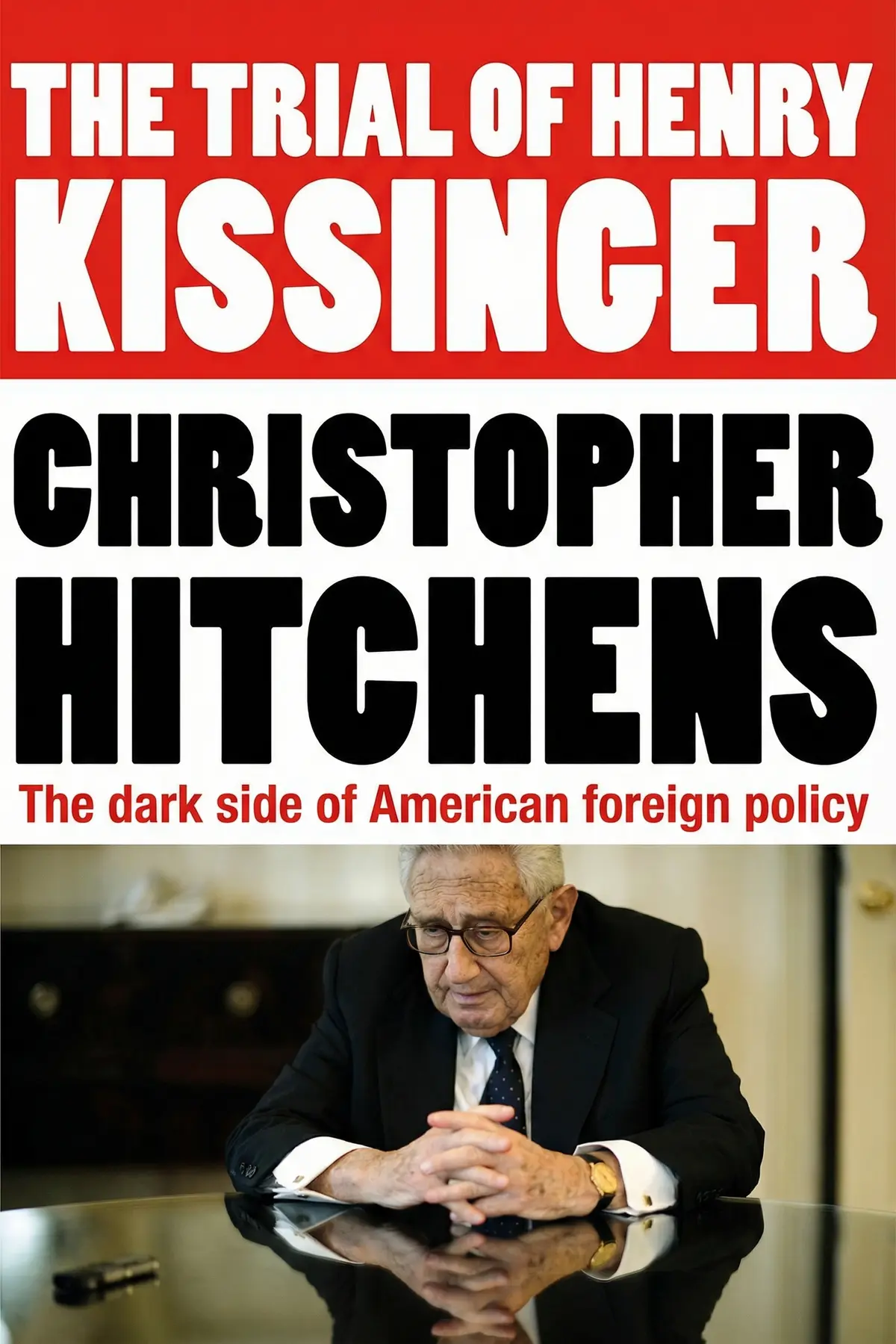
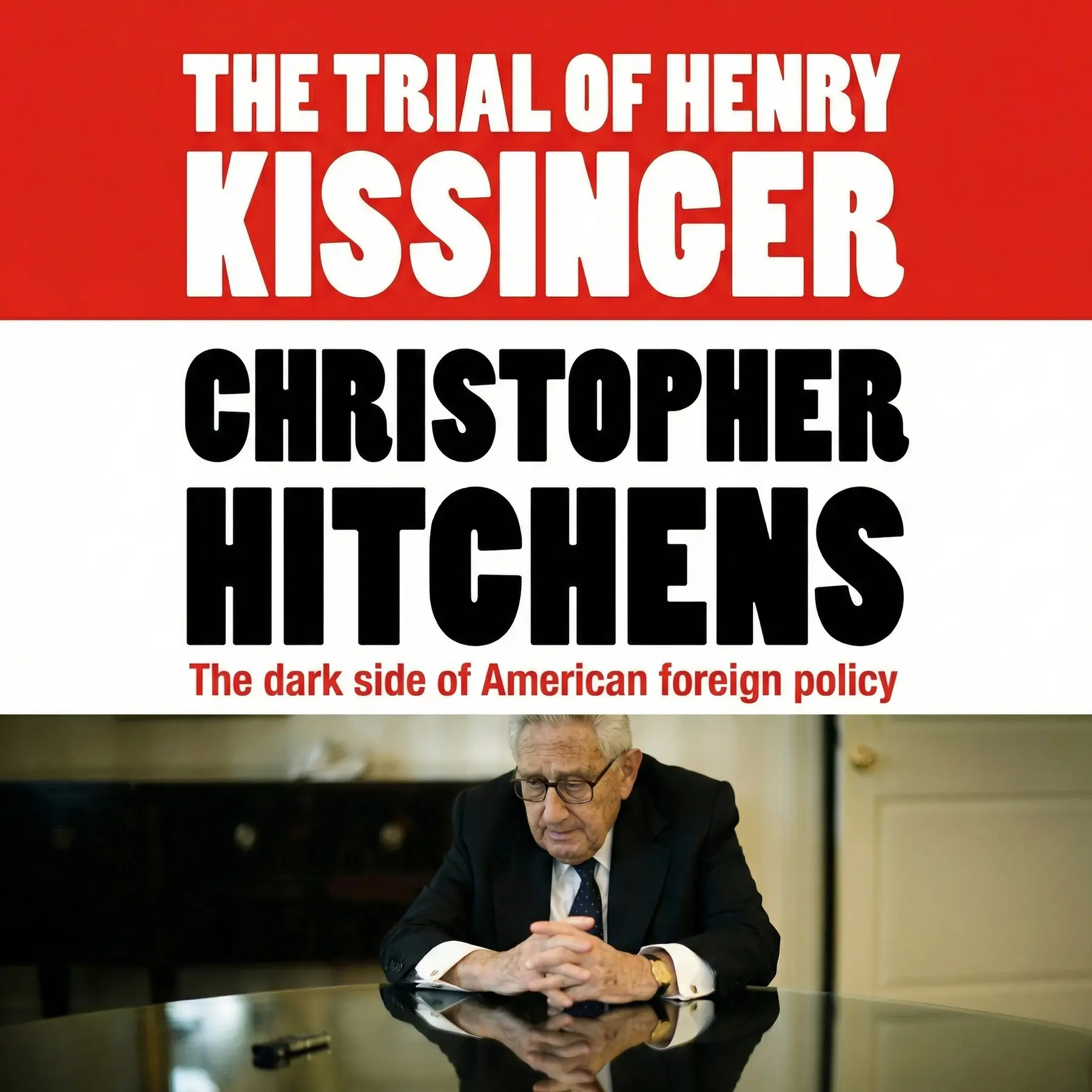
A provocative examination of Henry Kissinger’s record, Christopher Hitchens presents a case for the indictment of the famous diplomat, alleging his direct involvement in war crimes, assassinations, and illegal foreign interventions across several continents.
1 min 42 sec
Henry Kissinger is a name that commands respect in many circles. He is frequently portrayed as the ultimate elder statesman, the brilliant architect of cold-eyed diplomacy who navigated the treacherous waters of the 20th century. Even decades after leaving office, his opinion is sought on nearly every major international crisis. We see him as a Nobel laureate, the man who opened the door to China and brought a measure of stability to a world on the brink of nuclear catastrophe. But there is a shadow that follows this legacy—a shadow that most history books tend to overlook.
In this exploration of Christopher Hitchens’ work, we are going to look past the polished image of the pragmatic diplomat. We are going to examine a series of grave allegations that suggest Henry Kissinger’s career was defined not just by peace deals, but by what Hitchens identifies as war crimes, assassinations, and systemic human rights violations. The central question we are tackling today is whether the ‘realpolitik’ Kissinger practiced was actually a shield for activities that would see any other leader hauled before an international tribunal.
Over the next several sections, we will trace Kissinger’s influence across the globe. We will look at the secret sabotage of peace talks that might have ended the Vietnam War years earlier. We will follow the trail of blood through the Mekong Delta, Cambodia, and Laos. We will investigate the tragic events in Bangladesh and the violent overthrow of democracy in Chile. Finally, we will see how these political maneuvers eventually translated into personal profit. This is not just a biography; it is a prosecutorial case. It is a journey into the dark heart of power, asking what happens when the pursuit of national interest crosses the line into criminality.
2 min 00 sec
What if the Vietnam War could have ended years earlier? Explore the shocking allegation that a future Secretary of State undermined peace for a seat at the table.
1 min 53 sec
Beyond the battlefields of Vietnam, secret operations were claiming thousands of civilian lives. Learn how Kissinger’s strategies led to illegal bombing campaigns.
1 min 59 sec
In the shadow of the Cold War, a genocide was ignored for the sake of strategic partnerships. See why Kissinger stood by as millions suffered.
2 min 00 sec
How far would the U.S. go to stop a democratically elected leader? Discover the dark history of the 1973 coup and the assassination of a general.
1 min 50 sec
A single meeting in Jakarta preceded one of the 20th century’s most overlooked genocides. Uncover the truth about the invasion of East Timor.
1 min 50 sec
Does ‘Realpolitik’ have a price tag? Explore how Kissinger used his political connections to build a lucrative consulting empire.
1 min 51 sec
Why is a man accused of such crimes hailed as a hero? Examine the double standards of international law and the call for a trial.
1 min 34 sec
The portrait Christopher Hitchens paints of Henry Kissinger is a far cry from the image of the wise, white-haired diplomat we often see on television. It is a portrait of a man who viewed the world as a game of chess, where the pieces were not wooden figurines, but millions of human lives. From the secret sabotage of peace in Vietnam to the bloody streets of Santiago and the starving villages of East Timor, the evidence suggests a consistent pattern of behavior: the pursuit of power and strategic advantage, regardless of the human cost.
What this summary reveals is that ‘realpolitik’ is not just a neutral academic term. In practice, it can be a justification for the most horrific acts imaginable. The lesson here isn’t just about one man’s legacy; it’s about the nature of power itself and the lack of accountability that often accompanies it. When we allow those in high office to operate above the law, we set a precedent that can have devastating consequences for generations to come.
As you reflect on these findings, consider the importance of historical memory. It is easy to let the passing of time soften the edges of a controversial career, but for the victims in Bangladesh, Chile, and Indochina, the consequences of these policies are very much alive. Hitchens’ work serves as a powerful reminder that justice should not have an expiration date, and that no one, no matter how influential or well-connected, should be beyond the reach of the truth. True diplomacy should aim for a more peaceful world, not just a more profitable or strategically convenient one.
The Trial of Henry Kissinger offers a searing critique of one of the most influential figures in modern American history. While much of the world views Henry Kissinger as a master of diplomacy and a Nobel Peace Prize winner, author Christopher Hitchens presents a radically different perspective. This summary explores the evidence Hitchens compiled to argue that Kissinger should be held legally responsible for actions taken during his time in the Nixon and Ford administrations. The book moves across the globe, from the jungles of Indochina and the streets of Santiago to the massacres in Bangladesh and East Timor. It promises to pull back the curtain on 'realpolitik,' suggesting that what some call pragmatic statecraft was, in fact, a series of calculated decisions that resulted in the deaths of hundreds of thousands of civilians. By re-examining declassified documents and historical accounts, the summary provides a sobering look at the darker side of American foreign policy and the lingering questions of international justice and accountability for those in power.
Christopher Hitchens was a prominent English author, debater, and journalist known for his sharp wit and willingness to challenge powerful figures and institutions. A self-described socialist, he often took controversial stands on famous public personalities. In his later years, he gained significant attention for his anti-religious writings and his outspoken support for the Iraq War. Hitchens was a prolific writer whose career spanned several decades before he passed away in 2011.
Christopher Hitchens
Christopher Hitchens
Christopher Hitchens
Listeners find the work thoroughly researched, with one listener noting it includes actual classified documentation, and they consider it well worth their time. Additionally, the quality of the prose receives high marks, with one listener characterizing it as a wonderfully written history. The title also delivers deep historical perspectives, with one listener emphasizing how it masterfully documents Kissinger's war crimes. Nevertheless, reactions concerning the pacing and authenticity are mixed among listeners.
Finally got around to reading this classic polemic, and it certainly lives up to the reputation. Hitchens operates here as a relentless prosecutor, laying out a devastating case that goes far beyond mere political disagreement. What impressed me most was the inclusion of actual classified documentation and declassified cables that support his claims regarding the 1968 election and the destabilization of Chile. The writing is sharp, witty, and unapologetically aggressive, which makes for a gripping read despite the heavy subject matter. Frankly, it is a masterclass in how to hold power to account when the official record tries to smooth over the rough edges. While some might find his tone a bit much, the sheer weight of the evidence regarding Indochina is difficult to dismiss once you see it laid out so clearly. It is a wonderfully written history that feels more relevant than ever in our current political climate.
Show moreWow. I was absolutely floored by the level of research that went into this relatively short volume. Hitchens takes the 'cowboy' persona that Kissinger cultivated and strips it away to reveal something much more sinister. The sections on the genocide in Bangladesh and the deliberate prolongation of the Vietnam War are some of the most harrowing pieces of non-fiction I have ever encountered. Every sentence is packed with meaning, and the varied sentence lengths keep the momentum moving like a legal thriller. Not gonna lie, I had to take breaks because the content is so heavy, but the quality of the prose kept pulling me back in. He masterfully documents how a single individual could influence the fate of millions with such cold-blooded indifference. If you want to understand the dark side of American foreign policy, this is an essential read.
Show moreThe chapter on East Timor is easily the most chilling section of this entire volume and worth the price of admission alone. Hitchens manages to distill incredibly complex diplomatic maneuvers into a narrative that is both easy to digest and deeply infuriating. He doesn't just make vague accusations; he points to specific meetings and memos that show a clear awareness of the atrocities being committed. Frankly, the book changed the way I look at that entire era of American history. The prose is sharp and moves at a breakneck pace, which helps when dealing with such grim subject matter. While it's true that the book is an angry polemic, the anger feels entirely justified given the evidence presented. It’s a slim book that carries the weight of a much larger tome. Absolutely worth your time if you value investigative journalism.
Show moreThis book reads less like a standard biography and more like a focused legal indictment designed for an international court. Hitchens skips the usual literary ornamentation he is known for to provide a hard-nosed brief on war crimes. The historical insights regarding the invasion of East Timor and the secret bombings of Cambodia are genuinely chilling and well-supported by the text. To be fair, the book does presume a high degree of prior knowledge from the reader, and the pacing can feel a bit rushed as he jumps between different global atrocities. I occasionally found myself needing to look up additional context to fully grasp the significance of some minor players mentioned in the Cyprus chapters. Still, the core argument is powerful and the documentation is robust. It is a necessary counter-narrative to the standard 'statesman' image often presented in mainstream media.
Show moreLook, Hitchens isn't hiding his bias here, but the sheer volume of declassified information he provides is hard to ignore. The way he documents Kissinger's involvement in the overthrow of Allende is meticulous and deeply disturbing. I appreciated how he connects the dots between different theaters of operation, showing a consistent pattern of realpolitik that ignored human costs. My only real complaint is that the authenticity of some of the more speculative leaps regarding the Greek journalist Elias Demetracopoulos felt a bit thinner than the rest of the book. Truth is, the Indochina sections are so strong that the weaker chapters don't detract too much from the overall impact. It is a dense read, and you might find yourself squirming with rage by the final page. Hitchens has a way of making you feel the weight of every decision made in those closed rooms.
Show moreAs someone who only knew the basics of the Nixon era, this was an eye-opening deep dive into the mechanics of state power. Hitchens focuses on the specifics of Kissinger's actions in Cambodia and Chile, using actual records to build a case for accountability. The book is wonderfully written, though the author's notorious biting tone can sometimes feel like it's overshadowing the facts. Personally, I think the argument that Kissinger should be held to the same standards set at the Tokyo War Crimes trials is the most compelling part of the work. There are some pacing issues in the middle sections where the names of minor diplomats come at you fast and furious. However, the overall historical value of the work is undeniable. It forces you to question why certain figures are allowed to remain in the good graces of the establishment despite such a track record.
Show morePicked this up after seeing the documentary, and the book provides much more of the 'legal brief' feel that Hitchens was aiming for. It is a whirlwind tour of bad acts around the world, from Cyprus to Bangladesh, and it rarely stops for breath. The way he uses Kissinger's own words and public statements against him is quite clever and effective. Gotta say, the book is quite dense and occasionally the pacing feels a bit off, especially when he moves quickly between different decades. I would have liked a bit more detail on the domestic political fallout of these decisions. However, as a condemnation of a ruling class that views human lives as pawns, it is incredibly effective. It is a hard-hitting piece of work that doesn't pull any punches. You won't look at a black-tie Washington event the same way again.
Show moreAfter hearing so much about Kissinger's legacy, I wanted to see the case against him, and Hitchens certainly delivers. This is a clear-eyed and devastating look at the human cost of realpolitik. The documentation regarding the secret bombing of Cambodia is particularly well-presented and difficult to argue with. To be fair, Hitchens does have a tendency to assume you already know a lot about 20th-century history, so keep your phone handy to look up some of the references. The writing is punchy and direct, avoiding the flowery language he uses in his later essays. Some might find the lack of a traditional narrative structure off-putting, but it works for the 'trial' format he intended. It provides essential historical insights that you won't find in a standard textbook. Definitely a solid four-star read for anyone interested in international justice.
Show moreNot what I expected after hearing all the hype about Hitchens' brilliance as a writer. While the book certainly provides some eye-opening historical insights, the structure felt incredibly fragmented and frustrating at times. In several chapters, he makes a bold allegation and then provides a plethora of information that doesn't quite close the logical argument. It felt like watching a trial where the prosecutor keeps getting distracted by his own cleverness instead of finishing the syllogism. The chapter on East Timor was the only one where I felt the evidence truly matched the intensity of the rhetoric. In my experience, the book is a bit too short to cover such a wide range of complex geopolitical events effectively. It serves as a good starting point for research, but I wouldn't call it the definitive account of these events.
Show moreAbsolutely dreadful experience. I don't know if Hitchens is right about the specific allegations regarding the 1968 election, but his obnoxious tone makes it impossible to enjoy the book. He seems more interested in blasting insults than in providing a balanced historical account. The writing quality is technically fine, but the constant snide remarks and aggressive posturing undercut the seriousness of the charges he is making. I kept finding myself saying 'okay, then what?' because he often fails to finish his logical arguments before moving on to the next insult. It felt more like a long, angry blog post than a serious work of history or law. If you are looking for an objective look at this period, you should probably look elsewhere. I hated almost every page of this one.
Show more
Yanis Varoufakis
Yuval Noah Harari
Jacinda Ardern
Pankaj Mishra
Michael Axworthy
James Comey
Anthony Pratkanis
AUDIO SUMMARY AVAILABLE
Get the key ideas from The Trial of Henry Kissinger by Christopher Hitchens, plus 5,000+ more titles in English and Thai.







