

27 min 57 sec
Green Illusions: The Dirty Secrets of Clean Energy and the Future of Environmentalism
By Ozzie Zehner
Green Illusions challenges the conventional wisdom of the environmental movement, arguing that renewable energy technologies often mask deeper ecological problems and that true sustainability requires a fundamental shift in our consumption habits.
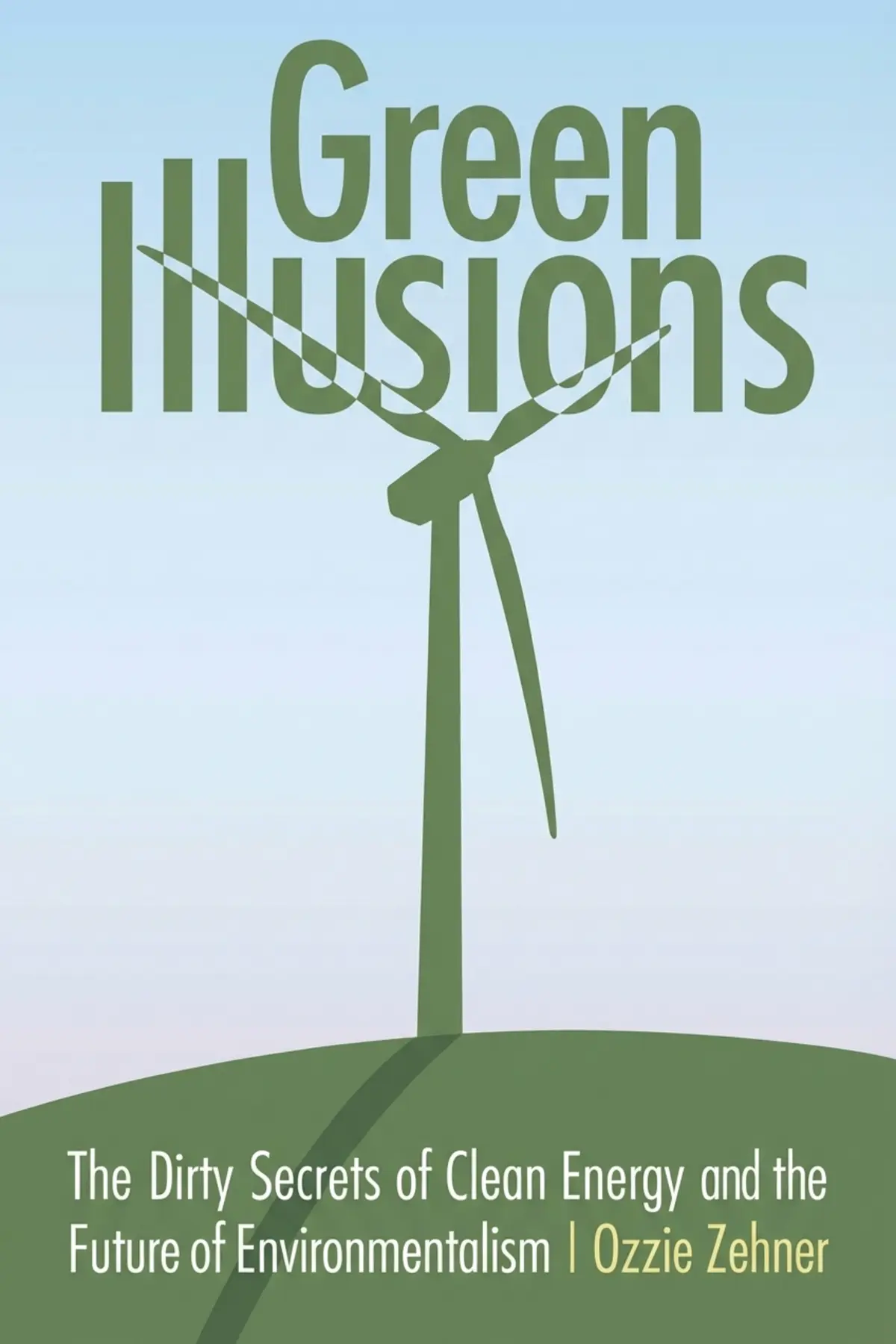
Table of Content
1. Introduction
1 min 37 sec
Imagine a world where every rooftop is covered in solar panels, every hillside is dotted with wind turbines, and every car runs on clean, plant-based fuel. For many of us, this is the ultimate vision of a sustainable future. We are told that technological innovation is the key to stopping climate change and ending our reliance on dirty fossil fuels. But what if this vision is actually a distraction? What if our reliance on these ‘green’ technologies is doing more to soothe our consciences than to actually save the planet?
In Green Illusions, author Ozzie Zehner takes a provocative and deeply researched look at the underside of the clean energy industry. He argues that by focusing so intensely on how we produce energy, we are ignoring the much more important question of how much energy we consume. Zehner suggests that many of our favorite alternative energy solutions come with hidden environmental costs, toxic byproducts, and social consequences that we rarely hear about in the mainstream media.
This isn’t just a critique of technology; it is a call to rethink our entire relationship with the environment. Throughout this summary, we will explore why the hype surrounding renewables might be overrated and how the pursuit of ‘green’ tech can sometimes accelerate the very problems it aims to solve. We’ll look at the limitations of everything from solar power to electric cars, and we’ll discover why the most effective environmental solutions aren’t found in a laboratory, but in our daily choices, our urban planning, and our social structures. By the end, you may find that the path to a truly sustainable future looks very different than you once imagined.
2. The Hidden Costs of Conventional Power
2 min 27 sec
Explore the fundamental flaws of our current energy landscape as we examine why coal and nuclear power remain dominant despite their severe environmental risks and hidden financial costs.
3. The Paradox of Biofuels and Land Use
2 min 15 sec
Delve into the unintended consequences of plant-based fuels and learn why the push for ‘regrowable’ energy could lead to global food shortages and increased carbon emissions.
4. The Manufacturing Footprint of Solar and Hydro
2 min 28 sec
Understand why even the most iconic symbols of clean energy, like solar panels and hydroelectric dams, carry heavy environmental burdens and spark international tensions.
5. The Energy Reality of Wind and Hydrogen
2 min 20 sec
Examine the limitations of wind turbines and hydrogen fuel cells, focusing on the massive amounts of conventional energy required to build and maintain them.
6. The Illusion of Technological Salvation
2 min 17 sec
Uncover the psychological reasons why we cling to technology as a cure-all, and how this ‘green conscience’ allows us to avoid the difficult reality of reducing our consumption.
7. The Influence of Green Marketing and Media
2 min 26 sec
Learn how the media and corporate interests shape our perception of clean energy, often overlooking simple, non-technical solutions in favor of profitable high-tech alternatives.
8. The Efficiency Trap and the Jevons Paradox
2 min 16 sec
Discover the counterintuitive economic principle that explains why making our gadgets and cars more energy-efficient might actually lead us to consume more power rather than less.
9. Reframing Consumption as a Personal Benefit
2 min 14 sec
Explore why the secret to environmental success lies in focusing on the immediate, tangible benefits of a simpler lifestyle, such as improved health and more free time.
10. Systemic Policy Shifts for a Leaner Future
2 min 14 sec
Discover practical government policies, from consumption taxes to packaging regulations, that could drastically reduce national energy use without sacrificing quality of life.
11. Empowering Women and Protecting Children
1 min 48 sec
Understand the social dimensions of environmentalism, including how education for women and advertising bans for children can lead to a more sustainable population and culture.
12. The Environmental Case for Dense Urban Living
2 min 11 sec
Challenge the myth of the ‘green’ suburb and learn why living in walkable, bike-friendly cities is actually the most sustainable choice for a modern society.
13. Conclusion
1 min 24 sec
The message of Green Illusions is both a warning and an invitation. It warns us that our current path—relying on technological ‘fixes’ to maintain an unsustainable lifestyle—is a dead end. Whether it’s the toxic byproducts of solar manufacturing, the land-use conflicts of biofuels, or the efficiency paradoxes of new gadgets, technology alone cannot solve a crisis rooted in excess.
However, the book also invites us to imagine a more fulfilling way of living. True environmentalism isn’t about deprivation; it’s about realignment. It’s about choosing a life that values time over things, community over consumption, and health over convenience. By shifting our focus from how we produce energy to how we live our lives, we can find solutions that are more effective and more rewarding.
So, where do we start? We can begin by looking at our own daily habits. Could you swap one car trip a week for a bike ride? Could you support policies that tax consumption rather than income? Could you choose to live in a more walkable community? The most powerful environmental tool we have isn’t a new kind of battery or a more efficient turbine—it is our ability to choose a simpler, more intentional way of life. By letting go of the green illusions of the past, we can start building a truly sustainable future today.
About this book
What is this book about?
This summary dives deep into the unsettling realities of the clean energy industry. It explores why solar panels, wind turbines, and biofuels may not be the environmental saviors they are marketed to be. Instead of focusing solely on energy production, the book suggests that these technologies often create new environmental hazards while failing to address the root cause of our crisis: a culture of excessive consumption. Listeners will learn about the hidden carbon footprints of renewable hardware, the psychological traps of the green conscience, and the economic paradoxes that make efficiency gains backfire. The promise of the book is a clearer, more holistic understanding of environmentalism that moves beyond technological quick fixes and toward community-centered, behavioral solutions that can actually sustain the planet for future generations.
Book Information
About the Author
Ozzie Zehner
Ozzie Zehner is an American author who serves as a reviewer for the Intergovernmental Panel on Climate Change (IPCC). A respected voice in environmental analysis, his writing and research have been featured in major international publications, including The Sunday Times, Wired, and The Washington Post.
Ratings & Reviews
Ratings at a glance
What people think
Listeners find this book highly worth reading, with one noting it introduces fresh perspectives to the environmental landscape. The quality of information receives positive feedback, as one listener highlights its deep scientific basis. Furthermore, the content is thought-provoking, pushing people to question their daily routines, and listeners laud the pacing as a superb achievement. They appreciate the focus on energy usage, particularly the emphasis on lowering consumption, and one listener identifies the book as an eye-opener.
Top reviews
Ratree
Zehner’s work is a total paradigm shift that shattered my naive optimism regarding the 'green' energy movement. For years, I assumed solar panels and electric cars were the ultimate fix, but this book exposes the dirty manufacturing processes and toxic gases like nitrogen trifluoride that often go unmentioned. The author’s central argument—that we must prioritize energy reduction over mere production—is a hard pill to swallow but feels fundamentally necessary. Frankly, the way he links environmentalism to women’s reproductive rights and urban walkability was a revelation. It transforms 'saving the planet' from a shopping list of gadgets into a profound cultural shift. While the pacing is impressively fast for a non-fiction book, some of the metaphors feel a bit reaching. Regardless, it is an eye-opener that encourages you to question every 'eco-friendly' product you see. This is an essential read for anyone tired of corporate greenwashing.
Show moreNiramai
The connection between women’s rights, military spending, and carbon emissions was something I never saw coming in an environmental book. Zehner argues that we can't solve the energy crisis without addressing population growth and consumer culture. It’s a bold take. I loved how he exposed the LEED certification as more of a PR gimmick than a real sustainability standard. The chapter on the 'Architecture of Community' really hit home for me. It made me realize how much of our energy use is dictated by poor city zoning and sprawl. We’ve paved over our best soil for parking lots and highways. The truth is, technology won't save us if we don't change our habits. It’s a dense read but the information quality is top-tier. I’ve been recommending this to everyone in my local sustainability group because it moves the conversation past the usual solar-vs-coal talking points.
Show moreGame
Not what I expected from an environmental book, but maybe that's the point. Instead of boring graphs, Zehner gives us a searing critique of the 'holy cows' of the green movement. He exposes how Big Oil has co-opted the alternative energy industry as a PR shield. It's fascinating. I was particularly struck by the facts regarding radioactive contamination from nuclear sites and the inefficiency of hydrogen cells. The book is an outstanding effort in terms of pacing and information quality. It’s rare to find a book that connects military arms production to your personal energy bill so effectively. The truth is, we are addicted to consumption, and Zehner is the only one brave enough to say the cure isn't more tech—it's less of everything. This book should be required reading in every high school. It changed the way I look at my commute and my kitchen appliances.
Show morePrayoon
After hearing so much buzz about this 'post-environmentalist' bible, I had to see if it lived up to the hype. It does. Zehner’s analysis of the hidden costs of solar cells—like the emission of sulphur hexafluoride—is a masterclass in scientific literacy. He doesn't let anyone off the hook, from the LEED board to the manufacturers of 'eco-friendly' gadgets. The book is devastatingly honest about the challenges we face. I especially appreciated the section on how our ancestors thought petroleum would save the whales; it puts our current 'green' obsession into a brilliant historical context. While some might find his focus on social issues like income inequality to be a reach, I think it’s the most original part of the debate. This book doesn't just give you facts; it gives you a new lens to view the world. Truly a classic in the making for environmental literature.
Show moreThitiwan
Ever wonder why our supposed 'clean' energy solutions never seem to actually lower our total carbon footprint? Green Illusions dives head-first into Jevon’s paradox, explaining how efficiency gains often just lead to more consumption. The first half is a brutal, data-driven takedown of wind, solar, and biofuels that left me reeling. To be fair, I found the second half a bit more wandering as it veered into child advertising and teenage acne. I appreciate the holistic approach, but it felt a little less grounded than the technical critiques. The writing style is engaging and accessible, avoiding the dry tone of most academic environmental texts. Zehner is clearly a brilliant thinker, even if his vision of a 'Department of Efficiency' feels like a political pipe dream in today’s climate. It’s a provocative, important book that forces you to re-evaluate your lifestyle and the systems we take for granted.
Show moreDivya
Finally got around to reading this, and it’s easily the most thought-provoking book on my shelf. Zehner doesn't just scratch the surface; he digs into the 'dirty little secrets' of the green movement. I found the analysis of the life cycle of wind turbines particularly eye-opening—those things aren't as carbon-neutral as they look. The author's focus on reduction rather than production is a refreshing change of pace. I did find some of his solutions, like campaign finance reform, to be a bit optimistic given our current political gridlock. Also, the section on child advertising was interesting but felt slightly tangential to the core energy theme. Despite these minor gripes, the book is incredibly readable. It challenges the status quo of 'clean energy' in a way that is both devastating and hopeful. If you're ready to have your assumptions challenged, buy this book.
Show moreHunter
As someone who has always been a diehard believer in solar power, this book was a much-needed reality check. Zehner shows that many alternative-energy technologies are only as durable as the subsidies that support them. He isn't saying we should stick with coal; he's saying we're asking the wrong questions. The writing is surprisingly funny in places, which helps balance out the somewhat bleak data. I appreciated the deep dive into the 'Green Revolution' and how it actually led to a massive increase in energy inputs for agriculture. Some parts are a bit repetitive, and the author definitely has a bias toward high-density urban living. However, the core message about curbing rampant consumerism is undeniable. It’s a capital-I Important book that reframes environmentalism for a new generation. We need more of this kind of 'post-environmentalist' thinking.
Show moreSuvannee
I want to divide this book into two distinct sections: the first is an awesome, five-star critique of alternative energy. Zehner masterfully explains why wind and solar aren't the panaceas they are marketed to be, highlighting the huge energy inputs required for their production. However, my enthusiasm waned in the second half. He starts blaming energy use for everything from obesity to sexuality, which felt like a massive stretch. The constant comparisons to European 'energy paradises' got old quickly. We are Americans, and we need solutions that fit our specific cultural landscape, not just a lecture on why we should live like Danes. It’s a good book with some very sharp insights, but it loses its way when it tries to be a catch-all solution for every social ill. Read it for the tech critique, but take the sociology with a grain of salt.
Show moreYaowaluk
Truth is, I have mixed feelings about this one. On one hand, Zehner is right to point out that 'clean energy' isn't really clean when you factor in the toxic greenhouse gases used in manufacturing. The critique of hybrid cars as a PR ruse for the auto industry was particularly sharp. On the other hand, the book feels incredibly polemical at times. The author dismisses almost every technological advancement as a distraction, which feels a bit disingenuous. Is he really suggesting we can just 'vote' our way out of a climate cataclysm? His solutions often feel like pipe dreams that ignore the reality of entrenched corporate power. I liked the focus on walkable communities, but the 'Architecture of Community' section dragged on far too long. It’s a solid 3-star read: great for deconstructing myths, but less successful at building a realistic path forward.
Show moreGoy
Picked this up at the library hoping for a rigorous critique of green tech but I was sorely disappointed by the blatant errors. As someone with a background in electrical engineering, I found the claim that solar photovoltaics would cost $44 trillion to manufacture completely absurd. It’s an order of magnitude off. The author seems less interested in science and more interested in a biased crusade against any technology that isn't a bicycle or a bus. The prose is filled with fear-mongering anecdotes and an annoying 'Europe does it better' attitude that ignores our unique socio-economic context in America. The book is repetitive, especially toward the end, and the section on bicycle insurance was just bizarre. If you want a serious economic analysis of energy, look elsewhere. This felt more like a manifesto for living in a dense urban commune than a balanced scientific study.
Show moreReaders also enjoyed


Beyond Words: What Animals Think and Feel
Carl Safina

Cradle to Cradle: Remaking the Way We Make Things
William McDonough
Cod: A Biography of the Fish That Changed the World
Mark Kurlansky

Comfortably Unaware: What We Choose to Eat is Killing Us and Our
Richard A. Oppenlander

Drinking Water: A History
James Salzman
AUDIO SUMMARY AVAILABLE
Listen to Green Illusions in 15 minutes
Get the key ideas from Green Illusions by Ozzie Zehner, plus 5,000+ more titles in English and Thai.
- 5,000+ titles
- Listen as much as you want
- 7-day free trial
- Cancel anytime







