
17 min 26 sec
How Music Got Free: The End of an Industry, the Turn of the Century, and the Patient Zero of Piracy
By Stephen Witt
Explore the dramatic collapse and rebirth of the music industry. This account reveals how a German lab, a North Carolina factory worker, and corporate giants reshaped how we listen to music.
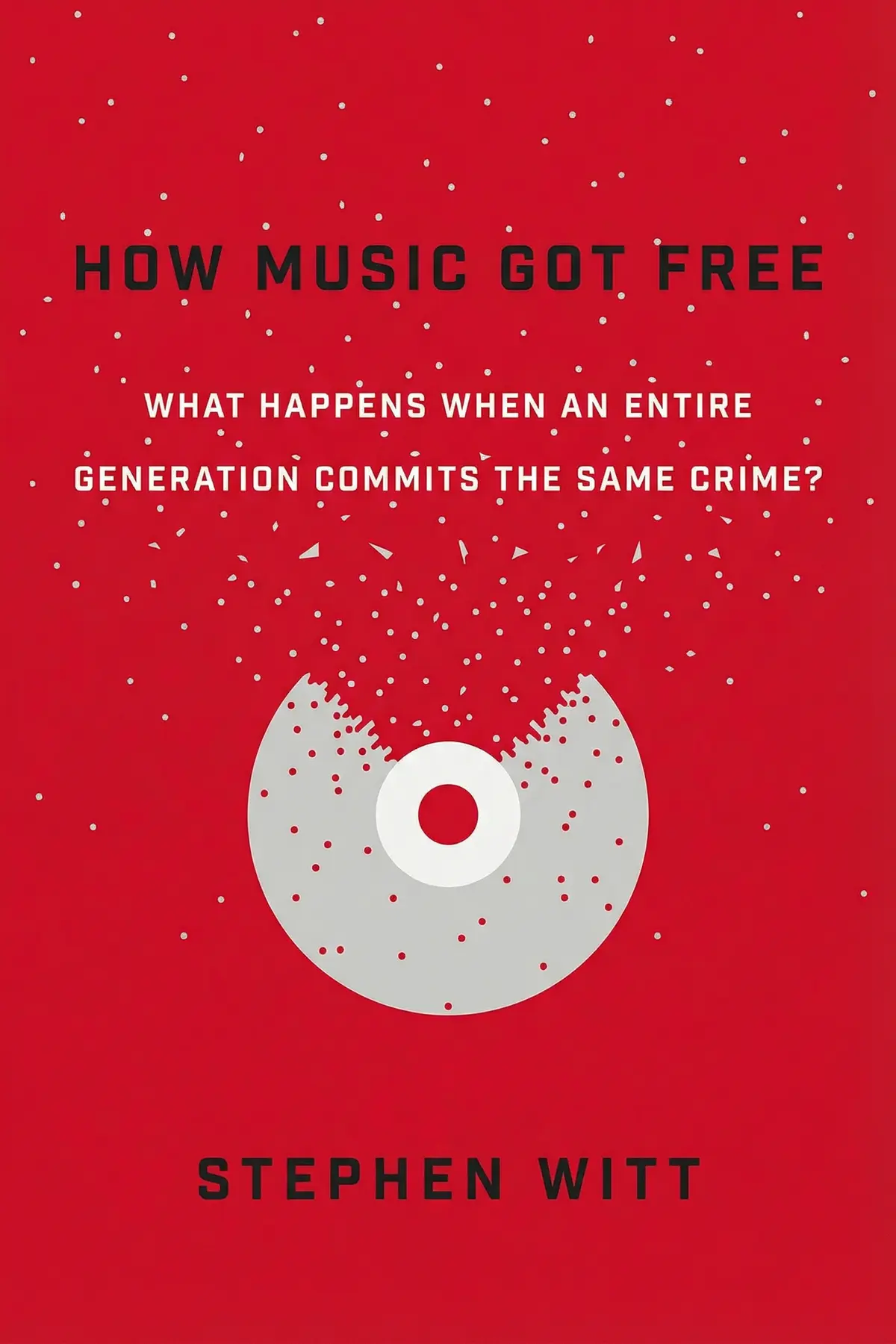
Table of Content
1. Introduction
1 min 24 sec
Think back to the turn of the millennium. If you were a music fan, your bedroom was likely dominated by shelves of plastic jewel cases. Buying music was a physical, expensive ritual. But seemingly overnight, those shelves began to gather dust. The transition from physical discs to digital files wasn’t just a change in convenience; it was a total revolution that almost brought one of the world’s most profitable industries to its knees.
In this story, we are going to look at the three-pronged attack that dismantled the traditional record business. First, we’ll see how a group of German engineers used the science of human hearing to shrink music into a portable format. Then, we will step inside a CD manufacturing plant in North Carolina to meet an unlikely insider who became the world’s premier music pirate. Finally, we’ll witness the corporate boardrooms where executives, blinded by massive profits, failed to see the digital tidal wave until it was too late.
This is a journey through the history of the MP3 and the era of piracy. It is a story of how a single piece of code and a few determined individuals managed to make music free for everyone, changing the way we value and consume art forever. We’ll see how the industry fought back with lawsuits and security measures, only to eventually find a new, if controversial, stability in the world of streaming. By the end, you’ll understand the complicated legacy of the digital files sitting on your phone right now.
2. The Engineering of Silence
1 min 50 sec
Discover how scientists exploited the limits of human hearing to shrink music files without sacrificing quality.
3. The Political Battle for a Standard
1 min 32 sec
The MP3 almost vanished into obscurity due to corporate lobbying and technical committees.
4. The Accidental Revolution
1 min 36 sec
How a desperate decision to give away software for free sparked a global piracy movement.
5. The Man Inside the Factory
1 min 14 sec
Meet Dell Glover, the unassuming factory worker who became the primary source for the world’s music leaks.
6. High-Tech Heists and Large Belt Buckles
1 min 41 sec
The surprising and low-tech methods used to bypass high-tech factory security.
7. The Industry’s Fatal Oversight
1 min 14 sec
Why record executives ignored the digital threat until their billion-dollar profits began to vanish.
8. The Napster Tipping Point
1 min 13 sec
The arrival of peer-to-peer sharing changed the marketplace forever, regardless of legal outcomes.
9. The Legal Crusade Against Fans
1 min 45 sec
How a desperate campaign of suing individual listeners backfired on the major record labels.
10. The Rise and Fall of Rabid Neurosis
1 min 21 sec
The final days of the world’s most prolific piracy group and the trial that followed.
11. The Dawn of the Streaming Era
1 min 16 sec
How the industry finally traded ownership for access, bringing an end to the era of the file.
12. Conclusion
1 min 20 sec
The story of how music got free is more than just a tale of technological change; it is a story of how the world’s most powerful industries can be blindsided by their own success. We’ve seen how a group of dedicated engineers in Germany created a tool they didn’t realize would be used for a revolution. We’ve seen how a single factory worker in North Carolina could bypass the security of a multi-billion dollar corporation using nothing more than a large belt buckle. And we’ve seen how the record labels’ refusal to adapt led to a decade of legal warfare that they ultimately couldn’t win.
Today, the battle over the MP3 is largely over. Streaming has become the new normal, and the days of massive underground piracy groups like Rabid Neurosis are behind us. But the legacy of that era remains. The power has shifted away from the gatekeepers who decided what we listened to and how much we paid for it.
As you listen to your favorite playlist today, remember that the ease of that experience was bought through a chaotic period of invention, theft, and corporate upheaval. The lesson of this journey is that technology will always find a way to meet human desire, even if the law and the economy have to break and rebuild themselves to make it happen. The music didn’t just get free; it changed the very nature of how we value digital information in the twenty-first century.
About this book
What is this book about?
This narrative explores the technological and cultural shifts that occurred when the music industry collided with the digital age. It tracks the invention of the MP3 format at a German research institute, showing how a small team of engineers changed the way audio data is compressed. Simultaneously, it follows the story of a high-volume pirate working inside a major CD manufacturing plant, leaking the world’s biggest albums before they hit shelves. The book promises a deep dive into the conflict between old-school record executives and the emerging world of online file-sharing. It examines the rise of platforms like Napster, the legal battles that followed, and the eventual transition to the streaming model we use today. You will learn about the human elements behind the data, from the motives of the leakers to the defensive maneuvers of the world's largest music groups.
Book Information
About the Author
Stephen Witt
Stephen Witt is a writer who belongs to the generation that grew up during the peak of digital piracy. He holds academic degrees in the fields of mathematics and journalism. Professionally, Witt has spent time working within the stock market and in economic development sectors.
Ratings & Reviews
Ratings at a glance
What people think
Listeners view this work as an essential read that is profoundly informed and thoroughly investigated, with one listener observing how it transforms ordinary details into something captivating. Furthermore, the prose is highly polished, and listeners characterize it as an intriguing examination of music’s digital transition, with one listener emphasizing how it portrays the excitement of accessing music for free. The book also offers an accessible experience, flowing like a work of fiction, and listeners value its excellent narrative style, with one listener mentioning how it illuminates a compelling era of modern history.
Top reviews
Orathai
Witt managed to take a story about file compression and turn it into a high-stakes heist thriller. I was mesmerized by the journey of Dell Glover, a low-level factory worker who essentially dismantled a billion-dollar industry from a CD pressing plant in North Carolina. The book weaves together the technical evolution of the mp3 with the corporate arrogance of executives like Doug Morris. It captures that specific cultural zeitgeist where the entire world decided that digital information should be free, regardless of the law. Truth is, the reporting here is exhaustive, yet it never feels like a dry history lesson. It reads like a fast-paced novel where you already know the ending, but you're desperate to see how the pieces fit together. My only gripe is that the final chapter felt a bit abrupt, but the ride there was absolutely worth it.
Show moreKru
This reads less like a history book and more like a high-octane crime drama. I was floored by the level of detail regarding the internal workings of the PolyGram plant. Seeing how Glover smuggled discs out under the noses of security was genuinely tense. Witt contrasts this perfectly with Doug Morris’s tenure at Universal, showcasing the industry's fatal delay in embracing the digital future. The research is clearly massive, but the storytelling is what makes it 'required reading' for anyone interested in media. Not gonna lie, I felt a bit guilty remembering my own pirated folders while reading about the fallout. It’s a well-crafted narrative that refuses to simplify a very complex cultural shift. If you want to understand the modern streaming world, you have to start here.
Show moreLucas
Picked this up on a whim and ended up finishing it in two sittings. It's one of those rare nonfiction books that actually lives up to the 'reads like a thriller' blurb on the cover. The way Witt connects the dots between a lab in Germany and a factory in the South is brilliant. You get a real sense of the arrogance of the music industry giants who thought they could sue their way out of a technological revolution. The character of Dell Glover is someone I’ll be thinking about for a long time. It’s a deeply knowledgeable account that sheds light on a period of history that changed how we perceive ownership. Look, if you’ve ever owned an iPod or used a torrent, you owe it to yourself to read this.
Show moreTakeshi
Wow, what a wild ride through the recent past of the music business. This book captures the joy and the chaos of the 'free music' era perfectly. I was particularly impressed by how Witt explained the psychoacoustic research behind the mp3 without making it feel like a textbook. The narrative drive is relentless, moving from corporate boardrooms to the FBI's investigation into online leakers. It’s a well-crafted look at how a single file format could bring a multi-billion dollar industry to its knees. I especially enjoyed the anecdotes about the rivalry between different piracy groups; it felt like a digital version of a gang war. In my experience, this is the definitive account of how we lost the concept of the 'album' and gained the 'stream.'
Show morePong
As a millennial who spent my adolescence waiting three hours for a single Limp Bizkit track to download on Napster, this book was a trip. Witt does an incredible job humanizing the engineers at the Fraunhofer Institute who were just trying to solve a math problem. I never realized how close the mp3 came to being a total failure before the internet pirates saved it. The narrative shifts between the German labs, the corporate boardrooms, and the underground 'Scene' with perfect timing. While some parts about the record industry's legal battles dragged slightly, the insight into the RNS group kept me turning pages. It's a deeply knowledgeable look at how a few obsessed individuals changed how we consume culture forever. Personally, it made me nostalgic for Winamp skins and the sound of a 56k modem.
Show moreWatcharee
Ever wonder how the music industry actually collapsed? This book provides a meticulously researched autopsy of the CD era. Witt focuses on three distinct pillars: the inventors, the executives, and the leakers. The sections on Karlheinz Brandenburg were surprisingly moving, showing the sheer persistence required to create a new standard. However, the standout is definitely Dell Glover, whose story feels like something out of a Scorsese movie. The book highlights the massive disconnect between the wealthy labels and the technology that was about to bankrupt them. Gotta say, the author’s prose is slick and accessible, making even the technical psychoacoustic details easy to grasp. It’s a fascinating look at a historical pivot point that most of us lived through without fully understanding the mechanics.
Show moreSven
The transition from physical media to the cloud is a story we all know, but Witt unearths the hidden players. I loved the focus on the RNS group and the competitive nature of the 'warez' scene. It wasn't about the money for them; it was about the glory of being first. This book does a great job of explaining why the record labels were so helpless against a decentralized enemy. My favorite parts involved the technical hurdles the German team faced while trying to convince the world their format was superior. It's a reminder of how often the best technology wins because of luck and timing rather than corporate backing. Some of the rap industry anecdotes felt a bit tangential, but they added color to the era. Overall, a great piece of investigative journalism.
Show moreArt
Frankly, I didn’t think I’d be interested in the logistics of a CD packaging plant in North Carolina. I was wrong. Stephen Witt manages to make the mundane details of manufacturing and shipping feel like vital clues in a global conspiracy. The book successfully captures the chaotic energy of the late 90s when the internet was still the Wild West. It’s particularly interesting to see how the industry's greed—keeping CD prices high while production costs dropped—fueled the public's desire to pirate. The technical explanation of how the human ear ignores certain frequencies was a highlight for me. While the author's personal interjections can be a bit distracting, the core reporting is top-notch. It’s a fascinating look at the digitization of music that explains our current Spotify reality.
Show morePia
To be fair, the content here is absolutely fascinating, but the writing style felt a bit like 'Magazine Feature Writing 101' at times. There’s a lot of descriptive padding that feels like it’s straining for a Michael Lewis vibe without quite getting there. I appreciated the deep dive into the 'Scene' and the Rabid Neurosis group, as that underground world was always a mystery to me. However, I kept waiting for a more profound moral analysis of the theft involved. Witt admits to his own massive collection of stolen music, yet he never really grapples with the ethical void of that generation. The reporting is solid, and I learned a ton about the Fraunhofer Institute's struggles. Still, the voice was a bit inconsistent, and it could have benefited from a tighter edit to keep the momentum going.
Show moreKasemsan
I found the author’s bias to be a major hurdle in enjoying what should have been a great history. Witt seems to have a real blind spot when it comes to the actual artists who lost their livelihoods during this era. He focuses so much on the 'cool' factors of the pirates and the greed of the executives that the musicians become afterthoughts. Also, his descriptions of Dell Glover felt a bit condescending and lacked a real understanding of the cultural context. The prose is often overwritten, with clunky transitions that slowed down my reading pace significantly. While the story of the mp3 invention is informative, the overall tone felt dismissive of the actual crime being committed. It's an interesting subject, but I think a more balanced perspective would have made for a much better book.
Show moreReaders also enjoyed
1929: Inside the Greatest Crash in Wall Street History--and How It
Andrew Ross Sorkin
Agent Sonya: The Spy Next Door
Ben Macintyre

A Biography of Loneliness: The History of an Emotion
Fay Bound Alberti
Alexander Hamilton
Ron Chernow
Alexander the Great
Philip Freeman


A History of Iran: Empire of the Mind
Michael Axworthy
A History of the World in 6 Glasses
Tom Standage
AUDIO SUMMARY AVAILABLE
Listen to How Music Got Free in 15 minutes
Get the key ideas from How Music Got Free by Stephen Witt, plus 5,000+ more titles in English and Thai.
- 5,000+ titles
- Listen as much as you want
- 7-day free trial
- Cancel anytime







