
24 min 37 sec
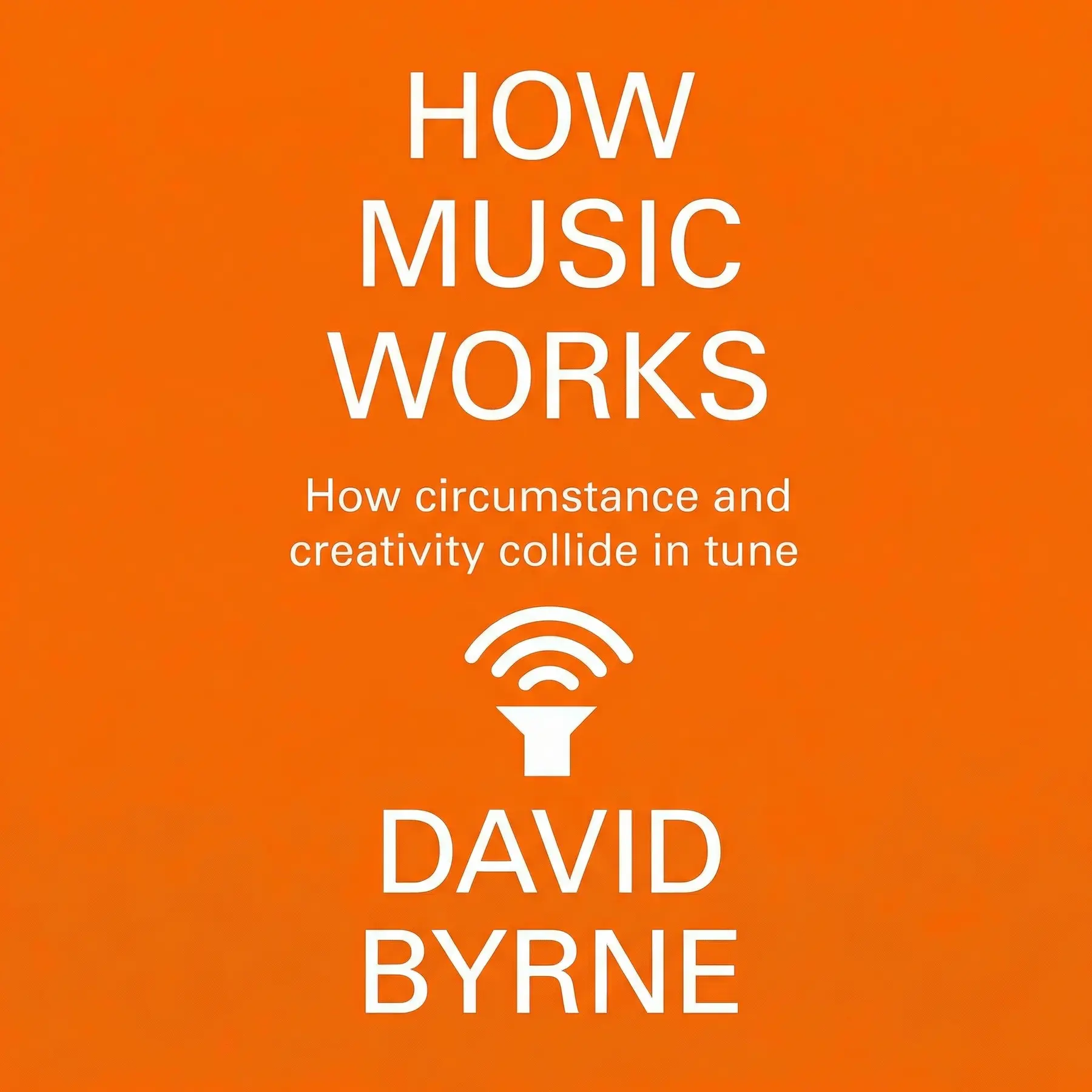
How Music Works
By David Byrne
Uncover how the physical world, technological shifts, and economic forces shape the music we love. This guide explores the fascinating intersection of human creativity and the environments where sound comes to life.
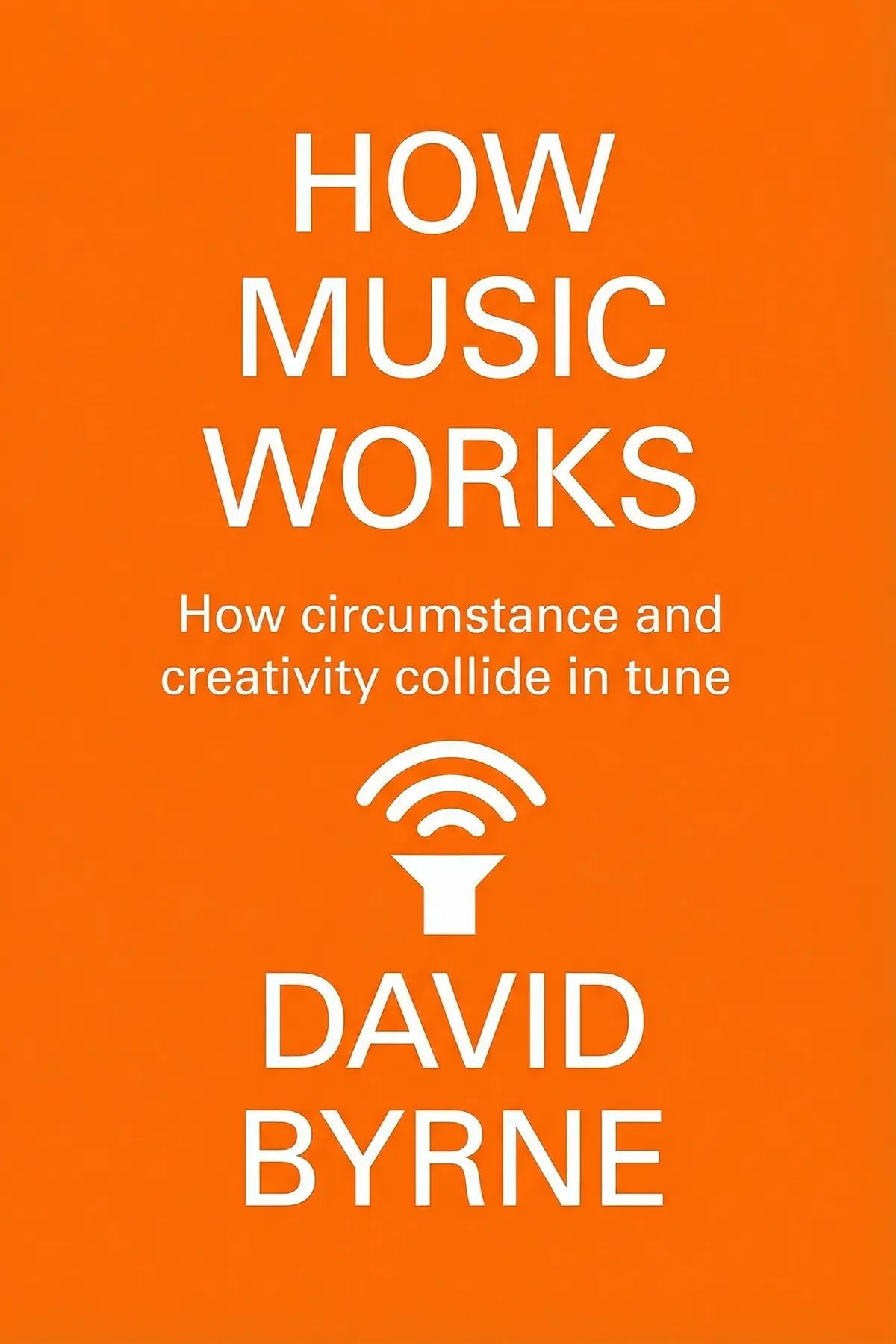
Table of Content
1. Introduction
1 min 47 sec
When we think about our favorite musicians, we often imagine them sitting in a room, suddenly struck by a lightning bolt of inspiration. We like to believe that music is a direct manifestation of a person’s inner soul, a pure emotional expression that bypasses the physical world. It is a romantic image, the lone composer scribbling notes onto a page as if they were channeling a divine message. But what if that is only a small part of the story? What if the music we create is actually a response to the physical spaces, the available technology, and the social structures of the time?
In this journey, we are going to look behind the curtain of the creative process. We will see that music is not just about talent or feelings; it is about context. It is about how a bird changes its song to be heard over city traffic and how a choir boy’s voice is shaped by the stone walls of a gothic cathedral. We are moving away from the myth of the isolated genius and toward a more complex, fascinating reality: that music is a living thing that adapts to its environment.
Over the course of this exploration, we will trace the history of sound from the flutes of Neanderthals to the digital files we share today. We will see how the invention of the microphone turned singers into crooners and how the rise of digital technology changed the very DNA of a pop song. We will also look at the business of music, which has undergone a radical transformation, and the social power of music to lift people out of poverty and reduce crime. By the end, you will see that the way music works is not just a matter of art—it is a matter of how we live, how we interact, and how we have evolved as a species. Let’s begin by looking at how the very air around us dictates the tunes we play.
2. The Influence of Physical Space
2 min 13 sec
Discover why the architecture of a room is just as important as the notes played, shaping everything from medieval chants to modern pop.
3. Technology and the Evolution of the Voice
2 min 08 sec
Learn how the invention of the microphone fundamentally changed the way humans sing, moving from powerful projection to intimate whispers.
4. The Impact of Sound Recording
2 min 06 sec
Explore how capturing sound on a disc moved music away from its live context and introduced a new standard of mathematical precision.
5. The Digital Slicing of Sound
2 min 39 sec
See how the transition from analog waves to digital ones and zeros has changed the texture and soul of modern recordings.
6. Isolation vs. Interaction in the Studio
2 min 02 sec
Understand the tension between the quest for a clean, controlled recording and the raw energy of a band playing together in one room.
7. The Power of Collaboration
1 min 55 sec
Examine how sharing the creative burden can lead to unexpected breakthroughs, even when collaborators are thousands of miles apart.
8. Adapting to the New Music Economy
1 min 53 sec
Dive into the radical shift of the music business, where records have become loss leaders for more profitable live events.
9. The Architecture of a Music Scene
1 min 51 sec
Learn the recipe for a vibrant musical movement, from the layout of the venue to the way the artists are paid.
10. Music as a Tool for Social Change
1 min 49 sec
Explore the powerful ways that making music can lower crime rates and provide a path out of poverty for young people.
11. Our Biological Connection to Sound
2 min 14 sec
Understand how music is hardwired into the human brain, from the flutes of our ancestors to the way it aids in modern therapy.
12. Conclusion
2 min 00 sec
As we have seen, the story of how music works is much larger than the notes on a page or the lyrics of a chorus. It is the story of how we adapt to our surroundings, how we harness technology to expand our voices, and how we navigate the ever-changing tides of the economy. From the echoing halls of a stone cathedral to the digital ones and zeros on a computer screen, music is a constant negotiation between our creative impulses and the world we live in.
We have explored how the loss of the visual element in recording forced us to become more precise and how the microphone allowed us to become more intimate. We have seen how collaboration can bridge the gap across oceans and how a well-designed club can spark a cultural revolution. Most importantly, we have looked at how music can be a lifeline for communities in need, proving that art is not just a decoration for life, but a tool for survival and social progress.
So, what can we take away from all this? Perhaps the most important lesson is that music is for everyone. It is not just for the professionals on stage or the stars on the charts. It is a biological birthright that is hardwired into our brains and our history. Making music, even as an amateur, is one of the best things you can do for your mind and your spirit. It engages your body, challenges your brain, and connects you to those around you.
The final advice is simple: do not just be a consumer of music; be a creator. You do not need a recording contract or a degree in music theory to start. Pick up an instrument, learn a few chords, and join a group. Whether you are jamming in a garage or singing in the shower, you are participating in the same grand tradition that has defined our species for 45,000 years. Embrace the context, use the tools you have, and see what kind of music you can bring into the world. The stage is set, and the environment is waiting for your sound.
About this book
What is this book about?
Have you ever wondered why certain songs sound the way they do? While we often think of music as a purely emotional outburst from a solitary genius, the reality is far more grounded in the world around us. This exploration looks at how the spaces we inhabit—from massive stone cathedrals to small, sweaty basement clubs—dictate the rhythms and melodies that thrive within them. Beyond the physical space, we dive into how the transition from live performance to digital recording has fundamentally altered our relationship with sound. You will learn about the business side of the industry, the collaborative spirit that drives innovation, and the profound social impact music can have on struggling communities. Ultimately, this is a story about how circumstances and creativity collide to produce the soundtrack of our lives, offering a deep promise of understanding for anyone who has ever been moved by a song.
Book Information
About the Author
David Byrne
David Byrne is a Scottish-born artist, Rock and Roll Hall of Famer and cofounder of Talking Heads. He’s received many awards, including an Oscar and a Golden Globe, and is the author of Bicycle Diaries and The New Sins.
Ratings & Reviews
Ratings at a glance
What people think
Listeners find this work to be a mandatory read for music enthusiasts, featuring deeply researched material that offers excellent insights into the essence of music and its commercial side. The prose is celebrated for being gracefully written, with one listener observing that the text reads like music itself. Additionally, the book provides knowledgeable historical contexts, and listeners value the author's artistry and creative methods.
Top reviews
Valentina
Finally got around to reading this, and it’s genuinely one of the most insightful books on the industry I’ve encountered. Byrne doesn't just talk about the so-called magic of creation; he dives into the grit of acoustics, venue sizes, and the hard math of royalties. Truth is, the chapter on Business and Finances should be mandatory reading for anyone who thinks they want to make a living in the arts. His writing has a rhythmic, elegant flow that mirrors a well-composed track, making even the technical bits about MP3 compression feel vital. While he occasionally veers into some esoteric tangents that might lose a casual reader, his passion for the democratization of sound is infectious. It’s a well-researched deep dive that treats pop music with the same intellectual weight usually reserved for the high arts. If you want to understand why your favorite songs sound the way they do, look no further than this brilliant volume.
Show moreLucia
As a long-time Talking Heads fan, I finally dove in and was blown away by Byrne's intellectual curiosity. He has this unique ability to take complex ideas about culture-music symbiosis and make them feel incredibly accessible. The way he traces the lineage of technology—from the player piano to the smartphone—shows a profound understanding of how we consume art today. Personally, I loved the Amateurs chapter because it strips away the gatekeeping that often makes people feel like they aren't qualified to create. It’s an empowering, well-researched manifesto that treats the listener as an active participant in the musical experience. Some might find his personal anecdotes a bit self-indulgent, but I think they provide the necessary context for his theories. It’s a masterclass in how to look at the world through a sonic lens, written with a sincerity that is hard to find elsewhere.
Show moreAnawin
David Byrne has managed to write a book that feels as vibrant and experimental as his best albums. It’s a rare pleasure to read someone so successful who is still this deeply invested in the why of their craft. From the architecture of concert halls to the psychological impact of background noise, he covers an immense amount of ground with grace and wit. The truth is, most books about music are either too dry or too worshipful, but Byrne finds a middle ground that is both educational and soulful. I was particularly struck by his insights into how music functions as a social glue, reinforcing community ties in a way that few other mediums can. It is an elegantly written piece of pop-musicology that challenges you to rethink every sound you hear in your daily life. An absolute essential for anyone who owns a pair of headphones.
Show moreOwen
Wow, I didn’t expect to find a book on music theory that I actually couldn't put down. Byrne’s perspective is so refreshingly broad, encompassing everything from the biological origins of rhythm to the future of streaming services. I especially appreciated how he deconstructed the myth of the lonely genius, arguing instead that music is a collaborative response to our environment and physical spaces. The layout of the book itself is gorgeous, and the way he integrates his own career milestones makes the theories feel grounded and real. Not gonna lie, I was never a huge Talking Heads fan before this, but reading his thoughts on performance and the scene at CBGB made me go back and listen with new ears. He makes a strong case for why we should all be making more noise and worrying less about being professional.
Show moreOrm
Ever wonder why a punk song sounds great in a dive bar but weird in a cathedral? Byrne’s exploration of how physical space dictates musical composition is absolutely fascinating and changed how I listen to the Talking Heads. He spends a lot of time on the history of recording technology, explaining how the transition from analog to digital didn't just change the sound, but the actual structure of songs. I’ll admit, some of his opinion-as-fact moments can be a bit grating, especially when he dismisses classical music traditions with a wave of his hand. However, his perspective as an industry veteran who has seen everything from CBGB to world tours is invaluable. The book is less of a textbook and more of a curated collection of insights from a very busy, very curious mind. It’s a bit of an uneven journey, yet the historical context he provides is worth the price of admission alone.
Show moreVarinee
The chapter on the history of technology alone makes this a must-read for any serious audiophile. Byrne explores how the physical constraints of recording discs actually invented the standard 3-minute pop song, which is a detail I never fully considered. His writing style is remarkably fluid; it reads less like a dry non-fiction book and more like a long, interesting conversation at a dinner party with a genius. There are moments where his multicultural chatter feels a bit performative, which can be distracting to the main argument. Yet, he makes up for it with a genuinely transparent look at the finances of his own albums, showing exactly where the money goes. It’s refreshing to see an artist be so honest about the business side of things without being cynical. While it's not a perfect treatise, it’s a compelling look at the ecosystem that allows music to exist in the 21st century.
Show moreWorawit
Picked this up because I wanted to understand the creative process behind his legendary performances, and I got much more than I bargained for. Byrne moves seamlessly from African polyrhythms to the digital revolution, creating a tapestry of how society and sound influence each other. He’s definitely got some biases, particularly a weird chip on his shoulder regarding the high art of the orchestral world. To be fair, his arguments for populist music are compelling, even if they are a bit repetitive at times. The book functions best as a lens into his specific, herky-jerky brain, which is a place full of wonder and pattern-recognition. It’s not a technical manual, so don't expect to learn how to write a symphony. Instead, expect to learn how a song lives, breathes, and survives in a capitalist market. It is an informed historical perspective from one of our great creators.
Show moreA
Not exactly what I expected from the title, but still a decent read if you’re a fan of the man himself. At times, it feels like a cursory walk-through of topics you could find on Wikipedia, particularly when he touches on music theory or ancient history. I wanted more depth on the actual mechanics, but instead, I got a lot of anecdotes about the New York scene in the 70s. Don't get me wrong, the stories about CBGB are great, but the book often feels like it's suffering from a lack of a strong editor to trim the fat. The final chapters get a little too far out there for my taste, bordering on late-night dorm room philosophy about the universe making us. Still, the sections on the economics of the music business were surprisingly transparent and helpful. It’s an okay primer for laypeople, though I suspect professionals might find it a bit elementary.
Show moreBrooklyn
In my experience, artist-written books can be hit or miss, and this one lands somewhere in the middle of the road. Look, David Byrne is a genius performer, but as a philosopher, he can be a bit of a rambling mess. The structure of the book is somewhat chaotic, jumping from very dry financial data to wild speculations about the music of the spheres. I found the Business section to be the most rewarding part, as it offers a rare, unvarnished look at the numbers behind the art. On the other hand, his critique of classical music felt less like a well-reasoned argument and more like a personal grievance against the upper crust. It’s an interesting read because the insights are there, but they are often overshadowed by his own eccentricities. A tighter edit could have turned this into a classic, but as it stands, it’s just a curiosity for fans.
Show moreSuthee
This book feels like a missed opportunity to actually explain how music works. Instead of deep insights, David Byrne gives us a series of unfocused rambles that frequently border on the pretentious. Frankly, I found his dismissal of the elitist classical world to be incredibly naive, especially considering his own successful career in a highly commercialized art world. He champions amateurism in a way that feels a bit patronizing, as if he’s trying to hide the fact that he hasn't done much hard research for this specific project. There are some interesting tidbits about the evolution of birdcalls and acoustics, but they are buried under layers of sophomoric musings. One is left with the sense that Byrne is a brilliant musician who might not be the best guide for an objective historical treatise. It’s a beautiful physical object, but the content inside is often as thin as an early MP3.
Show moreReaders also enjoyed
AUDIO SUMMARY AVAILABLE
Listen to How Music Works in 15 minutes
Get the key ideas from How Music Works by David Byrne, plus 5,000+ more titles in English and Thai.
- 5,000+ titles
- Listen as much as you want
- 7-day free trial
- Cancel anytime







