
17 min 15 sec
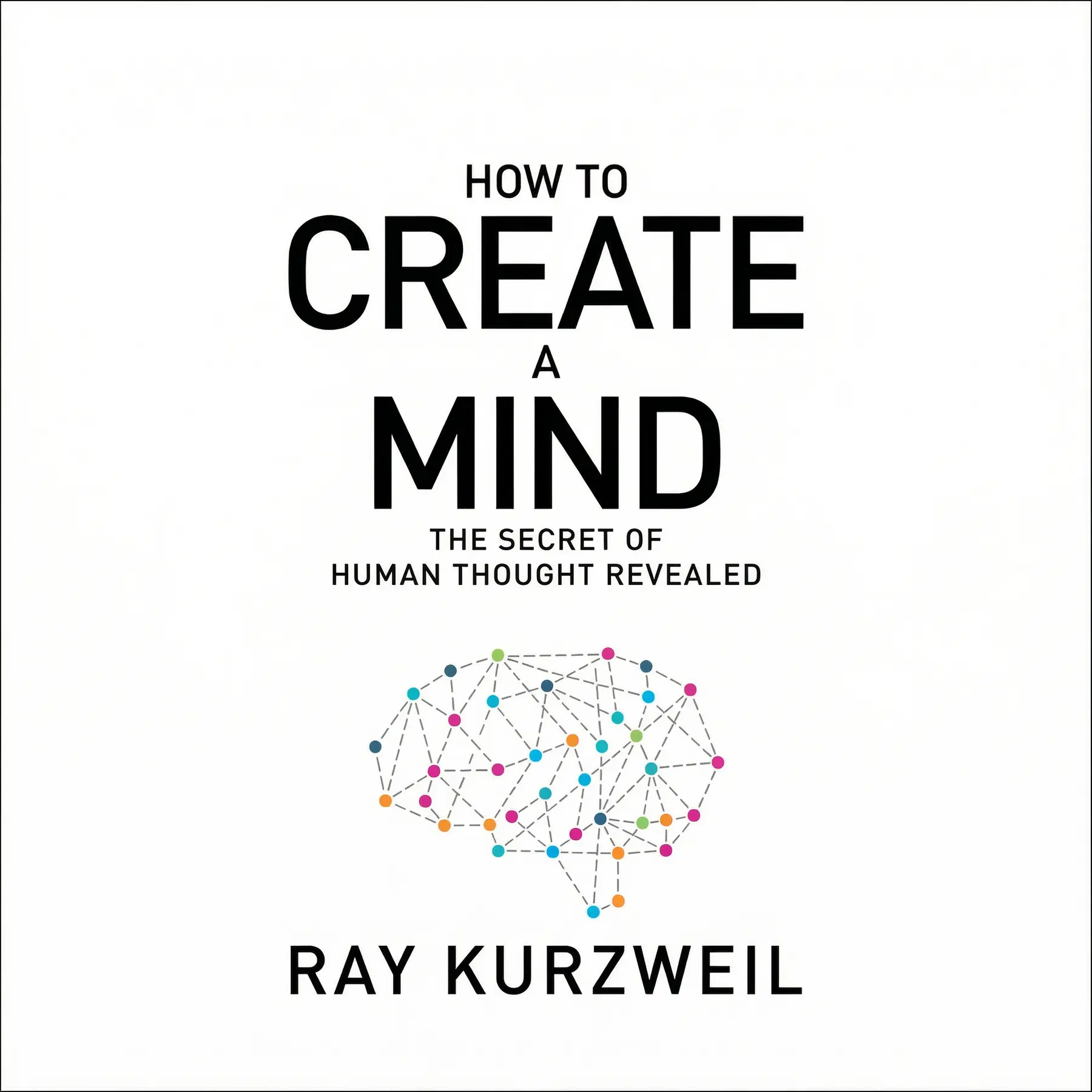
How to Create a Mind: The Secret of Human Thought Revealed
By Ray Kurzweil
Explore the revolutionary theory that the human brain is a biological computer. Ray Kurzweil explains how our neocortex recognizes patterns and how we are on the verge of replicating human consciousness in machines.
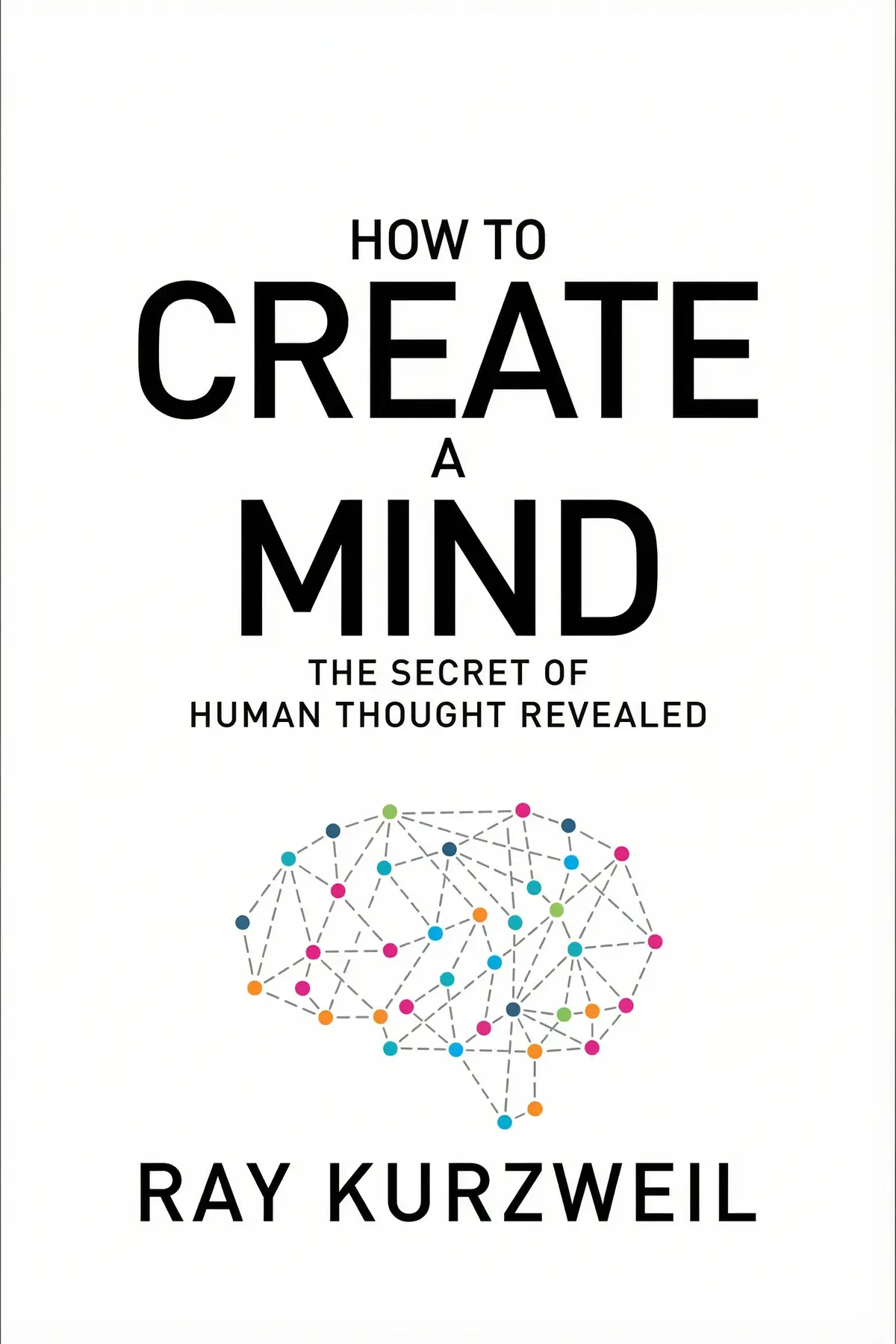
Table of Content
1. Introduction
1 min 35 sec
Imagine for a moment that you are standing in a crowded room. You catch a fleeting scent—perhaps a specific perfume or the aroma of a certain spice—and suddenly, you aren’t in that room anymore. You’ve been transported back twenty years to your childhood kitchen. This experience is more than just a nostalgic daydream; it is a window into the core architecture of your brain.
In How to Create a Mind, futurist and inventor Ray Kurzweil takes us on a journey into the very engine of human thought. He argues that the brain isn’t an unfathomable mystery of magic and spirit, but rather a sophisticated, hierarchical system of pattern recognition. This is the throughline of his exploration: the idea that if we can decode the specific algorithms the brain uses to process reality, we can replicate them in silicon.
We often think of computers as cold, calculating machines and ourselves as something altogether different—creative, emotional, and conscious. But Kurzweil challenges this divide. He suggests that the gap between a high-speed processor and a human mind is closing faster than we think. By understanding how our biological ‘hardware’ works, we can begin to see how we might build a digital mind that doesn’t just calculate, but truly understands. Over the course of this summary, we will look at how our memories are organized, how our neocortex functions as a grand pattern-matching machine, and why the line between human and artificial intelligence is destined to blur by the 2030s. Let’s dive into the secret mechanics of the mind.
2. The Sequential Nature of Human Memory
2 min 08 sec
Discover why your brain is like a one-way street when it comes to recalling information and how simple triggers can unlock entire chapters of your past.
3. The Neocortex as a Pattern Recognition Machine
2 min 29 sec
The secret to our intelligence lies in the neocortex, a massive array of mini-computers that work together to turn simple lines into complex ideas.
4. A Collaborative Brain Architecture
2 min 25 sec
The neocortex might be the star of the show, but it relies on a supporting cast of brain regions to decide what matters and what needs to stay in memory.
5. The Biological Roots of Emotion and Creativity
2 min 31 sec
We often think of art and love as magical, but they are actually the result of specialized cells and the brain’s ability to process metaphors.
6. Bridging the Gap Between Brains and Machines
2 min 20 sec
Learn how modern software is already using the same probabilistic logic as your brain to recognize your voice and answer your questions.
7. The Imminent Arrival of Conscious Machines
2 min 14 sec
The future is arriving faster than you think. Find out why the 2030s could be the decade when computers finally become our intellectual equals.
8. Conclusion
1 min 33 sec
As we wrap up our exploration of How to Create a Mind, the central message becomes clear: the human brain is an exquisitely organized pattern recognition system, and it is a system we are finally beginning to master. By breaking down the neocortex into its hierarchical components, Ray Kurzweil shows us that the ‘secret’ of human thought isn’t a single, magical spark, but the collective power of 300 million small recognizers working in harmony.
This realization changes how we look at both ourselves and our technology. If our minds are biological algorithms, then there is no fundamental barrier to creating those same algorithms in a digital format. We’ve seen how memory is sequential, how our different brain regions collaborate to filter reality, and how even our highest artistic and emotional impulses are rooted in this pattern-matching architecture.
The actionable takeaway here is to change your perspective on the future of AI. It’s not just about better tools or faster gadgets; it’s about the next step in our evolution. We are moving toward a world where the boundary between human and machine is flexible. In the coming decades, our ability to enhance our own neocortices with artificial ones will likely be the greatest leap in human history. For now, take a moment to appreciate the incredible pattern-matching machine currently operating inside your head—and get ready for the day when you might just be able to give it an upgrade. Thank you for listening to this BookBits summary of How to Create a Mind by Ray Kurzweil.
About this book
What is this book about?
How to Create a Mind is an ambitious deep dive into the mechanics of human thought and the future of artificial intelligence. Renowned futurist Ray Kurzweil proposes the Pattern Recognition Theory of Mind, suggesting that our brains are composed of hierarchical structures designed to identify and categorize data. By understanding these biological algorithms, Kurzweil argues that we can reverse-engineer the brain to build truly sentient machines. The book promises a roadmap for the next stage of human evolution. It moves from the biological foundations of the neocortex—the seat of our most advanced functions—to the digital simulations that are already beginning to mimic it. Through this lens, things like creativity, love, and even free will are deconstructed as sophisticated neurological processes. Ultimately, Kurzweil offers a startling prediction of a future where biological and non-biological intelligence merge, fundamentally changing what it means to be human.
Book Information
About the Author
Ray Kurzweil
Ray Kurzweil is a pioneering technological futurist as well as a prolific inventor, including groundbreaking work in speech recognition software. His books include the bestseller The Singularity is Near and The Age of Spiritual Machines.
Ratings & Reviews
Ratings at a glance
What people think
Listeners find the writing accessible and polished, with one listener observing that it is approachable for a persistent and educated reader. This work provides a great introduction to brain function; one listener describes it as the first comprehensive general theory of brain/mind, while another points to the detailed exploration of memory processes. Listeners appreciate the thought-provoking material, with one listener highlighting the enjoyable philosophical discussions and thought experiments, and they find the vision for the future to be fascinating. Although many feel the explanations are clear, some find them highly confusing.
Top reviews
Manee
This book is probably the most accessible introduction to the "Pattern Recognition Theory of Mind" I’ve encountered. Kurzweil explains the modular nature of the neocortex with such clarity that even a layperson can grasp how we process complex hierarchies. I was particularly fascinated by his breakdown of memory—not as a simple recording, but as a series of redundant patterns. While he does spend a fair amount of time on his own inventions, his track record in OCR and speech recognition gives him the authority to speak on these architectures. The later chapters on consciousness and the "Chinese Room" experiment provided exactly the kind of philosophical depth I was hoping for. It’s a bold vision for the future of AI that feels grounded in biological reality rather than pure science fiction. Truly a must-read for anyone curious about the intersection of neuroscience and computing.
Show moreAmara
As someone who has always been intimidated by neuroscience, I found Kurzweil's writing style incredibly refreshing and easy to digest. He has a gift for taking dense concepts—like how the brain uses recursion to build complex ideas—and making them feel intuitive. The way he describes the neocortex as a blank slate that learns through experience changed how I think about human potential. I especially enjoyed the thought experiments regarding identity and whether a digital copy of a brain would still be "you." Some critics call his predictions overly optimistic, but the data he presents on the exponential growth of computing power is hard to argue with. This isn't just a book about machines; it's a profound look at what makes us human. It's the kind of reading that sticks with you long after you've put it down.
Show moreScarlett
Wow. This is easily one of the most provocative books I’ve read in years. Kurzweil doesn’t just explain how the brain works; he explains how we can transcend its biological limitations. His theory that the neocortex is essentially a giant array of 300 million pattern recognizers is elegantly simple and powerful. I loved the section on "Qualia" and the deep dive into whether a computer could ever truly "feel" something. It’s rare to find a book that handles technical details and existential philosophy with equal skill. While some people find his self-referential style annoying, I think it adds a layer of authenticity to the narrative—he’s not just theorizing; he’s been in the trenches building this stuff for fifty years. If you’re interested in where humanity is going, you need to read this book.
Show moreCamila
Finally got around to reading this, and it’s a brilliant synthesis of computer science and biology. Kurzweil’s vision of a software-based neocortex that can be expanded in the cloud is both terrifying and exhilarating. The book is incredibly readable for such a complex subject; he manages to explain the "redundant hierarchy" of our thoughts without getting bogged down in unnecessary jargon. I particularly appreciated his response to critics in the final chapters, as it clarified a lot of the common misunderstandings about his timelines. It’s a comprehensive general theory of the mind that feels like it’s finally catching up to the reality of 21st-century technology. Whether you agree with his conclusions or not, you can’t deny that his insights into pattern recognition are fundamental to our understanding of intelligence.
Show moreSawit
Ever wonder how 300 million pattern recognizers in your head actually produce a personality? Kurzweil attempts to answer this by bridging the gap between biological neurons and computer algorithms. He relies heavily on the Hierarchical Hidden Markov Model (HHMM) to explain our cognitive processes, which might feel repetitive if you're already familiar with his work. To be fair, he acknowledges that some of these ideas parallel Jeff Hawkins’ earlier theories, but Kurzweil adds his own "Law of Accelerating Returns" flavor to the mix. The writing is smooth and readable, though I'll admit the middle section drags a bit when he dives into the specific math of speech recognition. It’s not a perfect manual for building a robot, but it’s a brilliant conceptual framework. I walked away with a much better understanding of how my own brain predicts the next word in a sentence.
Show moreHazel
Picked this up because I wanted to understand the logic behind Google’s current AI direction, and Kurzweil delivers a solid foundation. His explanation of the "redundancy" in our neural circuits explains so much about why we are able to recognize a face even in bad lighting or at an odd angle. The book is well-written and maintains a steady pace, even when the topics get a bit "geeky" regarding digital Neocortex simulations. I did find the sections on free will and Wolfram’s cellular automata to be a little out of left field, but they were still entertaining. My only real gripe is that he glosses over some of the massive hurdles in knowledge representation that we still haven't solved. Still, for a high-level overview of where we are headed, it's a fascinating and largely convincing piece of work.
Show moreRapee
After hearing so much about the "Singularity," I wanted to see if the science actually backed up the claims. Kurzweil provides a compelling argument for the "Law of Accelerating Returns," showing how biological evolution is being superseded by technological evolution. He breaks down the brain's architecture into manageable chunks, explaining how simple patterns build into the vast complexity of human thought. The discussion on Watson's Jeopardy victory was a highlight for me; it made the abstract concepts feel very real and current. Look, he’s definitely a "big picture" guy, so don't expect a step-by-step coding tutorial. However, if you want to understand the philosophical implications of artificial general intelligence, this is an excellent starting point. It’s dense in parts but ultimately rewards the persistent reader with a very unique perspective on the future.
Show moreMaksim
The chapter on the "old brain" versus the neocortex was genuinely illuminating, but the rest of the book feels like a mixed bag. On one hand, Kurzweil is a visionary who describes the future of machine intelligence with infectious enthusiasm. On the other hand, there is an exhausting amount of self-promotion that borders on a marketing brochure for his previous companies. Frankly, I didn't need a ten-page defense of why he was right and Paul Allen was wrong about the "singularity." The transition from hard science to philosophical discussions in the final third felt disjointed, as if the book couldn't decide if it wanted to be a textbook or a memoir. If you can filter out the ego, there are some great insights here regarding how AI like Watson actually functions. It's just a shame you have to dig through so much fluff to find them.
Show moreTang
Technically impressive but emotionally cold. The first half of the book is a great introduction to the brain’s hierarchical structure, and I learned a lot about how we process language and visual stimuli. However, Kurzweil’s insistence that everything can be reduced to a Hidden Markov Model feels like he’s trying to fit a square peg into a round hole. Truth is, the human mind is a lot messier than his clean mathematical models suggest. By the time he started talking about the Law of Accelerating Returns and the inevitable merger of humans and machines, he lost me. The writing is clear enough, but it lacks the nuance I’ve seen in other neuroscience books. It feels like a very "engineer’s view" of the soul, which might appeal to some, but left me feeling a bit skeptical.
Show morePannipa
Not what I expected at all, and a bit of a letdown given the hype surrounding Kurzweil’s name. The title promises a blueprint for creating a mind, but what we actually get is a shallow overview of technology he patented decades ago. He keeps coming back to his speech recognition software as if it’s the ultimate key to human consciousness, which feels incredibly reductive. The tone is smug, and the constant "as I predicted in my earlier book" asides made it hard to stay engaged with the actual science. To me, the philosophical sections toward the end read like the ramblings of someone who has spent way too much time in a tech bubble. I was looking for a rigorous exploration of modern AI research, but instead, I got a lot of hand-waving and vague analogies. Save your money and read "On Intelligence" by Jeff Hawkins instead.
Show moreFeatured in
Readers also enjoyed
A Short History of Nearly Everything
Bill Bryson
A Thousand Brains: A New Theory of Intelligence
Jeff Hawkins
AI 2041: Ten Visions for Our Future
Kai-Fu Lee
AUDIO SUMMARY AVAILABLE
Listen to How to Create a Mind in 15 minutes
Get the key ideas from How to Create a Mind by Ray Kurzweil, plus 5,000+ more titles in English and Thai.
- 5,000+ titles
- Listen as much as you want
- 7-day free trial
- Cancel anytime







