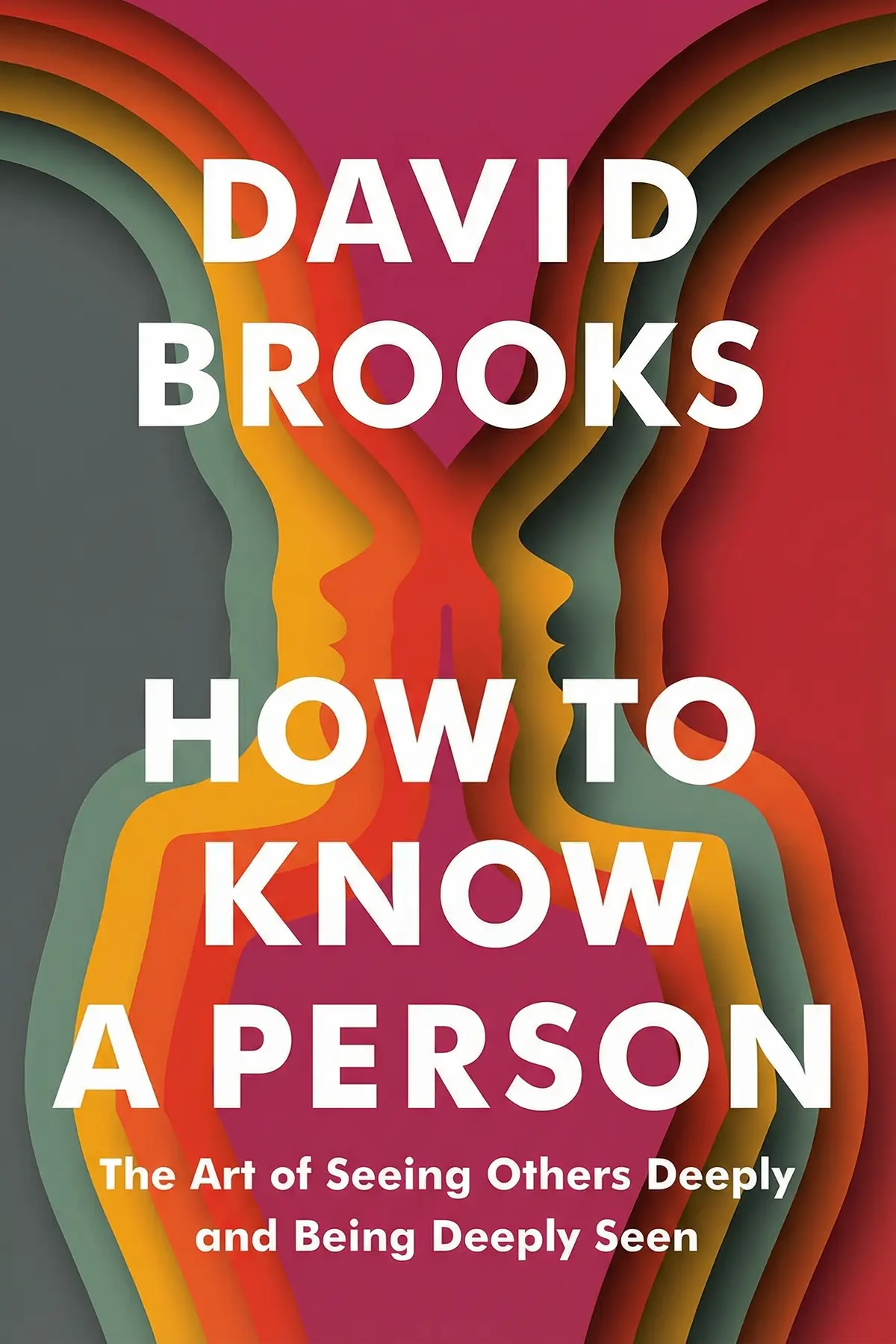
The Road to Character
David Brooks
Discover how to move beyond superficial interactions by mastering the art of deep listening, empathetic presence, and the essential skills required to truly see and understand the people in your life.
1 min 29 sec
We live in an era that is paradoxically both more connected and more isolated than ever before. We have the vocabulary of community and the digital tools for constant contact, yet many of us feel a persistent, quiet ache of being misunderstood. We talk about the importance of friendships, but how many of us actually know how to ask the kind of questions that crack open a person’s soul? How many of us can truly sit with a friend in pain without rushing to offer a shallow platitude?
The reality is that the ability to truly see another human being is a craft. It is a set of skills that we are rarely taught in school, and as a result, the social fabric of our lives is fraying. Loneliness isn’t just a personal sadness; it’s a public health crisis and a political challenge. But there is a way forward. The goal of our journey today is to transform the way you interact with every person you meet.
We’re going to look at the difference between those who make others feel small and those who bring out the best in everyone they encounter. We will explore how to have the difficult conversations that bridge political and social divides. Most importantly, we will establish a throughline: the idea that seeing someone deeply is a moral act. It is perhaps the greatest gift you can ever give. By the end of this summary, you’ll have a roadmap for becoming an ‘illuminator’—someone who shines a light on the hidden strengths and complexities of the people around them, making them feel respected, heard, and truly known.
1 min 54 sec
Explore why the act of truly seeing someone is a fundamental moral duty and how our perception of others shapes our most vital life decisions.
2 min 00 sec
Discover the distinction between people who diminish others and those who lift them up, and learn how to adopt a gaze of tenderness.
2 min 00 sec
Learn the practical skills of active engagement, from the ‘loud listening’ of Oprah to the strategic use of silence in dialogue.
2 min 03 sec
Address the rising tide of isolation and learn how to navigate difficult, high-stakes conversations across cultural and political lines.
2 min 06 sec
Understand how our unique backgrounds and cultures literally change the way we see the world, and why objective reality is an illusion.
2 min 09 sec
Learn the vital difference between trying to ‘fix’ someone in pain and practicing the skills of mentalizing and caring presence.
1 min 18 sec
As we conclude this exploration, the throughline becomes clear: the art of knowing a person is the art of being fully human. It requires us to abandon the role of the critic and the diminisher, and instead embrace the role of the illuminator. We have seen that this isn’t just a soft skill or a matter of good manners; it is a rigorous practice of attention and empathy. It involves mastering the nuances of conversation, acknowledging the subjectivity of our own perceptions, and having the courage to stay present during times of suffering.
What this really means for your daily life is a call to slow down. The next time you are in a conversation, try to flip that switch of attention to ‘on’ and keep it there. Ask the extra question that invites someone to tell their story. Before you judge someone for a differing political view or an unusual behavior, pause and ask yourself what cultural or personal history might be shaping their reality.
True connection is a form of social repair. Every time you make someone feel seen and understood, you are adding a stitch back into the social fabric. You are proving that they matter. This is actionable work that starts today, in your very next interaction. By choosing to see others deeply, you not only enrich their lives, but you also open yourself up to being seen in return. And in that mutual recognition, we find the cure for the loneliness that marks our age.
At its heart, this exploration addresses a profound crisis in modern society: the pervasive sense of loneliness and the breakdown of social cohesion. We often speak about the importance of community, but few of us have been taught the actual mechanics of connection. This summary breaks down the essential character traits and conversational tools needed to transition from being someone who diminishes others to someone who illuminates them. You will learn why the way we perceive the world is inherently subjective and how our backgrounds—ranging from our fitness levels to our cultural heritage—color our reality. The promise here is not just better manners, but a fundamental shift in how you relate to your spouse, your colleagues, and even those with whom you fundamentally disagree. By developing the skills of loud listening and mentalizing, you can foster trust in an era of division and provide meaningful support to those experiencing profound suffering. It is a guide to repairing the social fabric, one intentional interaction at a time.
David Brooks is a prominent commentator and author who contributes to major publications including the New York Times and the Atlantic. He is a familiar face on television, serving as a correspondent for PBS NewsHour and appearing on NBC’s Meet the Press. Brooks has authored several best-selling books that examine the intersection of sociology, politics, and culture, such as Bobos in Paradise and The Social Animal.
Listeners describe the text as both intellectually stimulating and deeply insightful, highlighting its effectiveness in improving their understanding of those around them. Furthermore, the prose is viewed as sophisticated, and listeners appreciate the rigorous research behind its actionable strategies for relating to nearly everyone. The book also encourages people to grow into more empathetic individuals, as listeners highly prize its advice for strengthening interpersonal skills and nurturing more profound interactions.
Finally, a guide to human connection that doesn't just offer vague platitudes but actually provides a tactical roadmap for conversation. David Brooks has written a deeply compassionate book that challenges us to move beyond superficial interactions. I found the SLANT method—sitting up, leaning forward, and tracking the speaker—to be an immediately applicable tool for my professional life. His concept of 'loud listening' is a game-changer for anyone who wants to make others feel truly seen and valued. Personally, the most striking part was the 'midwife model' of conversation, where we help others give birth to their own stories rather than just asserting our own opinions. This book is a balm for our polarized times and offers real wisdom on how to foster belonging. It’s well-researched, heartfelt, and genuinely inspiring for anyone looking to become a better friend and a more empathetic person.
Show moreWow, the chapter detailing the author’s experience with his friend’s depression hit me like a physical weight. Brooks writes with such vulnerability about his failure to 'fix' his friend, ultimately realizing that presence is more important than advice. That insight alone makes the book worth reading, as it completely reframes how we should support those in pain. The idea that we should be 'story-editors' for one another is a beautiful way to think about friendship and therapy. I’ve already started trying to 'listen with my eyes' and the difference in my daily interactions is palpable. It’s a well-researched guide to becoming a more compassionate human being in a world that often feels cold and dehumanizing. While some of the literary references felt a bit like a scattershot display of learnedness, the emotional core is undeniably powerful. I highly recommend this to anyone who feels a sense of social disconnect.
Show moreNot what I expected from a political commentator, but this is a profoundly gentle book about the art of seeing others clearly. David Brooks moves away from partisan discord to focus on the fundamental human need to be known. He explores how therapists are essentially story-editors, helping us reframe our lives into more empowering narratives. This idea of focusing on relationships over individual identity felt very revolutionary to me. I appreciated the practical tips, like the SLANT method, which helped me realize how much of a 'diminisher' I could be when I was distracted. It’s an inspiring call to become an 'illuminator' in a world that often feels like it's dimming our light. The book is a balm for the soul and a reminder that every person we meet has a hidden depth. I felt like a more compassionate human being just by finishing the last page.
Show moreAs someone who struggles with social anxiety, I found Brooks' admission of his own 'blocked' nature remarkably refreshing. He isn't a natural social wunderkind, which makes his advice on hearing others deeply feel much more authentic and earned. I especially loved the sections on asking 'how' and 'why' questions to elicit life stories rather than just trading dry facts. In my experience, most people are hungry for this level of depth, even if they don't know how to initiate it themselves. The writing style is elegant and the insights into the Big Five personality traits provided a useful framework for understanding the people in my life. Look, there are a few moments where the narrative gets a bit slippery, but the core message is vital. We have lost the art of seeing one another, and this book serves as a necessary intervention. It’s a thought-provoking read that I’ll likely return to often.
Show morePicked this up on a whim after seeing it on several 'must-read' lists, and it's easily one of the most useful books I've encountered this year. David Brooks provides practical guidance on fostering meaningful conversations that I think every leader or parent should study. The 'gem statement' technique for navigating disagreements is a brilliant way to find common ground without compromising your own values. He explains that seeing a person isn't just about being nice; it's about the writerly virtue of picturing them in their own unique story. To be fair, some of the psychological generalizations are a bit broad, but the overall wisdom is undeniable. It’s an elegant blend of research and personal growth that feels very timely. I feel more equipped to enter difficult conversations with curiosity rather than defensiveness. This isn't just self-help; it’s a blueprint for a more humane society.
Show moreDavid Brooks has a way of distilling complex psychological research into something that feels deeply personal and accessible. He argues that we are in a moral crisis of loneliness, and he offers 'loud listening' as the primary antidote. I found the section on emotional granularity fascinating, as it highlights the importance of understanding our own feelings before we can truly see others. Frankly, the book is filled with non-obvious ways to become a better conversationalist that go way beyond simple manners. Treating attention as an on/off switch rather than a dimmer has already changed how I approach my morning meetings. The writing is elegant, and the author’s authenticity shines through every chapter. It’s a well-researched plea for more compassion and understanding in our daily lives. This is a must-read for anyone who wants to deepen their communication skills and foster more meaningful connections.
Show moreAfter hearing Brooks talk about this on a podcast, I wanted to see if the 'how-to' portion actually lived up to the hype. The truth is, while some parts feel like a scattershot display of learnedness, the practical guidance is solid. I’ve started using the 'looping method' to check my understanding during arguments, and it has saved me from several misunderstandings already. He does a great job explaining why we should favor familiarity and draw out the lessons others have learned from their experiences. Some of the criticisms about his pontificating tone are valid, but the core wisdom here is too good to ignore. It’s a thought-provoking look at why we struggle to connect and what we can do to fix it. If you can get past the occasional academic jargon, there’s a lot of heart in these pages. It’s definitely a 4-star read for its utility alone.
Show moreWhile the sentiment behind this book is undoubtedly noble, the execution feels like a college syllabus that can’t quite decide on a major. David Brooks is an elegant writer, but these pages are often drowning in theory that feels more pedantic than practical. I appreciated the distinction between being a 'diminisher' and an 'illuminator,' yet the book never quite unearths the deeper complexities of modern relationships. To be fair, the personal anecdotes are moving, especially when he discusses his own struggle to connect with others. However, the sheer volume of recherché quotations from every philosopher under the sun became distracting after a while. I was looking for a more grounded guide to social skills, but this felt a bit too much like required reading for a seminar I didn't sign up for. It’s a decent book for reflection, but don't expect it to turn an introvert into a social butterfly overnight.
Show moreTo be fair, Brooks writes beautifully, but I struggled with the way he occasionally contradicts himself regarding trauma and empathy. In one chapter, childhood trauma is a source of isolation, but in another, it’s a necessary prerequisite for deep human connection. This inconsistency made the central argument feel a bit slippery at times. However, I can't deny that his advice on being a 'loud listener' and avoiding the 'topper' mentality is incredibly sound. The book is a bit of a potpourri, mixing everything from Good Will Hunting to the Big Five personality traits. While the thesis can be hard to discern through all the recherché quotations, the sentiment of the book is undeniably good. It’s a thought-provoking read, even if it feels a bit unpolished in its logic. I’d recommend it for the practical communication tips, even if you skip some of the more pontificating sections.
Show moreThere is a frustrating lack of cohesion in David Brooks’ latest attempt to solve the American loneliness crisis. Frankly, the book feels like a scattershot display of learnedness, jumping from the Brontë sisters to the personality of George W. Bush without a clear connective tissue. To be fair, some of the psychological research is interesting, but I found the unreferenced assertions about Botox and the Greeks versus Confucians to be intellectually lazy. He argues that empathy is a cornerstone of connection, yet he claims it is only learned through suffering, which feels like a reductive take. It is a potpourri of contradictory advice that often boils down to simple manners like making eye contact. While his desire for a more connected America is noble, the slippery arguments and pontificating tone made this a difficult read for me. I wanted a profound philosophical inquiry but mostly got a collection of sentimental platitudes that didn't quite land.
Show more

AUDIO SUMMARY AVAILABLE
Get the key ideas from How to Know a Person by David Brooks, plus 5,000+ more titles in English and Thai.