
25 min 18 sec
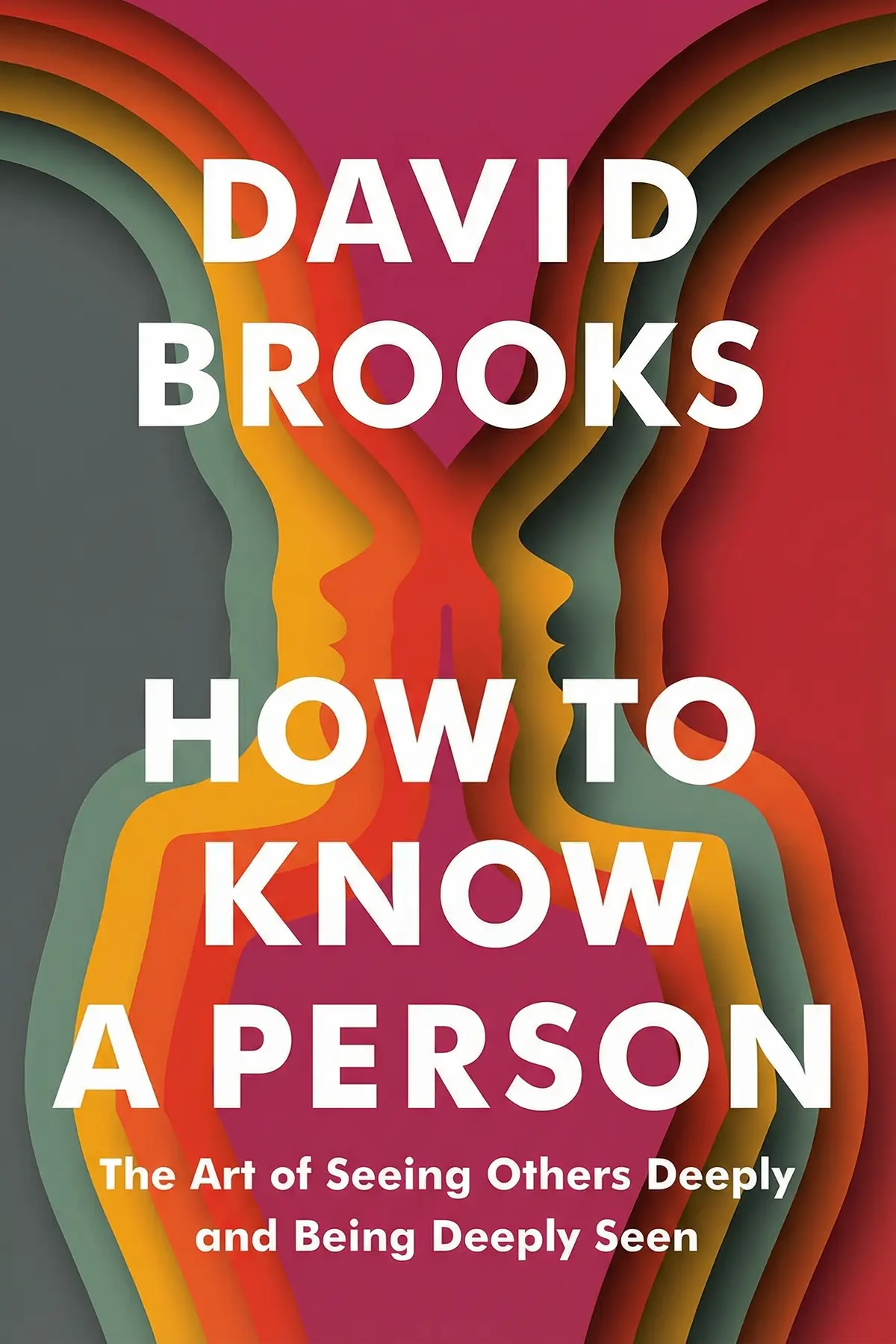
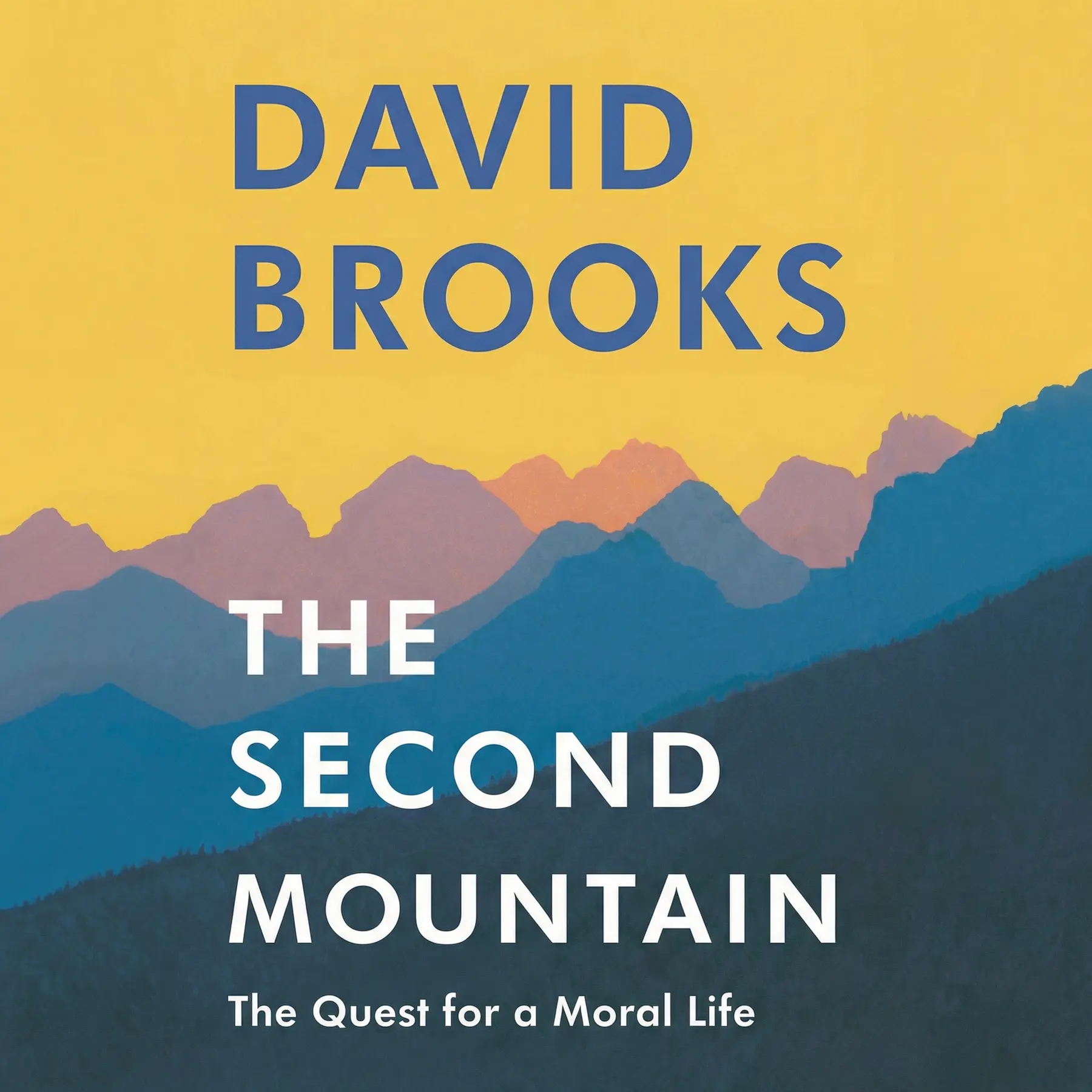
The Second Mountain: The Quest for a Moral Life
By David Brooks
Discover how to transition from a life focused on personal success and individual achievement to a deeper, more meaningful existence centered on service, community, and the lasting fulfillment of moral commitment.
Table of Content
1. Introduction
1 min 50 sec
In our modern world, we are often told that the pinnacle of life is the achievement of our personal goals. We are encouraged to build our brands, climb the corporate ladder, and safeguard our individual freedom above all else. But have you ever noticed that the people who seem the most radiant—those who possess an unshakeable sense of inner peace and purpose—don’t necessarily follow this script? They don’t seem to be chasing the same things the rest of us are. They seem to have found a different way of being, one that revolves around others rather than themselves.
This is the central mystery we are exploring today. After years of observing society as a journalist and reflecting on his own personal trials, David Brooks developed a powerful metaphor to describe this shift in perspective. He calls it the journey of the two mountains. The first mountain is the one we are all familiar with: the climb toward success, status, and self-sufficiency. It is the mountain of the ‘ego.’ But for many, that climb eventually leads to a plateau of emptiness or a sudden, painful descent into a valley of suffering.
It is only in that valley, when our individualistic defenses are stripped away, that we see the second mountain. This second peak isn’t about personal glory; it’s about the beauty of commitment and the joy of service. Today, we’re going to walk through this landscape together. We will examine how our culture of individualism has left us feeling disconnected and why the pursuit of happiness is a hollow goal compared to the pursuit of joy. We will look at how we can rebuild our lives and our communities by making deep, lasting promises to things larger than ourselves. This is a journey from the ‘me’ to the ‘we,’ and it starts with understanding the terrain of the life we’ve been taught to lead.
2. The Dominance of Individualism
2 min 25 sec
Our modern culture prioritizes personal freedom and self-determination above all else, creating a landscape where individuals are encouraged to follow their own desires without the constraints of tradition.
3. The Human Cost of Hyper-Individualism
2 min 09 sec
While personal freedom is a virtue, an obsession with autonomy has led to a breakdown in social fabric, resulting in rising levels of loneliness, distrust, and mental health challenges.
4. Scaling the First Mountain
2 min 04 sec
Most people spend the early part of their lives climbing the mountain of worldly success, driven by the desire for status, wealth, and ego-driven achievement.
5. The Valley of Suffering and Loss
2 min 01 sec
Success is not a permanent shield against the trials of life, and many find themselves in a ‘valley’ where their previous goals no longer provide meaning.
6. Distinguishing Happiness from Joy
2 min 08 sec
While our culture pursues the fleeting satisfaction of happiness, the second mountain offers the deeper, more enduring state of joy through self-transcendence.
7. The Necessity of Commitment
2 min 01 sec
Living a life of service isn’t just a feeling; it requires building a ‘structure of behavior’ through deep promises and daily rituals that sustain love over time.
8. Vocation as a Calling Beyond a Career
2 min 05 sec
A vocation is more than just a way to earn a living; it is a dedicated response to a specific problem or passion that demands our full commitment and integrity.
9. Marriage as a School of Character
2 min 12 sec
Marriage is the ultimate laboratory for overcoming the ego, requiring us to move from ‘me’ to ‘we’ through daily acts of sacrifice and mutual devotion.
10. The Power of Faith and Shared Belief
2 min 08 sec
Religion and philosophical traditions provide the rituals and moral frameworks that connect us to something larger than ourselves, anchoring us in a community of shared values.
11. Becoming a Weaver of Community
2 min 13 sec
The ultimate goal of the second mountain is to rebuild the social fabric by becoming a ‘weaver’—someone who creates connections and fosters belonging at the local level.
12. Conclusion
2 min 02 sec
As we conclude our journey through the landscape of the two mountains, it’s worth taking a moment to reflect on where you currently stand. Most of us are taught to spend our entire lives on the first mountain. We are conditioned to believe that if we just work hard enough, earn enough, and keep our options open enough, we will eventually find the peace we crave. But as we’ve seen, the first mountain is a lonely place. Its peaks are cold, and its successes are fleeting.
The real secret to a moral and fulfilling life—the life of joy—is found on the second mountain. This is the mountain we climb when we realize that our lives are not our own. We find ourselves when we lose ourselves in service to others. Whether it’s through the deep intimacy of a marriage, the dedicated pursuit of a vocation, the grounding rituals of faith, or the vital work of weaving a community together, the path forward is always the same: it is the path of commitment.
If you find yourself in a valley right now—feeling lonely, disillusioned, or overwhelmed by suffering—know that this is not the end. The valley is the beginning of the second climb. It is the place where you can trade your individualistic freedom for something much more valuable: a sense of purpose. The transition from the first mountain to the second is the most important journey you will ever take. It is a shift from the temporary high of happiness to the permanent glow of joy.
As you move back into your daily life, look for opportunities to make a promise. Look for a place where you can be of service. Stop asking what the world can do for you and start asking what you can do for the world. Find your neighborhood, find your calling, and start weaving. The second mountain is waiting, and the view from its slopes is more beautiful than anything the ego could ever imagine. Embrace the beauty of a committed life, and you will find that the joy you’ve been searching for was never at the top of a ladder—it was in the hearts of the people standing right beside you.
About this book
What is this book about?
The Second Mountain explores the profound journey from the self-centered pursuits of our modern era to a life defined by self-transcendence. Many of us spend the first half of our lives climbing a mountain of worldly success—seeking status, wealth, and personal freedom. However, this path often ends in a valley of disillusionment or suffering. It is in this valley that we realize that the individualistic pursuit of happiness is insufficient for the human soul. David Brooks presents a compelling vision for a second mountain. This journey is not about personal gain but about making commitments to four key areas: a vocation, a spouse and family, a philosophy or faith, and a community. By shifting our focus from 'What do I want?' to 'What is my responsibility?', we move from fleeting happiness to enduring joy. The book promises a roadmap for anyone feeling adrift in an individualistic society, offering a way to rebuild social connections and find a purposeful, moral life through the art of dedicated service.
Book Information
About the Author
David Brooks
David Brooks is a prominent center-right columnist for the New York Times, where he explores the intersections of politics, culture, and society. He is a prolific author of several best-selling works, including The Social Animal: The Hidden Sources of Love, Character, and Achievement. Beyond his writing, Brooks is a familiar voice in public discourse, serving as a regular commentator for The PBS NewsHour, NPR’s All Things Considered, and NBC’s Meet the Press. He also shares his insights with the next generation as a teacher at Yale University and is a distinguished member of the American Academy of Arts and Sciences.
Ratings & Reviews
Ratings at a glance
What people think
Listeners consider the work highly accessible and perceptive, with one individual remarking on the author's ability to turn complex philosophy into clear ideas. Furthermore, the material encourages the audience to rethink their personal paths and offers profound substance, with one listener characterizing the book as a "blueprint back to loving sane lives." The prose is also lauded for its gracefulness, and listeners value the depth of information, with one review emphasizing its detailed exploration. On the other hand, the tempo draws varied opinions, as several listeners felt the narrative was dull and redundant.
Top reviews
Oat
Picked this up during a very dark transition in my life and it felt like Brooks was speaking directly to my soul. The way he describes that moment in Penn Station, seeing the infinite depth in every passing commuter, perfectly captures the shift from selfishness to connection. This isn't just a book; it's a manual for moving from a life of success to a life of significance. The eloquence of the prose is staggering, and he has a way of making high-brow philosophy feel like a warm conversation over coffee. I’ve been quoting the sections on 'servant leadership' and 'the desiring heart' to my friends for weeks now. It’s a rare book that actually changes your day-to-day perspective on how you interact with strangers and loved ones alike. Look, if you’re looking for a quick self-help fix, this isn't it, as it requires real introspection and time to digest. But for those seeking a blueprint back to loving, sane lives, this is an absolute masterpiece.
Show moreHazel
Wow, I didn't expect a New York Times columnist to write something that feels this much like a manual for reclaiming our humanity. Brooks has provided a multifaceted exploration of what it means to live with purpose in an age that only values the 'first mountain' of money and reputation. His critique of the meritocracy is biting and accurate, showing how it turns us into speeding workaholics who avoid deep emotional connection. The book is stuffed with inspiring quotes, but they feel earned here, serving as pillars for his argument that we are primarily desiring hearts, not just analytic brains. Some might find his tone aloof or didactic, but I found it to be the voice of someone who has genuinely wrestled with his own failures. It’s a thick, qualitative look at life that prioritizes depth over the quantitative metrics we’re usually obsessed with. This is easily one of the most insightful books I’ve read on the topic of character and commitment.
Show moreRatthapong
Brooks has crafted a comprehensive analysis of the modern human condition that transforms dense philosophical ideas into digestible, actionable concepts for the average reader. His exploration of the four commitments—vocation, marriage, faith, and community—is both deeply personal and culturally relevant. I found the section on marriage particularly brave, as he doesn't shy away from his own history of 'constipation of the heart.' The book offers a much-needed defense of the 'relationalist' lifestyle, proving that our greatest joys come from the thick, deep bonds we form with others. The prose is elegant and the stories are genuinely moving, especially the anecdotes about people who have dedicated their lives to their neighborhoods. It’s a blueprint for a more compassionate society, and I felt myself shifting my own priorities as I read. This is a must-read for anyone who feels that there has to be more to life than just the next promotion.
Show moreLaor
Finally got around to reading this and the eloquence of the prose alone makes it worth the price of admission. David Brooks has a unique ability to weave together personal memoir and social commentary into something that feels both urgent and timeless. I loved his breakdown of how our society oscillates between individualism and conformity, and his argument that we are currently in a dangerous cycle of isolation feels spot-on. Not gonna lie, some parts are a bit slow, but the insights into 'servant leadership' and the importance of 'thick' communities are game-changers. This book is a rare gift that encourages you to stop looking at your own reflection and start looking into the souls of the people around you. It’s a beautiful, life-affirming read that I know I will return to whenever I feel like I'm losing my way on the first mountain. Truly a blueprint for a more loving and sane way of existing.
Show moreYindee
After hearing so much about the 'First Mountain' versus 'Second Mountain' distinction, I finally dove in and found the framework deeply resonant for my own career shift. Brooks manages to transform complex philosophical ideas into understandable concepts that feel applicable to the modern struggle for meaning. The transition from the ego-driven first mountain to the relationalist second mountain is a powerful metaphor for anyone feeling the hollow ache of the meritocratic ladder. I did find some of the religious sections a bit preachy and high-handed, as if he’s trying to define the soul as a matter of objective fact. However, his insights into the erosion of old-fashioned neighborhoods and the dangers of our current isolationist path are hard to argue with. It isn't a perfect book, and the pacing drags in the middle, but it definitely caused me to re-evaluate my commitments to my spouse and community. It’s a thoughtful read for those in a life transition.
Show morePacharapol
The Second Mountain serves as a vital blueprint for anyone feeling exhausted by the constant pressure to achieve and accumulate. Brooks argues that our culture has become hyper-individualistic, and he offers a 'relationalist' worldview as the necessary antidote to our collective loneliness. I was particularly moved by the idea that a life of meaning is built on four key commitments: to vocation, marriage, philosophy, and community. While I’ve read some criticisms of his personal life, I think it’s counter-intuitive to dismiss the advice just because the author has struggled; sometimes the best teachers are those who have failed. To be fair, some of the anecdotes feel a bit like 'feel-good' filler, and the writing can be somewhat repetitive. But the core message—that we find joy by losing ourselves in service to others—is a beautiful and necessary reminder. It’s an insightful, comprehensive analysis that challenges you to be a better neighbor and a more committed partner.
Show moreManika
The chapter on vocation really challenged my perspective on work and forced me to re-evaluate what I’m actually contributing to my community. Brooks draws a sharp contrast between a career—which is about self-advancement—and a vocation, which is a calling that requires a surrender of the self. I’ll admit that the book can be a bit 'quote-heavy,' making it feel at times like a textbook on moral philosophy. However, the information quality is top-notch, and the breadth of his research is impressive. It’s the kind of book that makes you want to take notes and highlight every other page. My only real gripe is that it can feel a little repetitive toward the end, as if he’s hammering the same point about individualism over and over. Still, the overall impact is profoundly positive. It’s a thoughtful, erudite guide for anyone looking to transition from a life of 'fun' to a life of 'joy.'
Show moreMaksim
Look, the core message about community and moving beyond hyper-individualism is absolutely essential, but the delivery is often quite dry and repetitive. I appreciate the intellectual effort Brooks puts into synthesizing so many different philosophers and writers, yet it often feels like he’s hiding behind them. The book provides a decent framework for thinking about life’s stages, but it’s definitely written from a place of immense privilege. Many people don't have the luxury of climbing a 'first mountain' of success only to pivot to a 'second mountain' later; they're just trying to survive. To be fair, he does acknowledge this briefly, but the book remains largely focused on the mid-life crises of the professional class. The writing is skillful and there are sparks of brilliance, but the pacing made it a bit of a slog to get through. It’s a good book to keep on the nightstand and read in small increments rather than all at once.
Show moreLuke
Ever wonder how many quotes one author can cram into a single volume before his own voice disappears entirely? While Brooks is an eloquent writer, this book feels more like a curated literature review than an original manifesto for living. He leans so heavily on moral heavyweights like Viktor Frankl and C.S. Lewis that it starts to feel like a highlight reel for people who don't want to read the source material. The pacing is incredibly uneven, and I found myself skimming through the repetitive chapters on religion and vocation just to find a shred of practical advice. Truth is, the thesis that 'hyper-individualism' is our primary social ill comes across as shallow when it ignores the systemic realities of class and power. It’s a very preppy, privileged view of the world that assumes everyone has the resources to just 'hop' between mountains. Ultimately, the book is too vague and directionless to leave a lasting impression on me.
Show moreRatree
This book is the ultimate example of a man trying to narrate his way out of a mid-life crisis by masking it as a profound spiritual awakening. Frankly, it is hard to take marriage advice from someone who famously blew up his own family, and the whole 'second mountain' metaphor feels like an elaborate justification for his personal choices. The writing style is certainly digestible, but the content is just sanctimonious drivel that prioritizes the author's own instincts over actual wisdom. He presents himself as a reasonable conservative, yet he remains a total quisling who feigns neutrality while ignoring the ugliness of the systems he defends. Brooks manages to be simultaneously pompous and boring, which is a rare, albeit unpleasant, feat for any columnist. If you want a real exploration of the soul, read the 'Dictionary of Obscure Sorrows' instead of this verbose post-divorce nonsense. I couldn't even finish the section on community because the hypocrisy was just too thick to stomach.
Show moreReaders also enjoyed

59 Seconds: Change Your Life in Under a Minute
Richard Wiseman
A Guide to the Good Life: The Ancient Art of Stoic Joy
William B. Irvine
A High-Performing Mind: Strengthen Your Mind and Live Your Best Life
Andrew D. Thompson
Abundance: The Inner Path to Wealth
Deepak Chopra
AUDIO SUMMARY AVAILABLE
Listen to The Second Mountain in 15 minutes
Get the key ideas from The Second Mountain by David Brooks, plus 5,000+ more titles in English and Thai.
- 5,000+ titles
- Listen as much as you want
- 7-day free trial
- Cancel anytime







