
15 min 42 sec
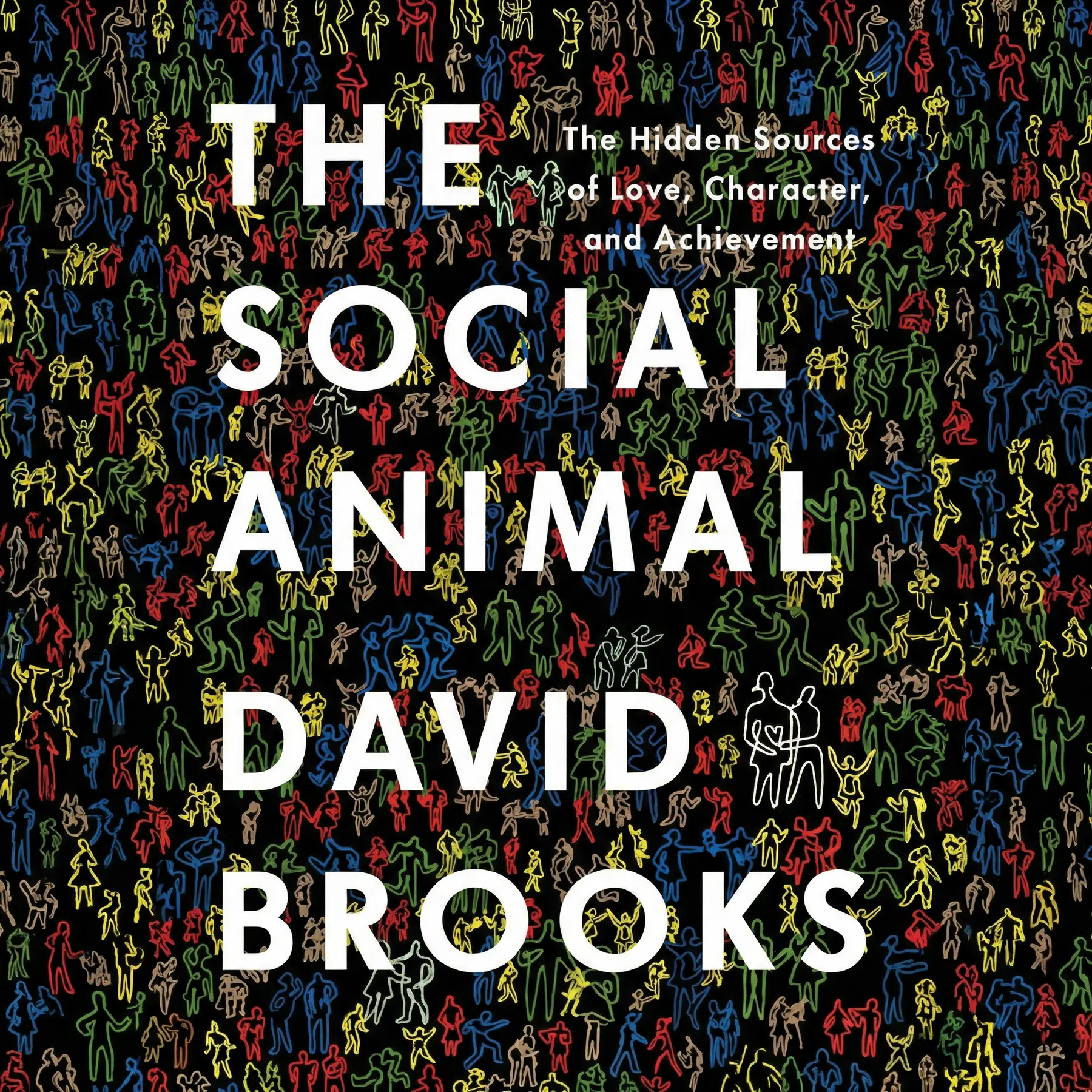
The Social Animal: The Hidden Sources of Love, Character, and Achievement
By David Brooks
David Brooks explores the hidden unconscious forces that drive human behavior, revealing how our social nature and emotional depths shape our paths to love, character, and professional achievement far more than rational logic.
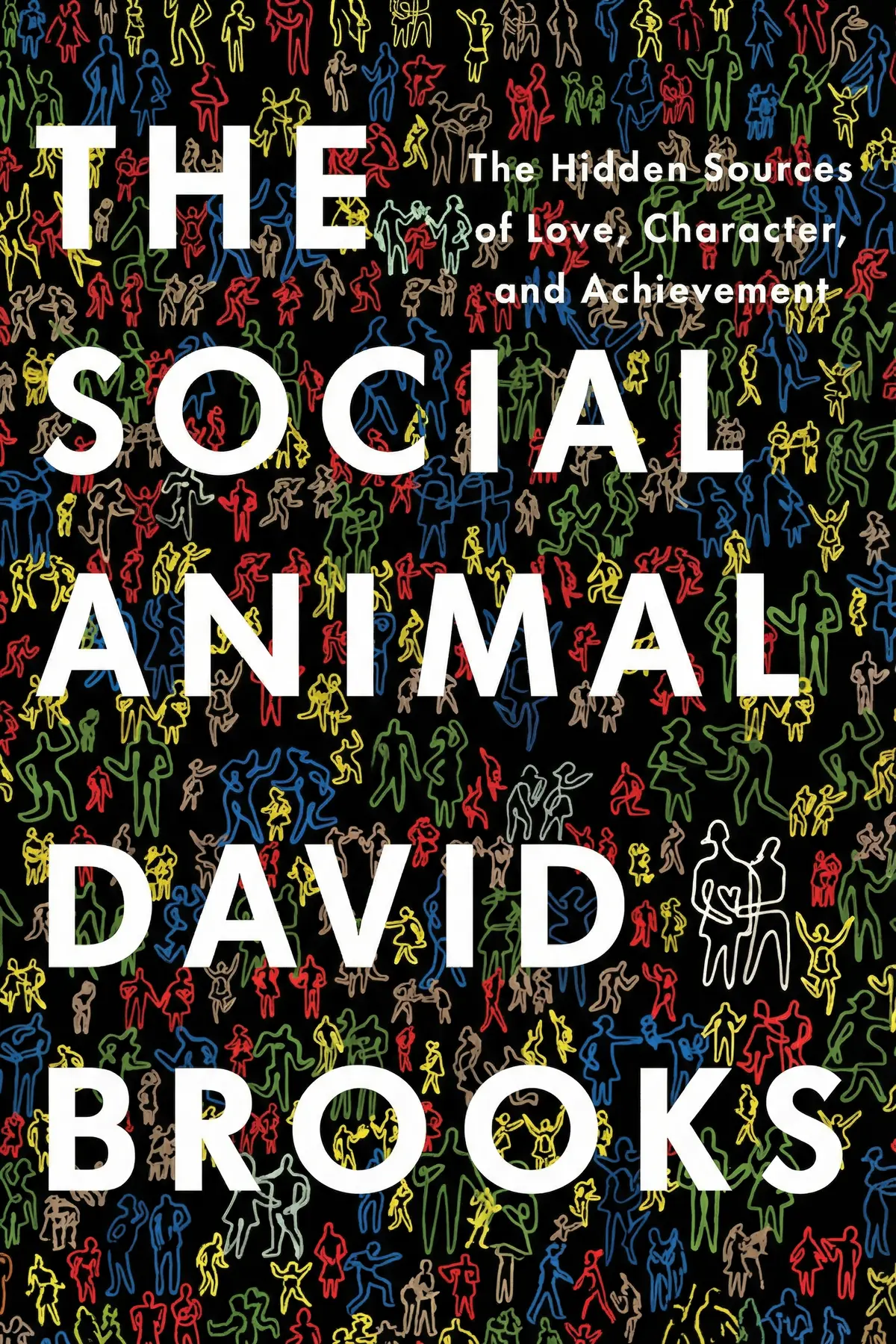
Table of Content
1. Introduction
1 min 50 sec
Think for a moment about the last time you walked through a grocery store. You might have felt like a completely independent navigator, scanning the shelves for the best deals or the freshest produce. But beneath that surface of conscious decision-making, a hidden world of influence was at play. Perhaps there was a faint sound of birds chirping near the fruit, or the gentle sound of waves by the seafood counter. These subtle cues aren’t just background noise; they are carefully calibrated psychological triggers designed to slow you down and encourage you to buy more.
This is the starting point for David Brooks’ exploration of the human experience. We often like to imagine ourselves as the captains of our own ships, steering our lives through pure reason and deliberate choice. We believe we fall in love because of a checklist of traits, and we think we succeed because of our high IQs. However, the reality is far more complex and significantly more mysterious.
In this journey, we are going to look at the hidden sources of our character and our achievements. We will see that we are, at our core, social animals. Our identities are not formed in isolation but are woven together through a lifetime of interactions, subconscious cues, and emotional resonances. We will explore why you might be more likely to marry someone who lives just a few blocks away, why a judge’s decision might depend on when they last ate, and why a four-year-old’s reaction to a marshmallow can predict their financial future.
The throughline here is a shift in perspective. We need to stop viewing the mind as a cold, calculating computer and start seeing it as a vibrant, interconnected system where the unconscious does the heavy lifting. By the end of this summary, you’ll understand that the things we often dismiss as “soft”—emotions, relationships, and intuitions—are actually the hardest and most important drivers of human life.
2. The Subconscious Patterns of Attraction
1 min 57 sec
Discover how your search for a life partner is guided by hidden biological markers and geographic coincidences that you probably never noticed.
3. The Influence of Environmental Cues
1 min 48 sec
See how a few simple words or a price tag can completely rewire your behavior and change how you walk or what you buy.
4. The Emotional Basis of Logic
1 min 52 sec
Find out why a judge’s ruling might depend on their lunch break and why emotions are the secret ingredient to being truly rational.
5. Intuition as a Moral Guide
1 min 43 sec
Explore the debate between reason and instinct and learn why even infants seem to possess an innate sense of right and wrong.
6. The Social Nature of Identity
1 min 44 sec
Understand how our brains are designed to mirror the people around us, making us far less autonomous than we think.
7. The Power of the Unconscious Mind
1 min 35 sec
Discover the incredible processing power of your subconscious and how it enables you to perform complex tasks without even thinking.
8. Beyond IQ: The True Drivers of Success
1 min 55 sec
Learn why traditional measures of intelligence are poor predictors of a happy life and what traits actually lead to achievement.
9. Conclusion
1 min 18 sec
As we wrap up our look at David Brooks’ exploration of the human mind, the central message becomes clear: we are much more than the sum of our conscious thoughts. The “Social Animal” within us is driven by a deep well of unconscious processes, emotional needs, and social connections. We’ve seen that our choices in love are guided by hidden biological maps, our morality is rooted in an innate sense of fairness, and our ability to succeed depends more on our character and self-control than on a high IQ score.
What this means for us is that we should stop trying to live as if we are purely rational machines. Instead, we should cultivate our “soft” skills. We should pay more attention to the environments we put ourselves in, knowing they will prime our behavior. We should value our relationships not just as a pleasant addition to life, but as the very foundation of our identity. And we should learn to listen to our emotions and intuitions, recognizing them as a sophisticated form of data processing that has been honed by millions of years of evolution.
By acknowledging the hidden forces that shape us, we don’t lose our agency. Instead, we gain a more honest and effective way to navigate the world. We can work with our nature rather than against it, building lives that are richer, more connected, and more deeply meaningful.
About this book
What is this book about?
Have you ever wondered why you make certain choices or why some people seem naturally inclined toward success while others struggle? This summary dives into the fascinating landscape of the human mind as mapped out by David Brooks. Moving beyond the traditional view of humans as purely rational actors, it explores the vast, submerged part of our mental iceberg—the unconscious. Through a blend of storytelling and scientific insight, the book illustrates how our social connections, biological instincts, and emotional responses form the true foundation of our lives. You will discover the surprising ways our environment primes our behavior, the biological underpinnings of attraction, and why emotions are actually essential for making logical decisions. By understanding these hidden currents, we gain a more profound perspective on what it means to be human and how we can cultivate a more fulfilling, connected life.
Book Information
About the Author
David Brooks
David Brooks is an American journalist and political commentator best known as a New York Times op-ed columnist. He has also contributed to the New Yorker, Forbes, The Times Literary Supplement and many other esteemed publications.
Ratings & Reviews
Ratings at a glance
What people think
Listeners find this book insightful, valuing its fascinating look at social sciences and its ability to provoke thought. Furthermore, they describe the writing as light and compelling, noting the effective use of a fictional narrative to provide a backdrop for explaining theories. The work is also praised for being a significant educational tool; one listener specifically points out how it weaves evolving life scenarios with culture. On the other hand, reactions to character development are varied, as some listeners feel the figures in the story lack depth and likeability.
Top reviews
Ruangrat
Finally got around to Brooks' deep dive into the human condition, and I must say it is quite a ride. The way he frames complex neurobiology through the lens of a fictional couple is a brilliant, albeit risky, move that mostly pays off. Truth is, I found myself actually caring about Harold and Erica as they navigated everything from playground politics to professional burnout. It’s a breezy read for something so dense with data. While some might find the 'pop-sci' factoids a bit oversimplified, I appreciated how it distilled high-level research into something digestible for a casual reader like me. He makes a compelling case that our rational mind is just a tiny rider on a very large, very emotional elephant. This book doesn't just provide information; it offers a whole new set of goggles to view your social world. Highly recommended for anyone who wants to understand the 'hidden' drivers of their own behavior.
Show moreJeeranan
This book completely shifted how I view my own rational mind and the way I interact with the people around me. I loved the author’s focus on the 'hidden' sources of character and how our environments shape us long before we are conscious of it. The chapter on the 'Academy' and how social capital functions in education was particularly enlightening for me. Brooks has a real gift for taking disparate fragments of information and stitching them into a coherent worldview. It’s an ambitious project that succeeds in making the social sciences feel deeply personal. I actually found the ending quite moving, which I didn't expect from a book that is essentially a literature review. It’s easily one of the most important resources I’ve encountered for understanding the intersection of culture and biology. It’s not just a book; it’s a toolkit for navigating modern life with a bit more empathy and self-awareness.
Show moreKatya
I've been a fan of Brooks' columns for a while, and this book feels like his magnum opus. He has a real flair for picking out those tiny, biting moments of human clarity—the pet peeves and subtle social cues—that make a scene feel authentic. The way he describes the subconscious mind as the 'midget hanging onto the reigns' of a monster is a metaphor that will stay with me forever. It’s a happy story, as the jacket promises, but it doesn't shy away from the darker, more irrational parts of our nature. I found the integration of economics and neuroscience to be particularly sharp. It challenged my assumptions about meritocracy and the achievement gap in a way that felt both fair and intellectually rigorous. This is the kind of book you want to give to every teacher and politician you know. It’s an engaging, insightful, and ultimately hopeful look at what makes us human.
Show moreSaranya
The premise here is fascinating, even if the execution stumbles in a few spots. David Brooks attempts to weave a lifetime of psychological findings into a single narrative, following two characters from birth to the grave. I really appreciated the chapters on early childhood attachment and how those invisible bonds basically map out our future success. It’s an insightful overview of the social sciences that managed to keep me engaged even when the plot slowed down to a crawl. However, to be fair, the characters of Erica and Harold often felt less like real people and more like vessels for whatever study Brooks wanted to cite that week. Their dialogue can be a bit wooden and their decisions are sometimes purely illustrative. Despite that, the book is a great learning resource for those who haven't spent years reading academic journals. It makes you think about character and culture in a way that most non-fiction simply doesn't.
Show moreNuk
Honestly, I was skeptical about the 'fictional' element of a science book, but it actually helped the concepts stick. Most psychology books feel like a dry list of experiments, but here you see the 'subconscious monster' in action within a simulated life. I particularly liked the section on 'limerence' and the internal chemistry of falling in love. It’s a light and engaging style that avoids the typical academic jargon that usually bogs these topics down. My only real gripe is that the author sometimes makes giant leaps of logic, taking one small study of Kenyan painting preferences and turning it into a universal law of human nature. Still, the breadth of the material is impressive. It covers everything from educational policy to the way we perceive faces in a microsecond. If you can ignore the occasionally smug tone, there is a wealth of wisdom to be found in these pages.
Show moreSupatra
After hearing David Brooks on various podcasts, I knew what to expect: a thoughtful, if occasionally smug, synthesis of modern life. The Social Animal doesn't disappoint in that regard. It's an interesting overview of how our brains process social cues and why we are so prone to imitating those around us. The 'Hamiltonian' perspective on policy was a highlight for me, offering a unique take on how government might actually support human flourishing. I'll admit, the fictional framing is a bit hokey at first, but you get used to it. By the time the characters reached old age, I actually felt a bit of an emotional connection to them. The book does a great job of explaining why technical skills aren't enough—character and intuition are what really drive success. It’s a bit long-winded in the middle, but the insights into the 'raging monster' of the subconscious are worth the effort.
Show moreCholada
Wow, what a strange, ambitious beast of a book. It’s part novel, part sociology lecture, and part political manifesto. For the most part, it works! The writing is incredibly light and engaging, making it easy to plow through four hundred pages of research summaries. I found the section on how we predict election winners based on microsecond glimpses of faces to be absolutely wild. It really makes you realize how little control our 'rational' self actually has. To be fair, the characters lack depth and often feel like unlikable archetypes rather than people you'd actually want to grab a coffee with. Erica is particularly cold. But as a backdrop for explaining complex theories, they serve their purpose well enough. It’s an important learning resource that weaves evolving life scenarios with culture in a way that feels very relevant to our current social divide.
Show moreRatree
Ever wonder why we make such terrible decisions despite our best intentions? Brooks tries to answer that, but the results are a bit of a mixed bag. On one hand, the synthesis of research regarding the unconscious mind is genuinely eye-opening and provides a necessary critique of our hyper-rational culture. On the other hand, the story of Harold and Erica is just... boring. They felt like lumps of protoplasm with personality traits stamped on their foreheads rather than living, breathing humans. The narrative is scattered and jumpy, leaping through decades just to land on a specific scientific point. I found myself skimming the 'story' bits to get back to the actual data. Frankly, the book overreached by trying to be a novel and a textbook at the same time. It’s a decent introductory text for a non-scientist, but if you’ve read any Gladwell or Kahneman, a lot of this will feel like a rehash of familiar territory.
Show moreSavannah
Frankly, the 'story' part of this narrative-driven science book didn't quite land for me. I appreciate what Brooks was trying to do by humanizing the data, but the narrative of Harold and Erica was so scattered and jumpy that I never felt fully immersed. One minute we're talking about infant attachment, and the next we're at a corporate board meeting, all to check off another box on a psychology syllabus. The science itself felt a bit dated in parts, relying on studies from the 70s that have struggled with replication issues lately. I also found the lack of clear footnotes frustrating; it’s hard to verify the 'facts' when they are buried in an unnumbered endnote section. It’s a decent enough read if you want a broad overview, but it lacks the 'meaty' discussion I was hoping for. It’s an okay intro, but ultimately it feels a bit over-simplified for anyone who has a serious interest in the field.
Show moreChon
Look, I really wanted to love this, but it felt like a mile wide and an inch deep. Brooks tries to cover everything from infancy to senility in a single volume, and as a result, the science is sprinkled in in the worst kind of 'pop-sci' way. Whole academic disciplines are summarized in half-sentence factoids that ignore any real scholarly disagreement. The fiction is even worse; Harold and Erica are essentially straw men designed to prove the author's political and social points. They don't have souls; they have 'behavioral tendencies.' The writing style is condescending, especially when Brooks describes the habits of college students or the 'underprivileged.' It felt more like a laundry list of his own pet peeves than a rigorous exploration of the human mind. If you want actual neuroscience, go read a specialist. This is just cocktail party trivia masquerading as a profound philosophical treatise. It's a lost opportunity that prioritizes an aesthetic sheen over scientific rigor.
Show moreReaders also enjoyed
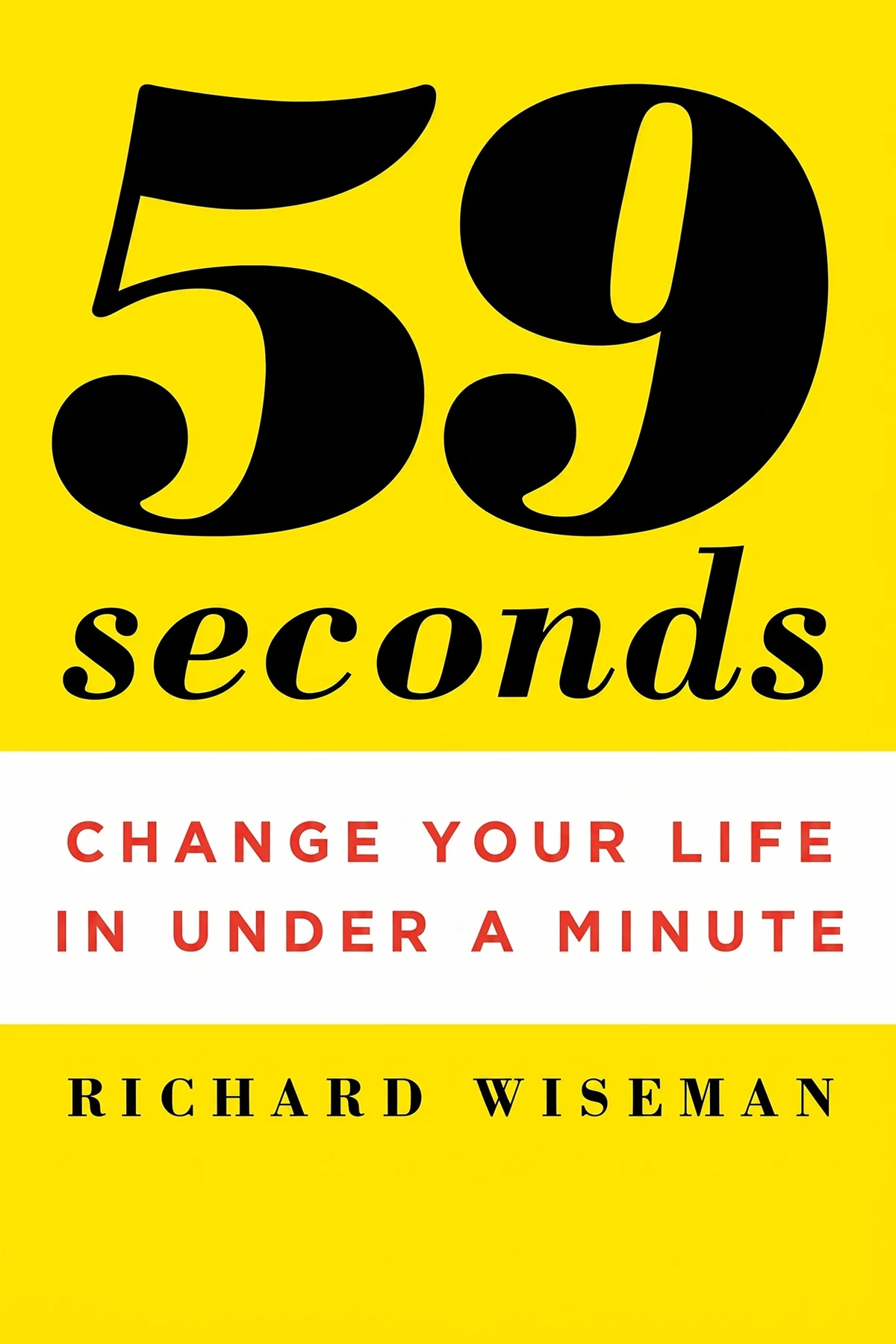
59 Seconds: Change Your Life in Under a Minute
Richard Wiseman
A Liberated Mind: How to Pivot Toward What Matters
Steven C. Hayes

Acting with Power: Why We Are More Powerful Than We Believe
Deborah Gruenfeld
Age of Propaganda: The Everyday Use and Abuse of Persuasion
Anthony Pratkanis
AUDIO SUMMARY AVAILABLE
Listen to The Social Animal in 15 minutes
Get the key ideas from The Social Animal by David Brooks, plus 5,000+ more titles in English and Thai.
- 5,000+ titles
- Listen as much as you want
- 7-day free trial
- Cancel anytime







