
18 min 47 sec
How to Prevent the Next Pandemic: What We’ve Learned From COVID-19 & the Changes We Need to Make
By Bill Gates
A visionary roadmap for global health, this summary explores how coordinated international response teams, advanced surveillance, and equitable vaccine distribution can stop future outbreaks before they become global catastrophes.
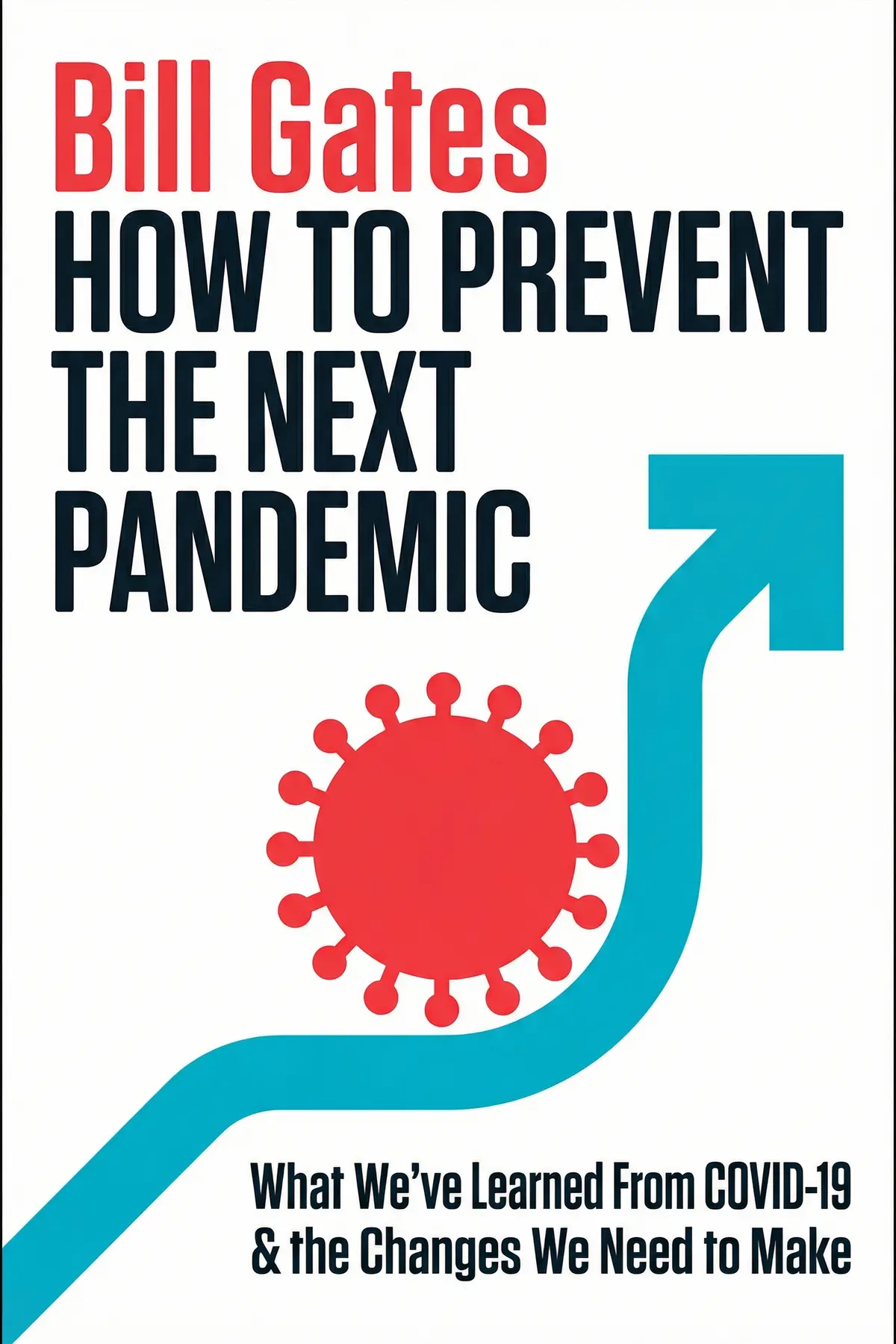
Table of Content
1. Introduction
2 min 18 sec
In the spring of 2020, as the world began to shutter its doors and the gears of global society ground to a halt, most people were living through a nightmare they never could have imagined. But for one person, this wasn’t an unimaginable shock; it was a predicted reality. Years before the first case of COVID-19 was ever identified, Bill Gates was sounding the alarm. He stood on a TED stage in 2015 and delivered a clear, urgent message: we were not ready for a viral outbreak. He didn’t just warn of the danger; he provided a blueprint for how to prepare. At the time, that warning largely fell on deaf ears. Governments didn’t shift their priorities, and the proposed systems were never built. The irony is that the video of that talk only gained massive popularity after the disaster had already begun, serving as a somber reminder of a missed opportunity to change history.
Now, we find ourselves at a crossroads. The collective trauma of the pandemic has provided us with hindsight that we didn’t have a decade ago. We know the cost of inaction—not just in terms of the trillions of dollars lost to the economy, but in the millions of lives cut short. However, there is a recurring pattern in human history where the urgency felt during a crisis begins to evaporate the moment the crisis seems to be receding. As other global problems take center stage, there is a very real danger that we will return to the same complacency that left us vulnerable in the first place. We cannot afford to let the lessons of COVID-19 become old news before we act on them.
This is why we need a concrete, actionable plan to ensure that we never face a catastrophe of this magnitude again. By looking at the gaps in our previous response and identifying the specific tools that actually worked, we can build a world where the next outbreak is nothing more than a local headline rather than a global shutdown. We have the technology, the resources, and the knowledge; what we need now is the political will and the coordinated effort to implement these changes while the memory of the crisis is still fresh in our minds. The following pages will explore exactly what that plan looks like, from the creation of a global specialized task force to the fundamental reshaping of how we distribute medical care to the most vulnerable corners of the planet. The goal is simple: to make COVID-19 the last pandemic of our time.
2. Learning from Success: Testing and Tracing
2 min 28 sec
Some nations managed to keep the virus at bay while others struggled. Discover the specific strategies used by high-performing countries to contain the spread early.
3. The Need for a Global Pandemic Fire Department
2 min 30 sec
Imagine a world where virus outbreaks are treated with the same urgency as a house fire. Learn about GERM, a hypothetical elite squad dedicated to pandemic prevention.
4. Advanced Surveillance: Finding the Needle
2 min 34 sec
Early detection is the key to stopping a spread. Explore the innovative ways we can track pathogens using everything from social media to wastewater.
5. The Six-Month Goal: Revolutionizing Vaccines
2 min 15 sec
Vaccines were the hero of the last pandemic, but they can be even faster. Discover the new technologies that could put a shot in every arm in record time.
6. Practice Makes Perfect: The Power of Simulations
2 min 25 sec
We run drills for earthquakes and fires, so why not for viruses? Learn how ‘germ games’ can expose the weaknesses in our defense systems.
7. Equity as Security: Closing the Global Health Gap
2 min 34 sec
Pathogens do not respect borders. Discover why investing in the health of the world’s poorest nations is the only way to keep the wealthiest nations safe.
8. Conclusion
1 min 43 sec
As we look toward the future, it is easy to feel a sense of fatigue. We have been through a global trauma, and the desire to simply move on and forget is powerful. But if we take only one lesson from the experience of the last few years, let it be this: the cost of preparation is a bargain compared to the cost of a crisis. We have seen exactly what happens when the world is caught unprepared, and we now have the blueprint to ensure it never happens again. Preventing the next pandemic is not a matter of scientific impossibility; it is a matter of making the right choices now.
While much of this plan relies on the actions of governments and large international bodies, the individual also plays a vital role. We are the ones who elect the leaders who will either prioritize science or ignore it. We are the ones who can keep the conversation alive, ensuring that our representatives don’t slip back into the comfortable but dangerous habits of complacency. By supporting policies that fund global health and by staying informed about the importance of surveillance and innovation, we contribute to a culture of readiness.
The throughline of everything we have discussed is coordination. Whether it is the GERM team acting as a global nerve center, the sharing of data across borders, or the equitable distribution of life-saving vaccines, our strength lies in our ability to work as a single species against a common enemy. A virus is a formidable opponent, but it does not have the capacity to plan, to innovate, or to cooperate. We do. If we take the steps outlined in this plan—investing in technology, practicing our response, and closing the gap of inequality—we can transition from a world that reacts in terror to a world that acts with confidence. We can make the next pandemic an event that never actually happens.
About this book
What is this book about?
The world was caught off guard by COVID-19, but it doesn't have to happen again. This guide outlines a comprehensive strategy for global pandemic preparedness, drawing on the successes and failures of the recent past. It details the necessity of a dedicated global response team, the power of rapid diagnostic testing, and the urgent need for innovation in vaccine delivery. Beyond immediate medical responses, the narrative emphasizes the deep connections between global health equity and security. By investing in the health infrastructure of low-income nations and conducting regular large-scale simulations, the world can build a protective shield against pathogens. The promise is a future where infectious diseases are contained at the source, saving millions of lives and trillions of dollars in economic damage.
Book Information
About the Author
Bill Gates
Bill Gates is a prominent business leader, investor, and philanthropist who co-founded Microsoft in 1975. Currently, he serves as the chair of the Gates Foundation. This organization is committed to improving health on a global scale, specifically through investments in vaccines, sanitation, and health infrastructure in developing nations. Gates is also a significant investor in green technology and the author of the bestseller How to Avoid a Climate Disaster.
Source Code: My Beginnings
Bill Gates
Ratings & Reviews
Ratings at a glance
What people think
Listeners describe the work as both educational and skillfully composed, valuing its pragmatic strategy for stopping future outbreaks, and one listener specifically points out its focus on clear actions. The writing is considered accessible, with one person mentioning how effectively it clarifies complex terminology. Opinions vary regarding the book’s discussions on risk management and its overall efficacy.
Top reviews
Ten
Finally got around to reading this and I’m genuinely impressed by how Gates breaks down global health infrastructure. He manages to turn what could have been a dry, technical manual into a hopeful roadmap for humanity. The way he simplifies epidemiological terms without being patronizing is a real feat of writing. I especially liked the focus on the "health gap" between wealthy and developing nations, which often gets ignored in Western media. It’s clear and actionable, though some might find his reliance on private-sector innovation a bit heavy-handed. Still, the logic is sound and the data is presented with helpful charts. To be fair, it’s a bit idealistic about global cooperation, but we need that kind of ambition right now.
Show moreDaranee
Bill Gates has a knack for making the complex feel remarkably simple, which is exactly what he does here with global virology. I loved how he integrated his own experiences with the foundation into the broader narrative of global health. The book is packed with insights on rapid testing and the importance of closing the inequality gap. Some critics say he’s "scaremongering," but I think he’s just being realistic about the risks we face. The quote he includes from Dr. Larry Brilliant—that outbreaks are inevitable but pandemics are optional—really stuck with me. If we actually fund the research and infrastructure he suggests, we might stand a chance. It's a must-read for anyone concerned about the future of our health systems.
Show moreVilaiporn
Wow, this was far more comprehensive than the TED talks suggested. I appreciated how Gates addressed the criticisms of his own wealth and the foundation's role in global health. He’s transparent about his belief in the private sector, which might rub some people the wrong way, but his results are hard to ignore. The writing is engaging and even includes a bit of humor to lighten the mood. The focus on "practicing" for pandemics through simulations is a brilliant and necessary suggestion. Frankly, this is the most hopeful thing I’ve read about the pandemic since it all began. Highly recommend for the clear-headed perspective it offers on a topic that is usually drowned in fear.
Show moreJeeranan
After hearing so many conflicting opinions online, I decided to read the actual text for myself. What I found was a sober, well-reasoned argument for better global coordination. Gates doesn't just point out what went wrong; he offers specific, funded solutions to ensure it doesn't happen again. The chapter on closing the health gap was especially moving, as it highlights how the poorest are always hit the hardest. Some parts are definitely technical, but he explains things like mRNA technology in a way that anyone can understand. It’s an essential contribution to the conversation. Gotta say, it changed my perspective on how prepared we actually are and what needs to change immediately.
Show moreTanawan
As someone who followed the COVID news closely, I found this book provided a necessary bird’s-eye view of the situation. It moves beyond the daily headlines to look at the structural failures of our current systems. Gates is at his best when he’s explaining the logistics of vaccine manufacturing and the need for a standing "GERM" team. Truth is, the book is incredibly informative, but it does feel a little sterile at times. He focuses so much on the biology and the tech that he skims over the political hurdles that often block progress. It’s a solid read because it’s practical and easy to follow, even if it’s a bit optimistic about how well governments will play together in the future.
Show moreThanakorn
Ever wonder why some countries fared so much better than others during the 2020 lockdowns? Gates spends a good amount of time analyzing these discrepancies, particularly highlighting the success of nations like Japan. He argues convincingly that leadership and early intervention are the most critical factors in stopping an outbreak before it goes global. The book is well-written and the tone is surprisingly positive, considering the subject matter. My only gripe is that it feels a bit repetitive in the later chapters when discussing funding. Despite that, the actionable steps he outlines for future readiness are hard to argue with. It’s a pragmatic look at a terrifying possibility that we all need to consider more seriously.
Show morePim
Picked this up because I wanted a roadmap for the future, and for the most part, Gates delivers. He breaks down the response into nine clear chapters, covering everything from detection to vaccine manufacturing. I found the section on the U.S. response particularly biting and, sadly, very accurate regarding the lack of data sharing. The book is professionally written and very direct, which I appreciate in a sea of sensationalist health books. In my experience, books like this can be dry, but the inclusion of charts and personal anecdotes keeps it moving. It’s a very practical guide that should be on the desk of every policy maker, even if some of the funding goals seem like a stretch.
Show moreJib
The chapter on the 'GERM team' was particularly interesting, though the name itself is a bit of a marketing blunder. I enjoyed the straightforward prose and the way Gates uses history to frame our current predicament. However, I found the lack of a formal bibliography a bit disappointing for a book that relies so heavily on scientific claims. It's a great primer for the average reader who wants to understand the basics of pandemic prevention without getting bogged down in jargon. Personally, I would have liked more depth on the ethics of data sharing between countries. It feels like a very "corporate" solution to a very human crisis, focusing on management rather than grassroots change.
Show morePierre
Look, I appreciate the optimism here, but the idea that we can just "tech" our way out of the next virus feels a bit naive. The book spends a lot of time on vaccines and testing but barely addresses the massive wave of disinformation that crippled the last response. If you don't solve the "infodemic," all the labs in the world won't save us. The prose is easy to read, but it feels like it was written in a vacuum where everyone just does what the experts say. In my experience, real-world problems are much messier than this book suggests. To be fair, the technical explanations are clear, but the social analysis is severely lacking and feels incomplete.
Show moreAraya
Not what I expected at all, and frankly, it felt like a 300-page PR stunt for his foundation. Gates seems to think that more technology and more billionaire-funded committees are the only way to solve human problems. He almost entirely ignores the messy psychological and social reasons why people didn't follow mandates in the first place. You can build all the testing labs you want, but if the public doesn't trust the source, it's all for nothing. The writing is polished, sure, but the substance feels detached from the reality of how people actually behave. It's a top-down solution that forgets the people on the bottom and ignores the risk of centralized power.
Show moreReaders also enjoyed
A Life Decoded: My Genome: My Life
J. Craig Venter

A Different Kind of Power: A Memoir
Jacinda Ardern

Age of Anger: A History of the Present
Pankaj Mishra
A Planet of Viruses
Carl Zimmer
A Higher Loyalty: Truth, Lies and Leadership
James Comey
Age of Propaganda: The Everyday Use and Abuse of Persuasion
Anthony Pratkanis
A Short History of Nearly Everything
Bill Bryson
A Thousand Brains: A New Theory of Intelligence
Jeff Hawkins

AUDIO SUMMARY AVAILABLE
Listen to How to Prevent the Next Pandemic in 15 minutes
Get the key ideas from How to Prevent the Next Pandemic by Bill Gates, plus 5,000+ more titles in English and Thai.
- 5,000+ titles
- Listen as much as you want
- 7-day free trial
- Cancel anytime







