

17 min 44 sec
How We Grow Up: Understanding Adolescence―A Must-Read for Parents and Anyone Who Cares for Teens and Young Adults, by the Pulitzer Prize-winning NYT reporter
By Matt Richtel
Explore the evolutionary necessity of teenage rebellion. Matt Richtel explains how modern adolescence is shifting from physical exploration to internal discovery, reframing the current youth mental health crisis as a complex biological adaptation.
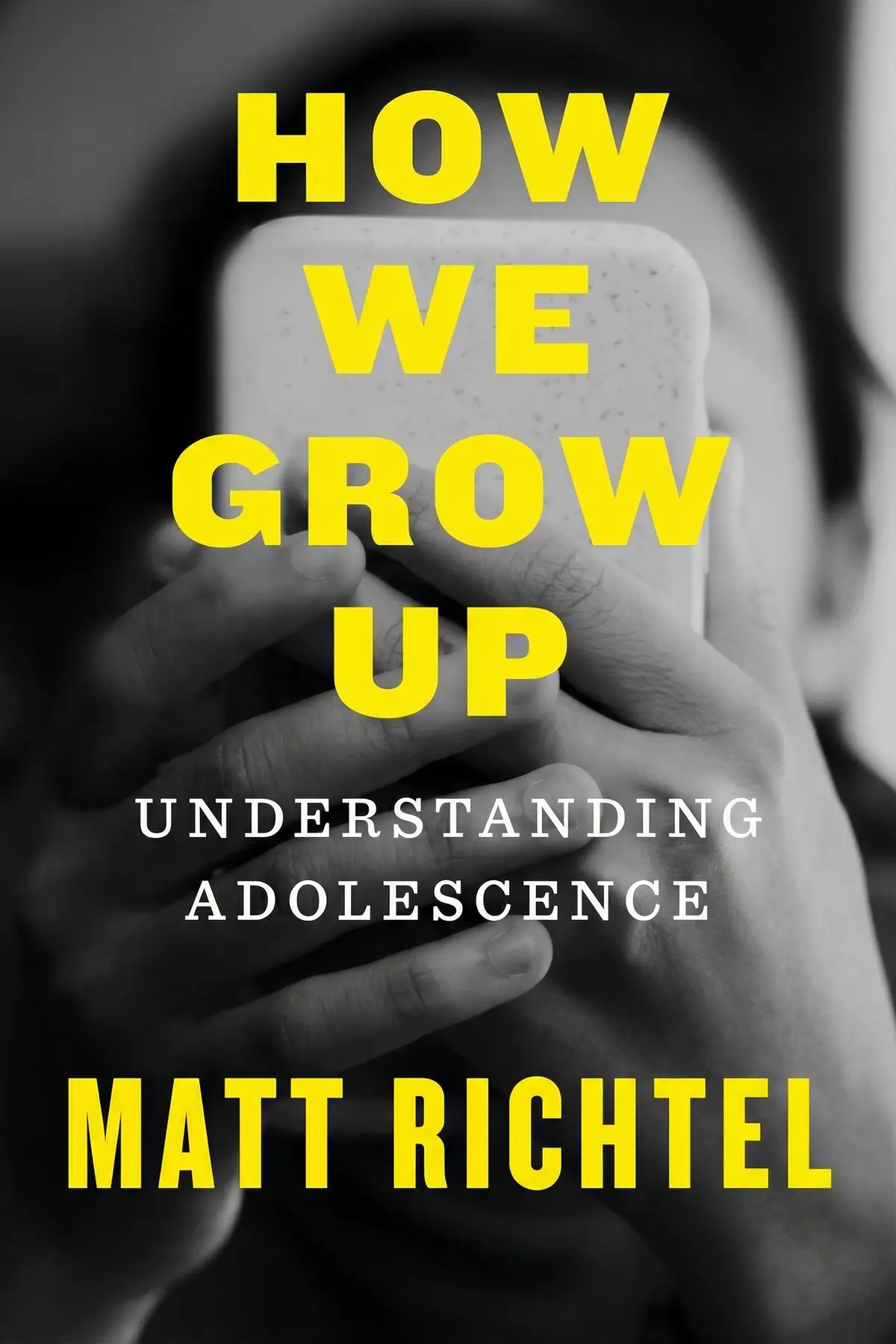
Table of Content
1. Introduction
1 min 39 sec
When we look at the teenagers in our lives today, it is easy to fall into the trap of old clichés. We might see them as perpetually glued to their screens, increasingly withdrawn, or perhaps more prone to emotional volatility than the generations that came before them. It is a common refrain among adults to wonder why the young seem so different now, and why the transition to adulthood feels more fraught with peril and psychological distress than it once did. But what if we are misreading the entire situation? What if the behaviors we often label as problems are actually the signs of a biological system doing exactly what it was designed to do?
In this exploration of human growth, we are going to look past the surface-level frustrations of parenting and education to see the deeper, evolutionary throughline of adolescence. We will discover that the teenage years are not just a bridge to be crossed as quickly as possible, but a sophisticated biological renovation designed to ensure the survival and progress of the human species. By looking at how the brain rewires itself, how history has shaped our definition of the ‘teenager,’ and how modern technology acts as an unexpected amplifier for these ancient processes, we can begin to understand the true purpose of the struggle.
The journey from childhood to maturity is a delicate dance between maintaining stability and seeking out the unknown. As we dive into the science and the stories of those navigating this path, we will find that today’s youth are not broken; they are pioneers of a new, internal frontier. They are grappling with an environment that their ancient biology wasn’t quite prepared for, and our role as the adults in the room is to understand that chaos, rather than simply trying to suppress it.
2. The Evolutionary Purpose of Youthful Rebellion
2 min 19 sec
Discover why the reckless energy of youth is not a developmental flaw, but a historical engine of human progress that allows each generation to outgrow the previous one.
3. The Biological Renovation of the Adolescent Brain
2 min 29 sec
Learn about the intense physical transformation happening inside a teenager’s head, where the brain undergoes a radical process of streamlining to prepare for the complexities of adult life.
4. Why Teengers Prioritize the World Over the Home
2 min 23 sec
Explore the fascinating neurological shift that causes adolescents to value the voices of strangers over their own parents as a necessary step toward independence.
5. The Shift from Physical Frontier to Internal Exploration
2 min 25 sec
Witness how the nature of teenage risk-taking is changing, moving from external rebellion like drugs and alcohol to deep, internal battles with identity and mental health.
6. The Digital Volume Knob and the Mismatch of Modern Life
2 min 20 sec
Uncover how social media and earlier biological maturity are creating a perfect storm for the adolescent brain, amplifying vulnerabilities and accelerating the pressures of growing up.
7. Building a Bridge to Maturity Through Faith and Connection
2 min 23 sec
Reflect on the vital role adults play in supporting the next generation, balancing the need for firm boundaries with the deep compassion required to foster resilience.
8. Conclusion
1 min 46 sec
As we look back at the landscape of human development, it becomes clear that adolescence is far more than just a phase of life characterized by mood swings and messy bedrooms. It is a profound biological and evolutionary mandate. We have seen how the teenage brain is a marvel of engineering, a system designed to strip away the unnecessary and accelerate into the future. We have explored how the drive to rebel and the shift in focus from parents to peers are not signs of a broken generation, but the very mechanisms that allow humanity to adapt, innovate, and survive.
Today’s teenagers are facing a unique set of challenges. They are navigating an inward frontier of identity and mental health, often while being buffeted by the high-frequency noise of the digital age. They are reaching physical maturity earlier and processing more information than any generation before them. While this has led to a rise in internal struggle, it also signifies a generation that is deeply engaged in the work of defining what it means to be human in a rapidly changing world.
For the adults, the message is one of both urgency and hope. Our role is to be the steady anchor while the young explore the storm. We must provide the compassion to understand their internal battles and the wisdom to set the boundaries that keep them safe. We need to stop viewing teenage development as a problem to be solved and start seeing it as a process to be supported. When we understand the ‘why’ behind the struggle, we can move from conflict to connection. The teenagers of today are carrying the fire of human evolution, and by supporting them with patience and understanding, we ensure that they not only grow up but also lead us into whatever comes next.
About this book
What is this book about?
Adolescence is often viewed as a period of turbulence that both parents and teenagers must simply survive. However, this exploration of human development suggests that the friction of the teenage years is actually a fundamental driver of human progress. By weaving together the history of societal development with modern neurological findings, the narrative explains why the young are biologically programmed to challenge authority and seek out the unfamiliar. The book promises a shift in perspective. Instead of seeing the modern rise in anxiety and depression as a simple failure of the current generation, it frames these struggles within the context of an evolutionary mismatch. We see how the teenage brain, built for the stone age, is attempting to navigate an information-heavy digital era. From the biological reasons why teenagers suddenly stop listening to their parents to the impact of early puberty and social media, the text provides a comprehensive look at the challenges and the essential purpose of growing up. Ultimately, it offers a more compassionate lens through which to view the next generation’s search for identity and meaning.
Book Information
About the Author
Matt Richtel
Matt Richtel is a distinguished journalist for the New York Times, where his investigative work has earned him high acclaim, including a prestigious Pulitzer Prize for his reporting on the dangers of distracted driving. He is well-known for his insightful series exploring the deep-seated impact of technology on the human brain and behavior. Richtel is also a prolific author, having written the bestseller An Elegant Defense, along with several mystery novels and thrillers that delve into the intersections of modern life and technological advancement.
Ratings & Reviews
Ratings at a glance
What people think
Listeners find the examination of adolescence as a critical evolutionary phase profoundly illuminating, although perspectives differ regarding the author’s narrative stories, which some believe occasionally drift. Nevertheless, many value the blend of history and neuroscience, especially the details on why the adolescent brain is naturally programmed for creativity and risk. They also highlight the book’s relevant look at "Generation Rumination" and modern digital stresses, with one listener pointing out the intriguing study illustrating how teenagers start to value the opinions of outsiders above those of their parents. Furthermore, listeners appreciate the short, compelling chapters that ensure intricate subjects like earlier puberty and neural restructuring remain understandable for everyone.
Top reviews
Leila
Wow, the chapter on how the teenage brain is literally designed to tune out parents in favor of strangers was a total eye-opener for me. Richtel does a brilliant job of explaining that what we see as rebellion is actually a necessary biological drive to explore and innovate. I loved the historical parallels, like the story of the kid on the Mayflower vs. the modern activists of today. It really puts the current 'mental health crisis' into a broader evolutionary context. Instead of just blaming social media, he looks at the mismatch between our ancient brains and this high-speed digital environment. It’s a compassionate, well-researched, and ultimately hopeful book that helped me look at my own teenager with a lot more patience. Each chapter is bite-sized and very accessible for a non-scientist.
Show moreSiriporn
Finally, a book that doesn't just treat teenagers like problems to be solved or screens to be confiscated! Richtel argues that adolescence is humanity’s method of evolution, and that perspective shift changed how I view my students. The way he connects the 'stubbornness' of a Nobel Prize winner like Jim Allison to the biological necessity of teenage defiance is just brilliant. Yes, the digital world is a dangerous amplifier, but the core of the 'teen problem' is actually our greatest strength as a species. The writing is engaging and the stories of kids like Thomas really bring the neuroscience to life. I finished this feeling much more optimistic about the future of our 'ruminating' generation despite the real challenges of anxiety and earlier puberty. Highly recommend for anyone working with youth.
Show moreKomsan
Ever wonder why your fourteen-year-old is suddenly a stranger? This book explains the biological 'rewiring' that makes adolescents prioritize unfamiliar voices, and it’s honestly a relief to know it's not just my parenting. Richtel manages to weave together the history of the Mayflower with modern brain scans to show that we need this period of disruption to survive. The sections on how technology interacts with 'differential susceptibility' were particularly chilling but necessary for understanding today's mental health crisis. It’s a deep, multi-layered look at the messiness of growing up in a world that’s moving faster than our biology can keep up with. If you can get past a few of the slower narrative sections, the insights into brain remodeling and the evolution of adolescence are absolutely worth your time.
Show moreVipawan
After hearing Matt Richtel on a podcast, I was eager to see if his research on modern adolescence lived up to the hype. The book successfully reframes the teenage years as a vital biological stage rather than a developmental glitch. I was especially struck by the research showing how adolescent brains prioritize the voices of strangers over their own mothers—it explains so much about that sudden push for independence. While some chapters felt a little too anecdotal, the synthesis of neuroscience and history kept me turning the pages. It’s an engaging, empathetic look at why our kids are turning inward and how the digital age acts as a massive amplifier for their natural anxieties. Definitely worth a read for parents struggling to bridge the gap between their own upbringing and the 'Gen Z' experience.
Show moreArm
As a parent of two 'Gen Z-ers,' I found Richtel's perspective on adolescence as a survival mechanism incredibly grounding. We often get caught up in the 'kids these days' rhetoric, but this book reminds us that their brains are performing a vital function by questioning the status quo. The breakdown of how neural connections are pruned to create a more efficient, risk-taking adult brain was fascinating stuff. To be fair, the book does get a little heavy-handed with the emotional stories, and I wish there had been more practical advice for navigating the digital stress he describes. However, the overall message of empathy over judgment is something every parent and educator needs to hear right now. It's a thoughtful, timely contribution to the discussion about our kids' mental health.
Show moreNora
Is it just me, or is the 'teen brain' conversation starting to feel a bit repetitive? Richtel offers some decent insights into 'Generation Rumination' and how our kids are constantly looping through digital stress. Truth is, the science here about earlier puberty and brain-environment mismatch is solid, but the writing meanders quite a bit. I found myself skimming through the longer anecdotes about specific kids that didn't always seem to connect back to the core thesis. While I appreciated the idea that adolescence is an evolutionary necessity for innovation, the book felt a bit scattered compared to other works in this niche. It’s a fine primer if you’re new to the subject, but don’t expect a groundbreaking manifesto. The short chapters are great for a quick read, but the depth just isn't always there.
Show moreAna
Bite-sized chapters and clear language make this an easy weekend read, though I was left wanting a bit more data-driven meat. Richtel’s concept of 'Generation Rumination' is a catchy way to describe the inward turn of today’s youth, but the book spends a lot of time on individual stories like Henry’s or Courtney’s. In my experience, some of these anecdotes felt like they were included more for emotional impact than to support the scientific claims. I did appreciate the sections on how junk food is physically changing the timeline of puberty, as that’s something you don’t hear about as often. It’s a solid 3-star read: insightful in parts but occasionally loses its focus in the narrative fluff. It works as a broad overview but skips over the deeper analysis I was craving.
Show moreSoontorn
The premise is fascinating, but I felt like the execution was a bit uneven in places. I picked this up because I was curious about the 'Generation Rumination' tag, and while Richtel provides some great context on why teens are turning inward, the book is quite anecdotal. At times, the stories about physical frontiers versus psychological ones felt a bit stretched to fit the evolutionary narrative. It’s interesting to learn about the biological pruning of the brain, but I found myself wishing for a more cohesive structure. The chapters are short and accessible, which is great for busy readers, but it sometimes feels like you're jumping from one case study to another without enough connective tissue. It’s an okay read, just not a standout in the field of adolescent psychology.
Show moreSomporn
The title promised a deep dive into how we grow up, but I mostly found a collection of disjointed stories that didn't quite land for me. I’ve read Richtel’s 'An Elegant Defense' and enjoyed it, but this one felt too simplistic and a bit overwrought in its portrayal of Gen Z. The author relies heavily on dramatic portraits of young people struggling with identity, which frankly felt like a bit of an agenda-push by the end. Not gonna lie, I was expecting more hard science and less meandering narrative. The themes of evolutionary purpose are interesting on paper, but they got lost in the weeds of the storytelling. It just didn't add much to the existing conversation about modern kids and why they are struggling so much more than previous generations.
Show moreBua
Look, I appreciate the effort to reframe teenage rebellion as evolutionary, but the book feels like it's pushing an agenda through specific, dramatic anecdotes. It started out with a wide scope but eventually spiraled into these overly dramatic portraits that didn't feel representative of the average kid's experience. I was looking for more substantial research on the 'brain-environment mismatch' and less focus on sensationalized stories of trauma and transition. By the halfway point, the writing felt like it was meandering away from the science and into a social commentary that I didn't find particularly novel. If you want a rigorous look at generational differences, there are definitely stronger books out there. This one just didn't quite stick the landing for me. The science is there, but the execution is messy.
Show moreReaders also enjoyed


59 Seconds: Change Your Life in Under a Minute
Richard Wiseman

A Liberated Mind: How to Pivot Toward What Matters
Steven C. Hayes
Acting with Power: Why We Are More Powerful Than We Believe
Deborah Gruenfeld
AUDIO SUMMARY AVAILABLE
Listen to How We Grow Up in 15 minutes
Get the key ideas from How We Grow Up by Matt Richtel, plus 5,000+ more titles in English and Thai.
- 5,000+ titles
- Listen as much as you want
- 7-day free trial
- Cancel anytime







