
28 min 40 sec
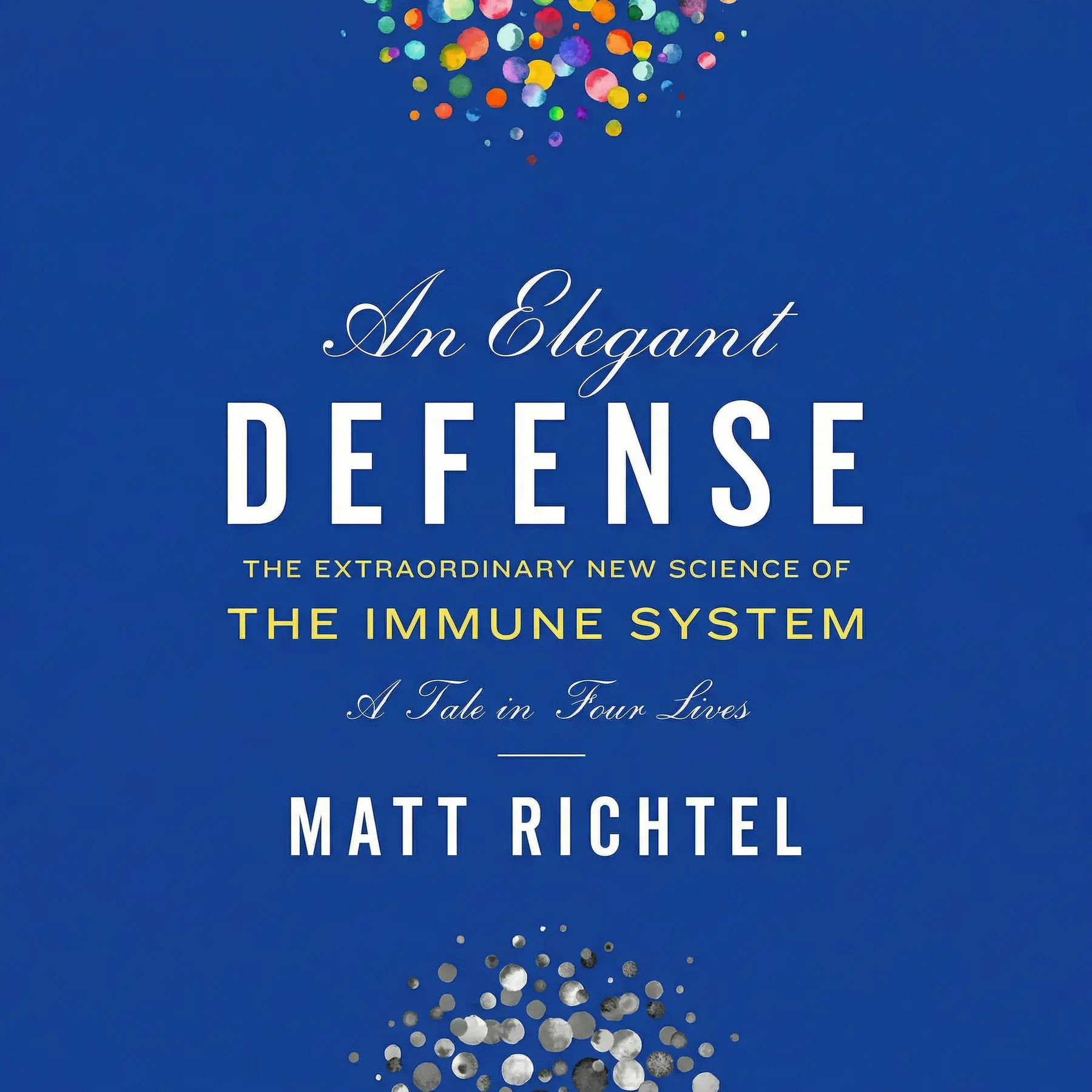
An Elegant Defense: The Extraordinary New Science of the Immune System: A Tale in Four Lives
By Matt Richtel
An Elegant Defense explores the sophisticated and delicate nature of the human immune system. Through personal stories and scientific history, it reveals how this internal network protects us and where it remains vulnerable.
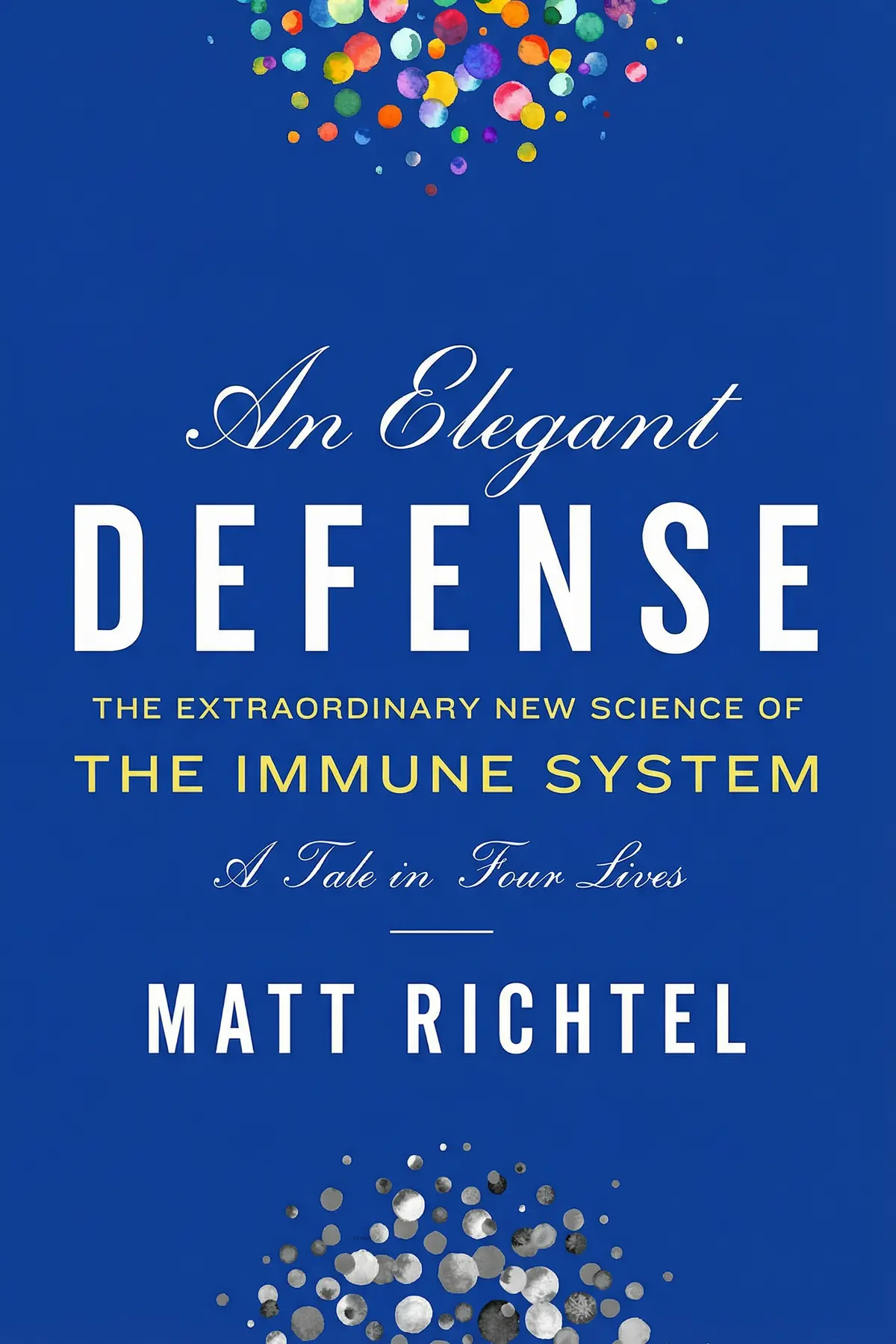
Table of Content
1. Introduction
2 min 20 sec
Every single moment of your life, a silent and invisible war is being waged. It is happening inside your veins, beneath your skin, and deep within your organs. This is the story of our internal security force—a system so intricate and capable that it can recognize and destroy threats it has never even encountered before. Yet, as the Pulitzer Prize-winning journalist Matt Richtel explores in his book, An Elegant Defense, this system is as fragile as it is powerful.
The inspiration for this exploration began with a personal miracle. Richtel watched as his lifelong friend, Jason Greenstein, faced a terminal cancer diagnosis with almost no hope of survival. However, Jason became one of the first humans to benefit from a revolutionary new type of medicine: immunotherapy. Rather than using chemicals to poison the cancer, this treatment unlocked Jason’s own immune system, allowing his internal defenses to recognize and obliterate the tumors. It was a recovery so sudden and complete that it felt like a resurrection.
This event ignited a series of questions for Richtel. How does this system actually work? How does it know what belongs to us and what is a foreign invader? And if we have the power to turn this system on with such incredible results, why can’t we cure everything? To answer these questions, we have to look back at centuries of scientific detective work. We have to understand the strange anatomy of chickens, the circulatory systems of dogs, and the microscopic behavior of starfish.
In the following minutes, we are going to trace the history of immunology—the branch of medicine that studies this defense network. We will meet the pioneers who discovered the various ‘soldiers’ of the immune system, such as T cells and B cells. We will also follow the throughline of Jason’s story, which serves as a powerful reminder that our immune system is a double-edged sword. It requires a perfect, delicate balance. When it is too weak, we fall to infection; when it is too aggressive, it can turn on the very body it is meant to protect. This is the story of the most sophisticated defense system in the known universe.
2. The Vast Biological Festival Within
2 min 26 sec
Think of your body not just as a single entity, but as a massive, non-stop celebration where trillions of guests are constantly interacting and being monitored.
3. Three Historical Riddles of Anatomy
2 min 39 sec
The road to understanding our internal defenses began with three seemingly unrelated mysteries involving chickens, dogs, and the larvae of starfish.
4. The Unsung Heroism of the Thymus
2 min 06 sec
For a long time, doctors thought the thymus was a useless organ, but a series of experiments with mice proved it was the command center for our defenses.
5. The Body's Selective Sentinels
2 min 25 sec
How does the body know to attack a splinter but leave its own skin alone? The answer lies in the specialized education of T cells.
6. The Discovery of the B Cell
2 min 04 sec
T cells aren’t the only precision warriors in your blood; a second type of cell, born in the bone marrow, provides the body’s long-range artillery.
7. The Precision of the Defense Force
1 min 59 sec
Our immune system is split between a general reaction force and a highly specialized squad of experts, each with a different way of handling an invasion.
8. The Infinity Machine in Your DNA
2 min 10 sec
How can your body have a ‘key’ for a disease it has never seen before? A Nobel Prize-winning discovery revealed a stunning genetic trick.
9. The Two Integrated Systems of Defense
1 min 56 sec
Your body doesn’t just have one immune system; it has two that work in a complex partnership of instinct and memory.
10. The Language of Cellular Communication
2 min 06 sec
Your immune cells talk to each other through a complex system of protein messages that can trigger fever, fatigue, and healing.
11. When the Defense is Hijacked
1 min 54 sec
Cancer is not just a growth; it’s a master of deception that can trick your immune system into protecting the very thing that is killing you.
12. The Limits and Dangers of Intervention
2 min 18 sec
Modern medicine can now ‘unlock’ the immune system to fight cancer, but doing so can trigger a lethal storm of self-destruction.
13. Conclusion
2 min 17 sec
The journey through the world of the immune system brings us to a singular, vital conclusion: health is a state of equilibrium. As we have seen through the history of immunology and the personal tragedy of Jason Greenstein, our ‘elegant defense’ is not a wall that simply stands firm; it is a dynamic, living conversation that must be perfectly tuned. If the system is too quiet, we are consumed by pathogens or cancer. If it is too loud, we are consumed by ourselves.
In the modern world, we often unknowingly disrupt this balance. We live in environments that are perhaps too sterile, depriving our innate systems of the ‘training’ they need. Conversely, we subject ourselves to chronic levels of stress that keep our systems in a state of high alert. Matt Richtel emphasizes that the same biological signals that help us fight a virus—the cytokines that cause inflammation and fatigue—can be triggered by the psychological pressures of modern life.
So, what can we do with this knowledge? The most actionable advice is to respect the biological needs of this system. This means prioritizing sleep and managing stress. Sleep is the time when the body shuts down its ‘alert’ hormones, like adrenaline, allowing the immune system to conduct its essential ‘janitorial’ work and reset its chemical balance. Meditation and mindfulness aren’t just relaxation techniques; they are ways to signal to your innate immune system that the ‘festival’ is safe and there is no need for a scorched-earth defense.
An Elegant Defense leaves us with a sense of wonder for the ‘infinity machine’ inside us, but also a sober warning. We are part of a complex biological legacy that has survived for millions of years by being just aggressive enough, and just cautious enough. By understanding the science and the stories of those who have navigated the extremes of this system, we can better appreciate the miraculous, invisible shield that allows us to walk through a world of trillions of microbes every single day. The goal of medicine—and the goal of a healthy life—is not to conquer the immune system, but to live in harmony with its elegant, necessary, and sometimes deadly grace.
About this book
What is this book about?
An Elegant Defense is an in-depth exploration of the human immune system, framing it as a complex and beautifully tuned protective network. The book takes listeners through the historical breakthroughs in immunology, from the earliest anatomical discoveries to modern-day treatments. It balances these scientific milestones with the poignant narrative of Jason Greenstein, a man whose life was transformed and ultimately taken by the very systems designed to save him. Listeners will gain a deep understanding of how various cells—like T cells, B cells, and neutrophils—work in concert to distinguish between friendly residents and dangerous intruders. The promise of the book is to demystify the 'infinity machine' inside us, explaining how our bodies prepare for threats they have never even seen before. It also serves as a cautionary tale about the limits of medical intervention, illustrating how the delicate balance of our internal defenses is both our greatest strength and a potential source of peril.
Book Information
About the Author
Matt Richtel
Matt Richtel is an accomplished journalist and author known for his ability to translate complex subjects into compelling narratives. As a reporter for the New York Times, his work earned him the prestigious Pulitzer Prize in 2010. Beyond his journalistic career, Richtel has authored several novels, including the thrillers Doomsday Equation and Dead on Arrival. His nonfiction work, A Deadly Wandering, received widespread acclaim and was recognized as one of the best books of 2014 by both Amazon and the San Francisco Chronicle. Richtel’s unique background allows him to blend rigorous reporting with the pacing of a storyteller.
Ratings & Reviews
Ratings at a glance
What people think
Listeners find this work to be a superb read that translates sophisticated theories into an understandable format, utilizing gripping stories of patients to keep the difficult subject matter engaging. The prose is skillfully written, as one listener observed the way the author uses short sentences to convey deep information. They praise the treatment of the immune system, with one review emphasizing how it portrays the human consequences of immune system weaknesses. While the language is accessible to a general audience, the work's pacing gets mixed feedback.
Top reviews
Somsak
Wow. I am almost at a loss for words trying to describe how this book managed to turn complex immunology into a page-turning thriller. Matt Richtel has this incredible gift for taking dense, intimidating science and distilling it into small, punchy sentences that even a layman like me can grasp. The heart of the story is Jason, the author's childhood friend, and his journey really anchors the whole narrative. It’s a science book, but it feels deeply personal, almost like a biography of the human body itself. I found myself staying up until well past midnight, completely absorbed by the way he describes our 'elegant defense' as a peacekeeping force rather than just a war machine. If you want to understand how your body actually interacts with the world, read this. It is a masterpiece of science communication that doesn't sacrifice the human element.
Show moreIff
This book is a masterclass in how to bridge the gap between clinical research and human emotion. Richtel weaves together the history of immunology with the lived experiences of four individuals facing life-altering diagnoses, and the result is nothing short of compelling. I was particularly moved by the sections on HIV and the early days of the GRID crisis; the way he captures the human impact of these immune deficiencies is heartbreaking and illuminating. The prose is well-crafted, and the chapters are short enough to keep you moving through the more technical sections without feeling overwhelmed. Frankly, it’s rare to find a Pulitzer winner who can write about T-cells with the same tension as a detective novel. This is a must-read for anyone interested in the delicate balance that keeps us alive every single day.
Show moreWorawit
After hearing about Matt Richtel's work on the radio, I had high expectations, and 'An Elegant Defense' mostly exceeded them. What struck me most was the clarity of the writing. He takes these incredibly dense concepts—like the way our bodies distinguish self from non-self—and makes them feel intuitive. The book covers everything from the early polio vaccine trials to modern cancer treatments, but it never feels like a dry history lesson because it's always rooted in the stories of real people. The way he connects the immune system to broader social issues like xenophobia was a brilliant touch that I didn't expect. It’s a profound look at what it means to be human and the invisible forces that protect us. It is easily one of the most informative books I've read in years.
Show moreHannah
Finally got around to reading this, and it’s easily the best explanation of the immune system I’ve encountered. The way Richtel balances the technical side with the emotional stories of the four patients is just masterful. I particularly liked how he explained that the immune system isn't just about fighting off 'invaders,' but about maintaining a delicate harmony within our own bodies. The writing is clear, the sentences are sharp, and the research—despite the lack of a formal bibliography—seems very well-reported from his interviews with top researchers. It captures the human impact of immune deficiencies in a way that a textbook never could. Whether you’re a science geek or just someone who wants to understand their health better, this book is an absolute gem. I couldn't put it down!
Show moreSupranee
Ever wonder why we’re seeing so many more allergies and autoimmune disorders these days? This book dives deep into the 'hygiene hypothesis' and provides some truly fascinating insights into why being too clean might be backfiring on us. I loved the comparison between the Amish and Hutterite communities; it really put the science into a real-world perspective that made sense. The author’s conversational tone makes the heavy topics—like how T-cells and B-cells function—actually digestible. I did find the pacing a bit uneven in the middle, and some of the metaphors were a little goofy, but the patient stories kept me grounded. It’s a solid, informative read that changed the way I think about my own health and the environment around me. I’ll definitely be less paranoid about a little bit of dirt from now on!
Show moreAlejandra
Picked this up after a recommendation from a friend, and I’m glad I did, even if it wasn't perfect. The science is presented in a very accessible way, focusing on the idea of the immune system as a 'peacekeeping force' rather than a violent defense system. I think that’s a beautiful way to frame it. The stories of the four main patients provide a much-needed narrative thread that prevents the book from becoming a dry textbook. My only real gripe is that it felt a bit long-winded in places, and I noticed a few minor inconsistencies in how certain drugs were described. However, for a general audience, these are small quibbles. It’s an eye-opening look at the 'infinity machine' inside us. Definitely worth your time if you're curious about how vaccines and immunotherapy actually work.
Show moreMaya
As someone who isn't a scientist, I appreciated how this book didn't talk down to me, for the most part. The author does a great job of explaining the 'why' behind our immune responses without getting bogged down in too much jargon. I found the chapter on vaccines particularly interesting, especially the history of Jenner and the early risks taken to understand immunity. Some of the metaphors, like the 'festival of life,' were a bit overused, but they helped visualize the concepts. The pacing was mostly good, though it did drag slightly in the section on autoimmune disorders. Still, the human stories are what make this book shine. Seeing the real-world impact of these scientific breakthroughs through the eyes of patients like Jason and Bob makes the science feel urgent and incredibly vital.
Show moreSuvannee
Not what I expected, but in a good way! I thought this would be a dry medical text, but it’s actually a very warm and human exploration of our internal defense systems. Richtel’s background as a journalist is evident; he knows how to find the 'hook' in every chapter. I learned so much about how our modern, sanitized lifestyle might actually be making us sicker. The discussion on the 'peacekeeping force' of the immune system was a total shift in perspective for me. I did notice the lack of references that other reviewers mentioned, which is a bit disappointing for a science book, but the narrative flow is so good that I was willing to overlook it. It’s a fascinating journey through the history of medicine and the brilliance of the human body.
Show moreElan
To be fair, there is a lot of good information here, but the writing style eventually started to grate on me. Richtel uses the phrases 'elegant defense' and 'festival of life' so many times that I started rolling my eyes every time they appeared on the page. It felt like the book was in desperate need of a stronger editor to trim the repetition. Also, the lack of a formal reference section or citations is a major red flag for a non-fiction book claiming to be rooted in cutting-edge science. I enjoyed the personal stories of the four patients, especially the sections on the history of the Black Plague and AIDS, but the constant 'pep talks' to the reader felt a bit like mansplaining. It’s a decent entry-level book for someone who knows zero about biology, but if you’re looking for something as rigorous as Siddhartha Mukherjee, this isn't it.
Show moreLuke
I really wanted to love this, but as someone with a science background, I found the errors too distracting to ignore. For instance, the author completely mixes up the roles of CD4+ and CD8+ T-cells at one point, describing the soldiers as the generals and vice versa. How did that get past an editor? Then there's the description of Enbrel, which is fundamentally incorrect regarding its mechanism of action. It feels like the author tried to 'fake it till he made it' with the complex biology and ended up spreading misinformation. The lack of any citations or a bibliography makes it impossible to verify his more shocking claims. While the personal story about his friend Jason is touching, the sloppy science makes it hard to recommend this as a reliable educational resource. If you want real science, stick to 'The Gene' or 'I Contain Multitudes'.
Show moreReaders also enjoyed

A Life Decoded: My Genome: My Life
J. Craig Venter
A Planet of Viruses
Carl Zimmer
A Short History of Nearly Everything
Bill Bryson
A Thousand Brains: A New Theory of Intelligence
Jeff Hawkins
AUDIO SUMMARY AVAILABLE
Listen to An Elegant Defense in 15 minutes
Get the key ideas from An Elegant Defense by Matt Richtel, plus 5,000+ more titles in English and Thai.
- 5,000+ titles
- Listen as much as you want
- 7-day free trial
- Cancel anytime







