
A Liberated Mind: How to Pivot Toward What Matters
Steven C. Hayes
Explore the transformative power of Internal Family Systems to harmonize your inner voices. Learn to lead with your core Self, heal childhood exiles, and release inherited ancestral burdens for lasting emotional wholeness.
1 min 44 sec
Have you ever found yourself in a situation where you felt completely divided? Perhaps one part of you was desperate to take a bold new professional risk, while another part felt paralyzed by the fear of failure. Or maybe you’ve felt a surge of anger toward a loved one, while simultaneously feeling a deep sense of guilt for even having that emotion. Most of us are conditioned to think of our minds as a single, monolithic entity—one ‘me’ that thinks, feels, and acts. But if we pay close attention to our internal dialogue, we realize that we are far more complex than that. We are not just one person; we are an entire ecosystem of internal personalities, each with its own perspectives, memories, and motivations.
This realization is the cornerstone of a transformative approach to emotional health. It suggests that our internal conflicts aren’t signs of a broken mind, but rather evidence of a vibrant inner family that is simply out of balance. By learning to recognize these distinct voices, we can begin to understand why we do the things we do, especially the behaviors that seem to sabotage our best intentions. We start to see that even our most difficult traits—like perfectionism, numbing out, or harsh self-criticism—are actually strategies developed by specific parts of us to keep us safe.
Over the course of this exploration, we will look at how to navigate this internal landscape. We will discover that at the center of this family of parts resides a calm, compassionate core—a true Self that is capable of leading with wisdom. We will also look beyond our own individual lives to see how the burdens of our ancestors might still be playing out within us today. Through this throughline of internal harmony and ancestral connection, we can find a path toward profound healing and wholeness.
1 min 43 sec
Explore the concept that your psyche is not a single unit, but a collection of distinct sub-personalities working to protect you.
1 min 39 sec
Discover the ‘Self,’ a core essence characterized by clarity and calm that remains undamaged regardless of past trauma.
1 min 46 sec
Understand the two types of protectors that guard your emotional world and keep your most vulnerable feelings hidden.
1 min 45 sec
Meet the young, sensitive parts of your psyche that carry the weight of past shame and fear.
1 min 36 sec
Learn the essential technique of creating space between your conscious Self and your overwhelming emotions.
1 min 42 sec
Address the common experience of being ‘stuck’ by understanding how parts pull you in opposite directions.
1 min 45 sec
Discover how your physical sensations act as a direct communication line from your internal family.
1 min 41 sec
Incorporate the wisdom of your lineage to support your internal healing process and find stability.
1 min 42 sec
Identify the traumas and beliefs that aren’t yours, but have been passed down through generations.
1 min 36 sec
Transition from constant internal reactivity to a state of balance where your Self guides your decisions and relationships.
1 min 33 sec
The journey through our internal world reveals a profound truth: we are far more than the sum of our struggles. By embracing the framework of Internal Family Systems, we move away from the idea that we are ‘broken’ and toward a deep understanding of our own complexity. We have seen how our mind is populated by parts that, even when they cause us pain, are fundamentally trying to protect us. We’ve discovered the incredible resilience of the Self—that core of compassion and clarity that remains untouched by trauma, ready to lead if we only give it the chance.
We have also learned that our healing is connected to something much larger than our individual lives. By addressing legacy burdens and inviting ancestral wisdom into our process, we heal the past and protect the future. We’ve explored practical tools—like unblending and somatic awareness—that allow us to transform our internal landscape from a place of conflict into a collaborative family.
As you move forward, remember that your parts are always listening. They want to know that they are safe and that someone capable is in charge. The most important thing you can do is to continue showing up for them with curiosity and kindness. When you find yourself reactive or overwhelmed, take a moment to breathe, find that small space of unblending, and ask your parts what they need. By consistently leading from your Self, you create a life of balance, purpose, and genuine connection. Healing isn’t about becoming someone else; it’s about finally becoming the wise, compassionate leader of the remarkable family you’ve always carried within.
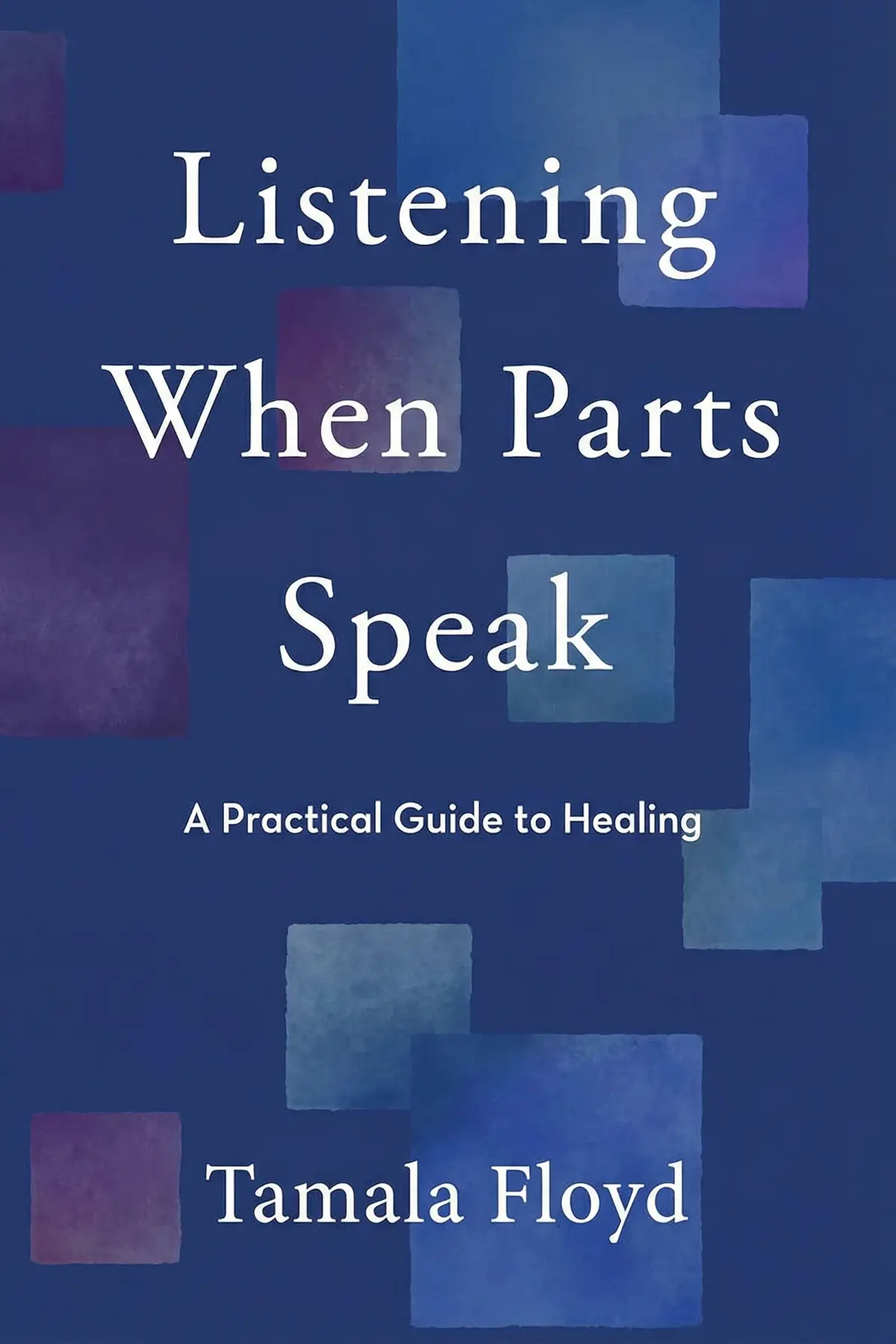
Listening When Parts Speak introduces readers to the profound world of Internal Family Systems (IFS) therapy, a model that views the human mind as a collection of sub-personalities or parts. The book explains how these parts—protectors, managers, and exiles—often work at cross-purposes, leading to internal conflict, anxiety, and self-sabotaging behaviors. Central to the narrative is the concept of the 'Self,' an undamaged core of compassion and clarity that exists in everyone and is capable of leading the internal family toward harmony. Beyond personal psychology, the book integrates the unique element of ancestral healing. It demonstrates how our internal struggles are often tied to legacy burdens—traumas and limiting beliefs passed down through generations. By combining the practical tools of IFS with the wisdom of lineage, the book promises a pathway to deep, sustainable healing. Readers learn to 'unblend' from intense emotions, negotiate with protective parts, and witness the stories of their most vulnerable inner children. Ultimately, the book provides a roadmap for moving from a state of internal reactivity to a life guided by Self-led wisdom and ancestral strength.
Tamala Floyd, LCSW, is an experienced psychotherapist and a lead trainer and consultant for Internal Family Systems (IFS). She holds a Master of Social Work from the University of Southern California and has a rich background in human services and social work education. Her professional focus is dedicated to the healing of trauma, with a particular expertise in addressing intergenerational and legacy wounds. Through her retreats, speaking engagements, and trainings, she empowers individuals to connect with their internal parts and ancestral lineage to achieve profound personal transformation.
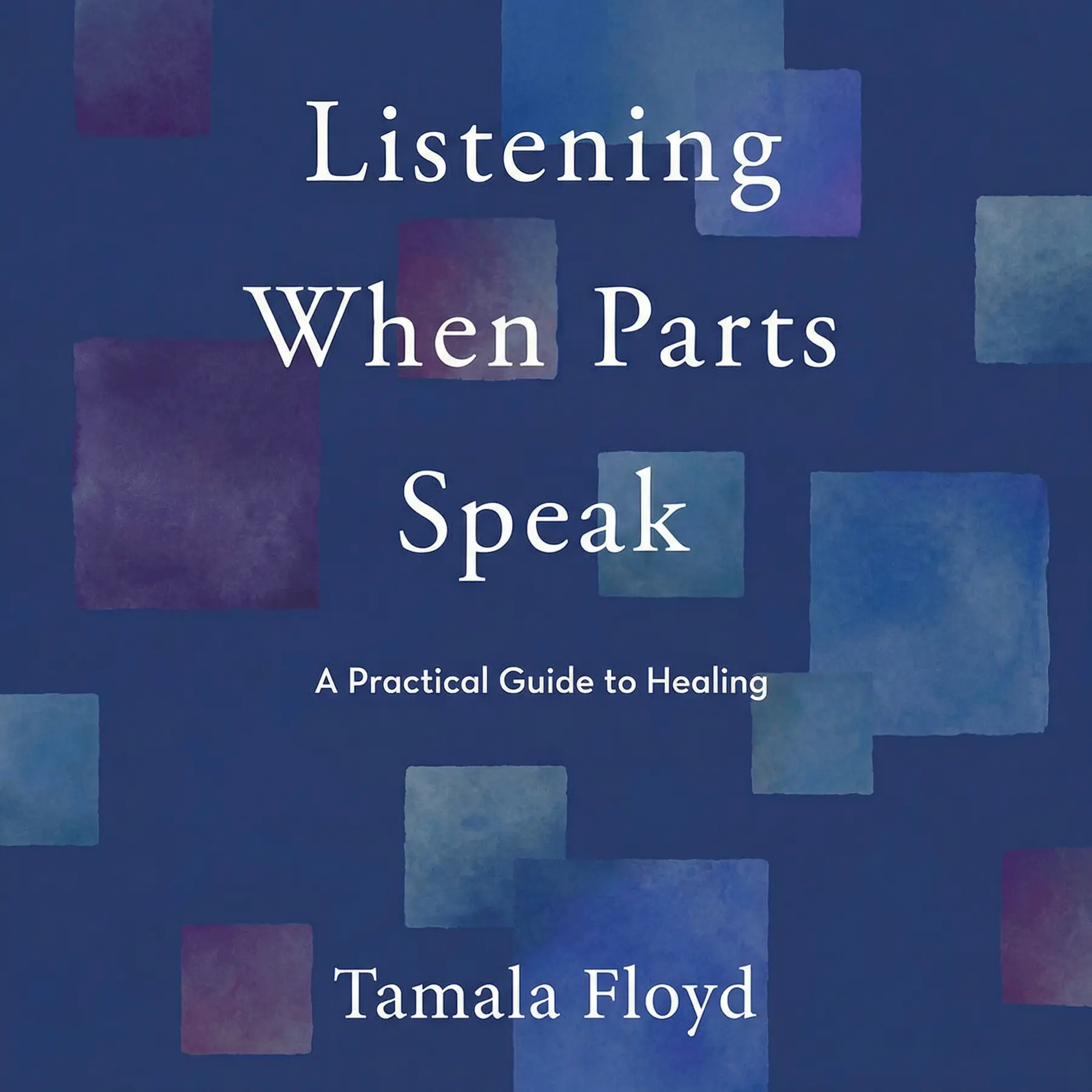
Listeners find this book truly restorative, with one highlighting how the exercises allow them to experience IFS firsthand. Moreover, the instructional content receives positive feedback, with one listener valuing the author’s breakdown of the IFS framework. Listeners also appreciate the profound nature of the material, as one individual remarks that the exercises are deep, while a different listener considers it a vital resource for IFS clinicians and practitioners. Finally, they praise how approachable the book is, with one listener characterizing it as easy to read.
Finding a resource that specifically centers the BIPOC experience within the Internal Family Systems framework felt like a breath of fresh air. Tamala Floyd does a beautiful job of weaving together traditional IFS concepts with the deep, often heavy work of ancestral healing. The way she describes 'self-led ancestors' helping to carry the load of generational trauma was particularly moving for me. It’s one thing to talk about parts, but it’s another to see how those parts are shaped by a lineage of struggle and resilience. I found the meditations to be quite powerful, though I did have to slow down and really sit with the prompts to get the full effect. This isn't just a book you read; it's a guide you live through. Some of the terminology around 'firefighters' and 'managers' took a second to click, but the examples provided eventually cleared things up. If you are looking for a path toward unburdening your soul while honoring your roots, this is it.
Show moreWow. This book hit me much harder than I anticipated it would. I’ve dipped my toes into IFS before, but Floyd’s approach to ancestral wisdom really unlocked something new for me. The cave meditation with ancestors was a 10 out of 10 experience that left me feeling more connected to my history than ever. Truth is, I used to feel overwhelmed by my 'firefighter' parts, but learning to ask them to unblend has been a total game changer for my anxiety. I love how she emphasizes that the Self doesn't have an agenda—it just offers healing as a gentle choice. It’s a very compassionate way to look at the messy parts of our personalities. While some of the more esoteric bits about ancestral energy might seem out there for skeptics, the results speak for themselves. This is a deeply healing journey that I'll probably revisit many times over the next few years.
Show moreThe chapter on self-led ancestors completely changed how I view my heritage and my healing process. Tamala Floyd explains that inviting connection with these ancestors can actually magnify your own self-energy. I had never thought about it that way before! In my experience, most self-help books stay on the surface, but this one goes deep into the mechanics of neuroplasticity and internal systems. I especially appreciated the tips on how to tell if you’re dealing with a 'self-like part' or your actual Self. Hint: check if your heart is open or if there is a hidden agenda! Learning to assist my parts in unblending rather than forcing them has made my internal world feel so much safer. It’s a beautifully written guide that manages to be both academic and deeply spiritual at the same time. This is definitely a must-read for anyone serious about doing the heavy lifting of inner work.
Show moreEver wonder why you keep reacting the same way to the same old triggers? This book gives you the answer by introducing you to your managers, firefighters, and exiles. I’ve read a lot about trauma, but the way Tamala Floyd explains the IFS model is uniquely clear and compassionate. Not gonna lie, I was a bit confused by the different terms at first, but the exercises helped me experience the concepts for myself. The focus on ancestral lineage healing adds a layer of depth that most IFS guides simply don't have. It feels like she is giving us permission to heal not just ourselves, but our whole family history. The meditations are deep and actually productive. If you’re ready to stop fighting your feelings and start listening to them, you need this book on your shelf immediately. It's truly a transformative piece of work for those willing to do the reflection.
Show moreThis book is exactly what I needed to get past a major roadblock in my own inner healing journey. It’s written with such warmth and clarity that you feel like the author is right there in the room with you. I finally understand the difference between my blended parts and my true Self energy. Asking a part to unblend has worked wonders for me when I’m feeling activated or overwhelmed by old wounds. Gotta say, the way Floyd treats our 'exiles' with such tenderness really moved me to tears a couple of times. It’s not just about fixing yourself; it’s about becoming a curious and loving leader for all the different versions of you. The meditations are some of the best I've encountered in any self-help book. This should be required reading for anyone dealing with the long-term effects of family dysfunction or generational trauma.
Show moreAs a therapist who frequently utilizes IFS in my practice, I found this to be a solid addition to my professional library. Floyd makes the complex architecture of the mind accessible without stripping away the nuance required for deep psychological work. To be fair, I think the distinction between self-like parts and the true Self could have been fleshed out just a bit more for a complete beginner. However, her focus on legacy burdens and the role of the family of origin provides a much-needed expansion of the standard model. The journal reflection questions are excellent tools for clients to use between sessions. I appreciated the structured approach to identifying unmet needs, even if that transition felt slightly abrupt in the early chapters. It serves as an essential primer for anyone wanting to move beyond surface-level symptoms and into the core of their internal system. This is a very practical, grounded guide for both practitioners and individuals.
Show morePicked this up because I was curious about how IFS works, and I'm really glad I did. It’s definitely a useful tool for understanding your own trauma and working toward some level of internal peace. The BIPOC focus is super important and handled with a lot of grace and expertise. I liked the meditations, but I do wish the journal reflection questions were a bit more pointed to help you actually identify specific parts. Sometimes it felt like the author assumed you already knew which 'part' was talking, which isn't always easy for a newbie. Look, it’s a solid book that simplifies a very complex psychological theory into something you can actually use in your daily life. I've already started using the 'unblending' technique when I feel myself getting triggered. It’s not a magic cure, but it’s a very helpful roadmap for anyone stuck in their healing journey.
Show moreFinally got around to finishing this, and I’m definitely going to be chewing on these ideas for a while. It’s a very accessible way to get into the Internal Family Systems model without feeling like you're reading a dry textbook. Floyd does an amazing job expanding the practice to include generational and ancestral burdens, which is so often missing from mainstream psychology. To be fair, there were moments where I wanted more concrete examples of how to transition from a feeling to a 'part.' That jump felt a little taken for granted in a few chapters. However, the guided meditations are excellent and actually help you feel the shifts in your body. It's a solid resource for anyone feeling like they’ve hit a roadblock with their mental health. I’d recommend getting the physical copy so you can easily flip back to the exercises.
Show moreAfter hearing so much about IFS, I decided to give this guide a try to see if it lived up to the hype. Frankly, I came to this book a bit skeptical, especially regarding the 'ancestral wisdom' parts of the narrative. Floyd didn't necessarily address all my skepticism about what's real versus imagined, but the practical results of the exercises are hard to deny. I really liked the central idea of humanizing your needs and feelings as 'parts' of yourself that deserve to be heard. It makes self-compassion feel like a tangible skill rather than just a vague concept. I do wish there were a few more examples of different types of managers to help distinguish them better. Despite those minor gripes, it’s a very useful tool for processing trauma and understanding why we do the things we do. A very solid 4-star read for anyone interested in the intersection of culture and psychology.
Show moreNot what I expected based on the glowing recommendations, though I can see why people like the content. My biggest gripe is actually with the audiobook format; having meditations scattered throughout is incredibly frustrating when you're trying to listen while driving. You really need the print version to actually do the work. Personally, I struggled with the sections on ancestral wisdom because they felt a bit too vague and didn't really address my skepticism about what's real versus what's imagined. I also found myself getting confused between the different categories like managers, exiles, and self-life parts. The book introduces so many terms that they started to bleed together after a while. I liked the central idea of humanizing our needs as parts, but the execution felt a bit cluttered for my taste. It's a decent primer, but it didn't quite provide the clarity I was hoping for.
Show moreSteven C. Hayes


Leanne Maskell

AUDIO SUMMARY AVAILABLE
Get the key ideas from Listening When Parts Speak by Tamala Floyd, plus 5,000+ more titles in English and Thai.







