
18 min 08 sec
Magic Words: The New Science of Language for Persuasion, Communication, and Driving Action
By Jonah Berger
Discover the scientific principles behind language that influence behavior and persuasion. Jonah Berger reveals how specific word choices can change minds, build connections, and drive meaningful action in every interaction.
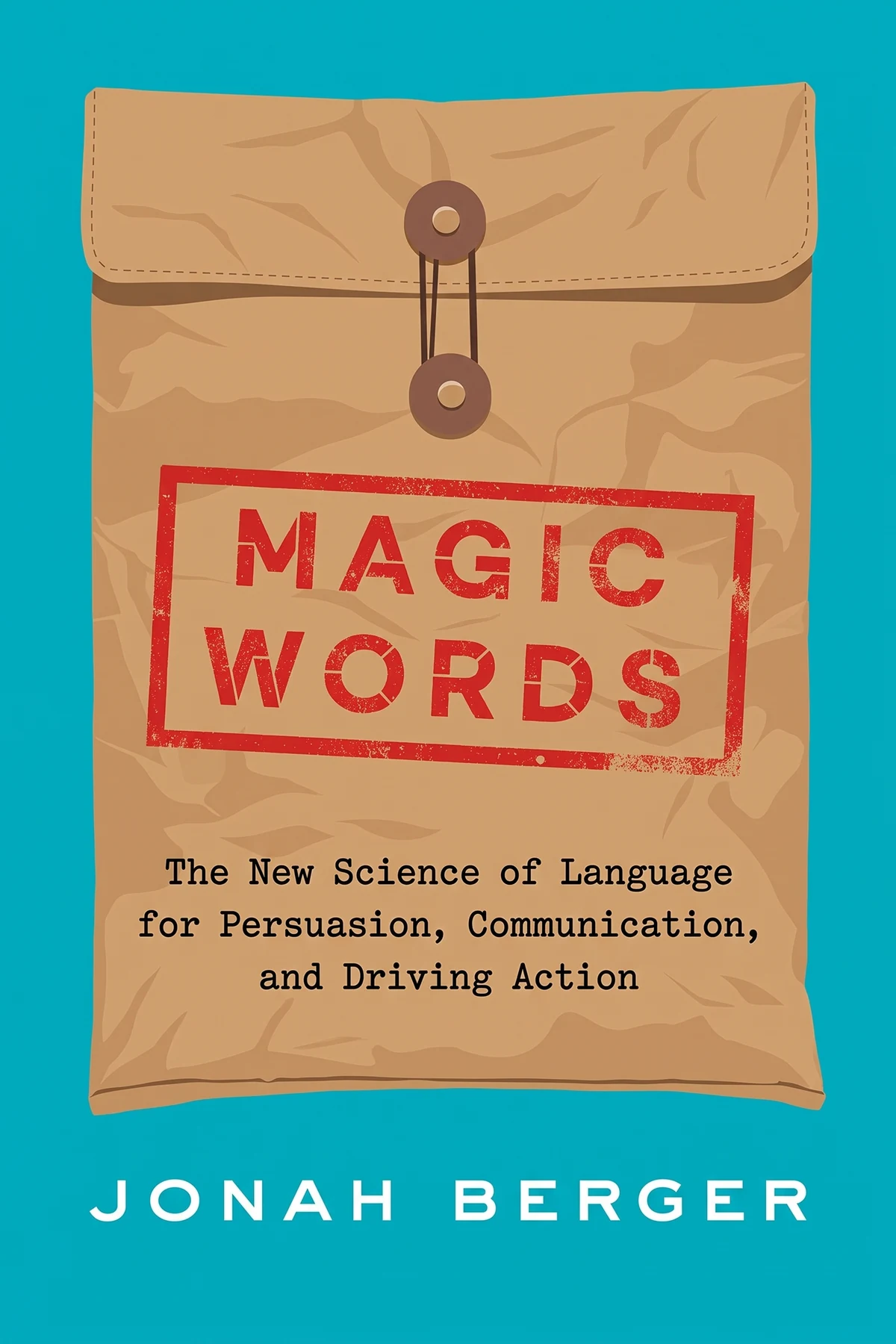
Table of Content
1. Introduction
1 min 38 sec
When we hear the phrase magic words, our minds often jump to the fantastical. We think of stage magicians in top hats or ancient legends where a single incantation can open a hidden cave or transform an object. But in the real world, the most potent magic doesn’t come from ancient scrolls. It lives in our everyday vocabulary. Every day, we use thousands of words, yet we rarely stop to consider the psychological weight they carry. We treat language like a utility, like water from a tap, without realizing that the specific temperature and pressure we choose can change everything about how people perceive us and how they respond to our requests.
In this exploration of Jonah Berger’s insights, we are going to peel back the curtain on the science of language. We aren’t just talking about being polite or using fancy vocabulary. We are talking about data-backed linguistic shifts that can make a recommendation thirty-four percent more effective or increase voter turnout by double digits. The central throughline of this journey is that words are more than just symbols for ideas; they are tools that can be used to engineer specific social and psychological outcomes.
Over the next several segments, we will look at six core strategies that can transform your communication from a passive exchange into an active force for influence. We will see how calling someone a name can be a good thing, why your choice of verb tense matters more than you think, and how the right kind of question can act as a social glue. By the end, you’ll see that the way to get what you want isn’t necessarily about shouting louder or arguing longer—it’s about choosing the right words to unlock the door. So, let’s begin by looking at how the way we label ourselves and others can fundamentally alter our behavior.
2. Invoking a Sense of Identity
2 min 44 sec
Discover how a simple shift from verbs to nouns can transform a person’s willingness to help and how choosing the right words can strengthen your own willpower.
3. Communicating with Authority and Confidence
2 min 24 sec
Learn why the most persuasive speakers avoid hedging their bets and how small adjustments in your tense and filler words can boost your perceived status.
4. Mastering the Art of Questioning
2 min 17 sec
Uncover the social benefits of asking follow-up questions and how the right inquiry can help you navigate awkward situations or extract hidden information.
5. The Strategic Use of Concrete and Abstract Language
2 min 39 sec
Learn when to be highly specific to make people feel heard and when to use broad, visionary language to win over investors and supporters.
6. Harnessing the Power of Emotion
2 min 28 sec
Explore why the most popular stories are emotional roller coasters and how to choose the right feelings to keep your audience engaged and clicking.
7. Finding the Balance Between Similarity and Distinction
2 min 23 sec
See how matching the linguistic style of your peers can lead to career advancement and why breaking the rules is the secret to creative success.
8. Conclusion
1 min 35 sec
As we have seen, the words we choose are never neutral. They are constantly working beneath the surface, shaping how we see ourselves and how others see us. By shifting from verbs to nouns, we can turn a simple request into an invitation to a new identity. By ditching our hedges and filler words, we can project a level of authority that commands respect. By asking thoughtful follow-up questions, we can transform strangers into friends and uncover truths that others might miss.
We also learned that the context of our communication dictates the tools we should use. Being concrete and specific shows that we are listening, while being abstract and visionary helps us lead. Using the right emotional hooks can make our stories unforgettable, provided we know when to be heartfelt and when to be strictly factual. Finally, we saw that linguistic harmony can pave the way for a smooth career, but a well-timed departure from the norm can spark a creative revolution.
The throughline of all these strategies is intentionality. Most people move through the world using language on autopilot, unaware of the magic they are wielding—or failing to wield. Your takeaway is to stop and listen to the words you are using. Notice the present tense, the definites, and the nouns. Start experimenting with these small changes in your next meeting, your next email, or your next conversation at home. You will find that you don’t need a magic wand to change your reality; you just need to choose your words with a little more care. When you master the science of language, you’ll find that getting your way isn’t about luck—it’s about the magic of the things you say.
About this book
What is this book about?
Have you ever wondered why some people are effortlessly persuasive while others struggle to be heard? It often comes down to the specific words they choose. This summary explores the hidden science of language, demonstrating how small shifts in vocabulary can lead to significant changes in outcomes. It moves beyond basic communication tips to reveal the psychological triggers that make certain phrases feel like magic. You will learn how to leverage six distinct linguistic frameworks to your advantage. From activating a person's sense of identity and projecting unshakeable confidence to mastering the art of the follow-up question, the book provides a toolkit for professional and personal success. Whether you are trying to sell a product, lead a team, or simply navigate a difficult conversation at home, these insights offer a roadmap for getting your way through the power of speech.
Book Information
About the Author
Jonah Berger
Jonah Berger is a Wharton School professor and a world-renowned expert on natural language processing and consumer behavior. He’s the author of several other bestsellers, including Contagious: Why Things Catch On (2013) and The Catalyst: How to Change Anyone’s Mind (2020). He also consults for companies like Apple, Google, Nike, and Amazon.
Ratings & Reviews
Ratings at a glance

What people think
Listeners find the work very enlightening, and one listener points out that it is supported by research. They also value the book’s perspective on language use and find the concepts easy to grasp, with one listener specifically mentioning its 6-step framework. Finally, the audio performance earns praise, with one listener characterizing it as nicely narrated.
Top reviews
Rung
Magic Words isn't just another dry business book; it’s a fascinating dive into the mechanics of how we speak and why it matters. Jonah Berger breaks down the power of language into a clear, six-step framework that feels both intuitive and deeply researched. I loved the examples of how subtle shifts—like using 'helper' instead of 'help'—can completely change the outcome of an interaction. The writing style is punchy and accessible, making complex concepts from computational linguistics feel like common sense. Not gonna lie, I started paying attention to my own emails immediately after finishing the first chapter. While some might find the data-driven approach a bit clinical, I found it incredibly grounding. It’s the kind of book you want to keep on your desk for quick reference to sharpen your persuasion skills.
Show moreChloe
The 6-step framework outlined here is a total game changer for anyone in marketing or sales who wants to understand the hidden drivers of persuasion. Berger has a gift for taking dense academic research and turning it into simple, actionable steps that anyone can follow. I found the chapter on leveraging concreteness to be the most helpful, especially the tips on how to make descriptions more vivid and memorable for customers. The narration in the audiobook version is also excellent, which made the data-heavy sections much easier to follow during my commute. People often take words for granted, but this book proves that even the smallest change in phrasing can lead to a 30% increase in success. If you want to communicate more effectively and inspire those around you, you need to read this.
Show moreWanida
Berger has a knack for taking complex linguistic patterns and distilling them into simple, actionable steps that feel immediately useful. This book is a fascinating exploration of how we can use specific types of words to persuade, connect, and lead more effectively. I was particularly impressed by the research on how 'present tense' increases perceived authority and impact. The real-world examples, ranging from loan applications to boardroom pitches, keep the content grounded and relatable throughout. Not everyone will agree with the heavy reliance on data and algorithms, but for me, it added a layer of credibility that is often missing from the self-help genre. It’s a must-read for anyone who wants to understand the hidden influence of the language we use every single day.
Show moreVimolwan
Ever wonder why some people just seem more convincing than others? This book answers that question by focusing on the specific words that drive action and build connection. I particularly liked the section on conveying confidence and how avoiding 'filler words' like 'um' or 'uh' can drastically change how you're perceived by an audience. The 6-step framework provides a solid structure that makes the information easy to digest and apply. Look, it’s not reinventing the wheel if you’ve already read a lot of Adam Grant, but Berger adds a modern twist with his focus on hard data. My only gripe is that some chapters felt a bit repetitive towards the end, hitting the same points multiple times. Still, the practical tips on using present tense to sound more authoritative were worth the read.
Show moreKamol
Frankly, I was skeptical about the NLP elements at first, but Berger backs his claims with enough research to make you think twice about your vocabulary. The book explores how we can use language to build trust and foster deeper connections in our personal and professional lives. I liked how he emphasized the importance of asking 'follow-up questions' rather than just checking off a list of inquiries. It makes the conversation feel more authentic and less like a transaction. Some of the statistics mentioned are truly mind-blowing, like how specific words in a cover letter can predict job success. However, it’s important to remember that words are just one piece of the puzzle. Overall, it is a very insightful read that provides a new lens through which to view our daily interactions.
Show moreWichai
Finally got around to reading this and the chapter on asking questions was worth the price of admission alone. Berger explains how the right questions can deflect tension or build intimacy, depending on how they are phrased. This is practical advice that I could use in my very next meeting. The writing is clear and simple to understand, which I appreciated given how much data is being thrown at the reader. My only real complaint is that some of the 'magic' words feel a bit like common sense once they are explained. Nevertheless, seeing the numbers behind the theories makes them much more convincing than just taking an author's word for it. It’s a solid book that delivers exactly what it promises: a data-driven look at the power of words.
Show moreSirinat
As someone who works in communication, I found the section on 'identity vs action' particularly insightful for crafting better messaging. Instead of just telling people what to do, Berger suggests we invite them to be a certain type of person through our word choice. It’s a subtle shift, but the data suggests it makes a massive difference in how people respond. The book is well-structured and the '6-step framework' makes it easy to remember the core principles long after you finish. Gotta say, I enjoyed the sections on NLP more than I thought I would, as they highlight how much our word choices reveal about our subconscious thoughts. While a few of the examples felt a bit repetitive, the overall message is powerful and well-supported.
Show moreRungrat
After hearing so much buzz about Jonah Berger, I expected a bit more punch from this one. While it starts out strong with interesting insights into identity and agency, it eventually devolves into a list of fifty different use cases that don't always feel relevant to the average person. I somehow doubt that a manager pitching a new project needs the same advice as a policeman or a novelist. The book tries to be everything to everyone and, as a result, feels a bit thin in certain areas. To be fair, the research is presented clearly and the writing is engaging enough to keep you turning the pages. It’s a decent introductory text for someone new to the psychology of language, but seasoned readers might find the advice a bit basic and the examples oversimplified.
Show moreEvelyn
It’s a quick read with some decent takeaways, but it tries to do too much in such a small package. I found the concepts of 'similarity' and 'emotion' to be interesting, yet they lacked the depth I’ve come to expect from this author. The book often feels like a collection of interesting anecdotes rather than a rigorous scientific study. Personally, I struggled with how some of the advice felt a bit manipulative if taken to the extreme. If you’re looking for a light overview of linguistic psychology, this is perfect. If you want a deep dive into the 'why' behind human behavior, you might find yourself wanting more. It’s useful for a quick brush-up on communication skills, but don't expect it to change your life overnight.
Show moreA
This felt like peak pop-psychology fluff where the data is stretched thin to fit a pre-determined narrative. Truth is, many of the 'magic' examples felt stripped of their actual context, leaving me wondering if these linguistic hacks would actually work in the real world outside of a controlled study. Berger relies heavily on Natural Language Processing studies, but he never really addresses the replication issues common in social sciences. I've read his previous work and loved Contagious, but this one misses the mark by being too broad and lacking actual depth. It tries to cover everything from courtroom testimony to dating profiles in one go. Instead of deep, meaningful insights, you get a collection of 'did you know' facts that don't always translate into a cohesive strategy for a professional setting. It’s not terrible, but it’s definitely not the manual for life it claims to be.
Show moreReaders also enjoyed
Acting with Power: Why We Are More Powerful Than We Believe
Deborah Gruenfeld
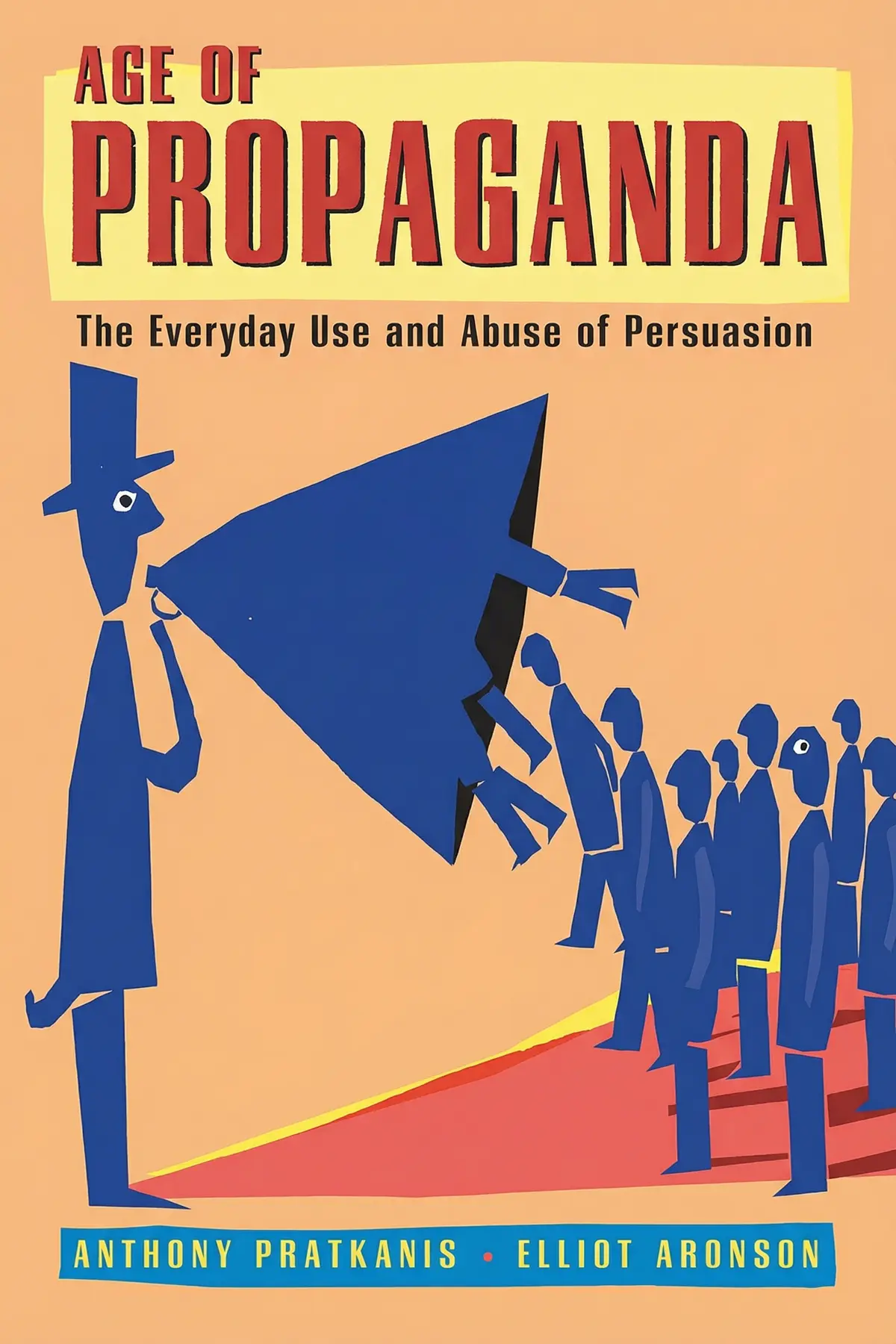
Age of Propaganda: The Everyday Use and Abuse of Persuasion
Anthony Pratkanis

59 Seconds: Change Your Life in Under a Minute
Richard Wiseman
AUDIO SUMMARY AVAILABLE
Listen to Magic Words in 15 minutes
Get the key ideas from Magic Words by Jonah Berger, plus 5,000+ more titles in English and Thai.
- 5,000+ titles
- Listen as much as you want
- 7-day free trial
- Cancel anytime







