


A Year in the Life of William Shakespeare: 1599
James Shapiro
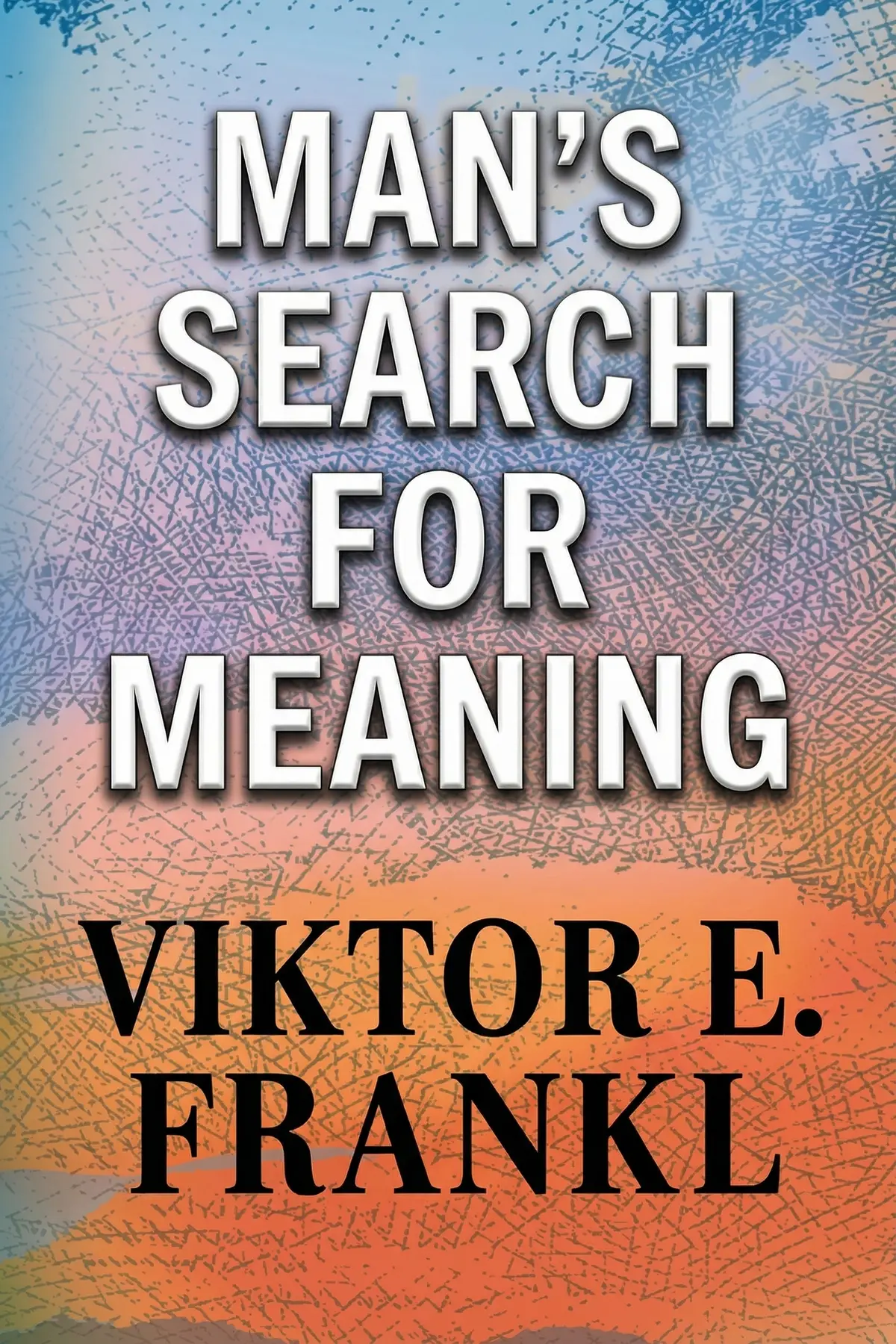
Viktor Frankl’s seminal work blends a harrowing concentration camp memoir with profound psychological analysis, demonstrating that the pursuit of personal meaning is the primary motivation that allows humans to survive and flourish.
1 min 42 sec
How does a human being maintain their core identity when everything that defines them—their family, their career, their very clothes and hair—is stripped away? This is the central question explored in one of the most significant works of the twentieth century. Viktor Frankl, an Austrian psychiatrist, found himself a prisoner in the Nazi concentration camp system, a place designed to crush the human spirit. Yet, in the midst of unimaginable suffering, Frankl observed something that would change the field of psychology forever.
He noticed that the difference between those who survived and those who gave up often came down to a single factor: the ability to find meaning in their situation. While we can never truly grasp the day-to-day reality of those who lived through the Holocaust without having been there ourselves, Frankl provides a window into the internal struggle of the prisoner. He doesn’t just chronicle the atrocities; he analyzes the mental evolution of those trapped within the barbed wire.
Through his observations, Frankl developed logotherapy, a form of treatment centered on the idea that humans are driven by a ‘will to meaning.’ This throughline connects his time in the camps to his later clinical work. It suggests that even in the most dire circumstances, we possess an internal freedom that cannot be taken away. In this summary, we will explore the three psychological phases of life in the camps, how the mind protects itself through apathy, and how we can apply Frankl’s hard-won wisdom to find purpose in our own lives, no matter the challenges we face. Let’s look at how the journey into darkness ultimately revealed a light that the world’s most brutal regimes could not extinguish.
1 min 45 sec
Discover how the mind uses shock and denial as a temporary shield when first confronted with the reality of an unthinkable disaster.
1 min 48 sec
Learn how emotional numbness can actually become a survival tool when living through prolonged and constant trauma.
1 min 44 sec
Explore why the end of suffering doesn’t immediately lead to happiness and the unique psychological hurdles of returning to freedom.
1 min 43 sec
Discover the techniques prisoners used to mentally escape their surroundings through memory, love, and imagination.
1 min 32 sec
Even in total captivity, there remains one final human freedom that no external force can take away.
1 min 34 sec
Explore how the search for meaning serves as the primary motivational force in human life and what happens when it is missing.
1 min 50 sec
Understand why there is no single, universal meaning of life, and how it is instead found in the unique demands of the present moment.
1 min 33 sec
Learn a unique psychological technique for breaking the cycle of anxiety by leaning into the very thing you fear.
1 min 38 sec
The profound legacy of Man’s Search for Meaning lies in its unwavering belief in the resilience of the human soul. Viktor Frankl’s journey from the depths of the Nazi concentration camps to the creation of a transformative psychological theory offers a roadmap for anyone navigating their own ‘dark night of the soul.’ The central takeaway is that while we cannot always control what happens to us, we have absolute control over how we interpret and respond to those events. Suffering, as Frankl shows, is not an obstacle to meaning; it can be the very vehicle through which we discover it.
By moving through the phases of shock, apathy, and eventual disillusionment, we see that the human mind has a remarkable capacity to protect itself and then eventually heal. But healing requires a direction—a ‘why.’ Whether that purpose is found in a creative project, the love of another person, or the simple dignity of enduring a difficult situation, it is the anchor that keeps us from drifting into the existential vacuum.
As you move forward, remember that your personal meaning is not something you need to wait for life to hand you. It is something you create every day through the responsibilities you accept and the attitudes you choose to adopt. When faced with anxiety, try the technique of paradoxical intention; when faced with despair, look for a task that only you can complete. The ultimate freedom—the last of all human freedoms—is yours to claim in every moment. By choosing to live with purpose, you don’t just survive your circumstances; you transcend them.
Man’s Search for Meaning is far more than a historical account of the Holocaust; it is a deep dive into the architecture of the human soul. Viktor Frankl, a psychiatrist who lived through the horrors of the Nazi concentration camps, uses his experiences to explain why some individuals were able to survive despite having every reason to give up. He argues that we are not merely products of our environment, but beings capable of finding purpose even in suffering. The book promises to provide a psychological framework for understanding our own lives. It introduces logotherapy, a school of thought that shifts the focus from past trauma or internal drives to the future and the specific tasks we have yet to complete. By reading this summary, you will discover the three phases of psychological adjustment that prisoners underwent and learn how to apply the same principles of resilience to your modern challenges, ensuring that no matter your circumstances, you can find a reason to keep moving forward.
Viktor Frankl was a prominent neurologist and psychiatrist from Austria. His life and work were forever altered by his experiences as a prisoner in Nazi death camps during World War II. These experiences served as the foundation for logotherapy, a groundbreaking form of psychotherapy that focuses on the human drive to find meaning. After his liberation, Frankl dedicated his life to teaching others how to discover purpose, eventually authoring numerous books on the subject and becoming a global figure in the field of psychology.
Listeners find this to be a remarkable, quick listen that offers deep-seated wisdom and evocative ideas. They value how it encourages people to seek out their own significance and journey in life, while also presenting a poignant story of survival amidst historical tragedies. Listeners call it a life-altering book that shifts their perspective, with one listener highlighting how it places first-world concerns into the correct context.
Wow. This book is a gut-punch that somehow leaves you feeling lighter. Frankl’s descriptions of the concentration camps are detached but haunting, making the horror feel more immediate than any flowery prose could. I found myself re-evaluating every minor inconvenience in my life after reading about his search for meaning in a crust of bread. It’s a fast read, yet I had to stop frequently to sit with my own thoughts. The second half is more academic, focusing on the principles of logotherapy, but it provides the necessary psychological framework for his survival. If you feel lost in the modern world, read this. It is a luminous, insightful work that demands your full attention.
Show morePicked this up during a particularly dark month, and it changed my entire outlook on life. Truth is, we often feel like victims of our circumstances, but Frankl proves that our response is the one thing no one can take from us. The way he describes holding onto the image of his wife to survive is beautiful and deeply empowering. It makes first-world concerns look absolutely trivial by comparison. I didn't mind the shift to the 'science' of logotherapy in the latter half because it helped me understand why those survival mechanisms worked. It’s a short volume, but it carries the weight of a thousand-page epic.
Show moreAs someone who usually avoids 'self-help' literature, I found this to be the most grounded book on the human condition I've ever encountered. Frankl doesn't offer platitudes; he offers a strategy for survival born from the literal ashes of Auschwitz and other camps. His focus on 'meaning' rather than 'happiness' is a distinction that more people need to understand in our current culture. Life isn't about avoiding pain, but finding a reason to keep going despite it. The prose is spare and unsentimental, which actually makes the emotional moments hit much harder. Every student of psychology or history should have a copy of this on their shelf.
Show moreEver wonder what keeps a person going when everything is stripped away? This book answers that question with chilling clarity and incredible heart. Frankl’s insight into the 'inner hold' that prisoners kept—or lost—is a profound look at the human spirit under pressure. I was struck by how he could find meaning in the simple possibility of rewriting his lost manuscript. It’s a testament to the idea that we are not just products of our environment, but architects of our internal world. It’s a small book that you can finish in an afternoon, but you’ll be thinking about the implications for years.
Show moreGotta say, this is one of those rare books that actually deserves its massive reputation. It’s a fast, intense read that puts your own life into perspective immediately. I loved the way Frankl talked about the 'freedom to choose one's attitude' in any given set of circumstances. It’s such an empowering concept, especially when you realize where he was when he formulated these thoughts. The second half is more technical, but if you pay attention, it bridges the gap between the horrors he saw and the therapy he developed. It’s a masterclass in turning tragedy into something constructive and universal.
Show moreAfter hearing about this book for years, I finally sat down with it and was floored by the gravity of the narrative. The writing style is surprisingly dispassionate, which makes the descriptions of the gas chambers and the daily struggle for soup even more devastating. Frankl isn't asking for your pity; he's asking for your attention. I found the concept of 'logotherapy' to be much more practical than traditional psychoanalysis because it focuses on the future and what you can still contribute to the world. If you're going through a period of transition or searching for a 'why,' Frankl’s words are a lighthouse in the dark.
Show moreFinally got around to this classic after years of seeing it on every must-read list. I loved the first section where Frankl details the psychological stages of being a prisoner; it feels like a masterclass in human resilience and the sheer power of the mind. However, I’ll be the first to admit that the second half slowed down significantly for me. It shifts from a gripping personal narrative to what feels like a psychiatric lecture on his theory of logotherapy. While the concepts are vital, the transition is a bit jarring and the tone becomes much more clinical and pedantic. Still, the message about our ultimate freedom to choose our own attitude is worth the price of admission.
Show moreThe chapter on the 'existential vacuum' hit me right where I live. Personally, I found the first half of the book to be a staggering achievement in memoir writing, especially how he avoids the typical psychobabble while in the camp. Frankl’s ability to analyze his own suffering as a doctor while experiencing it as a victim is fascinating. My only gripe is that the second half feels a bit repetitive and occasionally pokes too much at other psychological schools. It’s clear Frankl was trying to establish his own legacy, which is fine, but it lacks the narrative flow of the first 100 pages. Regardless, the core idea—that meaning is found in work, love, or suffering—is a powerful tool.
Show moreNot what I expected based on the hype surrounding it. To be fair, the historical account of life in the concentration camps is moving and well-written, illustrating the 'tragic optimism' Frankl maintained in a horrific environment. But once the book moves into the theoretical explanation of logotherapy, I lost interest almost immediately. It felt like reading a medical journal from the mid-20th century, filled with jargon and constant Freud-bashing that felt a bit dated. I was looking for more of a personal journey and less of a dry textbook. It’s an important historical document, but not necessarily an engaging cover-to-cover read for a casual reader.
Show moreLook, I respect the man’s experience immensely, but the book feels a bit disjointed in its current format. The first half is a 5-star account of survival that everyone should read at least once; it’s haunting and informative. But the second half, the part where he dives into 'Logotherapy in a Nutshell,' felt very dry and academic to me. It felt like I was reading two different books that were glued together at the spine. I struggled to stay engaged once the personal stories stopped and the psychological theories began. It’s definitely informative, but maybe not as 'life-changing' for me as the reviews suggested it would be.
Show moreJames Shapiro


Ben Macintyre
Steven C. Hayes
AUDIO SUMMARY AVAILABLE
Get the key ideas from Man’s Search for Meaning by Viktor Frankl, plus 5,000+ more titles in English and Thai.







