
The Art of Rest: How to Find Respite in the Modern Age
Claudia Hammond
A deep dive into the emotional landscape of finance, explaining why we make irrational choices and how our upbringing, biology, and environment shape our relationship with every dollar we spend.
1 min 51 sec
Consider for a moment the last time you sat down to plan your financial future. Perhaps it was a quiet evening when you decided that this was finally the year you would master your savings, contribute more to your pension, or cut back on those mindless daily expenses that seem to vanish into thin air. You felt determined, rational, and completely in control. Yet, as the weeks passed, that cool-headed logic likely began to fray. By the time the next month rolled around, you might have found yourself making the same impulsive purchases or pushing your savings goals into a hypothetical tomorrow.
This gap between our intentions and our actions is the central mystery of our relationship with currency. We like to view ourselves as logical actors in a marketplace, weighing costs and benefits with the precision of a calculator. However, the reality is far more complex. From the moment we are small children, we begin a process of financial socialization, soaking up the attitudes and anxieties of our parents like sponges. By the time we reach adulthood, money has become much more than a tool for trade. It is a dense tapestry of emotions, including comfort, freedom, shame, and power.
In this exploration of our financial minds, we are going to look behind the curtain of our bank statements to see what is actually driving our choices. We will investigate why our brains react differently to cash than to credit, why the price of a product can fundamentally alter our sensory experience of it, and why more money isn’t always the best way to get people to work harder. Through the lens of psychology, we can begin to untangle the irrational threads that lead us to make puzzling decisions. This isn’t just about numbers; it’s about understanding the human heart and mind as they navigate a world where value is often subjective. By the end of this journey, you will have a new framework for thinking about wealth—one that accounts for the quirks of the human psyche and offers a path toward more mindful, empowered living.
2 min 10 sec
Discover why the act of destroying physical money triggers such visceral outrage and what this reveals about our collective psychological attachment to value.
2 min 17 sec
Explore the surprising ways young children develop complex ideas about wealth and social status long before they ever earn their first paycheck.
2 min 05 sec
Learn why we remain irrationally attached to coins and bills, and how the design of currency can influence our perception of its real value.
2 min 10 sec
Uncover the psychological ‘pain-free’ trap of credit cards and why we are perpetually optimistic about our future ability to save.
2 min 11 sec
See how we categorize money into different ‘mental buckets’ and why this leads us to spend inconsistently depending on the situation.
2 min 07 sec
Understand how our expectations and the price tag of a product can actually change our physical experience of it, from wine to medicine.
2 min 12 sec
Delve into why paying people more doesn’t always lead to better performance and how financial rewards can sometimes kill creativity.
2 min 15 sec
Explore the ethical and practical dilemmas of using cash incentives to change behavior, from student grades to blood donations.
2 min 07 sec
Examine why winning the lottery can be a curse and how the ‘psychology of savoring’ is often the true key to a fulfilling life.
2 min 00 sec
As we reflect on the many ways money influences our thoughts and feelings, a clear throughline emerges: our relationship with currency is a deeply human, and often deeply irrational, journey. We have seen that money is never just a number on a screen or a piece of paper in a wallet. It is a vessel for our aspirations, a symbol of our social standing, and a powerful emotional trigger that can cloud our judgment or sharpen our focus. From the kindergarteners who already associate wealth with goodness to the lottery winners who find their fortunes to be a burden, it is evident that mastering money requires more than a grasp of mathematics; it requires a grasp of psychology.
The key to a healthier financial life is not simply to earn more, but to understand the ‘why’ behind our spending and saving. By recognizing our mental accounts, we can stop the inconsistent behavior that leads us to splurge in one area while pinching pennies in another. By acknowledging the ‘pain of paying,’ we can become more mindful of how credit cards trick us into spending more than we intend. And by understanding the limits of money as a motivator, we can focus on building lives and workplaces that prioritize meaning and purpose over just the bottom line.
As a final piece of actionable wisdom, consider how you interact with your social circle. One of the quickest ways to ruin a friendship is to try and quantify a favor in financial terms. If a friend helps you move or cooks you a meal, offering them cash can turn a gesture of love into a business transaction, often making them feel undervalued or insulted. Instead, offer a gift that has no clear price tag—a bottle of their favorite wine or a sincere note of thanks. This keeps the interaction in the realm of social exchange rather than market exchange. In the end, money is a tool meant to serve our lives, not a master meant to rule them. By keeping ‘mind over money,’ you can ensure that your financial decisions lead you toward a life of genuine security and lasting contentment.
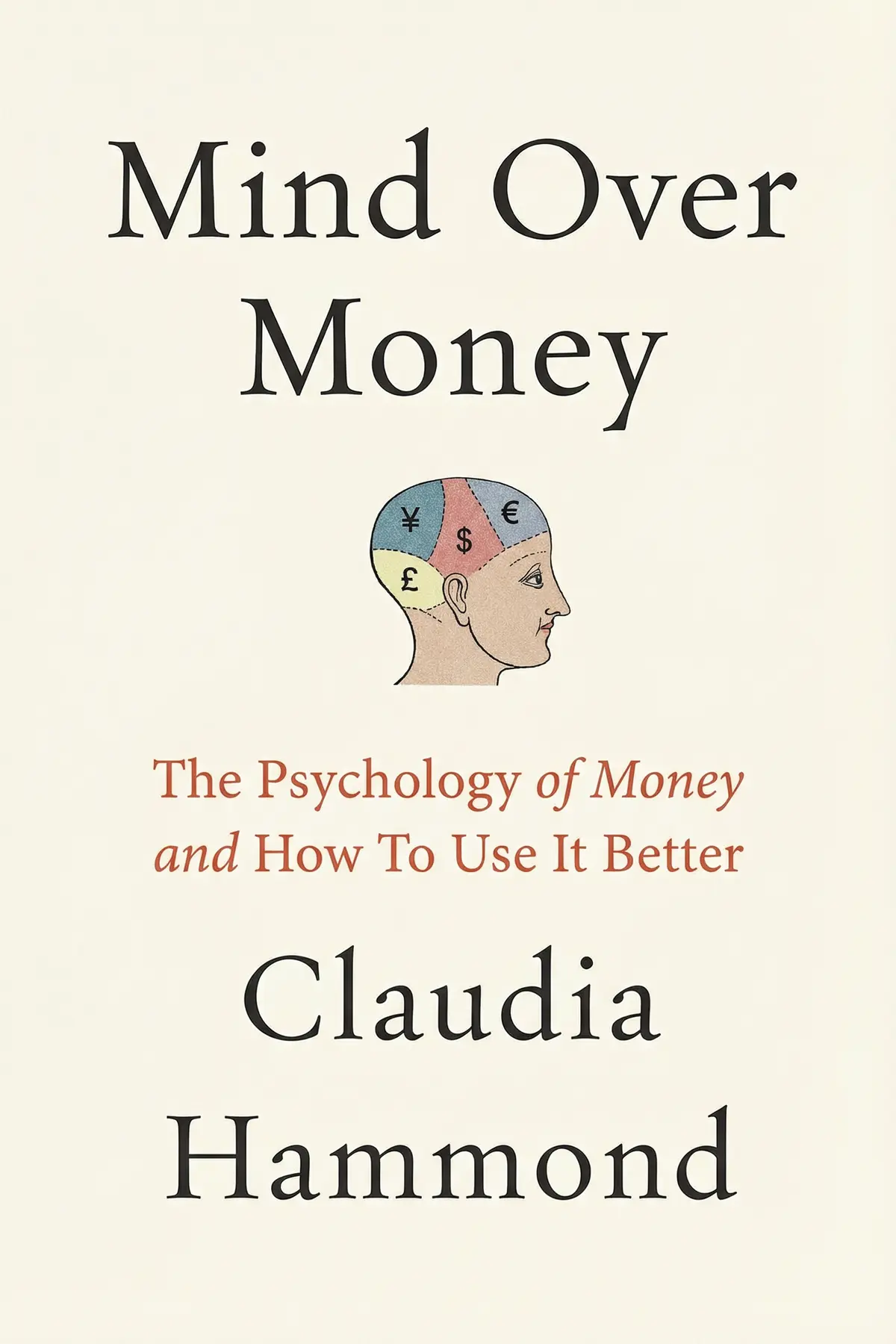
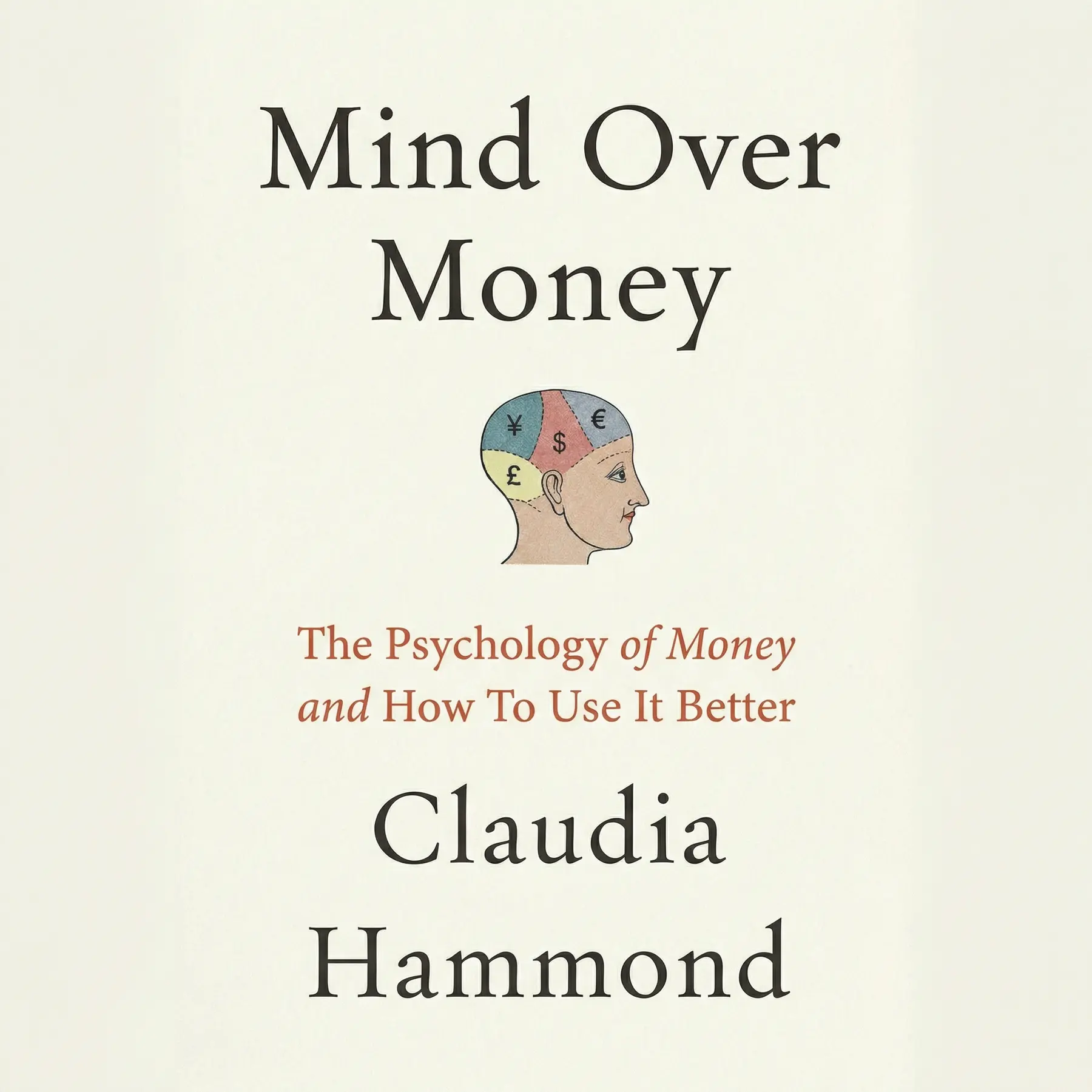
Have you ever wondered why you can justify a ten-dollar drink on vacation but hesitate to spend the same amount on a bottle of gin at the local grocery store? This summary explores the hidden psychological forces that dictate our financial lives. From the way children perceive social status to the reason expensive wine actually tastes better to our brains, Claudia Hammond reveals that money is far more than a medium of exchange—it is a powerful emotional symbol. Through a series of fascinating psychological studies and real-world examples, you will discover how credit cards decouple the pain of paying from the joy of buying, why financial bonuses can actually decrease workplace motivation, and how our brains are wired to prioritize immediate gratification over long-term security. The promise of this exploration is a clearer understanding of your own financial behavior, providing the mental tools needed to move beyond instinct and toward intentionality.
Claudia Hammond is an award-winning author, broadcaster, and psychology lecturer who presents the BBC Radio 4 Program All in the Mind. Her other books include Emotional Rollercoaster: A Journey Through the Science of Feelings and Time Warped: Unlocking the Mysteries of Time Perception. Currently, she is Visiting Professor of the Public Understanding of Psychology at the University of Sussex.
Claudia Hammond
Listeners find this to be an insightful book, with one listener noting that it draws upon many famous theories and research. Furthermore, the work is praised for being highly readable, and listeners value the emphasis on the psychology of money.
Ever wonder why you'll drop fifty bucks on a dinner out but obsess over a three-dollar parking fee for an hour? This book explains exactly why our brains are so irrational when it comes to finances and the deep-seated psychology behind our spending habits. I loved the section on mental accounts and how we treat money differently depending on where we "store" it in our heads, like a specific holiday fund versus general spending. Truth is, I’ve already started changing how I think about my daily coffee and my larger savings goals because of the studies Hammond shares. It’s a dense read at times, but the insights into childhood influences and how we value experiences over material things were worth every page. It's a real eye-opener for anyone who feels like their bank account has a mind of its own.
Show moreFinally got around to reading this and I’m genuinely surprised by how much it changed my perspective on giving and social connectivity. The advice about not thanking a friend for a favor with cash, but instead inviting them for coffee or a meal, resonated with me on a very deep level. It’s easy to forget that money can actually ruin social connections if we aren't careful about how we introduce it into our relationships. Not gonna lie, I was also surprised by the research on pocket money and how it can actually decrease a child's intrinsic motivation to help out altruistically. This book isn't just about saving pennies; it’s about understanding the invisible threads that tie our emotions to our currency. It's an essential read for anyone looking to build a healthier relationship with their wealth.
Show moreWow, what a comprehensive look at the invisible forces that drive our economy and our personal lives. Claudia Hammond has created something that is both informative and entertaining, which is a rare feat for a book with over two hundred study citations. I found the section on the "endowment effect" particularly helpful for understanding why I have such a hard time getting rid of old junk in my house. It turns out we value our own possessions much more than their actual market worth simply because they belong to us! This book is a must-read for anyone who wants to take back control of their financial life by understanding their own mind first. It's thought-provoking, surprisingly user-friendly, and offers tips that you can start using the very same day you finish it.
Show moreHammond has a knack for taking complex psychological concepts and making them accessible for the average person without dumbing them down too much. I was fascinated by the discussion on how credit cards remove the "pain" of paying compared to using cold, hard cash, which really makes you rethink your swiping habits. It is quite a research-heavy book, which might be a turn-off for some, but I found the data on price context and "anchoring" to be incredibly practical for daily life. My only gripe is that some of the studies felt a bit dated, which made me wonder if they still apply in our current world of digital wallets and instant payments. Still, the practical tips at the end are gold and make the rest of the dense text much more manageable for a casual reader.
Show moreAs someone who has always been fascinated by why we make terrible financial choices, this was a real deep dive into the human psyche. The concept of "anchoring" and how it affects our salary expectations was particularly enlightening for my own career negotiations and general sense of worth. It is amazing how much our perception of value is shaped by what our peers are earning or what the "middle" price on a restaurant menu happens to be. While the writing can be a bit heavy on references—feeling a bit like a student proving the earth is flat—it provides a very thorough foundation. It’s not a quick read, but it is a rewarding one if you have the patience to stick with the research and apply it to your own life.
Show morePick this up if you want the science, but skip it if you just want a quick, superficial 'how-to' guide for getting rich. The book is full of interesting snippets of information, like why we research flight prices for hours but ignore fuel costs when buying a car. However, the narrative is a bit disjointed and doesn't always flow from one topic to the next very smoothly. I did enjoy the part about spending money on experiences rather than things to increase long-term happiness, as that felt very practical and grounded. In my experience, though, the sheer volume of research jargon makes it hard to recommend to everyone. It’s a strong four-star read for data nerds, but might be too heavy for those looking for a light self-help book.
Show moreThe information here is undeniably solid, but the delivery left me wanting something punchier and more engaging. While I appreciated the deep dive into behavioral economics, the book often felt like one research summary after another without a clear through-line to connect them. I struggled to maintain my focus when the author would spend five pages proving a point that seemed fairly intuitive from the very first paragraph. Look, there are some great takeaways about not paying children for grades and why we should prioritize experiences over physical objects. However, you really have to dig through a lot of dry academic filler to find the gems that actually matter to your wallet. It's a decent reference book, but not exactly a page-turner for your summer vacation.
Show moreIs this a book or just a massive bibliography masquerading as pop psychology? Frankly, it felt more like a research paper than a fun read because Hammond cites study after study without providing enough of her own narrative voice to tie it all together. I found myself skimming through the heavy jargon about loss aversion and anchoring just to get to the actual point. To be fair, the final chapter where she lists all the money tips is actually quite useful, but getting there was a total chore. If you enjoy reading academic abstracts, you might love this, but for someone reading for pleasure, it’s a bit of a slog. It just lacks the personality I expected from a book about human behavior.
Show moreThis book started out with a lot of promise, but it quickly devolved into a relentless parade of experiments that felt disconnected from reality. By the time I reached the halfway mark, reading felt like a chore that I was being forced to complete for a grade. I ended up skimming a significant portion of the middle chapters because the author just kept hammering the same points over and over again with different studies. Honestly, the entire value of the book is condensed into the "money tips" section in chapter fifteen, so why bother with the rest of the text? It’s a shame because the topic is vital, but the execution is far too academic and bloated for a popular science book intended for the general public.
Show moreNot what I expected at all. I picked this up hoping for some actionable advice on managing my personal budget, but instead, I got buried under a mountain of data and endless study citations. It’s incredibly dry and repetitive to the point where I just couldn't bring myself to finish the last few chapters. If I wanted to read a dissertation on loss aversion and the endowment effect, I would have stayed in university. To be blunt, it’s just very boring and lacks the "pop" that usually makes these kinds of psychology books enjoyable for a general audience. Save yourself the time and just Google a summary of the tips from the back of the book because the journey to get there is exhausting.
Show more
Steven C. Hayes
Deborah Gruenfeld
Anthony Pratkanis

AUDIO SUMMARY AVAILABLE
Get the key ideas from Mind Over Money by Claudia Hammond, plus 5,000+ more titles in English and Thai.







