

On the Move: A Life
Oliver Sacks
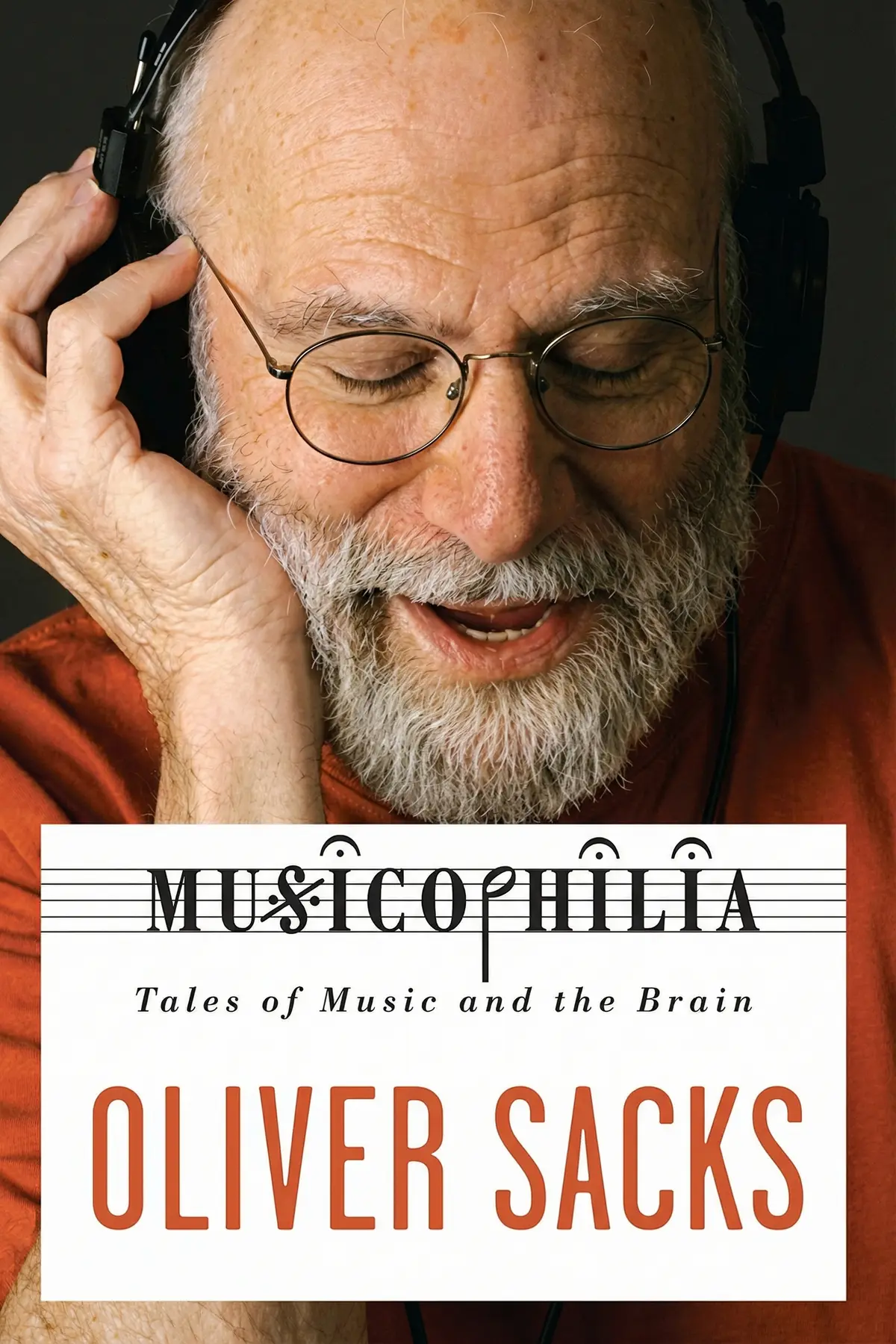
Musicophilia examines the intricate and often startling relationship between the human brain and music. Through neurological case studies, it explores how music can heal, haunt, and transform the human experience.
1 min 48 sec
For the vast majority of us, music is a constant, comforting presence. It is the backdrop of our lives, the soundtrack to our memories, and a universal language that seems to transcend culture and time. We often take for granted our ability to tap our feet to a beat or hum along to a familiar melody. But what if that connection to sound was suddenly altered? What if music, instead of bringing joy, became a source of terror, a catalyst for seizures, or a relentless hallucination that you couldn’t switch off? On the other hand, imagine if music was the only key left to unlock your ability to speak or move after a devastating illness.
In this exploration of our musical brains, we are stepping into the fascinating world of the late neurologist Oliver Sacks. He coined the term ‘musicophilia’ to describe the human propensity for music, an instinct so deeply rooted in our biology that it survives even when other cognitive functions have crumbled. Through a series of extraordinary clinical tales, we will discover that our relationship with music is far more complex than just a matter of taste or talent. It is a fundamental neurological reality.
Over the course of this summary, we will look at the spectrum of musical perception, ranging from those who are completely ‘deaf’ to the emotional power of a song to those whose brains are so attuned to pitch that they can hear the musicality in a blowing nose. We will explore how physical changes occur in the brains of musicians, how sightless individuals find a new world through sound, and how music acts as a powerful medicine for the mind. This is a journey through the wonders and the mysteries of the musical brain, revealing how deeply sound is woven into the very fabric of our being.
2 min 45 sec
Explore the surprising reality that not everyone experiences music the same way, from those who lack rhythm to individuals who find melodies as jarring as screeching tires.
2 min 32 sec
Discover how the brain physically transforms in response to musical training, creating a unique neural landscape that sets professional musicians apart from the rest of us.
2 min 18 sec
While it sounds like a superpower, the ability to identify any note with perfect precision can sometimes be a burden for the musicians who possess it.
2 min 36 sec
Investigate the fascinating world of synesthesia and how the loss of one sense, like sight, can lead the brain to amplify its musical and auditory capabilities.
2 min 43 sec
Witness the paradoxical world of musical savants and individuals with Williams Syndrome, where profound musical talent flourishes despite significant intellectual disabilities.
2 min 35 sec
Learn how the pulse of music can act as a powerful medicine, helping patients with Tourette’s and Parkinson’s regain control over their movements and their lives.
2 min 32 sec
Discover the incredible impact of music therapy for those who have lost the ability to speak, proving that musical memory often survives when other forms of communication fail.
2 min 44 sec
Explore the darker side of musicophilia, where songs can trigger life-altering seizures or become relentless, internal hallucinations that never stop playing.
2 min 34 sec
Hear the incredible stories of people who, late in life and sometimes after a traumatic event, suddenly developed an overwhelming and unexpected passion for music.
1 min 55 sec
As we conclude our journey through the landscape of the musical brain, we are left with a profound sense of wonder at the power of sound. Oliver Sacks has shown us that music is far more than a cultural luxury or a simple pastime. It is a fundamental, biological force that is deeply embedded in the structure of the human mind. From the professional musician whose brain is a finely tuned instrument of its own to the patient with dementia who finds their identity restored by a familiar song, musicophilia is a thread that runs through every human life.
We’ve seen how the brain’s incredible plasticity allows it to be reshaped by practice and how it can adapt to the loss of sight by heightening its auditory senses. We’ve explored the paradoxical world of the savant and the therapeutic miracle of music for those with movement and speech disorders. Yet, we’ve also acknowledged the darker side of this connection—the seizures and hallucinations that remind us of the brain’s delicate balance.
The throughline of all these stories is the resilience of the musical spirit. Even when language is lost, when memory fades, or when the body becomes rigid, music often remains as a source of healing, expression, and connection. It is the last bridge to the self when all other paths are closed.
So, what can we take away from this? Perhaps it is a new appreciation for the melodies that surround us and the complex neurological dance that allows us to hear them. Music is a gift that belongs to everyone, a latent potential within us all. Whether you are a trained professional or someone who just hums in the shower, your brain is a musical organ. Let this be a reminder to nurture that connection, to listen deeply, and to recognize that in the world of the human brain, music is not just something we do—it is part of who we are. In the end, we are all musicophiles, bound together by the universal, biological language of rhythm and song.
This exploration dives deep into the phenomenon of musicophilia—the human brain's innate obsession with melody and rhythm. It moves beyond the simple pleasure of a catchy tune to investigate the profound neurological underpinnings of our musical lives. From individuals who perceive music as noise to those whose brains have been physically reshaped by years of practice, the narrative reveals music as a fundamental part of our biological identity. The work also serves as a testament to the therapeutic potential of sound. It illustrates how music can act as a bridge for those suffering from severe conditions like dementia, aphasia, and movement disorders. By examining both the extraordinary gifts of savants and the distressing reality of musical hallucinations, the text promises a comprehensive understanding of how music can both empower and overwhelm the human mind.
Oliver Sacks was a British-American physician, writer, and professor of clinical neurology at Columbia University. Known for his empathetic and literary approach to medical case studies, he also authored the renowned works Awakenings—which inspired an Academy Award-nominated film—and the bestselling book The Man Who Mistook His Wife for a Hat.
Oliver Sacks
Listeners find this work exceptionally intriguing and eloquently crafted, offering a deep dive into the brain's enigmas and music's influence on cognitive health. The narrative is thorough and brimming with incredible anecdotes, and one listener highlights its ability to broaden one's grasp of neuroscience. Although frequently described as accessible, some point out that it can be a challenging read at times.
Wow. Oliver Sacks has this uncanny ability to turn clinical observations into something that feels deeply human and almost magical. The opening story about the man struck by lightning who suddenly becomes a piano virtuoso is worth the price of admission alone. It makes you realize how little we actually understand about the hidden pathways within our own skulls. While the terminology gets a bit dense in the middle sections, Sacks never loses sight of the person behind the pathology. He doesn't just treat patients; he seeks to understand their entire world through the lens of music. This isn't just a science book; it’s an exploration of what makes us tick and why we are a musical species. In my experience, no other writer captures the intersection of biology and art so gracefully.
Show moreFinally got around to reading this classic, and it’s every bit as enlightening as people say. Sacks has such a warm, sympathetic voice that makes even the strangest neurological conditions feel relatable rather than freakish. I loved the mention of Vladimir Nabokov’s "amusica," where music sounds like irritating noise to him. It’s fascinating to see how the same stimuli can be a source of ecstasy for one person and torture for another. The book is dense, yes, but the prose is civilized and full of genuine wonder. You really get the sense that Sacks loves his patients and respects their unique ways of experiencing the world. It’s a must-read for anyone interested in the mysteries of human consciousness and the power of auditory art.
Show morePicking this up was the best decision I've made for my commute in weeks. I was completely unaware of the phenomenon of musical hallucinations until I read the accounts of people hearing phantom Christmas carols. Sacks writes with such clarity and geniality that even the more complex neurological concepts become understandable to a layperson. The variety of topics—from perfect pitch to the way rhythm helps Parkinson's patients walk—kept me constantly engaged. I'll admit the middle section on synesthesia was a bit more technical than the rest, but it was still incredibly rewarding. This book isn't just about music; it's about the very essence of being human. It made me appreciate the silent moments in my life a lot more than before.
Show moreDirectly after finishing the final chapter, I sat in silence for ten minutes just processing everything. The story about Sacks’ own musical dream involving Mahler’s Kindertotenlieder was absolutely haunting and brilliantly told. It shows that he isn't just an observer; he is just as susceptible to the brain's mysteries as his patients are. His description of music as a "panacea" for the soul really resonated with my own experiences during difficult times. While some readers might find his tendency to ramble a bit much, I found it added to the book's charm and authenticity. It feels like a long, intellectual conversation with a very wise and compassionate friend. This is easily one of the most thought-provoking books on my shelf and highly recommended.
Show moreAs a lifelong musician, I found this deep dive into the "musical brain" absolutely gripping. Sacks explores why we get songs stuck in our heads and how music can reach people lost to dementia. It is terrifying to think that we are essentially slaves to our brain chemistry, yet it's also oddly comforting to see music used as a panacea. The section on "earworms" was particularly relatable and explained my own internal jukebox in a way that felt scientific yet accessible. To be fair, the writing style can be a bit dry and medical at times. Despite the occasional sluggishness, the insights into how the brain perceives pitch and melody are profound. It makes you realize that anatomy is destiny, especially when it comes to our creative impulses.
Show moreEver wonder why a simple melody can bring someone with advanced Alzheimer’s back to life? This book provides some beautiful, if heartbreaking, answers to those questions. The case of Clive Wearing, the man with the seven-second memory who can still play the piano perfectly, really stuck with me. Sacks shows us that music is processed in so many different parts of the brain that it can survive even when language and memory are gone. I will admit that some of the medical jargon required a quick Google search to fully grasp. Still, the emotional weight of these stories outweighs the occasional technical density. It’s a powerful reminder of our biological vulnerability and our resilience. You'll never look at a song the same way again.
Show moreAfter hearing so much about Sacks, I was surprised by how much this book felt like a philosophical meditation. It reinforces that idea that our personality and behavior are governed by our neural connectivity, which can be a bit depressing if you think about it too much. However, Sacks uses this to encourage a more non-judgmental view of people who are "different." If someone has a different brain organization, we should be more accepting of their unique outlook. The book does get bogged down in footnotes that are sometimes as long as the main text itself. Look, it’s not a light beach read, but it’s incredibly rewarding if you’re willing to put in the mental effort. It changed how I think about my own brain and my reactions to music.
Show moreIs it possible for a book to be both fascinating and incredibly tedious at the same time? I picked this up hoping for a rigorous scientific breakdown of why rhythm affects the motor cortex, but Sacks prefers to wander through endless anecdotes instead. Some stories, like the ones about Williams Syndrome, are truly touching and eye-opening. However, the lack of an overarching thesis makes the chapters feel like a collection of disparate essays rather than a cohesive argument. Frankly, I found myself skimming the long-winded footnotes that sometimes took up half a page. It’s a decent read for the casual curious mind, but if you want hardcore neuroscientific analysis, you might be disappointed. I'd recommend it for the stories, but don't expect a structured textbook on the brain.
Show moreThe truth is that I have a love-hate relationship with Oliver Sacks' writing style. On one hand, the case studies are unparalleled in their detail and the sheer "wow" factor of the pathologies. On the other hand, he often fails to link these anecdotes into a progression of greater understanding or a single cohesive theory. You get a lot of "this happened, then this happened," without enough of the "why" behind the neurology. Personally, I found the chapter on Shostakovich and the shrapnel in his head to be one of the highlights. But for every gripping story, there are ten pages of dry clinical observation that feel like they belong in a medical journal. It's a good book for the curious, but it requires a lot of patience.
Show moreNot what I expected based on the hype. I’ve read a lot of pop-science books lately, and this one felt remarkably unfocused compared to something like Levitin’s work. Sacks is clearly a gifted storyteller, but he drowns the reader in so many tiny tidbits that the actual science gets buried. I wanted more analysis of the neural connectivity involved in music processing and less about every single patient he ever met. The chapters on musical hallucinations were interesting for a few pages, but then they just kept going without adding new insights. Truth is, I found it difficult to finish because the pacing was so uneven. It’s okay if you like medical case studies, but it’s not a definitive scientific text on our obsession with sound.
Show more


J. Craig Venter

Richard Wiseman
Carl Zimmer
AUDIO SUMMARY AVAILABLE
Get the key ideas from Musicophilia by Oliver Sacks, plus 5,000+ more titles in English and Thai.







