
21 min 10 sec
New Power: How Anyone Can Persuade, Mobilize, and Succeed in Our Chaotic, Connected Age
New Power examines the shift from top-down, closed authority to participatory, peer-driven models. It explores how digital connectivity allows decentralized movements to challenge traditional hierarchies and transform global influence.
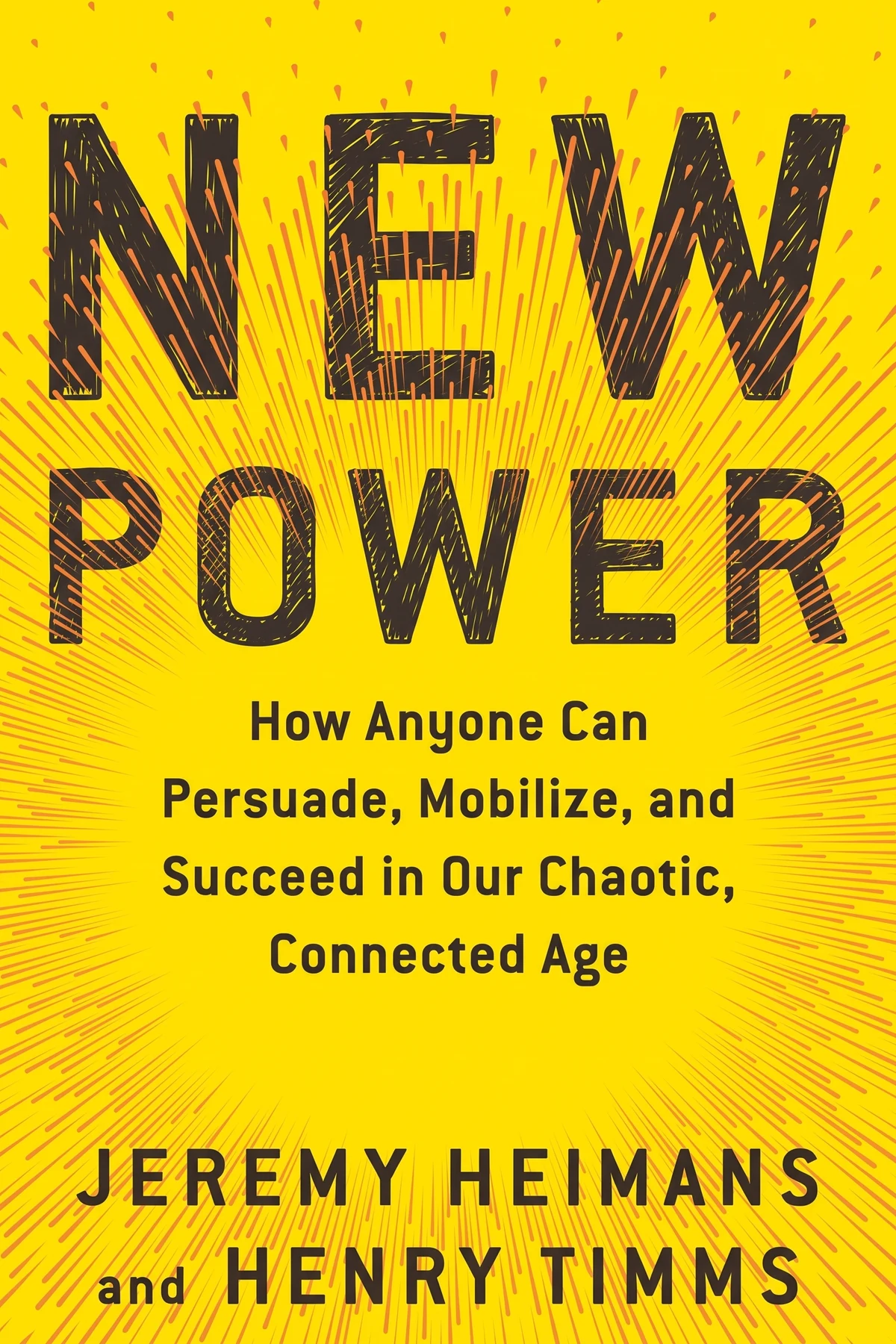
Table of Content
1. Introduction
1 min 58 sec
In the not-so-distant past, the world operated much like a well-oiled machine. In this industrial-age framework, power was something you grabbed, held onto, and protected. It was a currency. If you were a CEO, a high-ranking government official, or a religious leader, you sat at the top of a hierarchy and issued directives to those below. People were largely seen as cogs in the system—passive consumers of products, obedient followers of faith, and predictable voters in elections. This was the era of old power, and its rules were simple: stick to the script, respect the hierarchy, and keep information behind closed doors.
But look around today. The script has been rewritten. We live in an era of hyper-connectivity where the barriers to entry for almost any human endeavor have been demolished. A teenager in her bedroom can launch a global social movement; a patient can challenge their doctor’s diagnosis using data from a worldwide community; and a brand can be built—or destroyed—overnight by the collective actions of thousands of strangers. This isn’t just a change in technology; it’s a fundamental shift in how power itself behaves.
In this journey, we are going to explore the concept of New Power. We’ll look at how power is transitioning from being something that is guarded and hoarded to something that is shared and channeled. This shift is creating a world that values participation over observation and collaboration over competition. Through this summary, you will discover the underlying mechanics of this transition. We’ll dive into the specific value systems that differentiate the new world from the old, and we’ll look at the practical frameworks you need to build a crowd, spread an idea, and lead in a decentralized environment. Whether you’re trying to grow a business or change the world, understanding the flow of new power is no longer optional—it’s the primary requirement for success in the 21st century. Let’s explore how the rules of engagement have changed and how you can make them work for you.
2. The Shift from Cogs to Collaborators
2 min 00 sec
Digital technology has dismantled the old-world barriers that once kept power in the hands of the few, enabling a new level of individual agency and collective action.
3. Conflicting Values in the New Power Landscape
2 min 06 sec
Old power and new power don’t just use different tools; they are built on entirely different beliefs regarding transparency, governance, and the role of the individual.
4. Mapping the Models: From Castles to Crowds
2 min 31 sec
Organizations can be categorized by how they combine old and new power, creating a matrix of strategies ranging from secretive ‘Castles’ to transparent ‘Crowds.’
5. Making Ideas Spread: From Stickiness to Flow
2 min 13 sec
In the new power era, it’s not enough for an idea to be memorable; it must also be actionable, connected, and extensible to truly gain momentum.
6. A Strategy for Mobilizing the Masses
2 min 25 sec
Building a successful new power community requires a deliberate five-step process: finding the right connectors, building a flexible brand, and lowering the barriers to entry.
7. The Dynamics of the Power Triangle
2 min 11 sec
Every thriving new power ecosystem relies on a delicate balance between platform owners, regular participants, and the highly active super-participants.
8. Navigating the Wider Ecosystem and the Participation Premium
1 min 48 sec
Beyond the core community lies a wider circle of influencers and institutions; success depends on engaging these ‘orbiters’ while offering a sense of higher purpose.
9. Leadership Reimagined: Signaling, Structuring, and Shaping
2 min 26 sec
Modern leaders must master a new trio of skills—signaling personal values, structuring horizontal systems, and subtly shaping the cultural direction of their organizations.
10. Conclusion
1 min 32 sec
As we have seen, the landscape of influence has been forever altered. Power is no longer a static prize to be seized; it is a dynamic current to be channeled. We’ve moved from an era of cogs and hierarchies to an era of makers and networks. This transition isn’t just about technology, though digital tools are the catalysts; it’s about a fundamental change in human expectations. We now demand to be part of the stories that shape our lives. We expect transparency, we thrive on collaboration, and we place a premium on the things we help to create.
The throughline of our exploration is clear: the most successful organizations and leaders of tomorrow will be those who can effectively bridge the gap between the old and the new. They will understand when to hold the line like a ‘Castle’ and when to mobilize like a ‘Crowd.’ They will know how to turn a sticky message into a spreading movement using the ACE model, and they will master the delicate art of balancing the needs of platform owners and super-participants.
Ultimately, the rise of new power represents a great democratization of agency. It offers us the chance to solve problems that were previously out of reach for anyone but the largest institutions. But with this increased power comes an increased responsibility to participate thoughtfully. The tools are in our hands. The networks are waiting. The real question is no longer who has the power, but how you will use your connection to the crowd to shape the world we share. The shift is already happening; your job is to step into the current and start directing the flow.
About this book
What is this book about?
The way the world functions is undergoing a radical transformation. For centuries, power was a finite resource to be hoarded, guarded, and dispensed from the top of a pyramid. This old power was held by a few, driven by closed systems and rigid hierarchies. Today, however, a different kind of influence is surging. This new power operates more like a current than a currency. It is open, participatory, and peer-driven, enabled by a hyperconnected world where everyone has the tools to organize and create. New Power offers a comprehensive guide to navigating this new landscape. It explores the foundational differences between old and new power structures, explaining how values like transparency and collaboration are replacing secrecy and competition. You will learn the mechanics of how ideas spread in a digital age, the strategies for building and sustaining massive crowds, and the leadership traits necessary to thrive in an era of decentralization. Whether you are leading a corporation, a non-profit, or a grassroots movement, this summary provides the blueprint for harnessing the collective energy of the crowd and turning connectivity into real-world impact.
Book Information
About the Author
Jeremy Heimans
Jeremy Heimans is an Australian entrepreneur and political activist. He serves as the CEO of Purpose, an organization dedicated to building and supporting movements for businesses, non-profits, and philanthropies. Henry Timms is the former CEO of 92nd Street Y, a cultural center focused on civic engagement. He is also a cofounder of #GivingTuesday, a global philanthropic movement.
Ratings & Reviews
Ratings at a glance
What people think
Listeners find this work remarkably informative, detailing shifts in influence using real-world case studies, and value the approachable and captivating prose. The material is considered intellectually stimulating; specifically, one listener noted its profound perspective on modern methods for driving change, while another observed its success in depicting significant power structures. Additionally, the core premise and financial value earn praise, though reactions to the storytelling are divided among listeners.
Top reviews
Leo
Finally finished this deep dive into how influence actually moves in the digital age, and it’s a total game-changer for anyone in leadership. Heimans and Timms articulate that 'New Power' isn’t just a buzzword but a fundamental shift from closed, top-down hierarchies to open, participatory crowds. I found the distinction between Old Power (the Harvey Weinstein types) and New Power (the #MeToo groundswell) incredibly clarifying. It's not just about technology; it’s about the values of transparency and collaboration that define our current era. While some might find the anecdotal storytelling a bit dense, the way they break down the ACE framework—Actionable, Connected, Extensible—provides a tangible roadmap. To be fair, some of the corporate examples felt a bit like hindsight, but the core theory is robust and timely. This is essential reading for anyone trying to navigate the messy reality of modern mobilization and brand building today.
Show moreRatchanee
The transition from 'made to stick' to 'made to spread' is perhaps the most important takeaway from this entire work. For years, we focused on making messages memorable, but Heimans and Timms argue that today’s power lies in making messages customizable by the crowd. The contrast between Pepsi’s tone-deaf Kendall Jenner ad and Oreo’s quick, participatory response perfectly illustrates why old-school control is failing. Truth is, we are living through a period where the 'few' can no longer dictate terms to the 'many' without a backlash. The authors do a fantastic job explaining how 'New Power' is bottom-up and peer-driven, rather than top-down and jealously guarded. While the political leanings of the writers are evident, the structural analysis of how movements like #GivingTuesday gain momentum is invaluable. If you want to understand why some things go viral while others flop, this provides the best intellectual framework currently available.
Show moreChee
Wow, this really changed how I view my own agency in the world. For so long, power felt like something reserved for the 'few' in faceless corporate boardrooms, but Heimans and Timms show that it's now something we can all tap into if we understand the new rules. The concept of 'New Power' is so inclusive and empowering, making the case that bottom-up movements are the future of everything from business to activism. I loved the story of #GivingTuesday and how it morphed into a global phenomenon through simple, extensible ideas. Not gonna lie, it’s a bit idealistic, but we need more of that kind of thinking right now. The authors’ conclusions about finding a balance between old and new power structures seem incredibly accurate for today's climate. It’s a deeply insightful read that left me feeling more connected and motivated than any other business book this year.
Show moreLadawan
Picked this up on a whim after seeing it on several 'must-read' lists, and I’m glad I did. As someone working in community management, the insights into how people organize online felt incredibly authentic and actionable. The book explains why traditional 'Old Power' structures—those closed, inaccessible castles—are struggling to survive in a world where everyone wants a seat at the table. Not gonna lie, some of the examples, like patients using WebMD to challenge doctors, felt a little bit shaky from a scientific standpoint, but as a sociological observation, it’s spot on. The writing style is engaging and accessible, avoiding the dry academic tone that plagues many books on power dynamics. My only real gripe is that it leans a bit too heavily on 'tech-optimism' without fully addressing the darker side of mob mentality. Still, the value for money here is high because it forces you to rethink how you lead and interact.
Show moreMatteo
Power isn't what it used to be, and this book is the manual for the new version. The authors have crafted a convincing argument that the old ways of climbing ladders and hoarding favors are being replaced by a more fluid, participatory model. I loved the breakdown of the 'Crowd Leader' who makes themselves smaller to make their followers more powerful. It's a refreshing take on leadership that feels very timely given the current state of social movements. To be fair, the storytelling can be a bit hit-or-miss, and some sections felt much more researched than others. However, the core concept of 'New Power' as something actionable and connected is impossible to ignore in our current social media landscape. It’s a thought-provoking read that will definitely spark some intense discussions in your next team meeting, even if you don't agree with every single case study presented.
Show moreSing
Ever wonder why some social movements take off while others fizzle out within a week? This book answers that question by introducing the 'Power Navigator,' a 2x2 matrix that helps you understand where you stand in the shifting landscape of modern influence. I found the discussion of Black Lives Matter as a case study particularly illuminating, even if the authors didn't dive as deep into the long-term results as I would have liked. The writing is snappy and keeps you moving, though some of the anecdotes feel a bit one-dimensional. In my experience, the best part of the book is the glossary and the practical tools you can actually apply to your own projects. It’s a very informative look at how to bridge the gap between elitist structures and the connected many. Definitely a solid choice for any modern campaigner or advocate looking for fresh ideas.
Show morePichaya
This is one of those business books that starts with a brilliant premise but drags its feet halfway through. The central argument regarding the democratization of influence is fascinating, particularly the comparison between the Obama and Trump campaigns as different manifestations of New Power. However, the authors fall into the common trap of filling pages with endless case studies that eventually feel repetitive. Look, the 2x2 matrix is a helpful tool for categorizing organizational styles, but I didn't need twenty different examples of startups to understand the point. It feels like a brilliant Longreads article that was stretched into 300 pages to satisfy a publishing contract. Personally, I appreciated the glossary at the end, yet I struggled to stay engaged during the middle chapters where the storytelling became a bit too self-congratulatory. It’s worth a skim if you’re into sociology, though you might find yourself nodding off.
Show moreYui
As a study of communication, this is top-tier, but the constant political jabs were a major distraction for me. I believe the authors could have proven their points about power dynamics without constantly digging at specific politicians or taking sides in the culture war. It felt a bit like the NFL kneeling controversy—a platform being used for a personal agenda rather than the stated subject matter. That said, the actual framework for 'New Power' is brilliant and very informative for anyone trying to build a brand or a movement. The truth is, the world is shifting toward a model where 'Old Power' institutions are losing their grip, and the authors capture that shift perfectly. If you can look past the obvious bias, there are some deep insights here about how to harness collective energy. Just be prepared for some eye-rolling moments if you don't share the authors' specific worldview regarding recent elections.
Show moreAdam
Got to the end and realized I could have probably just read a few long-form articles and gotten the same info. While the theory of 'Old Power' vs 'New Power' is sound, the book feels like it was written by the same people who make Buzzfeed listicles. It’s very fast-paced and uses catchy acronyms like the ACE framework, but it often sacrifices depth for accessibility. In my experience, the authors tend to cherry-pick their examples to make the theory look flawless, ignoring the messy reality where 'New Power' often leads to chaotic or dangerous outcomes. The discussion of patients being 'smarter than their doctors' was particularly questionable and intellectually unsound. To be fair, it’s an engaging and accessible read for anyone new to the concept of digital networks. It just lacks the 'meat on its bones' that would have made it a five-star masterpiece. Good for a weekend flight.
Show moreKaen
Is there anything more frustrating than a book that mistakes 'new' for 'unquestionably better'? The authors seem to believe that digital decentralization is some kind of magic wand that solves all of humanity's problems. Frankly, their analysis of #MeToo misses the mark completely; it wasn't just a 'new power' groundswell, it was a coordinated call for solidarity led by specific, powerful voices. The suggestion that technology is 'giving power back to the people' is hardly a novel concept—it's been the rhetoric of every populist movement since the Roman Republic. I felt the selection of examples was incredibly cherry-picked to fit a specific narrative while ignoring the structural reforms actually needed for change. It reads like a Buzzfeed listicle expanded into a manifesto, full of flashy acronyms like the ACE framework that offer little real depth. If you want a 'tech-cheerleader' book, this is for you, but I was looking for actual political science.
Show moreReaders also enjoyed
AI 2041: Ten Visions for Our Future
Kai-Fu Lee

7 Powers: The Foundations of Business Strategy
Hamilton Helmer
AUDIO SUMMARY AVAILABLE
Listen to New Power in 15 minutes
Get the key ideas from New Power by Jeremy Heimans, plus 5,000+ more titles in English and Thai.
- 5,000+ titles
- Listen as much as you want
- 7-day free trial
- Cancel anytime







