
17 min 21 sec
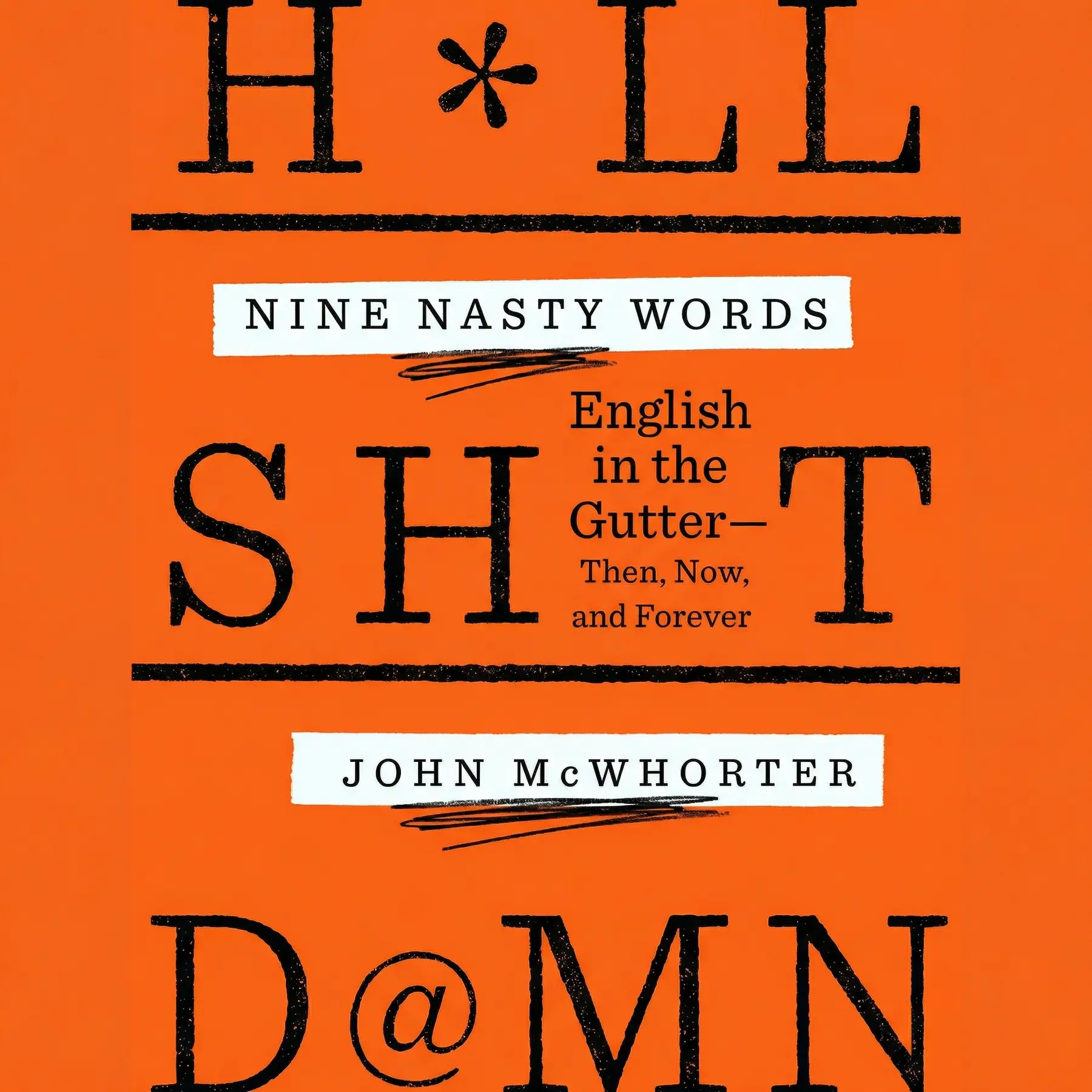
Nine Nasty Words: English in the Gutter: Then, Now, and Forever
Explore the secret history of profanity with linguist John McWhorter. This guide uncovers how forbidden words evolved from religious taboos to modern slurs, revealing the shifting landscape of what society finds truly shocking.
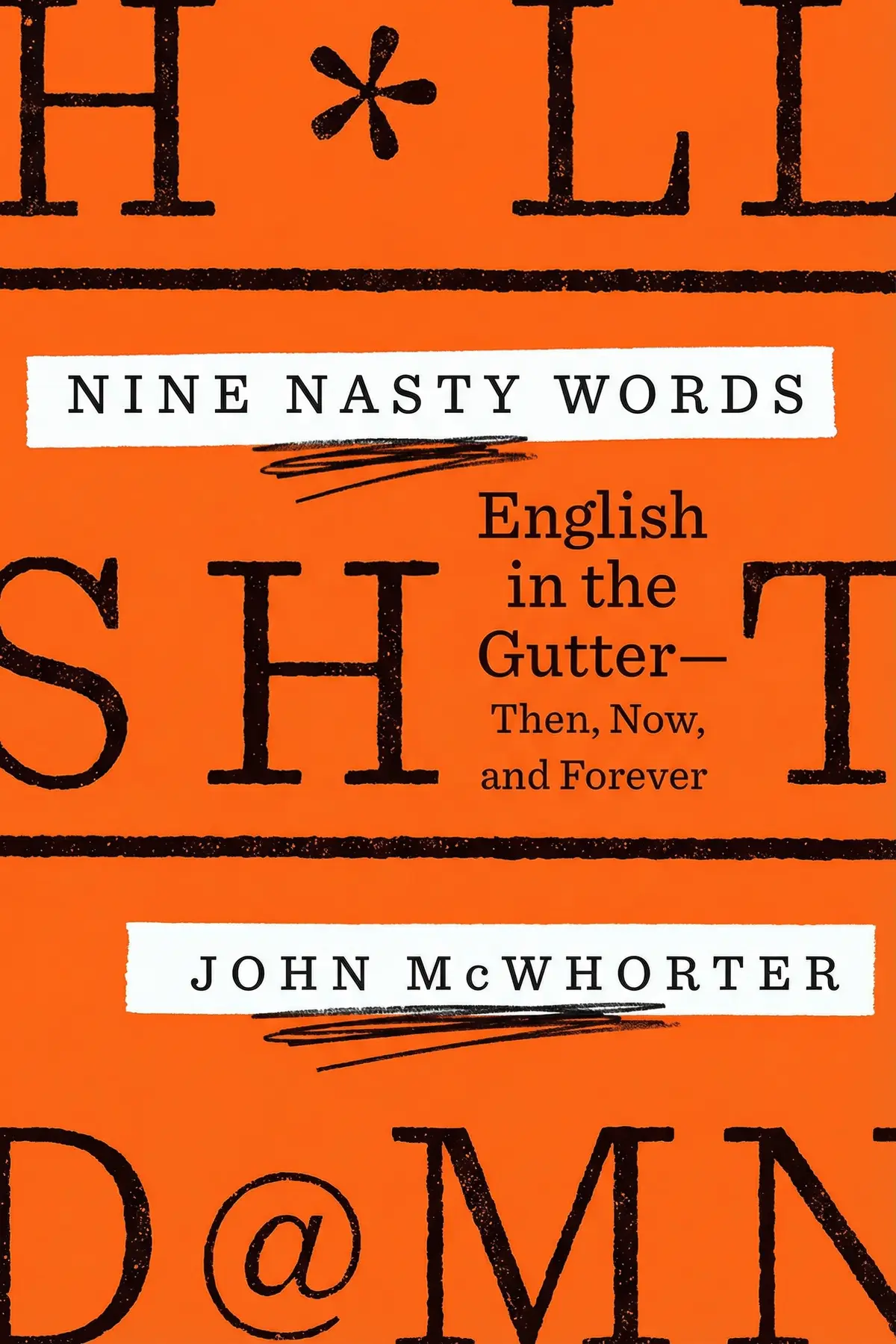
Table of Content
1. Introduction
1 min 28 sec
Language is often thought of as a tool for clear communication, but some of its most potent tools are the words we are told never to use. We’ve all felt that sudden jolt of electricity when someone drops a heavy expletive in a quiet room. But have you ever paused to ask why those specific sounds carry so much weight? Why does one word feel like a casual shrug while another feels like a physical blow?
In this exploration of Nine Nasty Words, we are going to peel back the layers of history to see where these linguistic outlaws came from. This isn’t just a list of ‘bad’ words; it’s a journey through the evolution of human society. We will look at how our ancestors were terrified of religious curses, how the rise of privacy turned basic biology into a source of deep shame, and how the modern world has shifted its taboos away from the body and toward the way we treat one another.
By following the research of linguist John McWhorter, we’ll see that the ‘gutter’ of the English language is actually one of the most honest places to look if you want to understand who we are. We’ll see how words like ‘hell’ lost their fire, how ‘fuck’ became the most versatile verb in existence, and why certain slurs have become the ultimate forbidden territory in the twenty-first century. This is a story of how language reflects our deepest fears, our dirtiest secrets, and our changing sense of morality. Get ready for a smooth, deep, and slightly irreverent look at the words that make us blush, cringe, and occasionally, laugh.
2. The Secularization of Sacred Curses
2 min 04 sec
Discover why the words that once risked your soul’s eternal damnation have become the mildest forms of frustration in the modern world.
3. The Mystery and Phonetics of the F-Word
1 min 58 sec
Uncover the cloudy origins of our most famous four-letter word and why its very sound might be the secret to its lasting power.
4. How Sanitation and Shame Defined 'Shit'
2 min 01 sec
Trace the surprising connection between ‘science’ and ‘excrement’ to see how social privacy changed the way we talk about our bodies.
5. The Linguistic Gap in Anatomical Terms
2 min 00 sec
Explore why the English language forces us to choose between cold, clinical labels and ‘dirty’ slang when talking about our own bodies.
6. The Changing Gravity of the N-Word
2 min 04 sec
Follow the dark evolution of a word that moved from a neutral descriptor to the most toxic and complex term in American society.
7. The Transatlantic Divide of Sexual Slurs
2 min 07 sec
Learn how a ‘bundle of sticks’ became a devastating insult in America while remaining a common household word in the UK.
8. The Versatile Evolution of Bitch
1 min 54 sec
From a female dog to a badge of empowerment, see how one of our oldest insults became a flexible tool for modern expression.
9. Conclusion
1 min 45 sec
We’ve traveled from the sacred halls of the medieval church to the private bathrooms of the Victorian era, and finally to the complex social battlefields of the modern day. What have we learned? We’ve learned that there is no such thing as a ‘dirty’ sound. The words we call ‘nasty’ are only nasty because we, as a society, have decided to pour our fears, our shames, and our prejudices into them.
Profanity is a mirror. In the past, that mirror showed a society terrified of divine retribution, which is why ‘hell’ and ‘damn’ were the ultimate taboos. Later, that mirror showed a society obsessed with privacy and physical shame, giving us the ‘dirty’ words for our bodies and their functions. Today, the mirror shows a society that is finally grappling with how we treat one another. Our modern taboos aren’t about God or the bathroom; they are about slurs and the harm they cause to marginalized groups.
Language is always in motion. The words that shock us today might be the casual slang of our grandchildren, just as ‘gosh’ and ‘darn’ were once shocking to our ancestors. Understanding the history of these nine nasty words doesn’t just make you a more ‘colorful’ speaker—it makes you a more aware one. It reminds us that every time we speak, we are participating in a long, messy, and fascinating history of human connection.
So, the next time you hear a ‘bad’ word, don’t just cringe. Think about the centuries of history, the shifts in morality, and the human stories that gave that word its power. Profanity isn’t just the ‘gutter’ of our language; it’s the place where our language is most alive, most honest, and most human.
About this book
What is this book about?
Have you ever wondered why certain words have the power to stop a conversation or trigger a visceral reaction? In this deep dive into the gutter of the English language, we explore the fascinating and often surprising biographies of our most controversial vocabulary. From the religious curses of the Middle Ages to the heavy-hitting slurs of the modern era, the words we are told not to say actually provide a window into our collective cultural psyche. You will discover how terms that once sent people to confession have become casual interjections, and how words describing basic biological functions transformed into badges of shame during the Victorian era. The journey also examines the most toxic terms in our current lexicon, explaining why their impact has shifted from the sacred to the social. By the end of this exploration, you will understand that profanity is not just about being 'nasty'—it is a living, breathing map of human history, morality, and social change.
Book Information
About the Author
John McWhorter
John McWhorter is a distinguished professor of linguistics at Columbia University and earned his PhD from Stanford University. He is a prolific author known for making complex linguistic concepts accessible to a broad audience. His notable works include Power of Babel: A Natural History of Language, Our Magnificent Bastard Tongue: The Untold History of English, and The Language Hoax. McWhorter's expertise lies in how languages evolve over time and the social forces that shape the way we speak.
Ratings & Reviews
Ratings at a glance
What people think
Listeners find this title to be a charming and fun experience that is both polished and educational, with one listener emphasizing its neutral delivery of history and facts. They enjoy the humor and linguistic focus, with one review noting how it examines the origins of taboo language. The book is praised for its intellectual quality, with one listener characterizing it as erudite, and its anthropological depth, as one review highlights its captivating chronicle of English-language swearing.
Top reviews
Bee
Ever wonder why saying 'damn' doesn't get you kicked out of a party anymore, but other words will get you canceled instantly? This book tracks that evolution perfectly, showing how our taboos have shifted from the sacred to the social over several centuries. McWhorter is brilliant at explaining how slurs have become the 'true' profanity of the modern era, replacing the old-school anatomical and religious curses. His tone is objective and scholarly, yet he manages to inject enough humor to keep the pages turning quickly. I’ll never look at the word 'rabbit' or its strange history with the word 'coney' the same way again. It is a absolute masterclass in linguistic history.
Show moreHom
This is hands-down the most entertaining linguistics book I’ve encountered in years. McWhorter has this whimsical style that makes even the most complex grammatical shifts feel totally accessible to a layperson. I particularly loved the charts explaining how profanity functions as a system of pronouns, particularly in Black American English. It’s one of those rare non-fiction titles that teaches you something on every single page while making you laugh out loud at the absurdity of it all. If you think linguistics is just about boring sentence diagrams, this book will absolutely blow your mind. It’s the perfect blend of high-brow scholarship and low-brow subject matter.
Show moreTim
John McWhorter proves once again why he is one of the most vital voices in modern linguistics today. He takes words that are usually whispered and puts them under a microscope, revealing the beautiful logic behind their usage. The way he traces the word 'bitch' from a simple noun to a complex marker of power and control is absolutely brilliant. He doesn't shy away from the controversial aspects of language, but he approaches them with the steady hand of a true scientist. This is a must-read for anyone who loves the messy, evolving nature of the English language. It is informative, hilarious, and deeply human all at once.
Show moreSiriphen
McWhorter has a way of making linguistics feel like a late-night chat at a bar. He explores how terms like fuck and shit migrated from the bathroom to the dictionary with impressive academic rigor. The sections on 20th-century pop culture might feel a bit niche for some, but they provide essential context for how these words became so pervasive in American life. Truth is, his breakdown of the 'pronoun-ification' of certain words—like how we use 'your ass' to mean 'yourself'—is worth the price of the book alone. It's a fun, informative romp through the mud of the English language. My only gripe is that some chapters feel slightly more repetitive than others, though the enthusiasm never wanes.
Show moreFrida
The shift from religious curses to slurs is the most fascinating part of this entire sociological study. McWhorter argues that words like 'hell' were once the peak of vulgarity because of the weight of religion, whereas today, we find them almost quaint. It’s a compelling look at how language acts as a mirror for what society actually fears or respects at any given moment. Some of the etymological deep dives into the 'n-word' are heavy but necessary for understanding our current cultural climate. It’s an erudite, thoughtful, and deeply researched book that treats its subject with the respect it deserves. Some sentence structures are a bit dense, but the knowledge gained is immense.
Show moreTuck
Finally, someone debunks the fake acronym myths with actual historical evidence! McWhorter takes a sledgehammer to the urban legends that have plagued our understanding of profanity for decades. He provides a grounded, objective history that doesn’t rely on cheap titillation to keep the reader’s interest. The chapter on the 'n-word' is handled with incredible care and nuance, highlighting the linguistic difference between the 'er' and 'a' endings in a way I hadn't considered before. It’s a masterclass in objective storytelling that remains deeply engaging from the first chapter to the motherfucking addendum. I would have liked a bit more focus on UK English, but the US focus is still brilliant.
Show moreTitiluck
Reading this with my college-aged kid turned out to be a surprisingly great bonding experience. It gave us a structured way to talk about the weight of certain words and how their meanings have drifted over the centuries since Chaucer. McWhorter’s writing is witty and intelligent, managing to bridge the gap between high-brow academic research and common street slang. Look, it’s not just a list of bad words; it’s an anthropological deep dive into how English speakers navigate the world. I highly recommend the audiobook version too, as McWhorter’s own narration brings a certain 'chuckle' to the text that makes the more complex linguistic theories easier to digest.
Show moreBond
I really wanted to love this more than I actually did. As a fan of McWhorter’s other work, I expected a more irreverent and punchy narrative, but parts of this felt like a dry university lecture. He spends an enormous amount of time on word origins and etymology, which is fascinating in theory but often meanders into long-winded territory. Frankly, the pop culture trivia started to grate on me after a while because it felt like a distraction from the core linguistic analysis. It’s a decent read if you’re a die-hard word nerd, but it lacks the lively spark I was hoping for based on the cover. It’s informative, sure, but definitely more scholarly than humorous.
Show moreOak
While the linguistic insights are top-tier, the constant references to obscure musicals and 1930s vaudeville were a bit much for me personally. McWhorter is clearly an 'old soul,' but those specific pop culture tangents occasionally derailed the flow of the history he was trying to tell. To be fair, the debunking of 'folk etymologies'—like the idea that certain words are acronyms for things like 'Fornicating Under Consent of the King'—was very satisfying to read. It’s a solid book that suffers from a few pacing issues and a narrator who sometimes gets a bit too distracted by his own hobbies. If you can handle the tangents, you'll learn a lot.
Show moreTanawan
For a book about swear words, this was surprisingly prissy and academic. I found it jarring that an author writing about the 'nasty' parts of our language would use such convoluted, Victorian circumlocution to avoid being direct about body parts. It felt like a professor who is terrified of his own subject matter, resulting in a book that is more 'scholarly presentation' than 'unfiltered history.' The footnotes provide endless content warnings that feel entirely unnecessary for an adult audience intentionally reading about profanity. Not gonna lie, I was expecting something much ballsier and less concerned with maintaining a 'proper' academic distance from the smut. It just didn't land for me.
Show moreReaders also enjoyed
A Splendid Exchange: How Trade Shaped the World
William J. Bernstein
A Spy Among Friends: Philby and the Great Betrayal
Ben Macintyre
A Force for Good: The Dalai Lama's Vision for Our World
Daniel Goleman
1491: New Revelations of the Americas Before Columbus
Charles C. Mann
A Year in the Life of William Shakespeare: 1599
James Shapiro
A Room of One’s Own
Virginia Woolf
AUDIO SUMMARY AVAILABLE
Listen to Nine Nasty Words in 15 minutes
Get the key ideas from Nine Nasty Words by John McWhorter, plus 5,000+ more titles in English and Thai.
- 5,000+ titles
- Listen as much as you want
- 7-day free trial
- Cancel anytime







