Doppelganger: A Trip into the Mirror World
Naomi Klein
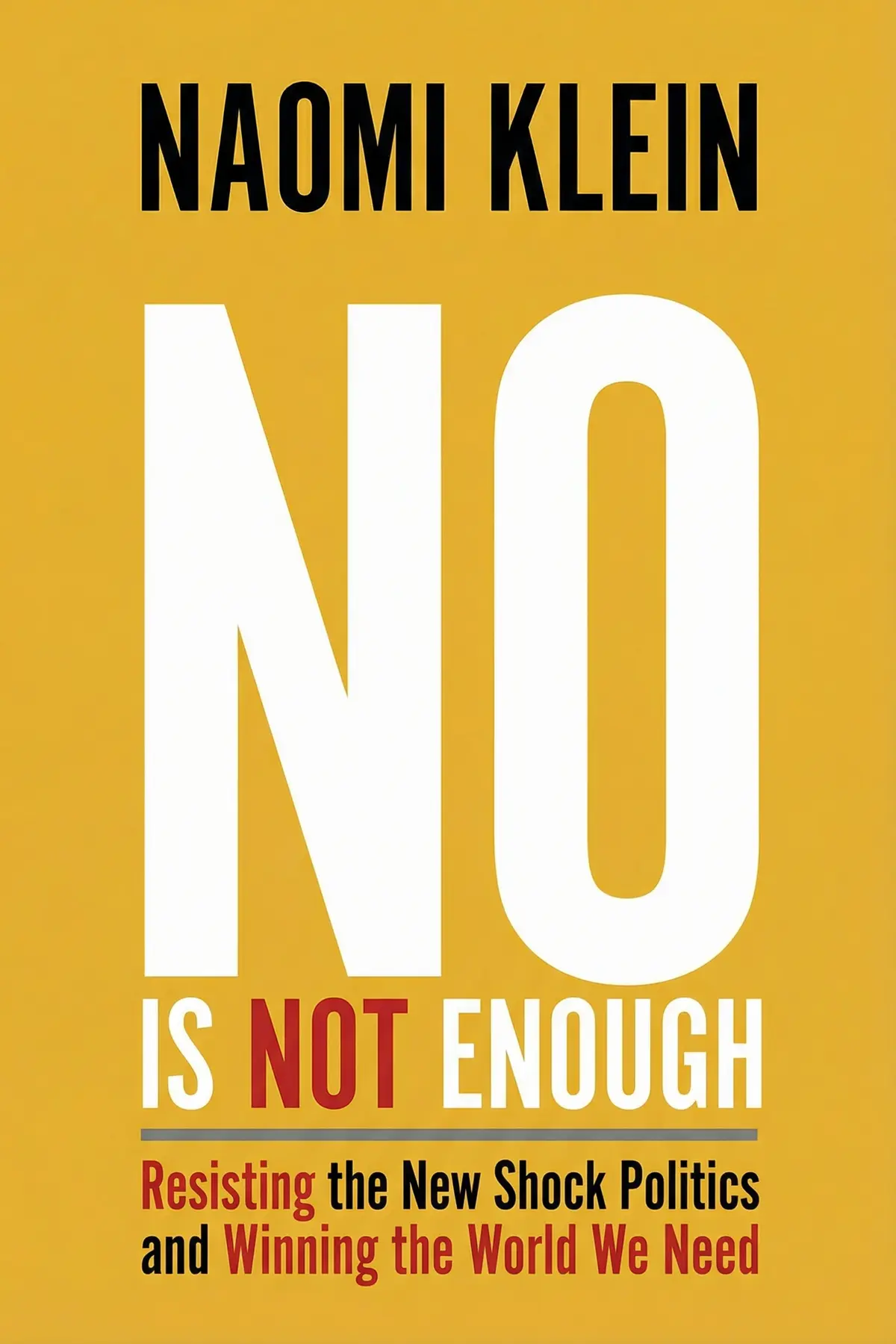
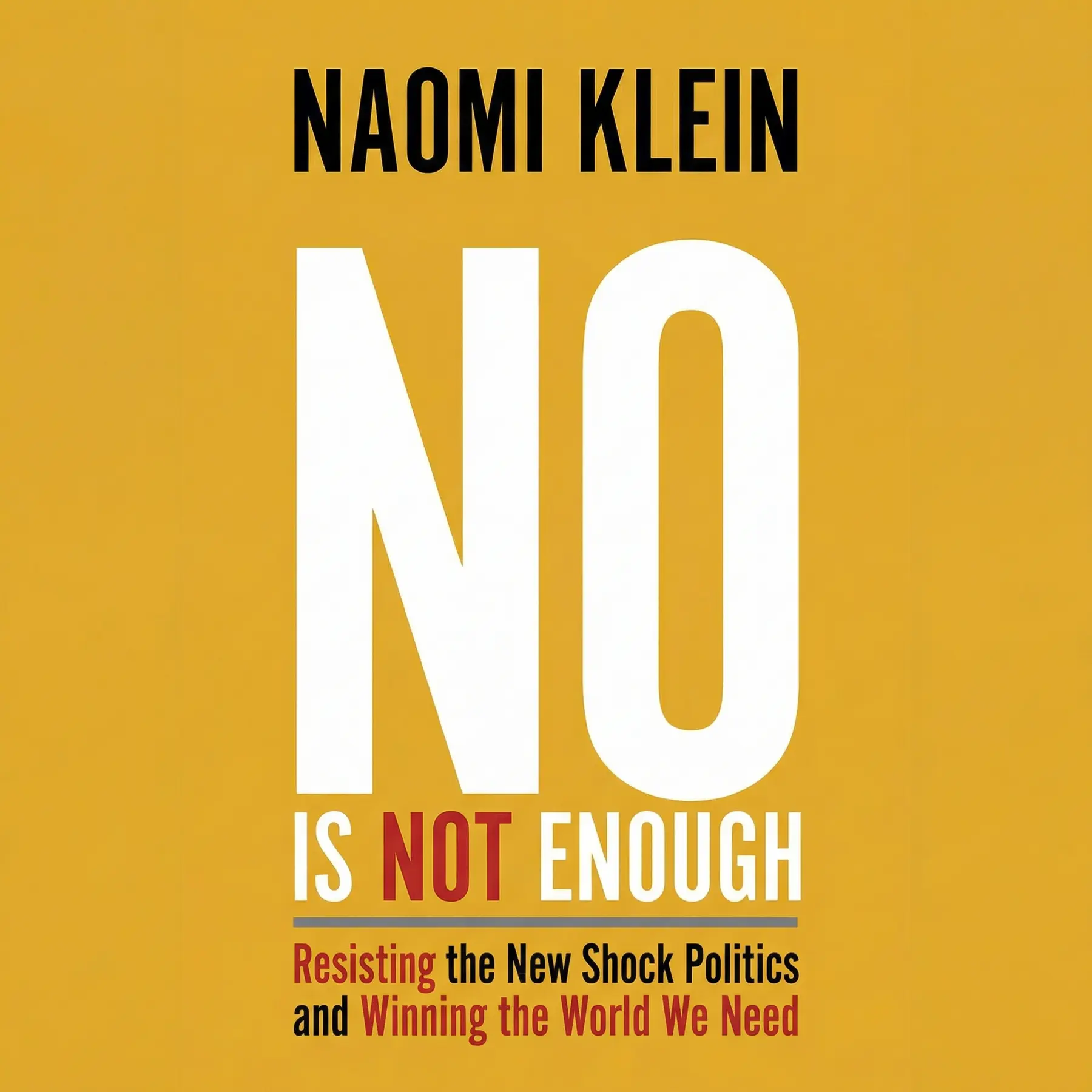
No Is Not Enough explores the rise of Donald Trump as a brand and a political force. It examines how corporate tactics and disaster capitalism are used to push radical agendas while offering a blueprint for resistance.
1 min 51 sec
In late 2016, a political event occurred that many people thought was impossible. The ascent of Donald J. Trump to the highest office in the United States didn’t just change the political landscape; it sent a massive tremor through the global consciousness. For many, the initial reaction was one of pure, unadulterated shock. But as the months turned into years, a vital realization began to take hold: shock is not just a side effect of this kind of politics—it is the very mechanism through which it operates.
In this exploration, we are looking at a deep analysis by Naomi Klein, who argues that to truly resist the policies of the Trump era, we first have to understand what we are actually dealing with. This isn’t just a story about one man or one political party. Instead, it’s about the convergence of mega-corporate branding, the rise of reality television culture, and a predatory economic strategy known as the shock doctrine.
The central throughline here is that simply resisting—saying ‘no’—is not going to be enough to fix the deep-seated issues that led to this moment. We need to understand the ‘brand’ we are fighting and why it was able to capture the public imagination. We have to look at how crises are used as cover for radical deregulation and how our focus on personal wealth has skewed our perception of leadership.
Most importantly, this journey isn’t just about pointing out what’s wrong. It’s about finding the path toward a ‘yes.’ It’s about how disparate groups—environmentalists, labor leaders, and civil rights activists—can come together to create a cohesive vision for the future that is so compelling it makes the old, destructive ways obsolete. Over the next several segments, we will pull back the curtain on the Trump brand, analyze the tactics of disaster capitalism, and discover why a small group of thinkers in Canada might have found the key to winning the world we actually need.
2 min 04 sec
Discover how the shift from selling products to selling identities paved the way for a businessman to treat the presidency as a global marketing asset.
1 min 59 sec
Explore how the logic of scripted competition and professional wrestling creates a political environment where truth is secondary to ratings.
1 min 56 sec
See how environmental protections and social cohesion are being dismantled to serve the interests of the fossil fuel industry.
1 min 53 sec
Examine why voters were drawn to a billionaire outsider and how the failure of the political establishment created a vacuum for ‘philanthrocapitalism.’
1 min 52 sec
Learn how moments of crisis and disorientation are used by those in power to push through unpopular and radical policies.
1 min 59 sec
Understand how the Trump administration’s cabinet, filled with industry insiders, views chaos and conflict as an opportunity for profit.
1 min 56 sec
Analyze why simply saying ‘no’ is a failing strategy and why the public’s memory of past exploitation is a vital tool for defense.
2 min 13 sec
Discover a model for unified progress that connects environmental, social, and economic justice into one cohesive roadmap for change.
1 min 42 sec
As we conclude this exploration, it becomes clear that the current political moment is a crossroads for our collective future. We have seen how the presidency has been transformed into a global branding exercise, and how the ‘Shock Doctrine’ is being used to dismantle the protections that keep our society and our environment safe. But we have also seen that there is a way forward.
The lesson here is that resistance is the starting line, not the finish line. We must be vigilant in our ‘no,’ but we must be even more passionate in our ‘yes.’ We must move away from the idea that wealth is a measure of worth and that competition is the only way to organize a society. Instead, we can choose to embrace a culture of care, community, and sustainability.
By understanding the tactics of disorientation and division, we take away their power. When we realize that our struggles—whether they are for the climate, for civil rights, or for economic fairness—are all part of the same fight, we become an unstoppable force. The ‘Leap Manifesto’ and similar efforts around the world show us that a better future isn’t just a dream; it’s a plan.
So, the next time you feel the shock of a news cycle or the weight of a new policy, remember that your disorientation is a tool being used against you. Re-orient yourself by looking toward the vision of the world we need. Connect with others, build that unified ‘yes,’ and let it be the light that guides us out of the era of shock and into an era of genuine progress. The world we want is waiting to be won—but it requires more than just our opposition. It requires our imagination, our cooperation, and our unwavering commitment to a better way of life for everyone.
This summary explores the provocative thesis that the election of Donald J. Trump was not an isolated accident but the culmination of several decades of corporate branding and political strategies. By viewing the former president through the lens of a global brand rather than a traditional politician, we can better understand his methods, from reality television tactics to his reliance on shock and disorientation. The core promise of this analysis is to move beyond simple opposition. While saying 'no' to destructive policies is necessary, it is insufficient on its own. The work provides a roadmap for creating a 'yes'—a positive, unified vision for a more equitable and sustainable society. It breaks down the mechanics of the 'Shock Doctrine' and shows how instability is often used to bypass democratic processes. Ultimately, it calls for a collective reimagining of our economic and social systems to ensure a future that serves everyone, not just the corporate elite.
Naomi Klein is a renowned and award-winning author, journalist and filmmaker. Her books include the international bestsellers No Logo: Taking Aim at the Brand Bullies, The Shock Doctrine and This Changes Everything. Klein’s writing can also be found in publications such as the Intercept, the New York Times, Le Monde and the Guardian.
Listeners consider this title to be crucial reading, specifically for the Trump era, commending its thoroughly researched and sharp analysis. Additionally, the prose is straightforward and succinct, with one listener mentioning that it is as engaging as a novel. The material is also seen as evocative and emboldening, with one review emphasizing its functional tips for neutralizing Trump. Listeners value the political themes, with one review highlighting how the book explains neoliberalism and presents alternatives to disaster capitalism.
Naomi Klein has a remarkable gift for articulating the vague sense of dread many feel in this current political climate. This book isn't just a critique of a single administration; it’s a surgical examination of how we became a society that worships 'superbrands' over citizens. Klein connects her previous work on the shock doctrine to our present reality with such clarity that it often reads as quickly as a thriller. Frankly, the way she explains the merger of corporate branding with the highest levels of government is both terrifying and brilliant. It provides a necessary toolkit for keeping our heads when everything feels like a manufactured crisis. If you want to understand how the public sphere was auctioned off, start here. This is essential reading for anyone who refuses to accept the current status quo as normal.
Show moreAs someone who has followed Klein’s work since 'The Shock Doctrine,' I found this to be her most urgent and practical piece yet. She doesn't just diagnose the terminal illness of our political system; she offers a roadmap for recovery through collective action. The sections detailing the resistance at Standing Rock were moving and served as a powerful illustration of what a unified 'yes' looks like in practice. We are living through a period where the very idea of democracy is being undermined by corporate interests. This book helps you flip the script and stop reacting to every tweet so you can focus on systemic change. It’s empowering and deeply insightful. You will walk away from this feeling like there is actually a path forward through the chaos.
Show morePicked this up during a long flight and ended up finishing the whole thing before I landed because the writing is just that compelling. Klein breaks down how both major American parties have essentially abandoned the democratic project in favor of the free market. She explains 'shock politics' in a way that makes sense of the overwhelming barrage of daily headlines. Truth is, we've been conditioned to accept the commodification of our entire lives, and this book acts as a much-needed wake-up call. It’s incredibly empowering to realize that the current chaos is a tactical tool, not just accidental incompetence. This isn't just another political book; it’s a guide for survival. It makes complex neoliberal theories feel accessible to anyone. Definitely a must-read for the age of Trump.
Show moreAfter hearing Naomi Klein speak at a recent rally, I finally grabbed this book to see if her 'Yes' was as strong as her 'No.' It absolutely is. She argues convincingly that the modern Left has lost its sense of utopia and desperately needs to reclaim a vision for what we actually want to build. The way she links environmental protection to systemic economic justice and indigenous rights is masterfully done. It’s a bold course for winning a fair and caring world, rather than just surviving a corporate takeover. Every chapter feels like a tool for shock-resistance in an era of constant distraction. Personally, I found the discussion of the Leap Manifesto to be the most hopeful thing I’ve read in years. It’s clear, concise, and incredibly vital.
Show moreCan we actually move past just saying 'no' to every single outrage coming out of Washington? This is the central question Klein tackles, and her answer is a resounding call for a proactive 'yes.' She takes her thesis on disaster capitalism and applies it to the modern era with precision, focusing on how crises are used to roll back rights. I found the inclusion of the Leap Manifesto particularly inspiring, as it offers a tangible vision for the future rather than just a list of complaints. To be fair, a few chapters felt slightly rushed, likely because the book was written so quickly to address the immediate political moment. However, that sense of urgency is exactly what makes the prose so punchy and readable. It’s a great primer on how to build a better narrative.
Show moreThe branding analysis in the first half of this book is worth the price of admission alone. Seeing the current administration not as a Martian invasion but as the logical conclusion of decades of corporate deregulation is a total lightbulb moment. Klein’s expertise from 'No Logo' shines through as she explains how a family can operate as a series of spin-off brands. I do wish she had spent more time criticizing the specific failures of the previous decade to provide a more balanced view of the vacuum that was left behind. Still, it’s a thought-provoking read that moves at a breakneck pace. Not gonna lie, the sections on environmental destruction are pretty scary. It’s a sobering look at our reality that somehow manages to stay optimistic.
Show moreNot what I expected, but exactly what I needed to read to make sense of the constant noise of the news cycle. Klein explains that the current political moment is a symptom of a much deeper disease involving the deconstruction of the regulatory state. The writing is so sharp and engaging that it really does read like a novel at times, making very complex economic shifts easy to grasp. I appreciated the practical advice on how to neutralize the shock tactics used by those in power to keep us disoriented. While the subject matter can be depressing, the focus on 'caring majorities' is genuinely heartening. It’s a necessary guide for navigating our current surreal reality. A bit more data would have been nice, but the message is clear.
Show moreI’ve been a fan of Klein's reporting for years, and this book feels like the culmination of her warnings about how 'shocks' are used to bypass democracy. She does an excellent job reframing the narrative around wealth creators and the corporate capture of the public sphere. The core message is that we don't have time to despair because the stakes are simply too high for the planet. Gotta say, her critique of how both sides of the aisle have failed the public is spot on and very hard to ignore. It’s a quick, punchy read that provides a much-needed toolkit for anyone feeling overwhelmed by the current state of the world. A few more specific examples of successful international resistance would have made it a five-star for me.
Show moreFinally got around to this one, and while I agree with the core politics, the execution left me wanting a bit more substance. The book is definitely clear and accessible, which is great for a general audience, but it lacks the heavy-hitting investigative research I usually expect from Klein. In my experience, the calls for grassroots community building were a bit repetitive and lacked concrete steps for local implementation. However, the insights into how natural disasters are manipulated to hand public wealth to the mega-rich are still incredibly important and relevant. It’s a decent introduction to her theories if you’re new to her work, but it feels a bit like a 'greatest hits' collection. It’s worth a read, but maybe check it out from the library first.
Show moreWow, I really wanted to like this more, but it felt like a series of recycled blog posts rather than a cohesive, deeply researched book. Klein is obviously a talented writer, but this lacks the rigorous data and deep case studies that made her earlier work so revolutionary. Many of the arguments about Trump as a brand are interesting but feel a bit thin after the first fifty pages. Look, the advice to 'confront our inner Trumps' is just too vague and amorphous to be useful for actual political organizing or policy change. It’s a fast read, but it feels like it was put together in a weekend to capitalize on the 2017 news cycle. If you've read her other books, you won't find much new here. It was a bit of a letdown.
Show more
Jessica Valenti
Yanis Varoufakis
Yuval Noah Harari
Jacinda Ardern
Pankaj Mishra
James Comey
Anthony Pratkanis

AUDIO SUMMARY AVAILABLE
Get the key ideas from No Is Not Enough by Naomi Klein, plus 5,000+ more titles in English and Thai.