
17 min 43 sec
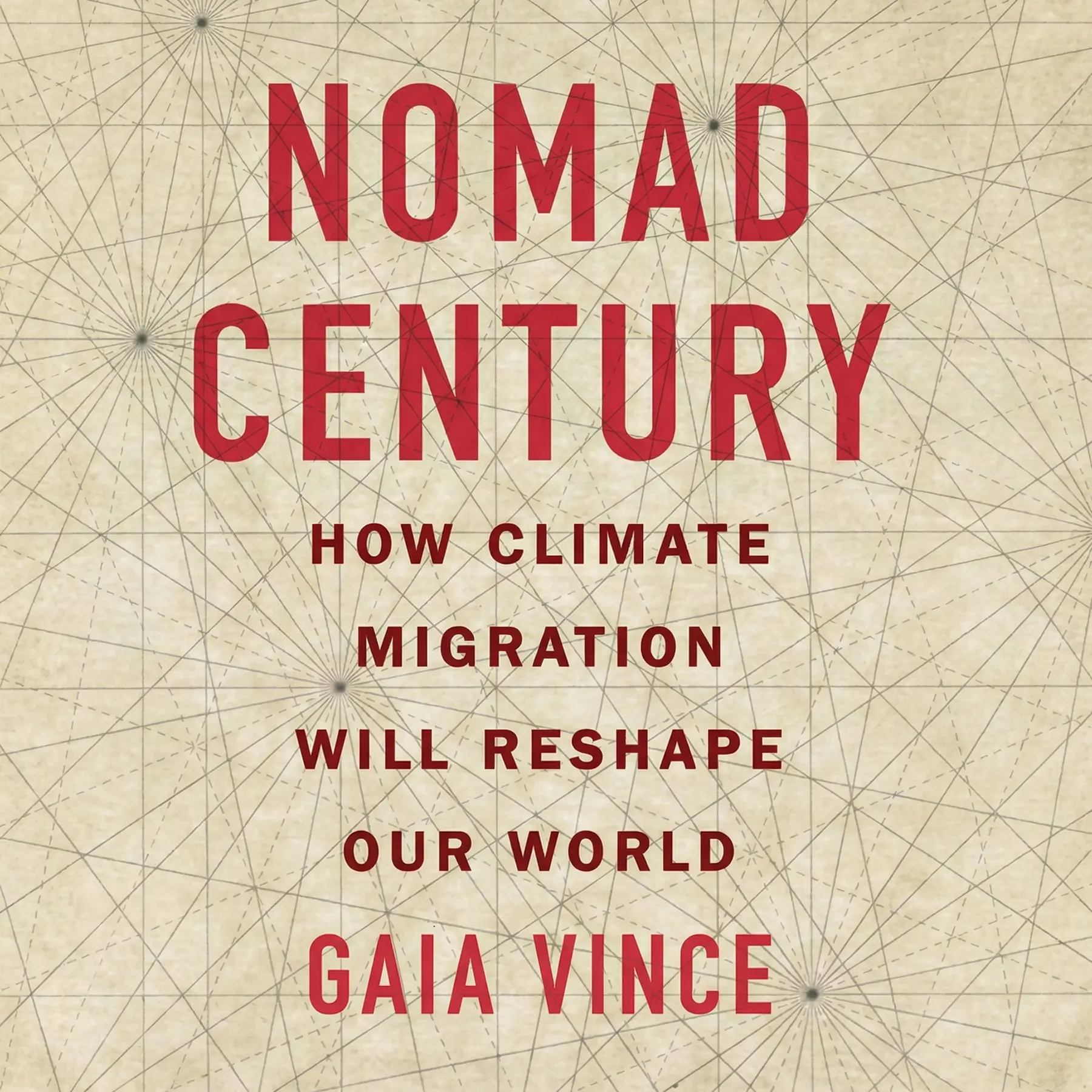
Nomad Century: How Climate Migration Will Reshape Our World
By Gaia Vince
Nomad Century explores how climate change will force billions to migrate and argues that embracing this massive human movement is the only way to ensure global survival and future economic prosperity.
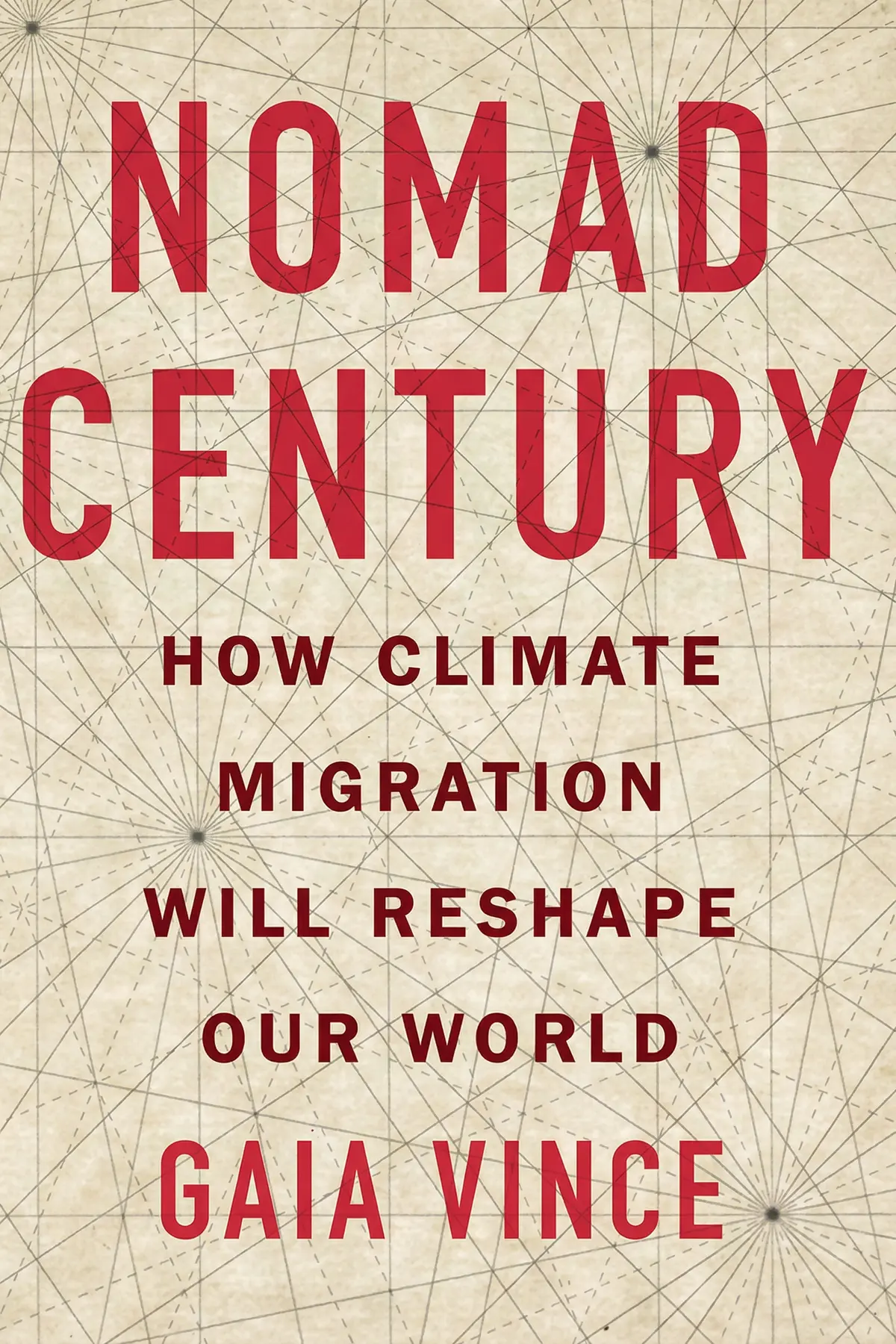
Table of Content
1. Introduction
1 min 37 sec
Imagine a world where the landscape you call home literally disappears. This isn’t a scene from a science-fiction movie; it is the impending reality for nearly half of the human population. Over the next fifty years, the shifting climate is projected to make current habitats uninhabitable for approximately 3.5 billion people. We are facing a future defined by fire, flood, extreme heat, and drought—a combination that will shatter our current systems of agriculture and residency.
As temperatures continue to climb, we are witnessing the start of the Great Climate Migration. This massive movement of people will primarily flow from the global south, where the environmental impacts are most devastating, toward the cooler latitudes of the north. This shift means that every person on Earth is about to play one of two roles: you will either be a migrant searching for a new home, or you will be a host welcoming others into yours.
While the prospect of such a massive shift might feel overwhelming or even frightening, there is a path forward. The core argument here is that our survival depends on embracing the very thing that allowed our species to thrive in the first place: our ability to move. Throughout history, migration has been our greatest survival strategy, allowing us to find new resources and innovate through collaboration. To navigate this new era, we must tap into that innate adventurous spirit and reinvent our communities for a mobile century. The journey ahead requires us to move past fear and look toward global collaboration, planned relocation, and the clever application of science to build a better, more resilient world.
2. The Uninhabitable Reality of a Four-Degree World
2 min 38 sec
As global temperatures rise toward a catastrophic four-degree increase, the physical limits of human survival are being tested, turning once-vibrant regions into danger zones of heat and flooding.
3. The Artificial Nature of Modern Borders
2 min 31 sec
Our current obsession with rigid national boundaries is a relatively recent historical development that conflicts with the long-standing human legacy of movement and adaptation.
4. Migration as an Economic Catalyst for Host Nations
2 min 34 sec
Contrary to common myths, immigrants are vital economic drivers who fill essential labor gaps, boost local wages, and fuel innovation in developed countries.
5. The Circular Benefits for Developing Countries
2 min 12 sec
Migration creates a powerful cycle of development by channeling funds directly to families and facilitating the transfer of democratic values and technical skills.
6. A Blueprint for Global Relocation and Governance
2 min 16 sec
To survive the climate crisis, we must shift from reactive emergency responses to a proactive, globally coordinated system of planned migration and sustainable urban living.
7. Technological Restoration and the Shift to the North
2 min 20 sec
As populations move toward more habitable zones, we have a unique opportunity to use advanced technology and abandoned lands to restore the planet’s ecological balance.
8. Conclusion
1 min 35 sec
The message of Nomad Century is both a warning and a call to action. We are standing at a crossroads in human history. We can either continue to ignore the reality of a warming planet and deal with the chaotic, often violent consequences of unplanned displacement, or we can choose a different path. We can choose to see migration as a powerful, life-saving tool that has always been part of the human story.
Adapting to the climate crisis will require us to collaborate on a scale that transcends our current political boundaries. It requires us to build cities that are ready for the future, to empower international organizations to manage human movement with dignity, and to use our scientific ingenuity to restore the Earth’s balance. This isn’t just about survival; it’s about the potential for a global renaissance. By welcoming those who move, we bring in the workers, the innovators, and the taxpayers who will sustain our aging societies and drive the next wave of human progress.
As you reflect on these ideas, consider how our definitions of ‘home’ and ‘country’ might need to evolve. The strength of our species has never been our ability to stay in one place, but our ability to adapt, to explore, and to cooperate. In a world that is rapidly changing, our most reliable strength is our innate ability to move. If we can harness that spirit and manage this great transition with foresight and compassion, we have the chance to build a world that is better for everyone.
About this book
What is this book about?
The planet is heating up at an unprecedented rate, and the consequences go far beyond simple weather changes. Within the next few decades, vast swaths of the Earth—currently home to billions of people—will become virtually uninhabitable due to extreme heat, rising sea levels, and agricultural collapse. This book presents a radical but necessary vision for the future: a world where migration is not seen as a crisis to be managed, but as a fundamental solution for survival. Nomad Century outlines the stark reality of the coming decades, where the global south faces the brunt of the environmental crisis while the global north deals with aging populations and shrinking workforces. Gaia Vince argues that by dismantling our modern concepts of rigid borders and implementing a globally coordinated plan for relocation, we can harness the innate human drive to move. The book provides a blueprint for building sustainable, high-density cities in safer northern latitudes, utilizing advanced science to restore the environment, and ensuring that the coming mass migration benefits both the displaced and their new host communities.
Book Information
About the Author
Gaia Vince
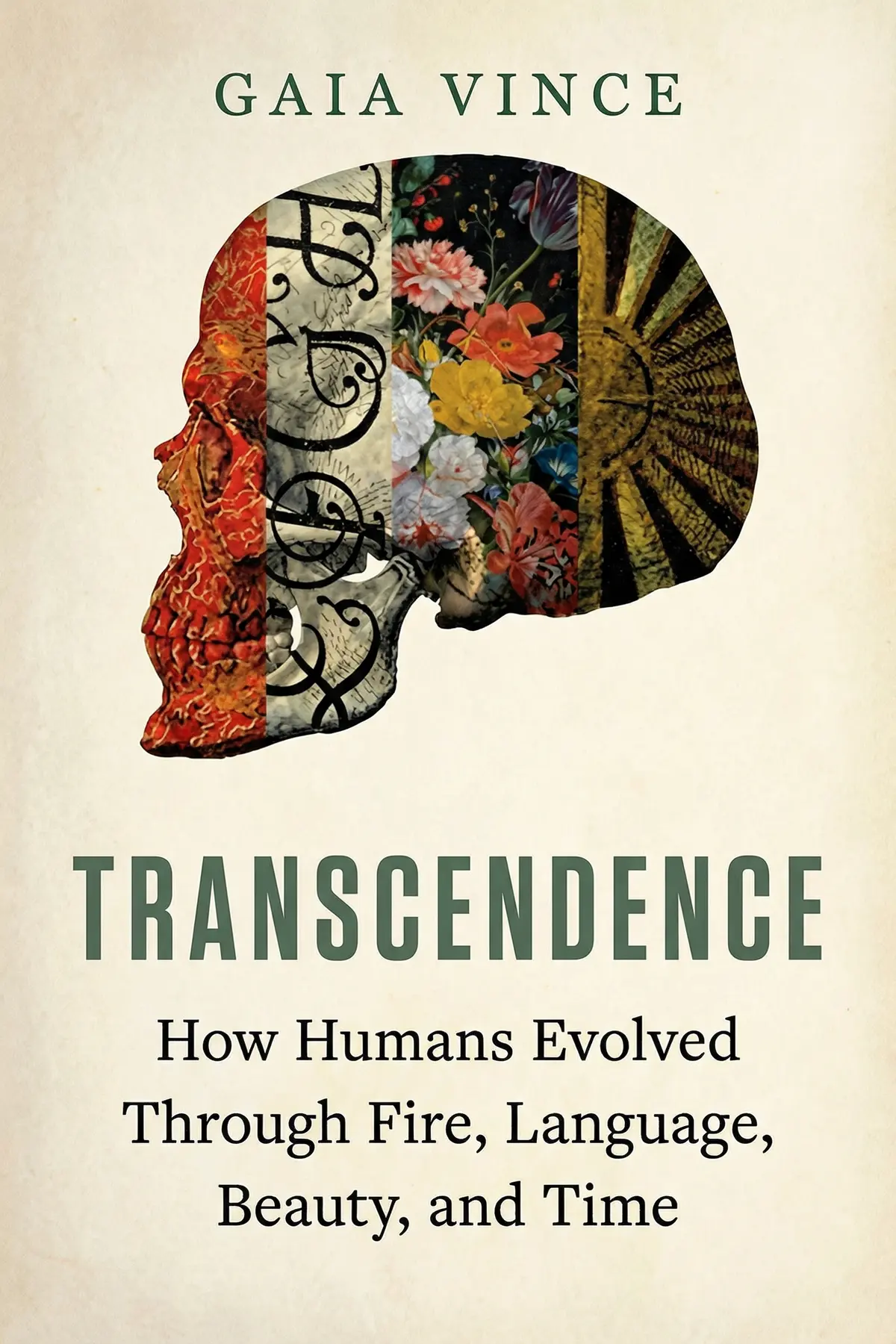
Gaia Vince is an award-winning British science journalist and broadcaster whose work has been shown on the BBC and published in New Scientist, the Guardian, and Science magazine. She’s held editorial positions at Nature and New Scientist and became the first woman to win the Royal Society Prize for Science Books for Adventures in the Anthropocene. She’s also the author of Transcendence.
Ratings & Reviews
Ratings at a glance
What people think
Listeners find the book informative and thoroughly researched, noting its eye-opening solutions according to one listener. They value how readable the material is, with one listener suggesting it is a must-read for CEOs. The work provides deep insights into climate change, which one listener describes as an enlightening perspective.
Top reviews
Champ
Picked this up after hearing it was a must-read for corporate leaders, and frankly, the urgency is palpable. Gaia Vince doesn't just list the 'four horsemen' of the Anthropocene; she maps out a radical restructuring of our global borders. While the idea of 11 billion people migrating to Siberia or Canada sounds like science fiction, she backs it with enough environmental data to make you sweat. The book is incredibly informative. It shifts the conversation from 'how do we stop this' to 'how do we survive what’s already coming.' It’s an eye-opening solution to a problem most of us are too scared to name. Some might find her optimism about city-states a bit much, but we need this kind of bold thinking now. Read it.
Show moreEmily
Finally got around to reading this, and it’s easily one of the most enlightening books on climate change I’ve ever encountered. Vince takes a terrifying premise—that large swaths of the planet will soon be uninhabitable—and turns it into a blueprint for human resilience. I was particularly struck by the discussion on how migrants boost economies rather than draining them, provided we actually plan for their arrival. It’s a message that every CEO and policymaker needs to hear before the crisis peaks. The writing is accessible and avoids the typical dry textbook tone you’d expect from such a heavy topic. We are the asteroid now, and this book shows us how to survive the impact. Absolute must-read.
Show moreSirirat
Gaia Vince has achieved something rare here: a climate book that actually offers a way forward instead of just wallowing in doom. Nomad Century is a masterpiece of environmental journalism that challenges our most basic assumptions about nationality and home. The way she describes the indicator species and relates them to our own precarious future is hauntingly beautiful. I found the policy proposals for urban planning in the north to be visionary, even if they are decades away from being realized. This is an enlightening perspective that shifted my entire worldview on immigration. It's an informative, brave, and necessary piece of work for our century. Don't skip this one.
Show moreAey
Ever wonder where your grandchildren will actually be able to live? This book is a dense, sometimes overwhelming look at the inevitable mass migration heading toward the Global North. Vince writes with a journalistic flair that keeps the pages turning, even when the subject matter makes you want to crawl under a rock. I found the sections on the greening of the electrical grid a bit too hopeful, perhaps even ignoring the messy reality of current politics. However, the core argument that we need to prepare for a world without traditional borders is hard to ignore. It’s an insightful perspective that forces you to reconsider everything you thought you knew about national identity. While some parts feel repetitive, the central message is vital.
Show moreKanokwan
Wow, this was a lot to process. Gaia Vince has written a book that is both a grim warning and a desperate plea for cooperation. She paints a picture of a world where our current borders are rendered obsolete by the sheer necessity of survival. I appreciated the specific details about Greenland and the potential for new habitable zones, though the logistics of moving billions of people are glossed over. The prose is sharp and fast-paced, making a 280-page book about global catastrophe feel surprisingly readable. There’s a bit of a 'do as I say, not as I do' vibe regarding her own travel, but the message remains vital. We need to start planning for the Nomad Century today.
Show moreNarongrit
Look, we can't keep pretending that the 'I got mine' mentality is going to save us when the tropical belt becomes a furnace. Vince’s book is an essential, albeit uncomfortable, deep dive into the coming era of mass movement. She argues convincingly that migration is our primary survival strategy as a species. While some of the technological predictions, especially regarding fusion by 2030, feel like total fantasy, the economic arguments for open borders are surprisingly robust. The book manages to be informative without being totally soul-crushing. It’s a necessary read for anyone trying to understand the intersection of climate change and global economics. It’s certainly eye-opening, if nothing else.
Show moreAurora
After reading Transcendence, I knew Vince would bring a unique historical perspective to the climate crisis. She doesn't disappoint, framing migration not as a failure, but as the very thing that has always allowed humans to thrive. The book is remarkably readable for such a dense topic, though it does get a bit repetitive regarding the four horsemen. I’m not entirely sold on the idea that corporations will suddenly start acting for the global good, but I appreciate the optimism. It's an insightful look at a future that is already arriving at our doorstep. Definitely worth the time for the eye-opening solutions and the sheer depth of research into habitable zones.
Show moreOoi
As someone who follows climate science closely, I had mixed feelings about Nomad Century. The first half is a brilliant, albeit terrifying, summary of the four horsemen—fire, heat, drought, and flood—and how they will reshape our geography. But the second half, where Vince proposes solutions like a global UN migration body with actual power, felt disconnected from our current geopolitical reality. Truth is, the book is quite repetitive in its middle sections, hammering home the same points about Siberia and Canada. While it’s well-intentioned and provides some valuable insights, the lack of citations for her more 'radical' claims made me skeptical. It’s a good starting point for a conversation, but not a definitive manual.
Show moreSukit
This book definitely lives up to the 'alarmist' label, but considering the data, that’s probably justified. My main gripe is that it feels a bit like a series of bulleted list entries expanded into a full-length narrative. One moment you're reading about the science of heatwaves, and the next, you're hit with a 'what if' scenario about city-states that feels totally unmoored from history. Personally, I found the lack of proper referencing for the more controversial claims to be a major distraction. It’s eye-opening and certainly informative in parts, but it lacks the academic rigor I was hoping for after seeing it on so many 'best of' lists. A mixed bag.
Show morePatchara
Not what I expected given the rave reviews. To be fair, Vince identifies the right problems—heat, fire, drought—but her solutions feel dangerously naive and poorly researched. She suggests that billions of people will simply move into newly built mega-cities in the far north and live in perfect democratic harmony. Where is the engagement with the actual history of migration or the violent reality of border politics? Often, she makes bold claims about what technology 'will' do without citing any peer-reviewed sources to back them up. It feels like a collection of 'back of the napkin' math and techno-utopian pipe dreams. If you want a serious political theory on climate, look elsewhere. This is unfortunately a misguided distraction.
Show moreReaders also enjoyed

A Promised Land
Barack Obama
A River in Darkness: One Man’s Escape from North Korea
Masaji Ishikawa
A Theory of Justice
John Rawls

A Warning
Miles Taylor
AUDIO SUMMARY AVAILABLE
Listen to Nomad Century in 15 minutes
Get the key ideas from Nomad Century by Gaia Vince, plus 5,000+ more titles in English and Thai.
- 5,000+ titles
- Listen as much as you want
- 7-day free trial
- Cancel anytime







