
17 min 39 sec
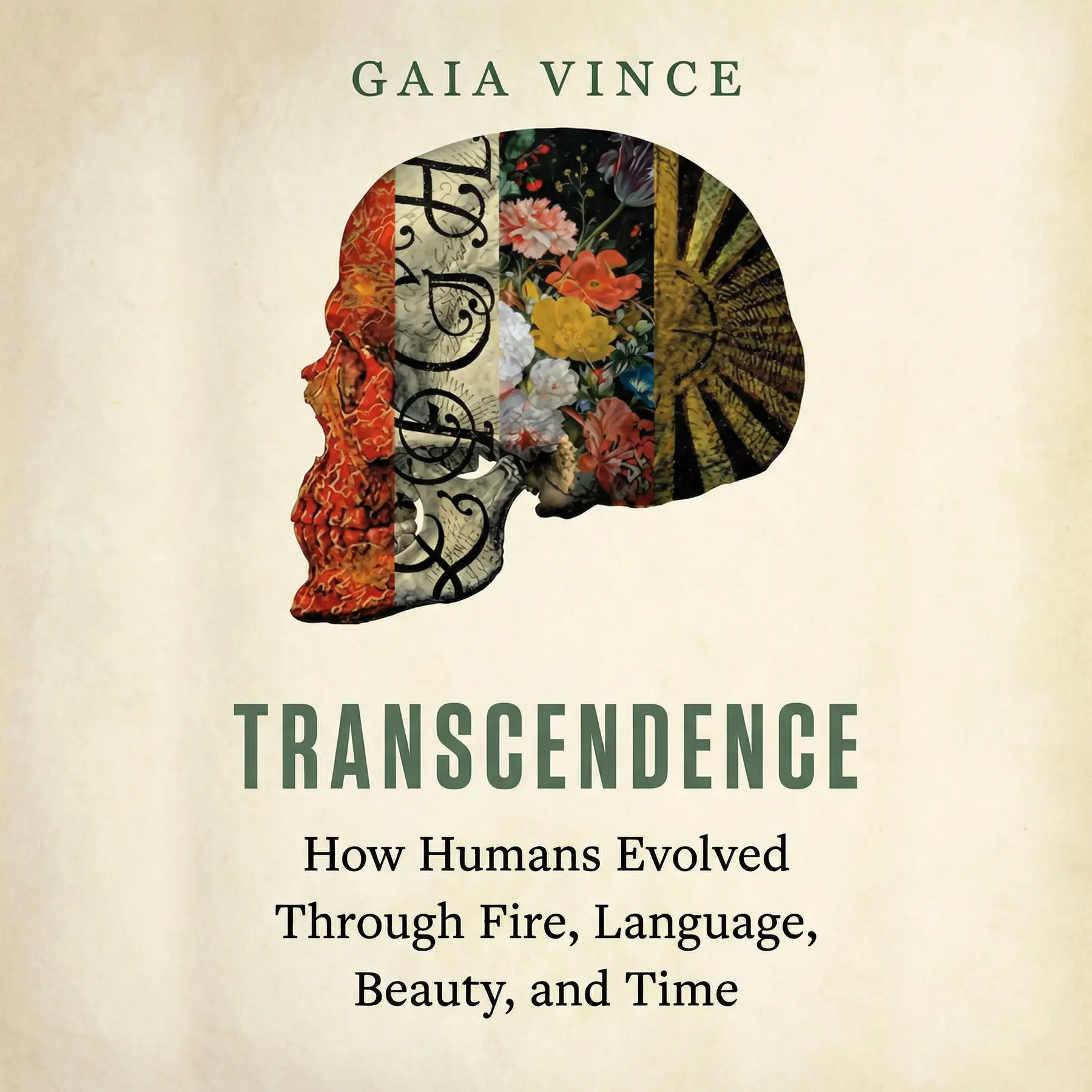
Transcendence: How Humans Evolved Through Fire, Language, Beauty, and Time
By Gaia Vince
Transcendence examines how the intersection of genetics, environment, and culture propelled humanity from simple primates to a globally dominant species through the mastery of fire, language, beauty, and the concept of time.
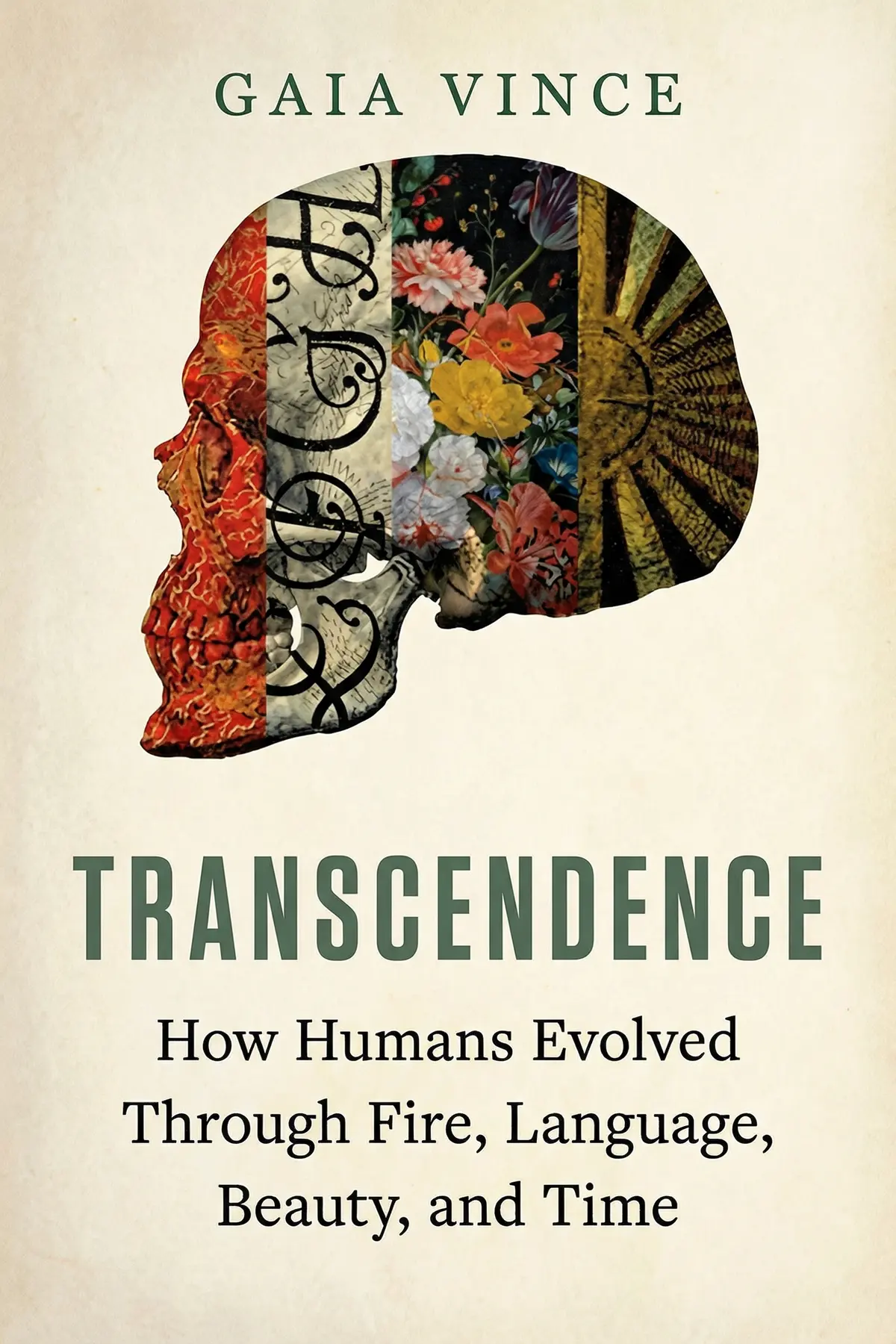
Table of Content
1. Introduction
1 min 44 sec
Imagine, for a moment, the world as it was several thousand years ago. Our ancestors were not the masters of the globe we see today. They were simply one species of mammal among many, trying to survive on the African savanna. They weren’t the fastest, the strongest, or the most well-equipped for combat. Yet, in what is a mere blink of an eye in geological terms, those same creatures have spread to every corner of the Earth, built massive cities, and even touched the stars. This transition from marginal animal to dominant force is what we call transcendence.
How did this happen? It wasn’t just a fluke of biology or a sudden burst of genius. Instead, it was the result of a powerful partnership between our surroundings, our DNA, and the shared knowledge we pass from one generation to the next. This summary explores this incredible journey by focusing on four specific forces that changed everything for us: fire, language, beauty, and time. These weren’t just inventions; they were fundamental shifts that allowed us to step outside the normal rules of evolution.
As we walk through these ideas, we’ll see that the story of humanity isn’t just a list of dates and battles. It’s a story of how we learned to outsource our digestion to flames, how we turned breath into complex information, how we used jewelry to build societies, and how we finally learned to map the future. By the end of this journey, you’ll have a new perspective on what it really means to be human and how we continue to reshape the world around us. Let’s begin by looking at the three-part engine that drives our species forward.
2. The Evolutionary Triad
2 min 38 sec
Humans are unique because we are shaped by a powerful feedback loop. Learn how our biology and culture interact with the environment to create something unprecedented.
3. The First Great Energy Shift
2 min 49 sec
Fire was more than just a source of warmth; it was a biological game-changer. Discover how the hearth paved the way for the growth of the human brain.
4. Connecting Minds Through Language
2 min 59 sec
Language did more than just allow us to talk; it allowed us to think together. Learn how storytelling became our most powerful survival tool.
5. The Social Power of Beauty
2 min 48 sec
Our obsession with aesthetics isn’t just vanity—it’s a fundamental part of human organization. Explore how beauty shaped trade and society.
6. Mastering the Fourth Dimension
2 min 50 sec
The ability to conceptualize the future changed the way we interact with reality. See how time-keeping turned into the engine of modern industry.
7. Conclusion
1 min 51 sec
In looking back at the long journey of Homo sapiens, it becomes clear that our survival was never guaranteed. We started as vulnerable creatures on the African savanna, but we possessed a unique advantage: the evolutionary triad. By combining our biological traits with the challenges of our environment and the power of our collective culture, we began to transcend our animal origins. We didn’t just adapt to the world; we began to invent the world we wanted to live in.
Through fire, we unlocked the energy needed to grow our brains and fuel our industries. Through language and storytelling, we learned how to link our minds together, creating a shared memory and a way to cooperate on a massive scale. Through beauty, we found the social signals and the spiritual motivation to build vast networks of trade and permanent cities. And finally, through our mastery of time, we learned how to plan for the future and organize our lives with scientific precision. Each of these pillars built upon the others, creating a feedback loop that has accelerated our progress at an incredible rate.
Today, we are more than just biological organisms. We are a global, interconnected species that has taken control of its own evolution. The tools we have created—from the first stone axe to the latest digital networks—are now an inseparable part of who we are. As we move into an uncertain future, the lesson of our history is that our greatest strength lies in our ability to innovate and cooperate. We have the power to reshape our planet, and with that power comes the responsibility to ensure that our continued transcendence leads to a world where we can all thrive. The story of humanity is far from over; it is a work in progress, and the next chapter is ours to write.
About this book
What is this book about?
How did a relatively weak mammal come to dominate the entire planet? Transcendence provides a deep dive into the unique evolutionary journey of Homo sapiens. Rather than crediting a single spark of intelligence, it argues that our success stems from a complex feedback loop between our physical environment, our biological evolution, and the collective knowledge we call culture. By examining four pivotal pillars—fire, language, beauty, and time—this summary illustrates how humans transcended their biological limits. You will discover how cooking reshaped our brains, how storytelling synchronized our minds, and how the pursuit of aesthetics and the measurement of time built the foundations of modern civilization. It is a story of how we became more than the sum of our parts, moving from the African savanna to a world of global networks and advanced technology.
Book Information
About the Author
Gaia Vince
Gaia Vince is an esteemed science journalist and broadcaster whose contributions have been featured in prominent publications such as Nature, Science, and New Scientist. She has received multiple awards for her insightful writing and is well-known for her book Adventures in the Anthropocene, which examines the profound human impact on Earth’s systems.
Ratings & Reviews
Ratings at a glance
What people think
Listeners consider this title to be an excellent listen that is both approachable and expertly authored. They value the educational depth, with one listener highlighting how the narrative shifted their outlook on the world in unexpected ways.
Top reviews
Hugo
Picked this up on a whim and was completely blown away by the scope of Gaia Vince’s vision. She manages to synthesize an enormous amount of knowledge into four distinct pillars: fire, language, beauty, and time. I found the section on how fire allowed us to 'outsource' our energy needs to be particularly enlightening, as it explains the biological leap toward our massive brains. Her writing style is remarkably fluid for such a dense subject, making complex evolutionary concepts feel like a gripping narrative. To be fair, some of the connections between beauty and economic exchange felt a bit ambitious, but the sheer originality of the synthesis kept me hooked. This is exactly the kind of 'big history' book that changes the way you look at a simple campfire or the words you speak. It feels like a definitive guide to what makes us uniquely human in a world governed by genetics.
Show moreJom
The chapter on beauty alone makes this worth the price of admission for any curious reader. Vince argues that our drive for aesthetic objects was a primary catalyst for economic exchange, which is a brilliant way to connect art and survival. I was also deeply moved by the descriptions of Australian Aboriginal songlines and how they serve as musical maps for navigation and survival. It’s rare to find a science journalist who can write with such empathy while still maintaining a focus on hard facts and data. Not gonna lie, I was worried this would be a dry read, but her storytelling is top-notch and kept me engaged through some of the more technical passages. She successfully shows how we have transcended our biological limits to become a species that determines its own destiny. This book really expanded my world view in surprising and delightful ways.
Show morePim
Wow. This is essentially a roadmap of how we hacked our own biology to become the most influential force on Earth. Gaia Vince writes with such clarity that even the most complex theories about cultural evolution become easy to grasp. I loved the way she connected the discovery of fire to the eventual development of metallurgy and modern cities; it makes our technological progress feel like an inevitable chain reaction. Truth is, I haven't been this excited about a science book since I first read The Selfish Gene years ago. The way she incorporates beauty and time as evolutionary drivers is both fresh and deeply intuitive. While the book is relatively short, it packs a massive punch and covers an incredible amount of ground without ever feeling rushed. It is a wonderful read that I’ll be recommending to everyone I know. Absolutely superb work by a world-class science journalist.
Show moreSaengdao
To be fair, I usually find anthropology a bit dry, but this reads more like a gripping narrative of our shared ancestry than a dusty academic text. Vince has this incredible ability to weave together disparate threads from archaeology, genetics, and sociology into a truly workable whole. I was especially struck by the discussion on 'shared attention' and how reciprocity is the foundation of human learning; it really put the importance of our social structures into perspective. While some critics argue that the themes are predictable, I found her specific focus on beauty as an economic catalyst to be a fresh and thought-provoking angle. The writing is fluid, the research feels expansive, and the overall message is one of profound hope for what we might become. It’s an informative, wonderful read that definitely expanded my worldview in ways I didn't anticipate when I first opened the cover.
Show moreChaiwat
As someone who devours 'big history' books like Sapiens, I found Transcendence to be a worthy addition to the shelf, even if it covers some familiar territory. Vince’s focus on the synergy between our genes and our culture is the real highlight here. I especially loved the details about assisted birthing and how our social nature evolved alongside our physiology. It’s fascinating to consider that our brains didn't just grow in a vacuum; they were fueled by the discovery of cooking and the cultural transmission of fire-making skills. Frankly, the narrative can be a bit repetitive if you’ve read a lot of anthropology, but her prose is so much more accessible than your average textbook. My only real gripe is that the chapter on time felt a little rushed compared to the deep dives into language. Overall, it is a very solid and informative read for anyone curious about our origins.
Show moreThitima
Finally got around to reading Gaia Vince, and her prose is remarkably fluid for such a dense and expansive subject. She has a real gift for taking massive archaeological findings and turning them into relatable human stories. I particularly enjoyed the discussion on 'shared attention' and how reciprocity is the foundation of how we learn to speak and interact. It’s an interesting way to present the human story, emphasizing that we are a collective intelligence rather than just individual geniuses. To be fair, I did notice the occasional lack of specific citations that other reviewers mentioned, which might bother the more academically inclined. But for a general audience, this is a fantastic piece of science communication that makes sense of our chaotic history. The book is short on political details, but it excels at explaining the biological and cultural feedback loops that made us who we are today.
Show moreRin
After hearing about Vince’s previous work on the Anthropocene, I had high hopes for this deep dive into our cultural evolution. For the most part, she delivers a compelling argument about how fire and language allowed us to escape the prison of genetic determinism. The sections on how we use stories to remember complex data—making information 22 times more memorable—really resonated with me as a reader. It’s a well-researched book, though I do wish there was a more comprehensive bibliography for those of us who want to dig into the primary sources. Some of her premises about early human migration felt a little speculative, but that’s the nature of archaeology to some extent. The tone is generally optimistic, focusing on our capacity to overcome obstacles through innovation and cooperation. It’s a very informative read that manages to be both educational and entertaining.
Show moreDuangjai
Ever wonder how humans actually became the dominant species on this planet despite being relatively weak primates? Gaia Vince attempts to answer this by looking at four major cultural catalysts, and for the most part, she succeeds in providing a readable overview. However, I felt like the book didn't offer many truly 'new' insights if you are already well-versed in the works of David Christian or Stephen Pinker. The ideas are organized well enough, but the lack of a chronological structure made the pacing feel uneven at times. In my experience, the middle sections on language and beauty were the strongest, while the beginning felt a bit like a retread of basic evolutionary biology. It is definitely a well-written account, and I appreciate the effort to bring so many disciplines together, but it didn't quite reach that 'magisterial' level for me. It's a good introductory text for newcomers to the genre.
Show moreMoo
Look, if you’ve already read Harari and Pinker, you might find this a bit redundant in terms of the actual facts presented. Most of the core concepts—like fire unlocking nutrients for brain growth—are fairly standard in the 'big history' genre these days. Gaia Vince is a talented writer, but I found the structure of the book a bit meandering, as it jumps between millennia without a clear through-line. Personally, I would have preferred more footnotes and a deeper dive into the history of ideas or philosophy, which seemed largely absent here. That said, it is a very easy read and would be a perfect resource for a college student or someone just starting to explore cultural anthropology. It’s a respectable effort to organize the vastness of human evolution, even if it feels a bit like a collection of interesting magazine articles rather than a unified theory.
Show moreHiroshi
Not what I expected after the glowing praise this book has received in science circles. While Gaia Vince clearly has a massive amount of knowledge at her fingertips, the presentation felt incredibly disjointed and often speculative. Truth is, I struggled with the lack of rigorous source references for some of her more ambitious claims about early hominid behavior. She meanders from point to point, occasionally making grand statements that felt more like pop-philosophy than hard evidence-based science. For a book that positions itself alongside heavyweights like Harari or Pinker, it simply doesn't have the same level of narrative cohesion or academic weight. I found the discursive writing style quite frustrating to follow, especially when the arguments jumped back and forth through time without a clear chronological anchor. It’s an interesting attempt at a 'big take' on humanity, but the execution left me wanting much more substance.
Show moreReaders also enjoyed
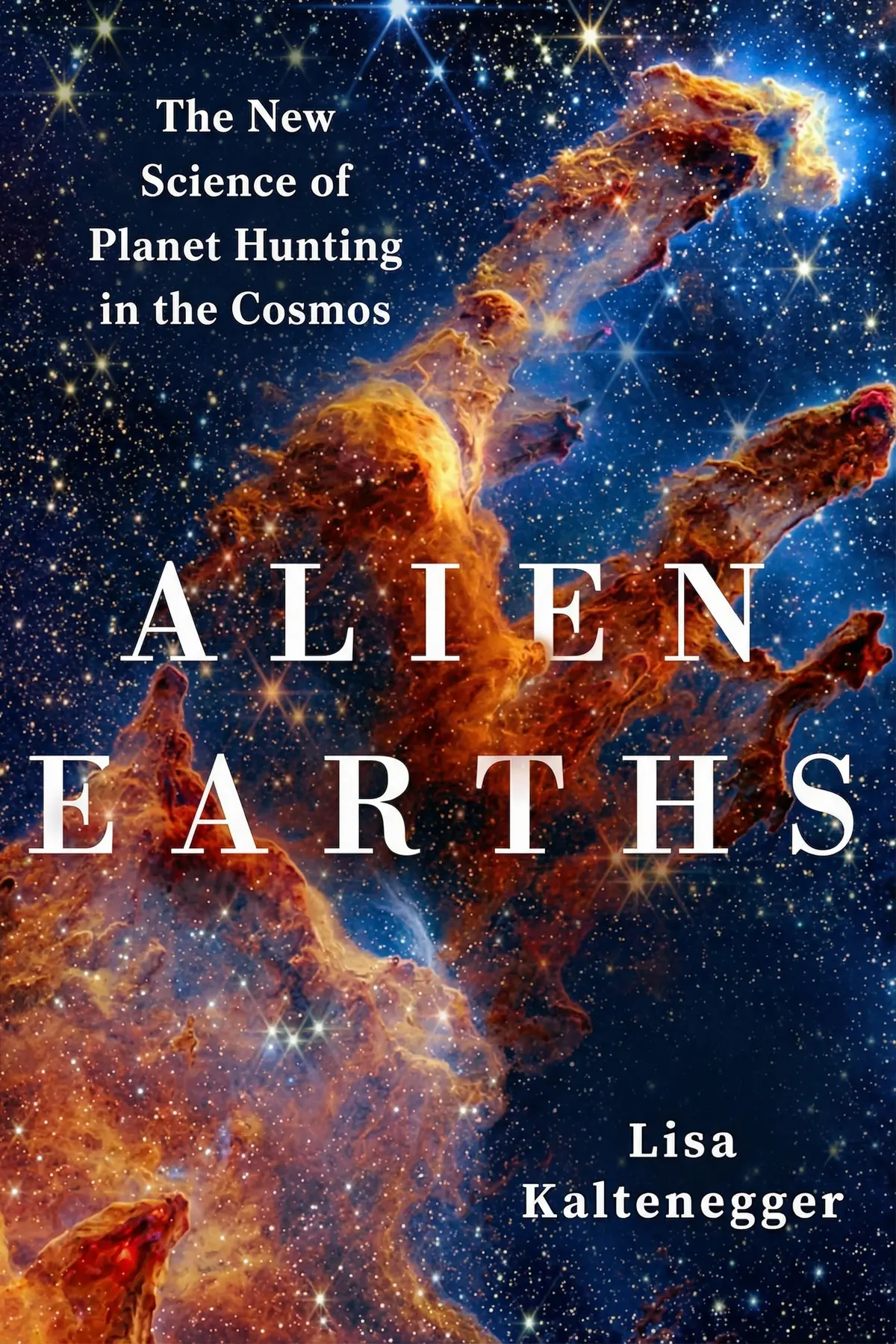
Alien Earths: The New Science of Planet Hunting in the Cosmos
Lisa Kaltenegger
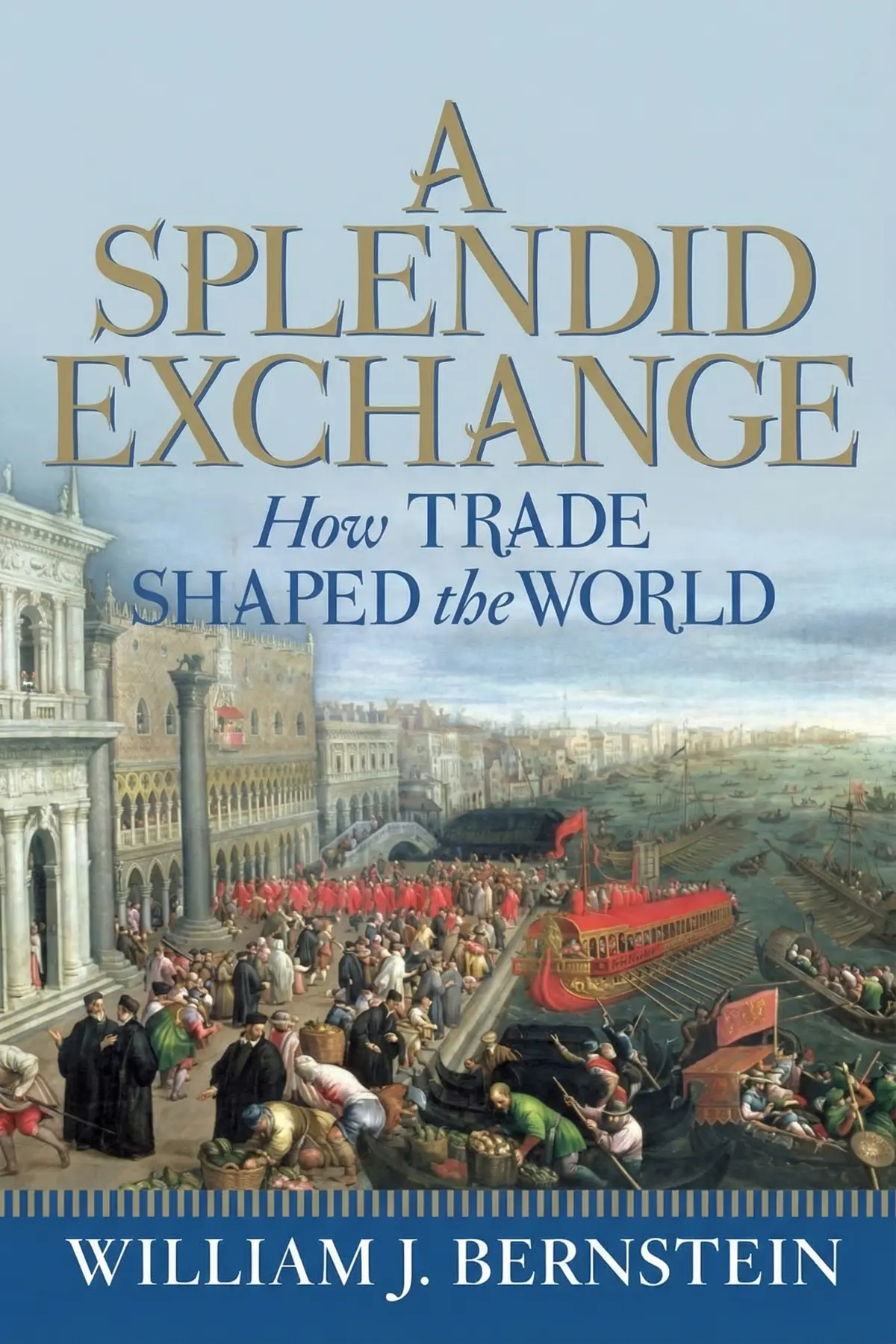
A Splendid Exchange: How Trade Shaped the World
William J. Bernstein

A Spy Among Friends: Philby and the Great Betrayal
Ben Macintyre


AUDIO SUMMARY AVAILABLE
Listen to Transcendence in 15 minutes
Get the key ideas from Transcendence by Gaia Vince, plus 5,000+ more titles in English and Thai.
- 5,000+ titles
- Listen as much as you want
- 7-day free trial
- Cancel anytime







