
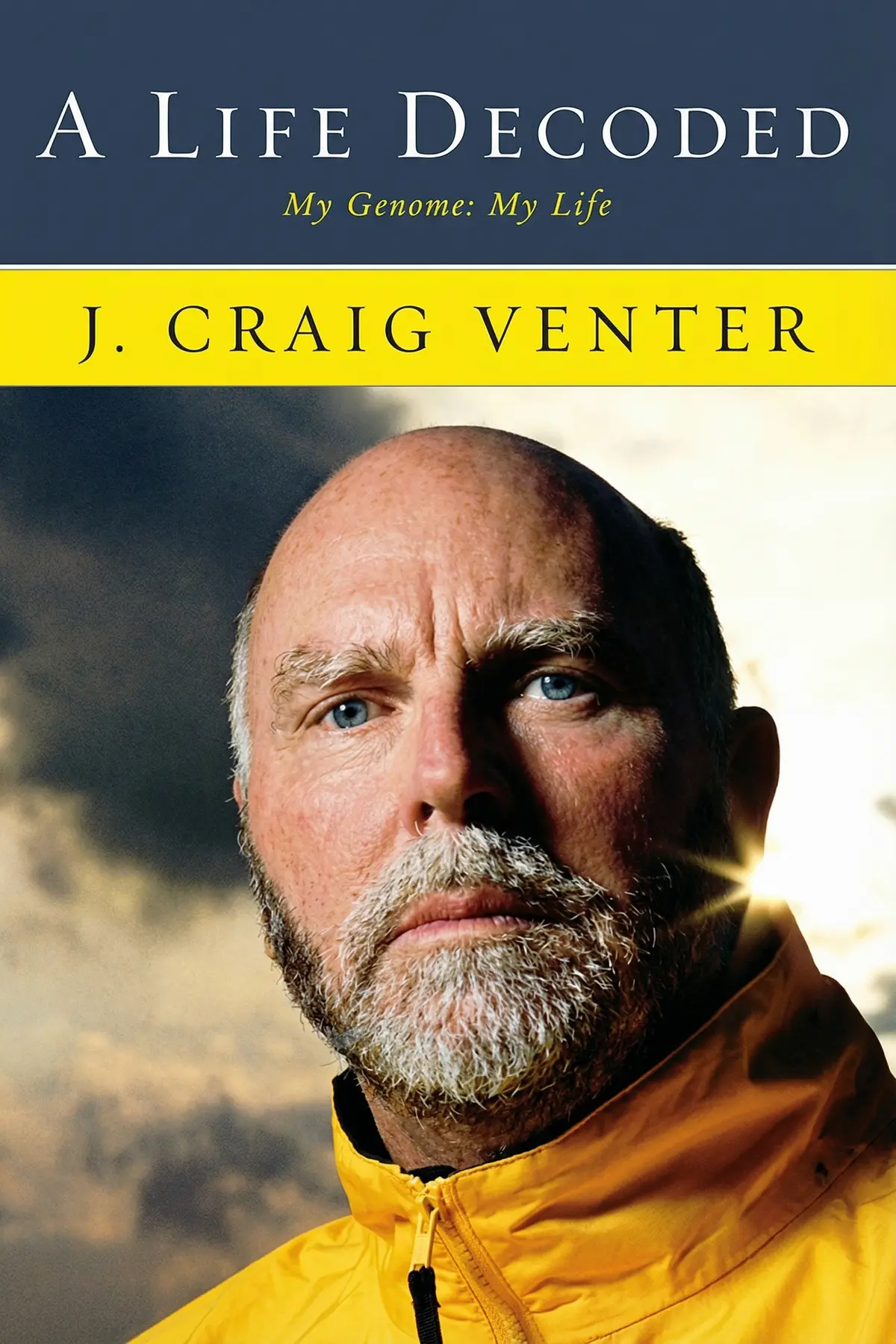
A Life Decoded: My Genome: My Life
J. Craig Venter
A foundational exploration of how life evolves through natural selection. Charles Darwin explains how slight variations over generations lead to the staggering diversity of species we observe across the globe today.
2 min 01 sec
When we think about the history of human thought, very few moments represent a total shift in how we perceive our reality. One of those moments occurred in the mid-nineteenth century with the publication of a work that would forever change the biological sciences. The theory put forward was bold, controversial, and meticulously supported by years of observation. It challenged the prevailing idea that every species on Earth was a fixed, unchanging entity, placed here exactly as we see it today. Instead, it proposed a world in constant, slow-motion flux, where life is a long, unbroken chain of modification.
This is the story of how life adapts, survives, and branches out into the incredible diversity we see around us. It is a story told through the lens of a naturalist who spent decades gathering evidence from the far reaches of the globe and the quiet corners of his own backyard. The central idea is one that remains the cornerstone of modern biology: natural selection. It is a simple mechanism with profound consequences. By understanding this process, we stop seeing nature as a collection of separate items and begin to see it as a vast, interconnected tree of life.
In this exploration, we are going to walk through the logical steps that led to this discovery. We will look at how humans have already been manipulating life for centuries through breeding and how nature performs a similar task on a much grander scale. We will dive into the mysteries of instinct, the puzzles of the fossil record, and the strange similarities in the skeletons of vastly different animals. By the end, you will see how these seemingly disparate facts align to form a single, elegant explanation for the origin and preservation of species. This isn’t just a book about science; it’s a guide to understanding the very engine of life on Earth.
2 min 18 sec
Humans have been reshaping the natural world for millennia. By examining the way we breed animals, we can uncover the basic principles of how life changes over time.
1 min 56 sec
Nature operates much like a master breeder, but its criteria for selection are based on survival and competition in a harsh and unforgiving world.
1 min 59 sec
Survival isn’t the only goal in nature; reproduction is equally vital. Traits that attract a mate can be just as important as those that help an animal find food.
2 min 10 sec
Nature is a complex web of checks and balances where no population can grow unchecked, leading to a grand, branching history of life.
2 min 27 sec
Where do the differences between individuals come from? Variation is driven by environmental conditions, the use of body parts, and the interconnected nature of growth.
2 min 14 sec
A theory as bold as evolution faces many questions. Why don’t we see transitional forms everywhere, and how can nature build something as complex as an eye?
2 min 18 sec
Evolution doesn’t just shape bones and fur; it also shapes behavior. Instincts and even the ability to breed are subject to the forces of natural selection.
1 min 59 sec
The fossil record is often cited as a challenge to evolution, but when we understand how rare fossilization is, it actually becomes a supporting piece of evidence.
1 min 57 sec
Why do certain animals only live in certain places? The way species are spread across the globe is a direct result of their history of migration and adaptation.
2 min 02 sec
The bones of a human hand, a mole’s paw, and a bat’s wing all share the same basic structure. This hidden similarity is the ‘smoking gun’ of common descent.
2 min 03 sec
As we reach the end of this journey through one of the most transformative ideas in human history, it is worth taking a moment to reflect on the sheer scale of what we’ve discussed. We began by looking at the small, manageable world of pigeon breeding and domestic dogs, seeing how easily life can be molded. From there, we scaled up to the grand, pitiless theater of natural selection, where every variation is a potential tool for survival. We saw how the struggle for existence and the drive to reproduce act as a constant pressure, carving out the specialized features of every creature on Earth.
We’ve also seen how this theory provides a single, unified explanation for things that once seemed like separate mysteries. It explains why the fossil record is so fragmented, why animals are distributed the way they are across the globe, and why a bat’s wing shares the same bones as a human hand. Instead of a world of static, disconnected objects, we are left with a vision of a world that is vibrant, interconnected, and deeply old. It is a world where every living thing is a relative, and every species is a success story in an ongoing saga of survival.
This perspective doesn’t diminish the beauty or the wonder of life; if anything, it enhances it. There is a profound grandeur in the idea that from a few simple forms, or perhaps just one, an endless variety of the most beautiful and wonderful creatures have been, and are being, evolved. It teaches us that change is not just possible; it is the very essence of life. As you look out at the natural world, whether it’s a bird in a tree or a pet on your lap, remember that you are looking at the result of millions of years of resilience and adaptation. We are all part of the same great tree, and the story of our origins is still being written in every new generation.
This summary explores the revolutionary concepts presented in one of the most significant scientific books ever written. It delves into the mechanics of how species change over time, moving away from the idea of static creation toward a dynamic process of descent with modification. By looking at everything from the breeding of domestic pigeons to the complex structures of the human eye, the text explains how nature acts as a selective force, preserving beneficial traits and allowing new forms of life to emerge and diversify. Listeners will gain a deep understanding of the struggle for existence and how competition for resources drives evolutionary change. The narrative also addresses common objections to the theory, such as the perceived gaps in the fossil record and the complexity of animal instincts. Ultimately, the work provides a unified framework for understanding the geographical distribution of life and the anatomical similarities shared by seemingly unrelated creatures, promising a new perspective on our place in the natural world.
Charles Darwin (1809–1882) was a prominent English geologist and naturalist. He is world-renowned for his monumental contributions to the field of evolutionary biology. In recognition of his extensive scientific work, specifically his detailed studies of geological formations and fossils, the Royal Society honored him with the Royal Medal in 1853. Today, his legacy is commemorated in Westminster Abbey, where he is buried in close proximity to the grave of the legendary physicist Isaac Newton.
Listeners find that although some feel the extensive scientific minutiae can sometimes be a "slog," most value the book’s massive influence on the field of science and its unexpectedly readable writing style. Furthermore, they are struck by Darwin’s polite and systematic approach, especially his readiness to openly discuss possible weaknesses in his own hypotheses. Additionally, listeners admire the vast array of biological observations provided, with one listener mentioning that the author's patient explanations of species—ranging from common pigeons to island-dwelling bats—remain intellectually stimulating and deeply respectful of the natural world.
Wow, I didn’t expect a 19th-century science book to be this readable or this deeply humble. Instead of being an arrogant manifesto, it reads like a long, polite conversation with a man who has spent his entire life looking at beetles and barnacles. The chapter on the instincts of honeybees and the "struggle for existence" gave me a whole new perspective on the natural world around us. Truth is, his descriptions of how species adapt to their environments are almost poetic at times, proving he was a naturalist who truly loved his subjects. It's a monumental piece of history that still feels fresh, even if we’ve refined the genetics since his day. Everyone should read this at least once to see where our modern understanding of life truly began.
Show moreEver wonder how a book could change the entire world? After finishing this, I totally get it because Darwin’s logic is just so persistent and grounded in reality. The way he discusses how bats can reach remote islands while other mammals can't was a total "lightbulb" moment for me. He doesn't just throw out big ideas; he builds them brick by brick using everything from the migration of seeds to the shape of bird beaks. What struck me most was his civil tone, as he treats his opponents with far more respect than most people do on the internet today. It’s a masterclass in how to present a radical idea without being a jerk about it. I feel like I finally understand the "theory of descent with modification" in its original, purest form.
Show moreFinally got around to reading this and I’m blown away by how Darwin uses metaphors to make complex biological processes understandable for the average person. His comparison of the "tree of life" is such a powerful image that it still defines how we think about ancestry today. I loved the parts where he admits his own confusion or lack of data, particularly regarding how complex organs first started to form. It’s rare to find a scientist so willing to show his work, including the parts he hasn't fully solved yet. The book is definitely long, and the scientific names can be a bit much, but the payoff is a deep appreciation for the interconnectedness of all living things. It truly makes the natural world feel like one giant, unfolding story.
Show moreIt’s actually quite humbling to read the thoughts of a man who was essentially rewriting the rules of biology as he went along. Darwin’s "Origin of Species" is much more than just a science book; it’s a testament to the power of observation and patient reasoning. I was particularly impressed by how he handled the "transitional forms" problem, admitting it was a major hurdle but explaining why the fossil record is naturally incomplete. The prose is surprisingly accessible if you give it the time it deserves, and the final paragraph is one of the most beautiful pieces of writing in scientific literature. Even with the parts that are now scientifically dated, the core logic remains incredibly robust. It’s a fascinating journey into the mind of a genius who wasn't afraid to follow the evidence wherever it led.
Show moreCharles Darwin is far more patient than I anticipated, especially considering how many critics he was likely expecting at the time. He spends a massive amount of focus on pigeon breeding to explain variation, which feels like a slow burn but effectively builds his case. Frankly, the writing is surprisingly clear for a Victorian scientific text, though some sections on botanical classification definitely tested my attention span. I appreciated how he addressed the potential holes in his own theory regarding the lack of intermediate fossils. It shows a level of intellectual honesty that you rarely see in modern debates between science and faith. While the pace can be a bit of a slog, the way he connects small changes to the massive web of life is undeniably brilliant. It is a foundational text that remains intellectually stimulating over a century later.
Show moreTo be fair, this isn’t exactly a page-turner that you’d take to the beach for a light afternoon read. Darwin’s prose is methodical and incredibly detailed, which is great for science but can make for a heavy slog during the middle chapters. I found myself getting a bit lost in the endless lists of species and geological data, yet I couldn't help but admire the sheer breadth of his research. Not gonna lie, I was surprised by how much he didn't know—like DNA or the actual age of the Earth—and yet he still managed to get the big picture mostly right. It is a fascinating look into a mind that was trying to solve the greatest puzzle of biology without the modern tools we take for granted. Recommended for those with patience.
Show moreAs a biology student, I felt like I had to read the source material eventually, and I’m glad I finally took the plunge. The depth of Darwin’s observations is staggeringly impressive, especially when you realize he was doing this all through letters and physical specimens. I particularly enjoyed the sections on how physical barriers like mountain ranges or oceans create distinct pockets of variety among similar creatures. My only real complaint is that the writing style is very dense and Victorian, which requires a lot of focus to get through without your eyes glazing over. However, seeing him grapple with the "imperfection of the geological record" makes the whole theory feel much more human and less like a finished dogma. It’s a vital read for anyone interested in the history of ideas.
Show moreWhile I respect the legacy this book created, I found the actual reading experience to be incredibly repetitive and somewhat exhausting. Darwin tends to make a point and then provide twenty different examples of the same phenomenon from different corners of the globe. Personally, I think the first few chapters and the conclusion are the real meat of the argument, while the rest feels like a dense catalog of 19th-century naturalism. It’s also hard to ignore the gaps where he struggles to explain the actual mechanisms of heredity, which we now know are governed by genetics. If you're looking for a quick summary of evolution, you're better off with a modern textbook, but for history buffs, it has its moments. It’s an important book, just not a particularly fun one.
Show moreLook, the historical significance of this work is a five-star achievement, but as a reading experience, it's a solid three. Darwin is a product of his time, and that means lots of long, winding sentences and an obsession with every tiny variation in pigeon feathers. I struggled to stay engaged during the more technical chapters on hybridism and geographical distribution, which felt like they could have been edited down significantly. It’s also a bit distracting to read his theories on inheritance knowing what we now know about Mendel and DNA. You can see him dancing around the answer without quite being able to grasp it. It's a foundational text that deserves its place on the shelf, but it's definitely a "one and done" kind of book for me.
Show moreI’m just not seeing the logic here, no matter how many times he talks about his domestic pigeons or fancy garden plants. Darwin spends hundreds of pages making excuses for why he can't actually show us a single species turning into another in real time. He calls it "natural selection," but to me, it looks like a lot of grand assumptions built on top of tiny observations that don't actually prove macroevolution. In my experience, the complexity of the human eye or a bird's wing points to something much more intentional than a random struggle for survival. He is very polite, I'll give him that, but being polite doesn't make a theory true when it still lacks the hard evidence to back up such world-changing claims. I'll stick to a more traditional view of our origins.
Show moreJ. Craig Venter
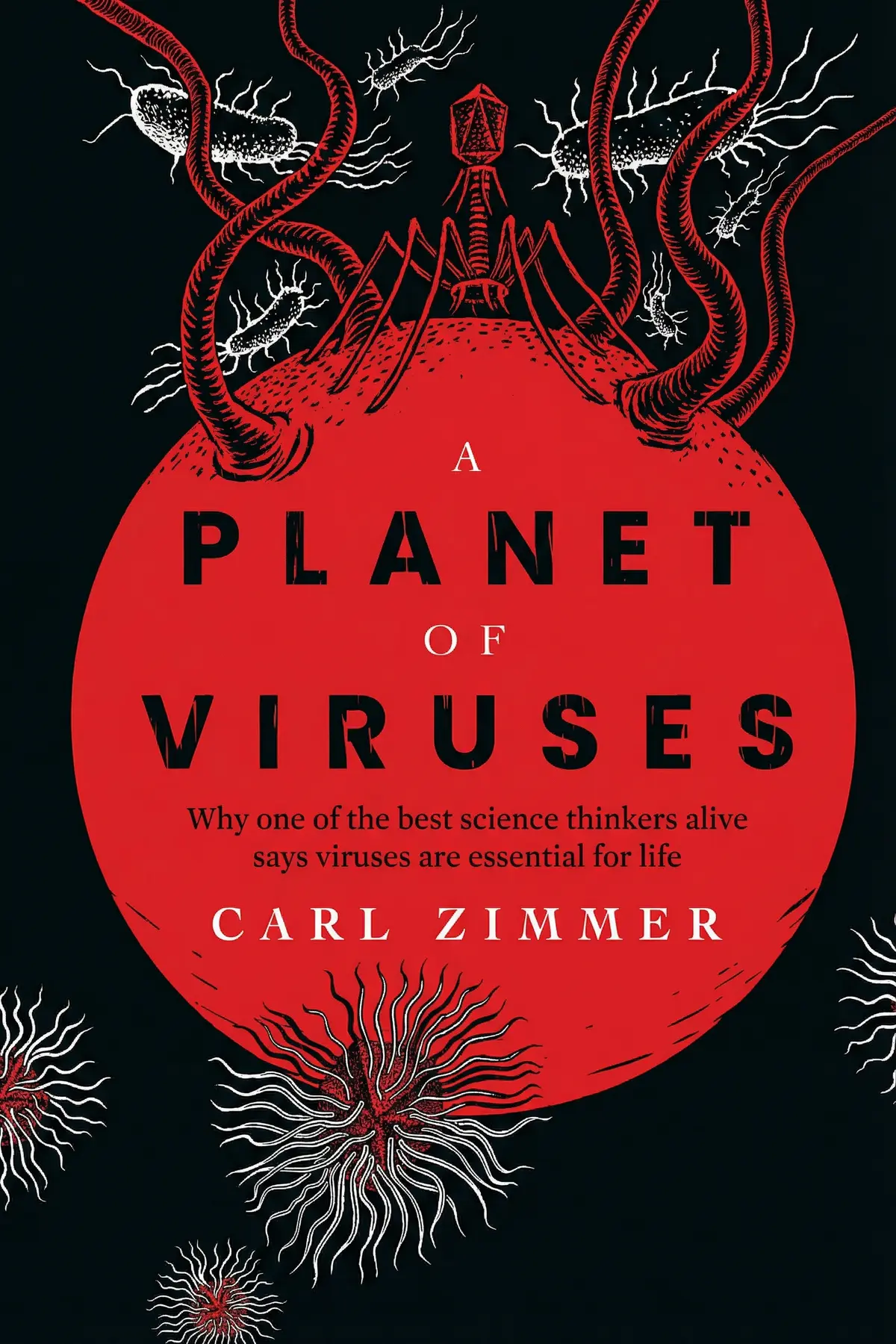
Carl Zimmer
Bill Bryson
Jeff Hawkins
Lisa Kaltenegger
AUDIO SUMMARY AVAILABLE
Get the key ideas from On the Origin of Species by Charles Darwin, plus 5,000+ more titles in English and Thai.







