
Blink: The Power of Thinking Without Thinking
Malcolm Gladwell
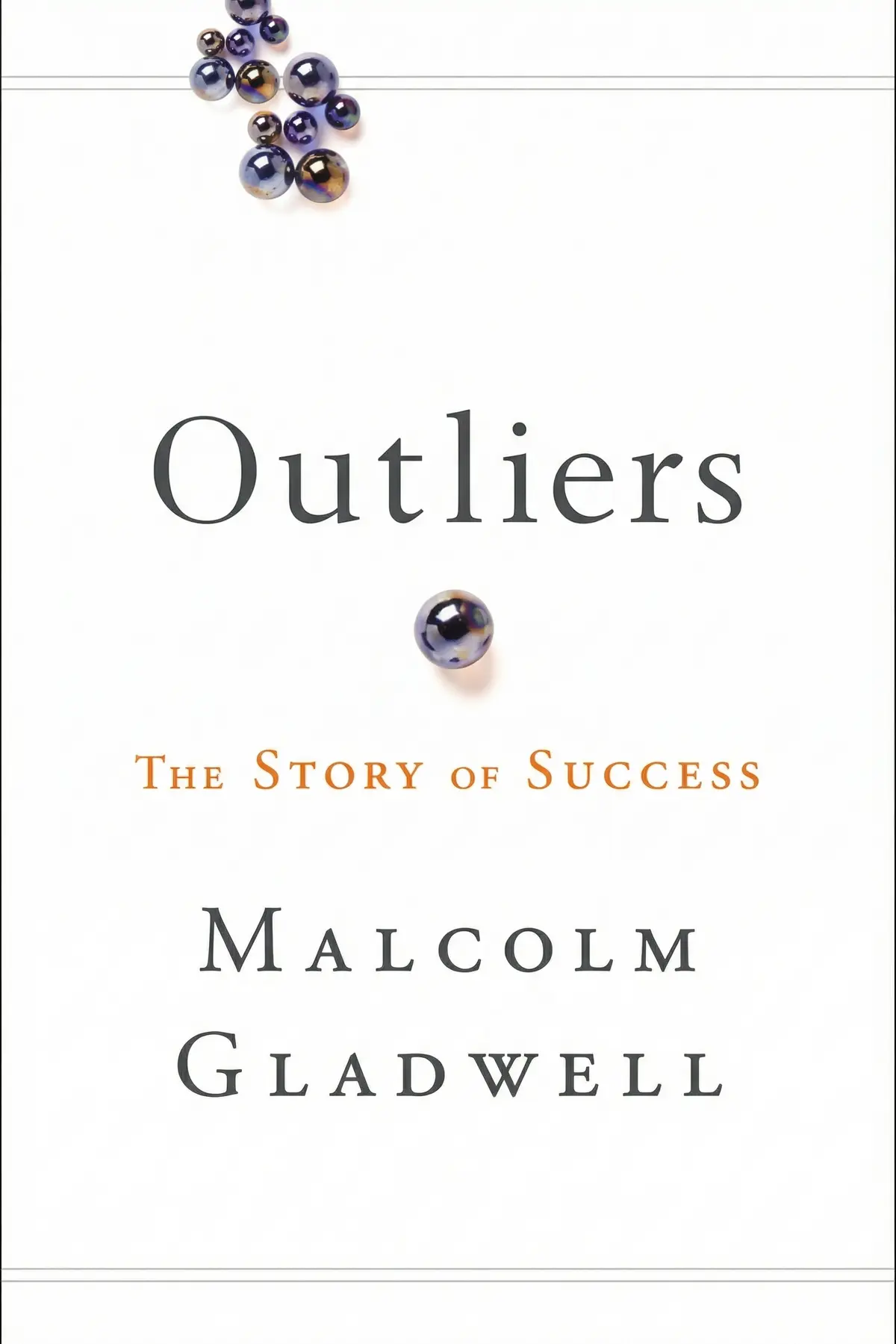
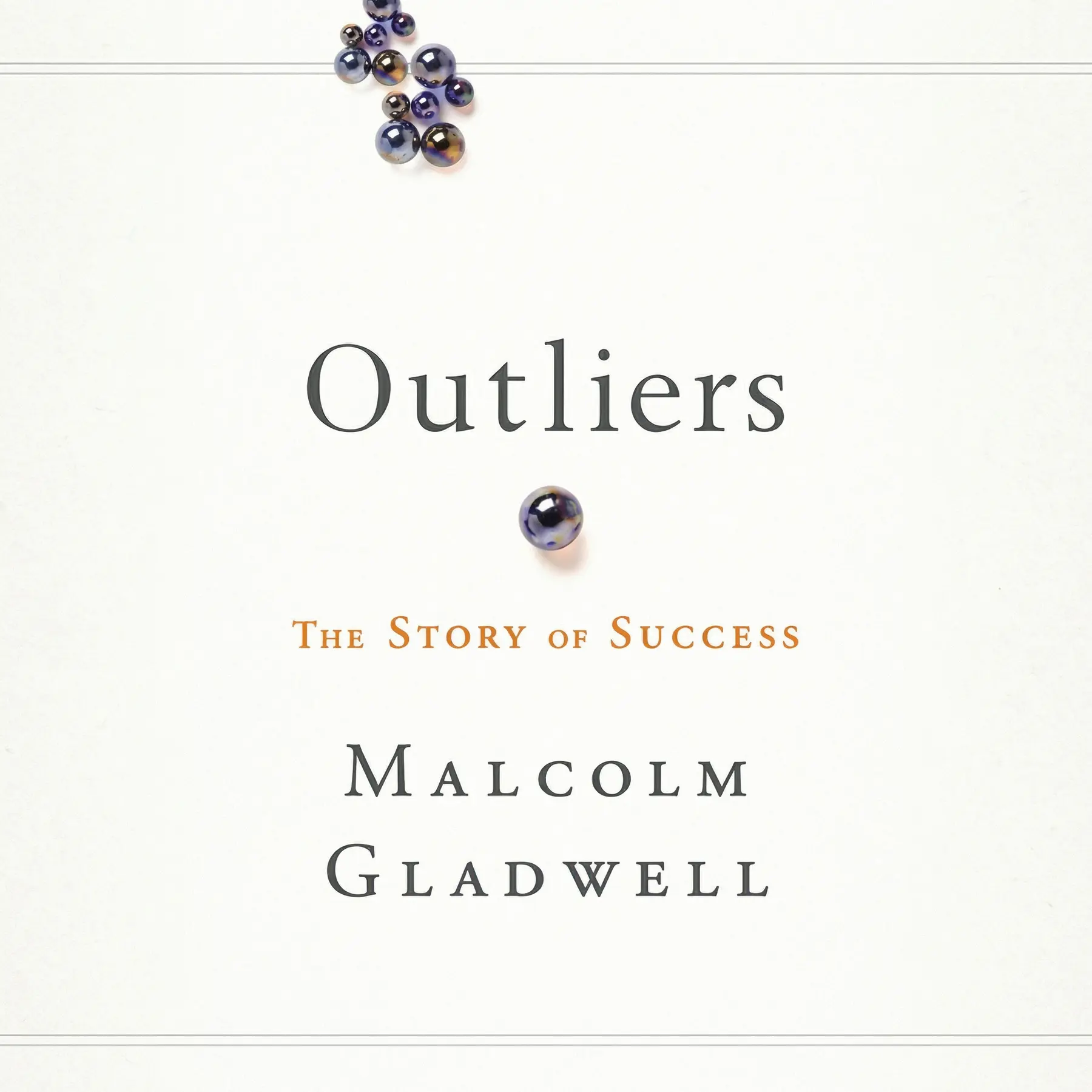
Explore the hidden forces behind extraordinary success, from cultural legacies to the timing of one's birth, challenging the myth that talent and hard work are the only ingredients for greatness.
1 min 38 sec
When we look at the giants of industry, the icons of music, or the superstars of professional sports, our first instinct is usually to marvel at their individual brilliance. We tell ourselves that these people are simply cut from a different cloth. We imagine they possessed a drive that others lacked or a raw talent that was destined to flourish. This narrative is deeply comfortable because it suggests that success is a simple equation of merit and effort. It’s the classic story of the self-made individual who rises from nothing through sheer force of will.
But what if that story is mostly wrong? What if the most successful people in our society are not self-made at all, but are instead the products of a specific set of circumstances that were completely out of their control? This is the central provocation we are going to explore. We’re going to look at the concept of the “outlier”—those people who sit so far outside the normal range of achievement that they seem like a different species altogether.
To understand these individuals, we have to look past their personalities and their IQ scores. We have to look at their birthdays, their family trees, and even the history of the countries where their ancestors lived. We’ll see how a few months’ difference in age can determine who becomes a professional athlete and who doesn’t. We’ll discover why being born in 1955 was a requirement for becoming a billionaire in the personal computer revolution. Most importantly, we will see that by understanding the true roots of success, we can stop waiting for geniuses to appear and start building the environments that allow them to grow. Success isn’t just about what you are; it’s about when you were born, where you grew up, and how much time you were given to practice your craft.
1 min 55 sec
Individualism is a cornerstone of modern culture, but attributing greatness solely to personal merit ignores the massive impact of family history and social status.
1 min 57 sec
Having a high IQ or great height is necessary to enter certain fields, but once a threshold is reached, extra talent stops providing an advantage.
1 min 55 sec
Incredible skill is less about innate genius and more about the rare opportunity to log thousands of hours of intense practice before adulthood.
1 min 46 sec
Small differences in relative age at a young age can lead to massive disparities in success due to how systems of selection work.
1 min 49 sec
The way children are raised significantly influences their ability to negotiate with authority and advocate for their own interests in adulthood.
1 min 38 sec
Extraordinary achievement often depends on being at a specific stage of life during a period of massive economic or technological change.
1 min 40 sec
Our ancestral backgrounds can instill specific work ethics and cognitive patterns that persist long after the original environment has changed.
1 min 48 sec
Cultural traditions regarding authority can have life-or-death consequences, as seen in the history of aviation safety and communication.
1 min 31 sec
The story of success is rarely what it seems. Throughout this journey, we have seen that the outliers of our world—the people who reach the very pinnacle of achievement—are not just the products of their own talent or ambition. They are the products of a complex web of history, culture, timing, and opportunity. We’ve seen that being born in the right month can give a hockey player a lifelong advantage, that being born in the right year can make a billionaire, and that the traditions of our ancestors can shape our ability to solve a math problem.
This realization might feel discouraging at first, as if success is just a lottery that we either win or lose at birth. But there is a much more hopeful lesson here. If we acknowledge that success is built on opportunity, then we have the power to create more of it. We don’t have to leave success to chance. We can change the way we organize our schools to account for the birth-month gap. We can build programs like the KIPP Academy that provide children from disadvantaged backgrounds with the 10,000 hours of support and practice they need to catch up.
When we stop looking at success as a solitary triumph and start looking at it as a community project, everything changes. We realize that an outlier isn’t just a person who worked hard; it’s a person who was given a chance and had the presence of mind to take it. The most important thing we can do is to stop waiting for talent to emerge on its own and start building a world where everyone has the chance to put in their 10,000 hours. Success is not a gift; it is a legacy we build together.
Why do some people achieve so much more than others? While we often credit individual talent and grit, this exploration into the world of high achievers suggests that the story of success is far more complex. It reveals that the most successful people—the outliers—are often the beneficiaries of hidden advantages, extraordinary opportunities, and cultural legacies that allow them to learn and work in ways others cannot. By examining everything from the birth dates of professional hockey players to the ancestral traditions of rice farmers, this summary provides a new framework for understanding achievement. It shifts the focus away from what a person is like and toward where they came from and the specific timing of their life. Ultimately, it offers a roadmap for how we can restructure our schools and organizations to create more opportunities for everyone to succeed, rather than leaving greatness to chance.
Malcolm Gladwell is a distinguished staff writer for the New Yorker magazine and a renowned author. He began his professional journey in journalism as a reporter for the Washington Post, where he specialized in business and science coverage. In 2005, his influence was recognized globally when he was named to Time Magazine’s list of the 100 Most Influential People. Gladwell has authored several bestsellers, including The Tipping Point and Blink, and is celebrated for his ability to synthesize complex sociological and psychological research into engaging narratives.
Malcolm Gladwell
Malcolm Gladwell
Listeners describe this work as compelling and stimulating, prompting reflection on their own lives as they examine achievement through intriguing real-world examples. Furthermore, the material is accessible and moves at a fast pace, backed by thorough investigation and captivating insights. Listeners also value the author's approach, with one listener pointing out the understated prose and another emphasizing how well-written the case studies are.
This book completely reframed how I view success and achievement in our society. Gladwell argues that we focus too much on the individual and not enough on the circumstances that allow talent to flourish. The data about Canadian hockey players and their birth months was a total "aha" moment for me. It makes so much sense that the oldest kids in a cohort get the most coaching and attention, creating a self-fulfilling prophecy of excellence. While the 10,000-hour rule is a bit of a generalization, the core message about the necessity of opportunity is undeniable. It’s a quick, punchy read that challenges the American myth of the self-made man. I did find the lack of female examples a bit disappointing, but the overall thesis is still incredibly powerful and humbling.
Show moreAfter hearing so much about the 10,000-hour rule, I finally decided to dive into the source material. It's much more nuanced than the "practice makes perfect" mantra you hear on social media. Gladwell doesn't just say work hard; he says you need the opportunity to work hard for that long without the burden of survival. The story of the Beatles playing eight-hour sets in Hamburg was such a vivid illustration of this point. They weren't just talented; they were forced to practice more than any of their peers. This book is a page-turner that makes you look at your own life and the "lucky breaks" you might have taken for granted. It’s deeply engaging, even if you don't agree with every single conclusion he draws about cultural legacies.
Show morePicked this up on a whim and ended up finishing it in two sittings because the prose is just so fluid. I was particularly fascinated by the "culture of honor" section involving the Scotch-Irish in the American South. It explains so much about regional temperaments and the persistence of certain social behaviors over centuries. Gladwell has this unique ability to take a tiny, seemingly insignificant detail and expand it into a grand theory of everything. While some critics say he overgeneralizes, I think the value lies in the way he encourages us to look beyond the individual. We aren't just the sum of our choices; we are the products of our ancestors, our birth dates, and our environments. This is a must-read for anyone who feels like the "meritocracy" isn't quite what it's cracked up to be.
Show moreThe truth is that we love the myth of the "self-made man" because it makes us feel like we have total control. Gladwell deconstructs this myth with such elegance that you can't help but feel a bit more empathetic toward those who haven't "made it." By highlighting how success is often a matter of being the right age during a tech boom or having the right parents, he shifts the focus from blame to structure. I found the story of Chris Langan, the man with the 195 IQ who didn't succeed, to be the most moving part of the book. It proves that without the right social support, even the most brilliant mind can go to waste. This is an important book that asks us to build a fairer society rather than just praising the lucky few.
Show moreEver wonder why some people seem to skyrocket to the top while others with equal talent stall out? Gladwell explores this by looking at "outliers"—those who exist outside the normal curve of achievement. I found the section on Bill Gates particularly enlightening because it highlights how his proximity to a computer lab in the 1960s was just as vital as his raw intellect. It turns out that genius alone isn't enough; you need the right time, the right place, and a healthy dose of luck. The writing is incredibly fluid and conversational, which makes complex sociological ideas feel accessible to a casual reader. My only real gripe is that the connections sometimes feel a bit too convenient, as if he's smoothing over the messy parts of reality to fit a neat narrative. Still, it’s a fascinating look at the hidden logic behind who wins and why.
Show moreAs someone who works in education, the chapter on the achievement gap and summer vacation really struck a chord. Gladwell’s analysis of the KIPP schools suggests that the problem isn't the kids or the curriculum, but the "summer slide" where poor students lose ground while wealthy ones stay engaged. It’s a sobering look at how our structures often fail the very people they are supposed to help. The prose is clean and rhythmic, making it easy to breeze through the chapters in a single afternoon. I do think he oversimplifies the role of IQ, basically dismissing it once you hit a certain threshold, which feels a bit reductive. However, the focus on "practical intelligence" and knowing how to navigate social systems is a vital contribution to the conversation.
Show moreTo be fair, Gladwell isn't trying to write a peer-reviewed academic paper; he's telling a compelling narrative about our world. The book functions like a series of interconnected dots that reveal a picture we often refuse to see. I loved the breakdown of how "merit" is often just a result of accumulated advantage, like the hockey players who get better coaching simply for being born in January. It’s a heavy blow to the ego of anyone who thinks they made it entirely on their own, but it’s a necessary perspective. Some of the chapters, like the one on the "rice paddy" work ethic, felt a bit like he was forcing a square peg into a round hole. However, the overall readability and the way he summarizes his points make it a very satisfying experience.
Show moreFinally got around to reading this and I was surprised by how much the "culture of honor" section resonated with my own family history. Gladwell explores the idea that our ancestors' livelihoods—like herding versus farming—shape our reactions to conflict even generations later. It’s a bold claim, and while I’m not sure it explains everything, it certainly provides a fresh lens for looking at social dynamics. The book is filled with these kinds of provocative insights that make you want to pause and discuss them with whoever is nearby. It’s remarkably reader-friendly and lacks the dry, academic jargon that usually plagues sociology books. While he definitely cherry-picks his case studies to fit his themes, the underlying message about the power of our environment is hard to ignore.
Show moreWow, I enjoyed the ride, but I can't help but feel there’s a massive blind spot regarding women in this book. Almost every single "outlier" featured is a man—Bill Gates, Joe Flom, the Beatles, Bill Joy—while women are relegated to the sidelines as mothers or minor characters. It’s a glaring omission that makes the book feel a bit dated and narrow in its scope. That said, the chapter on Korean Air and the "culture of deference" was absolutely fascinating and terrifying at the same time. It illustrates how communication styles rooted in cultural history can have life-or-death consequences in the modern world. Gladwell is undeniably talented at making you think about the world in a different way, but his methodology is often too sloppy for my taste. It's good for a cocktail party, but maybe not for a classroom.
Show moreLook, Gladwell is a master storyteller, but the actual science here feels incredibly cherry-picked and flimsy. He starts with an interesting premise—that success is tied to luck and culture—but then he stretches it to the breaking point with shaky anecdotes. The claim that Asians are better at math specifically because of a cultural history of rice farming felt like a massive leap of logic that ignored a hundred other variables. He presents these ideas as if they are settled facts, yet he rarely provides a truly systematic review of the conflicting research. It’s entertaining as a collection of New Yorker-style essays, but as a serious social theorist, he falls flat for me. I wanted to be convinced, but instead, I found myself arguing with his "just-so" stories on every other page. It’s pop-psychology at its most superficial.
Show more
Richard Wiseman
Robin Ryan
Steven C. Hayes
AUDIO SUMMARY AVAILABLE
Get the key ideas from Outliers by Malcolm Gladwell, plus 5,000+ more titles in English and Thai.







