
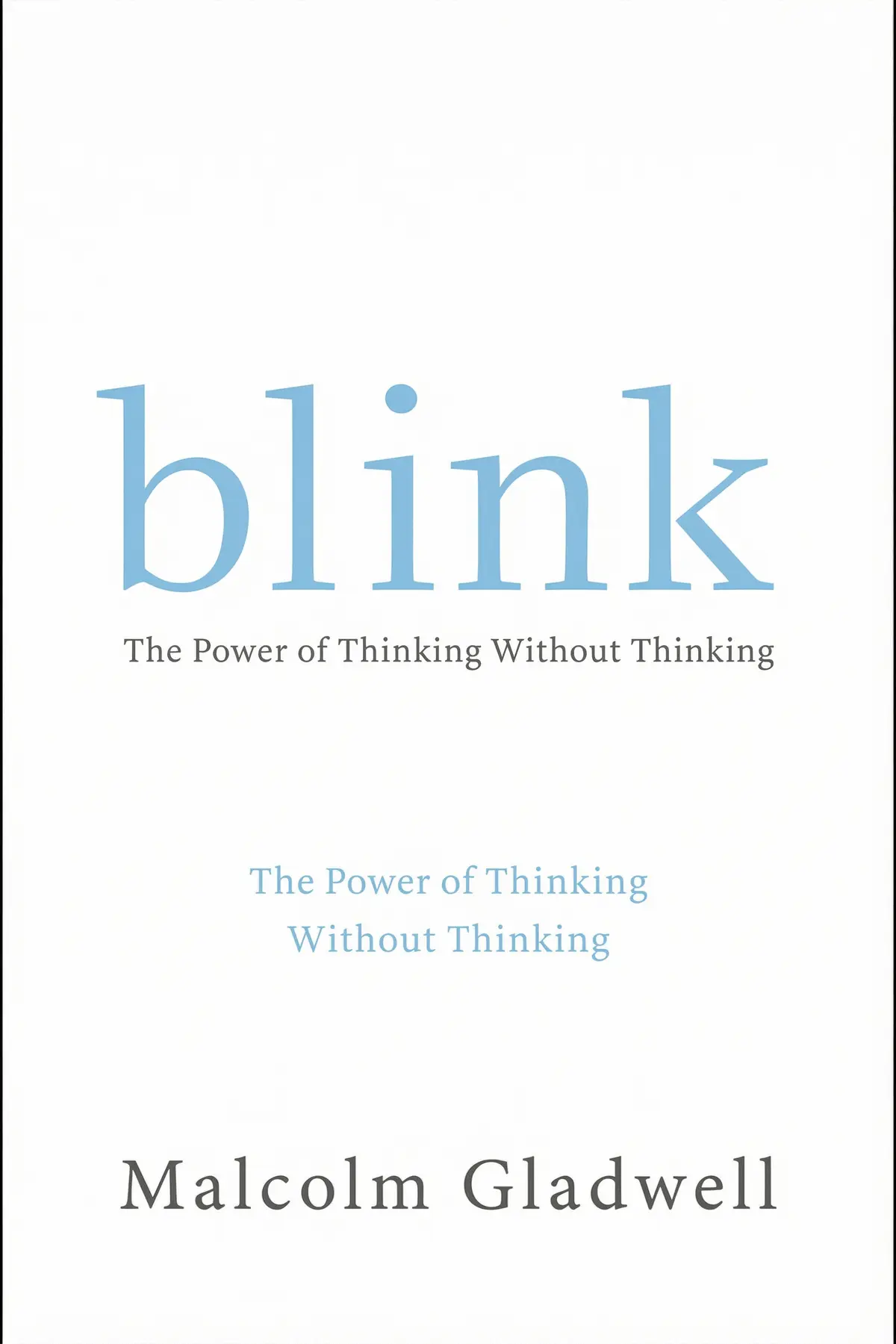
Blink: The Power of Thinking Without Thinking
Malcolm Gladwell
A deep exploration of how modern social engineering and hidden environmental factors drive the sudden, often explosive spread of behaviors and ideas, reconsidering the mechanisms that push society to its tipping point.
1 min 52 sec
In the year 2000, a book arrived that fundamentally shifted how we view the world around us. It suggested that ideas, products, and behaviors could spread with the same explosive logic as a biological virus. It introduced us to the ‘Tipping Point,’ that magic moment when a trend crosses a threshold and becomes an epidemic. But the world has changed significantly since those early observations. We have moved from an era of accidental trends to an era of deliberate social engineering.
In this exploration of the forces that drive our society, we are looking at the evolution of these concepts. This isn’t just a sequel; it’s a necessary recalibration. We live in a time where our environments are more connected, our data is more precise, and our understanding of human behavior has become a tool for both good and ill. The central question we are tackling today is why certain phenomena take hold in specific places while failing everywhere else. Why did a specific type of crime thrive in Los Angeles but stay dormant in San Francisco? Why do certain neighborhoods have radically different medical outcomes than their neighbors just a few miles away?
To answer these questions, we have to look past the surface level of events and investigate the ‘overstories’—the invisible scripts that dictate how a community breathes, thinks, and reacts to new information. We will meet the ‘superspreaders’ who drive massive changes through small actions and look at the biological mechanics that make some people far more influential than they realize. By the end of this journey, you will see that the tipping points of today are rarely accidental. They are the result of a complex interplay between individual biology, community narrative, and the intentional shaping of our social landscapes. Let’s dive into the mechanics of influence and see how the world really tips.
2 min 29 sec
Discover how a handful of specialized individuals in 1980s Los Angeles turned a supposedly dying crime into a record-breaking social epidemic.
2 min 15 sec
Why do neighboring towns have radically different medical outcomes? Explore the hidden patterns that dictate community health and behavior.
2 min 11 sec
Understand the invisible cultural scripts that determine which ideas are embraced and which are rejected by a community.
2 min 15 sec
Go behind the scenes of a mass-infection event to see how individual biology can trigger a global catastrophe.
2 min 12 sec
As we get better at identifying the drivers of social trends, we face new and difficult questions about privacy and control.
1 min 43 sec
As we reflect on these stories of bank robbers, Vermont doctors, and biological superspreaders, a clear throughline emerges. We are not just passive observers of the world; we are participants in a complex, interlocking system of influence. We have learned that the vast majority of social change is driven by a remarkably small number of people—the ‘few’ who possess the unique ability to spread ideas or pathogens with extraordinary efficiency.
We have also seen that the environment matters just as much as the individual. The ‘overstories’ we inhabit—the cultural narratives of our schools, our workplaces, and our neighborhoods—act as the filter for everything we experience. They are the reason a trend can be a wildfire in one city and a flickering candle in another. If you want to understand why your world is changing, look for the story that is making that change possible.
Finally, we must reckon with the rise of social engineering. Our ability to map and manipulate these tipping points has never been greater. We now have the tools to identify the levers of social change and pull them with intent. This is a power that demands responsibility. Whether you are a leader trying to foster a positive culture or an individual trying to navigate a sea of influence, the lesson is the same: the tipping point is no longer a mystery to be feared, but a mechanism to be understood.
Take a look at your own surroundings. What is the overstory of your community? Who are the superspreaders in your network? By recognizing these patterns, you move from being a passenger in the social epidemic to someone who understands the wheel. The world tips because of small things, but when we understand those small things, we gain the power to shape the future.
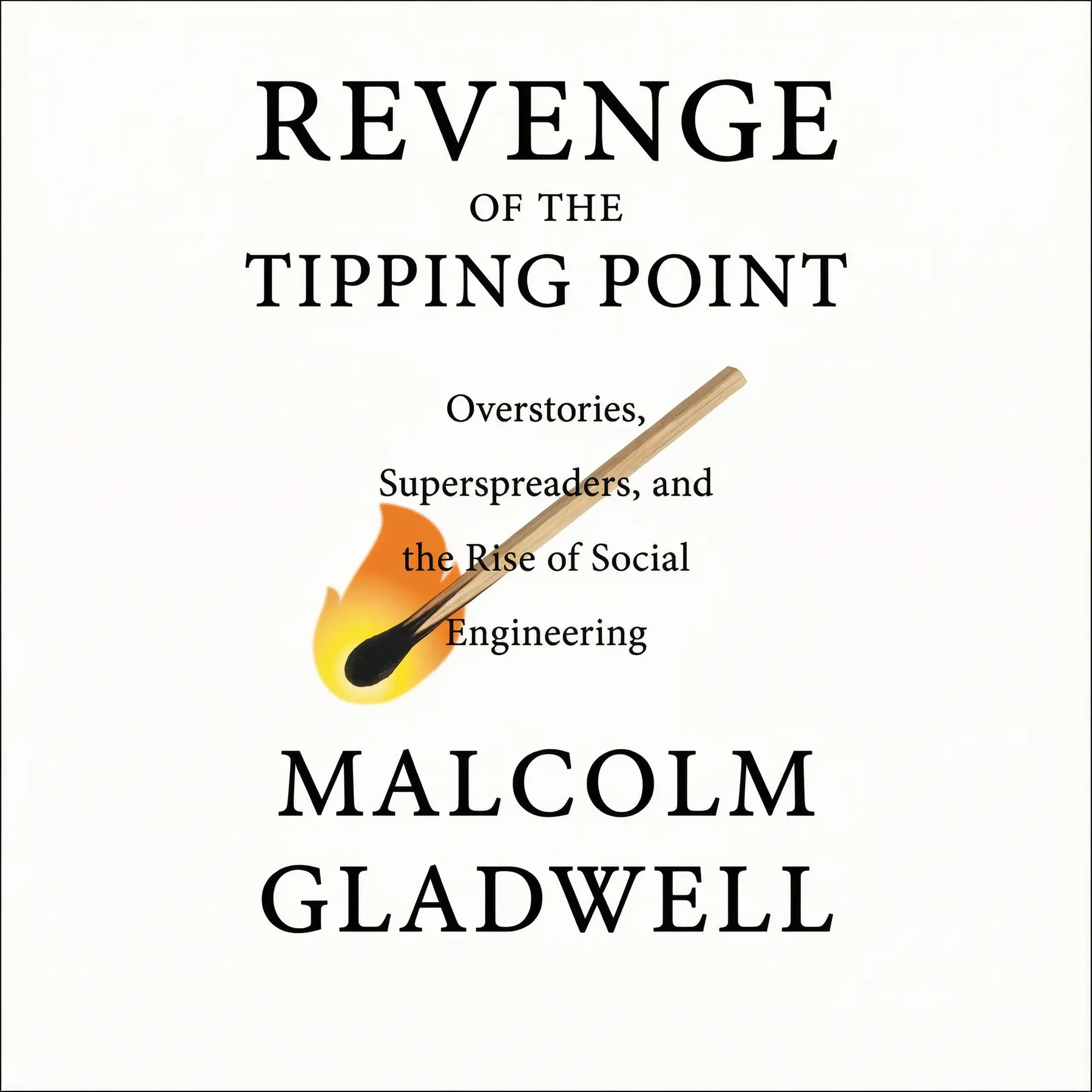
Twenty-five years after his groundbreaking debut, Malcolm Gladwell returns to the phenomenon of social contagions with a darker, more sophisticated lens. This work moves beyond the simple spread of fashion trends to look at the powerful forces that shape our collective behavior, from the rise of specialized crime waves to the biological realities of a global pandemic. It introduces the concept of overstories—the grand narratives that act as an immune system for communities—and explains how these narratives can either protect us or make us vulnerable to dangerous ideas. Through a series of gripping narratives involving bank robbers, medical mysteries, and corporate retreats, the book promises to reveal why some outbreaks of behavior fizzle out while others reshape the world. It explores the 'Law of the Few' in a modern context, showing how a tiny fraction of individuals can drive the majority of social outcomes. Ultimately, it challenges listeners to see the hidden architecture of their own environments and understand how intentional social engineering is being used to move the needle of public opinion and behavior in the twenty-first century.
Malcolm Gladwell is a renowned journalist, essayist, and staff writer at the New Yorker, known for his ability to unpack complex social phenomena through compelling narrative storytelling. He is the author of numerous bestsellers, including The Tipping Point, Blink, Outliers, and What the Dog Saw.
Malcolm Gladwell
Malcolm Gladwell
Malcolm Gladwell
Listeners find the book captivating and worth visiting multiple times, with Gladwell providing an impressive narrative that utilizes thorough research and real-world anecdotes to support his points. The prose style gets a varied response, as some think it is compelling while others are less convinced. Listeners value the caliber of information and find it easy to grasp, making it a rewarding acquisition.
Listening to Gladwell narrate his own work is an experience in itself, and this might be his most layered performance yet. He takes these intricate ideas about social engineering and makes them incredibly accessible for the average reader. The information quality is stellar, especially when he dives into the 'super-spreaders' of the opioid crisis. It's a terrifying look at how Purdue Pharma manipulated the very tipping points he wrote about decades ago. Even though it's a sequel of sorts, it feels fresh and vital for our post-pandemic world. Every chapter starts with a puzzle that keeps you hooked until the final reveal. Definitely a worthwhile purchase for anyone who loves a good intellectual deep dive and wants to understand the 'why' behind major cultural shifts.
Show moreFinally got around to this sequel and it’s a towering narrative that actually feels more relevant than the first one. Gladwell focuses on the 'unscrupulous' use of tipping points, which is a much darker and more realistic take than his original book. His breakdown of how the Holocaust miniseries changed global conversation was a masterclass in media analysis. The book is absorbing, informative, and provocative in all the right ways. I love how he uses real-life stories to explain the 'overstory' that shapes our collective behavior. It's a great read that I’ll likely return to several times just to catch the nuances. He hasn't lost his magic; he’s just matured as a thinker who isn't afraid to ask uncomfortable questions about how our world is engineered.
Show moreIt’s rare to find a book that is both terrifying and deeply hopeful at the same time. Gladwell shows us how epidemics of hatred and xenophobia are driven by the same rules as any other contagion. This is a brilliant, evocative, and compelling call to action for us to pick up the tools of change ourselves. I was floored by the research into how small, smart moves can dismantle a monoculture before it reaches a tipping point. The writing is incredibly polished and the message about diversity being a bulwark against social decay is vital. Personally, I think this is his most important work to date. It’s a must-read for anyone worried about the current direction of global politics and the way ideas spread like viruses.
Show moreEver wonder why certain trends just... explode? Gladwell returns to his roots but with a much darker, more cynical lens this time around. I found the 'Magic Third' concept particularly fascinating—the idea that a minority can shift a whole culture once it hits a specific threshold. While some critics argue he cherry-picks his data, his ability to weave a narrative is still top-tier. The way he connects 1980s bank heists to modern social engineering is pure Gladwell. It’s a compelling journey through history and science that makes complex sociological shifts feel personal. Truth is, you might not agree with every conclusion he draws, but you’ll definitely be thinking about it for weeks. It is worth reading if you enjoy seeing the world through a slightly tilted perspective.
Show moreGladwell has a knack for making you look at your own neighborhood through a microscope, and this book is no exception. His exploration of 'monocultures' as breeding grounds for epidemics—not just viruses, but ideas and crimes—is genuinely thought-provoking. The chapter on Miami's evolution was a highlight, showing how population shifts create hidden tipping points. I do think he gets a bit too generalistic in his theories at times, bordering on preachy. However, the 'Magic Third' theory alone makes the book worth the price of admission. It’s not a perfect sequel, but it offers a much-needed update on how social contagion works in a digital age. Great for casual reading but maybe don't use it as a primary source for a thesis; it’s more about the narrative than the hard data.
Show moreThe section on how rugby is used to bypass affirmative action blew my mind and changed how I view elite education. Gladwell is at his best when he’s uncovering these weird, specific loopholes in our social systems. While the book can be a bit disjointed, the individual case studies are absolutely absorbing and easy to understand. I appreciated the introspective tone he took regarding his own growth as a writer since the first Tipping Point. Some of the logic leaps are a bit much, and he definitely picks the data that fits his narrative. But if you're looking for an engaging sociological read, this delivers. It’s a fascinating look at the ripple effects of the influential few in our society and how small changes snowball into massive shifts.
Show moreMalcolm Gladwell is essentially the master of the 'puzzle' format, and he uses it here to great effect. Each chapter starts with a confusing scenario that he 'solves' using his specific brand of sociological theory. I found his description of 'super-spreaders' during the COVID era to be particularly insightful and well-researched. The writing style is vintage Gladwell—smooth, fast-paced, and full of surprising connections. To be honest, I don't always buy his 'Magic Third' theory, but it’s presented so convincingly that it’s hard not to be intrigued. It’s a worthwhile purchase for anyone who enjoys seeing the 'why' behind big societal trends. Just take some of the broader claims with a grain of salt, as the research can feel a bit cherry-picked to support his personal worldview.
Show moreThis book argues that our shared narratives—or 'overstories'—are what truly drive group behavior, and it’s a compelling case. The way he analyzes how a single miniseries shifted the narrative on the Nazi genocide was brilliant. Gladwell is a great writer who can turn what would be a dry lecture into a narrative that you can't put down. Not gonna lie, the lack of a cohesive 'grand theory' at the end was a bit frustrating, but the journey was worth it. His focus on social engineering and the ethics of influence is timely and handled with a lot of nuance. It's a layered book that rewards careful reading. Even if you don't agree with every point, the information quality is undeniably high and the storytelling is as sticky as ever.
Show moreTo be fair, this feels more like a collection of long-form articles than a cohesive book. As someone who has followed Gladwell’s work for years, I felt like I was missing something profound that just wasn't there. He spends a lot of time rehashing stories like the Sackler family, which felt a bit tired if you’ve followed the news at all lately. His snarky footnotes and self-referential style can be a bit much after 300 pages. There are some compelling sections, particularly about rugby being used to skirt affirmative action, but they feel like unlinked strands. It’s still a fun read because he's a talented storyteller, but it lacks the predictive power I was hoping for. It’s a solid 3 stars for the prose, even if the grand theory is a bit of a word salad.
Show moreI wanted to like this, but some of the phrasing used here is genuinely dangerous and hard to overlook. Specifically, calling a colonial history a 'war for independence' felt like a massive erasure of historical reality that boiled my blood. Beyond the political tone, the book feels like a series of unfinished strands that never quite tie together. Gladwell is a master of the veneer of sophistication, but when you look closer, the research feels thin and conveniently selected. He uses block quotes like a student trying to hit a word count, often without providing real depth to the underlying studies. Frankly, it’s disappointing to see such a talented writer rely on superficial, ex post facto explanations. 2 stars because a few anecdotes were interesting, but the overall logic is flimsy and lacks predictive power.
Show more
Tracy Rosenthal
Steven C. Hayes
Jessica Valenti
Deborah Gruenfeld
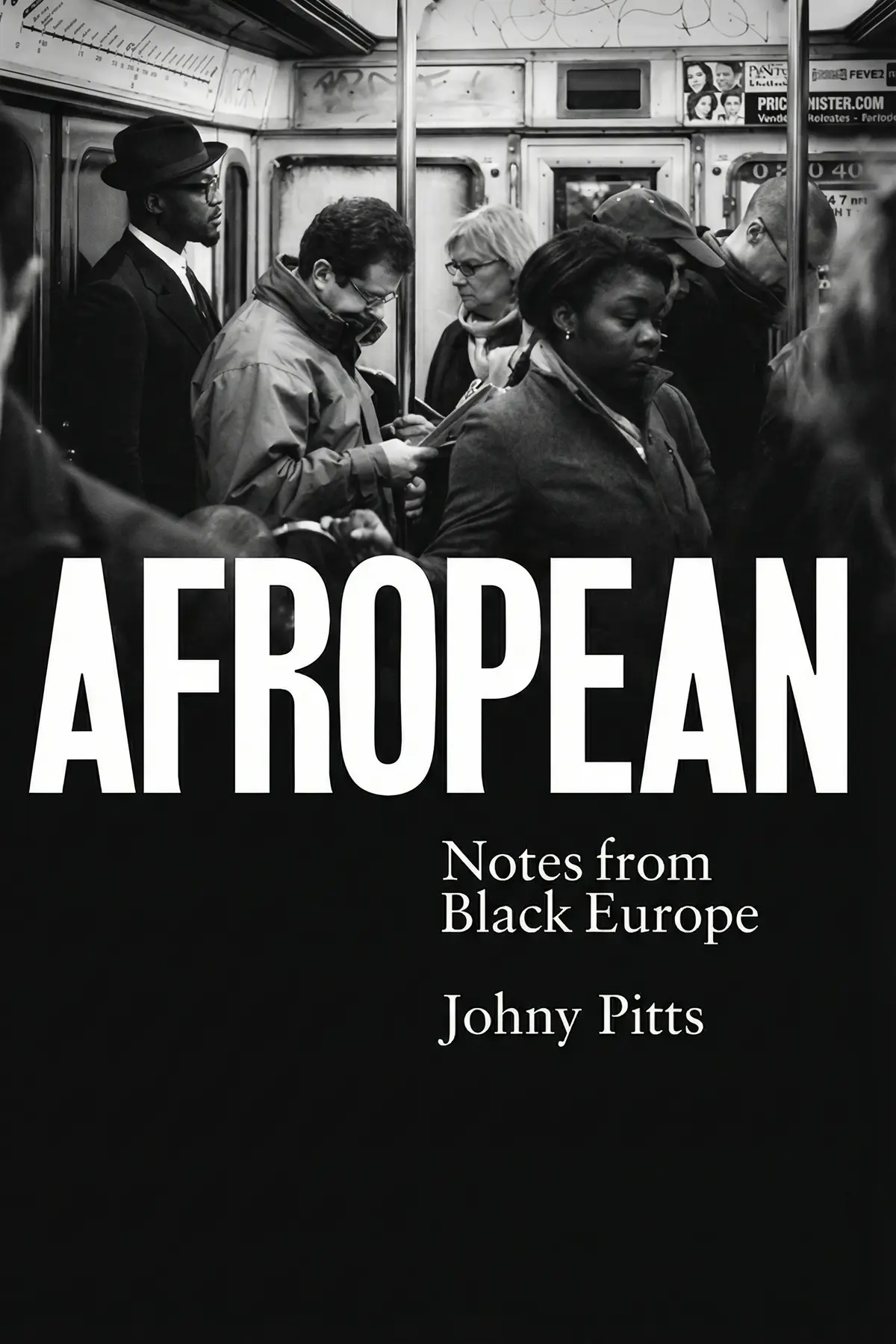
Johny Pitts
AUDIO SUMMARY AVAILABLE
Get the key ideas from Revenge of the Tipping Point by Malcolm Gladwell, plus 5,000+ more titles in English and Thai.







