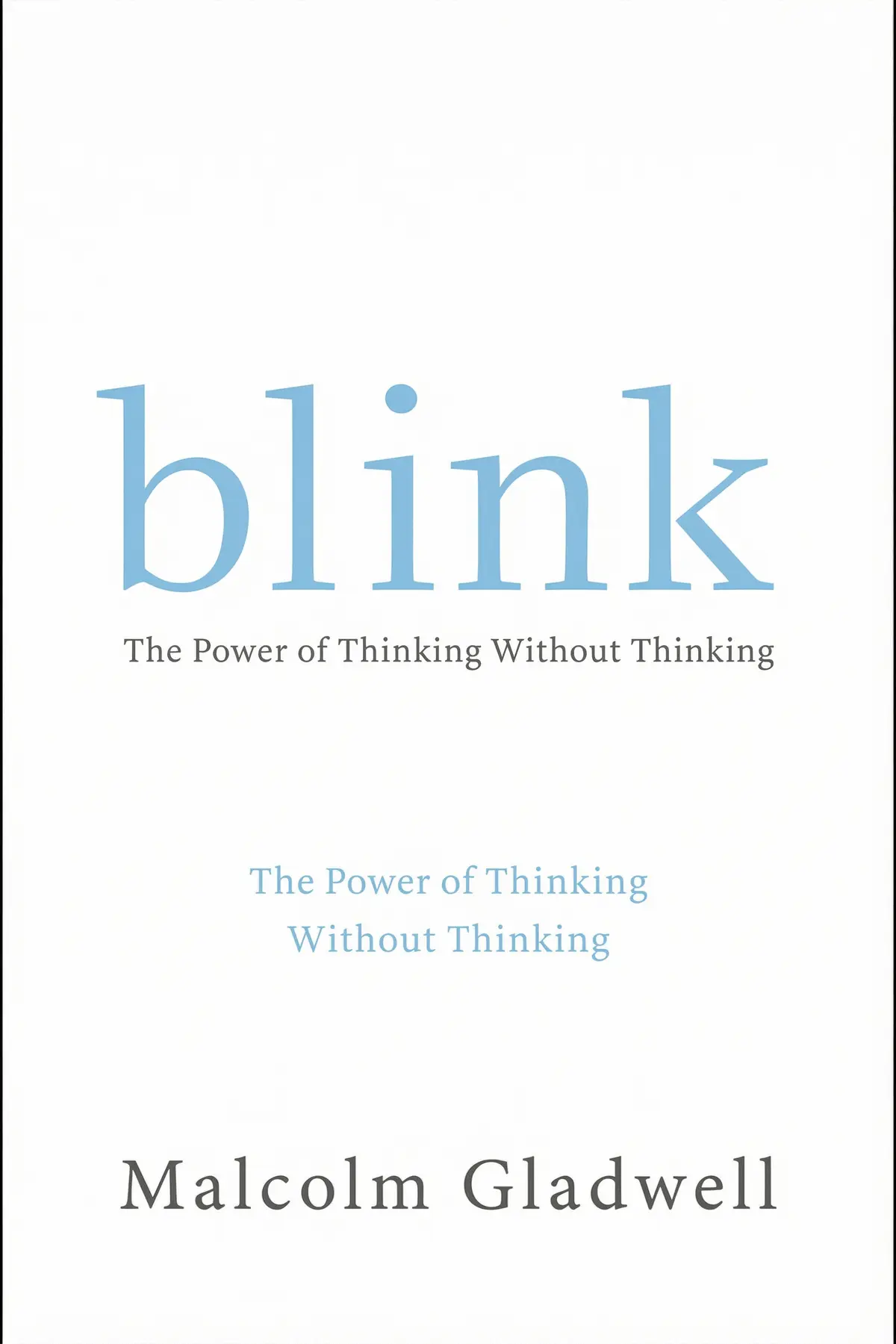
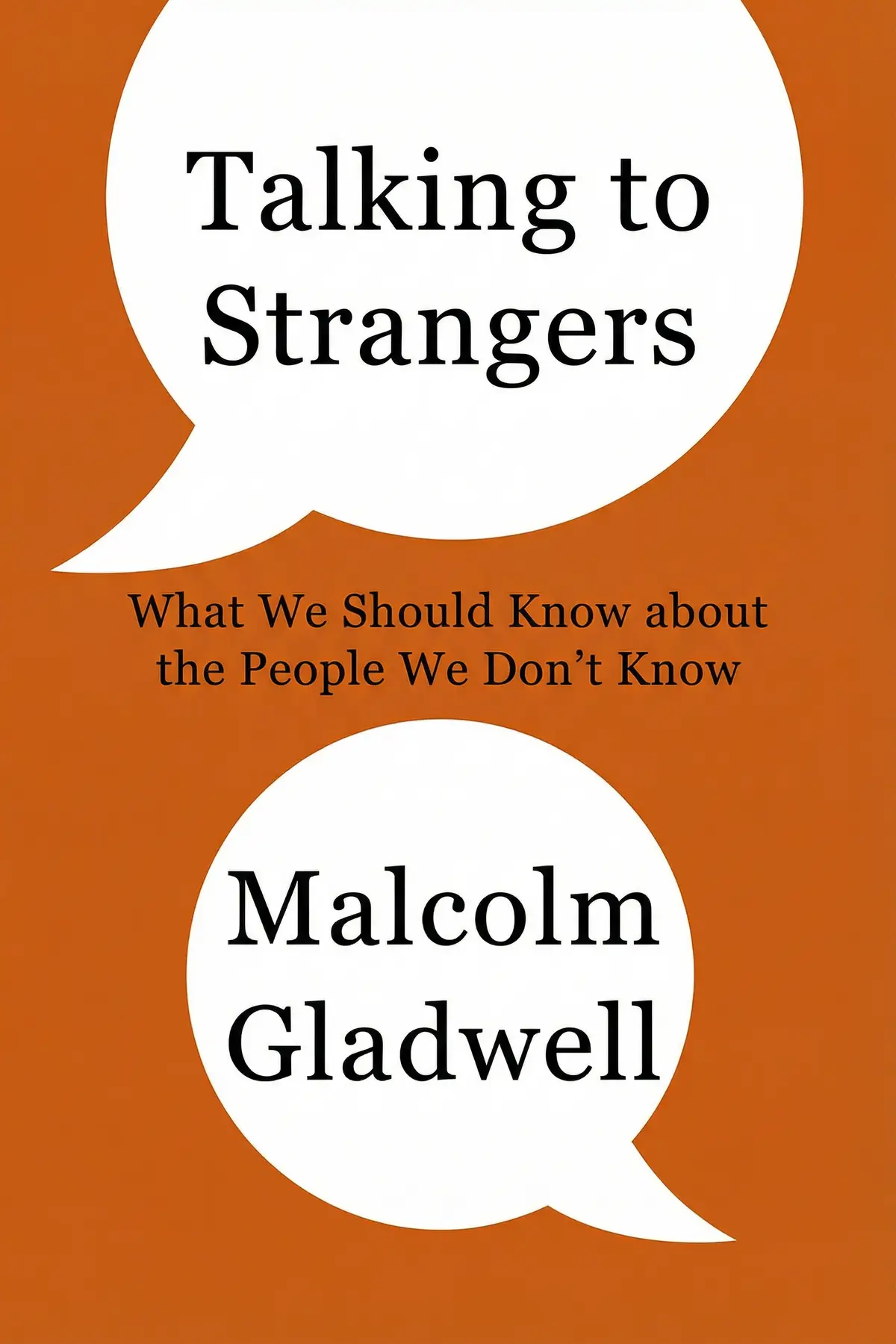
Blink: The Power of Thinking Without Thinking
Malcolm Gladwell
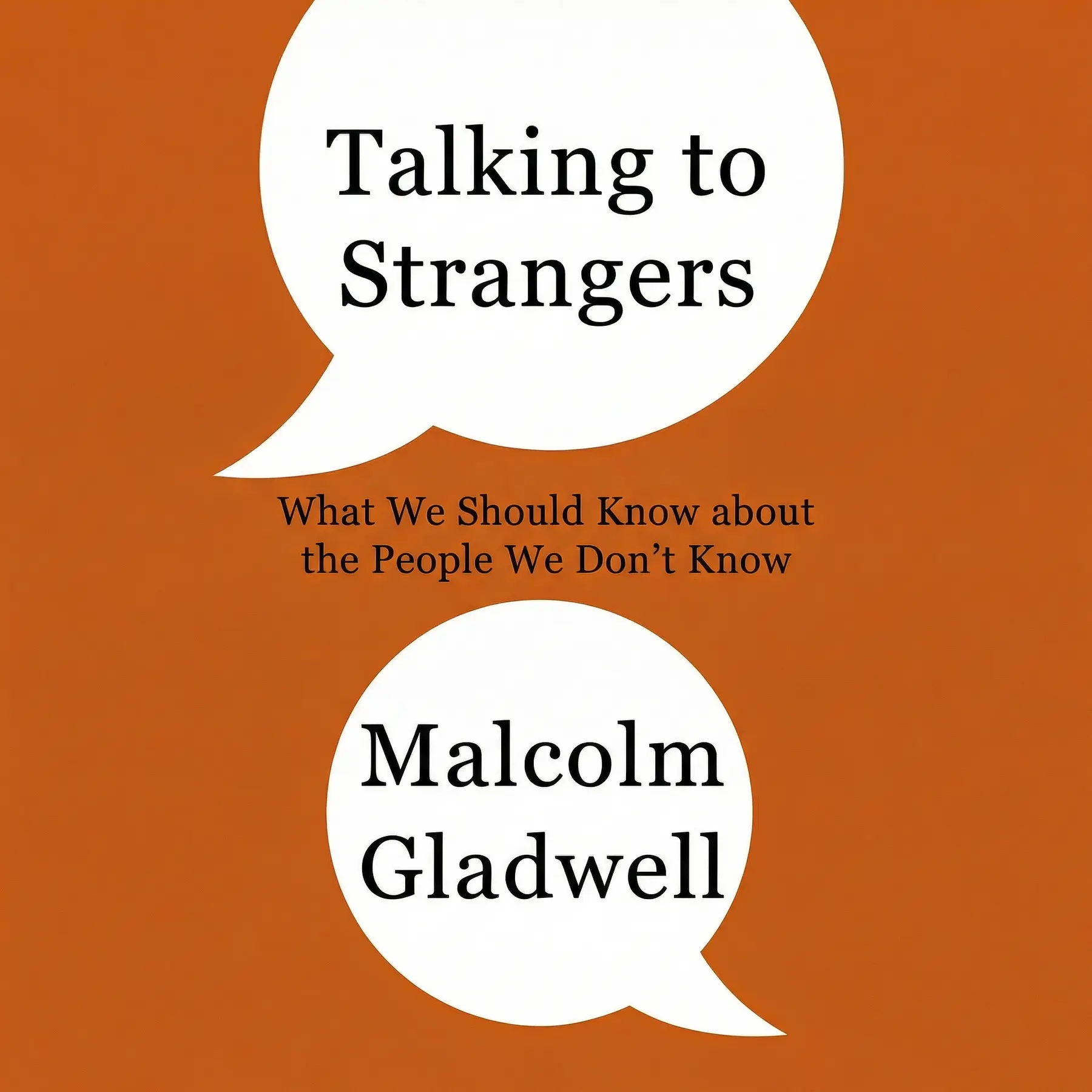
Malcolm Gladwell explores why humans are remarkably bad at understanding people they don’t know. Through historical examples and psychological studies, he reveals the biases that lead to dangerous misunderstandings in our daily interactions.
1 min 47 sec
In 1938, as the clouds of World War II began to gather over Europe, British Prime Minister Neville Chamberlain did something he thought was a masterstroke of diplomacy. He traveled to Munich to meet Adolf Hitler face-to-face. Chamberlain wasn’t just there to sign papers; he wanted to look the German leader in the eye, to get a sense of his character, and to see if the man could be trusted. After their meeting, Chamberlain returned home with a sense of triumph. He told the world that he had taken the measure of Hitler and found him to be a man of his word. History, of course, remembers this as one of the most disastrous misjudgments of character ever made. Hitler was not a man of peace, and Chamberlain’s confidence in his own ability to read a stranger paved the way for a global catastrophe.
Most of us will never have to make a decision with the weight of a world war on our shoulders, but we are all like Neville Chamberlain in one crucial way: we think we are good at reading people. We navigate our lives based on the assumption that we can tell when someone is lying, when they are dangerous, or when they are sincere. Whether we are interviewing a potential employee, going on a first date, or interacting with a stranger on the street, we rely on a toolkit of social assumptions that we believe are reliable.
But what if those tools are fundamentally broken? In this exploration of Talking to Strangers, we will see that human beings are remarkably ill-equipped to understand the people we don’t know. We rely on biases that make us vulnerable to deception and lead us to judge others unfairly. We will look at why our brains are hardwired to trust, why we think faces are easier to read than they actually are, and how these misunderstandings can lead to tragedy. This is a journey into the hidden mechanics of human interaction, showing us that the more we think we know about a stranger, the less we might actually understand.
2 min 32 sec
Think you can spot a liar just by looking them in the eye? Discover why machines are actually better than human judges at making critical character assessments.
2 min 15 sec
We are naturally programmed to trust others, a trait that makes society possible but also leaves us wide open to being deceived by master manipulators.
2 min 07 sec
While trust is vital, we occasionally need individuals who refuse to believe anything. Meet the man who saw through Bernie Madoff’s $60 billion lie.
2 min 09 sec
We think a person’s face tells the whole story, but real-life emotions are rarely as obvious as they are on a sitcom like Friends.
2 min 01 sec
What happens when an innocent person ‘acts guilty’? Learn how the mismatch between behavior and truth led to the wrongful suspicion of Amanda Knox.
2 min 04 sec
Alcohol doesn’t just lower inhibitions; it fundamentally changes how we perceive the world, often leading to tragic lapses in judgment and consent.
1 min 59 sec
A simple traffic stop turned into a national headline. See how a series of misread cues and the wrong policing tactics led to a devastating outcome.
1 min 55 sec
Human behavior is often tied to specific locations and circumstances. Discover why we can’t understand a stranger without looking at where they are.
1 min 57 sec
The overarching lesson of these insights is a call for profound humility. We move through the world with a sense of confidence in our social instincts, but as we have seen, those instincts are built on shaky ground. We are hardwired to trust, which is a beautiful thing that allows society to thrive, but it also means we are naturally prone to being deceived. We are obsessed with the idea of transparency, yet our faces and demeanors are often ‘mismatched’ with our internal truths. And we frequently ignore the power of context and the ‘coupling’ of behavior to our environment.
So, what is the path forward? It isn’t to become a cynical skeptic like Harry Markopolos, questioning everyone and everything. That would be an exhausting way to live and would destroy the very connections that make life meaningful. Instead, the solution is to embrace the fact that strangers are, and will always be, somewhat mysterious. We need to stop assuming that a five-minute conversation or a look in someone’s eyes gives us the right to judge their entire character.
When you meet someone new, remember the ‘truth default’ and the ‘transparency’ trap. Give them the benefit of the doubt, but also give them the space to be complex. If their behavior seems ‘off,’ don’t immediately jump to a conclusion of guilt or malice. They might just be mismatched, or they might be reacting to a context you don’t fully see. By being more patient and less certain, we can avoid the tragic misunderstandings that plagued people like Neville Chamberlain and Brian Encinia. Talking to strangers is a necessary part of the human experience; doing it with a little more grace and a lot less judgment is how we make that experience better for everyone. Stop making assumptions, start listening more deeply, and accept that the person across from you is just as complicated as you are.
Have you ever walked away from a conversation with a stranger feeling like you had their number, only to find out later you were completely wrong? In this summary of Talking to Strangers, we dive into the complex and often flawed ways we interpret the people we meet for the first time. Malcolm Gladwell argues that our natural instincts—like assuming people are telling the truth or believing that a person’s face is a window to their soul—frequently lead us astray. This isn't just a book about social awkwardness; it’s a high-stakes look at how these miscommunications can lead to catastrophe. From high-level diplomacy and international espionage to courtroom decisions and tragic police encounters, the tools we use to judge strangers are shown to be outdated and ineffective. By the end of this journey, you’ll understand the biological and psychological reasons why we are so easily deceived and why our society actually requires a certain level of trust to function, even if that trust occasionally backfires. It is a guide to being more humble about our perceptions and more patient with the mystery of other people.
Malcolm Gladwell is a renowned writer and thinker with five New York Times best sellers under his belt. The author of The Tipping Point and Outliers, Gladwell has been included in TIME magazine’s 100 Most Influential People list and is one of Foreign Policy’s top global thinkers.
Malcolm Gladwell
Malcolm Gladwell
Malcolm Gladwell
Listeners find this book exceptionally engaging and meticulously researched, offering stimulating perspectives that prompt them to reflect on their social encounters and choices. They value the way the author bridges seemingly disconnected narratives, and one listener observes that the writing style transforms intricate concepts into something easily digestible. The work receives favorable reviews for its focus on communication, motivating people to examine their own human interactions, while one listener emphasizes its explanation of how misinformation can lead to big mistakes in life.
This book completely dismantled my confidence in my own intuition. Gladwell argues that we "default to truth," assuming others are honest until the evidence of a lie becomes too heavy to ignore. Truth is, I always thought I was a decent judge of character, but the breakdown of the Fidel Castro and CIA double agents proved me wrong. The prose is incredibly smooth and turns complex psychological concepts into a narrative that feels like a high-stakes thriller. While some might find the lack of a practical "how-to" guide at the end annoying, I appreciated the focus on humility. We need to accept that we will never truly know the heart of a stranger. It is a necessary, albeit uncomfortable, shift in perspective. I can't stop thinking about how we misinterpret the people around us every single day.
Show moreFinally got around to Gladwell’s latest, and it’s a mind-bending journey through human error that I finished in two sittings. The concept of "coupling"—that specific behaviors like suicide or crime are tied to very specific locations and contexts—was a total revelation for me. It shifts the blame from the individual to the environment in a way that feels both compassionate and scientifically grounded. Frankly, the way he analyzes the Jerry Sandusky scandal through the lens of our innate desire to trust is uncomfortable but necessary. He isn't excusing the behavior, but rather showing how the adults around him were trapped by their own psychological programming. This book is a masterclass in challenging your own biases about how the world works. It is carefully researched and presented with the signature flair that makes Gladwell a household name.
Show moreWow, I couldn't put this down during my cross-country flight and ended up annoying my seatmate by gasping out loud at the revelations. This book is essentially a deep dive into the scandals that define our era, from the CIA to Larry Nassar, and it turns everything you thought you knew upside down. I can't unsee the "mismatch" problem now; I find myself wondering if I’m judging people based on their actual intent or just their facial expressions. Personally, I think Gladwell’s mission to make us more humble in our judgments of others is exactly what the world needs right now. It is a brilliant, provocative, and ultimately necessary look at the fragility of human communication. Every page offers a new "aha" moment that reframes the way you see your own interactions with people you don't know.
Show morePicked this up on a whim at the airport and now I can't stop looking at strangers through a completely different lens. The way Gladwell explains how misinformation can lead to massive, life-altering mistakes is both terrifying and enlightening. I loved the section on how different cultures interpret facial expressions; it really highlights how arrogant we are to think we can "read" someone from a different background. The writing is punchy, the research feels expansive, and the connections he draws between unrelated events are truly masterful. It encourages a level of self-reflection that most nonfiction books simply don't achieve. If you want to understand why our society feels so polarized and why we are so prone to misunderstanding one another, start here. It's a gorgeous, complex, and vital piece of work that I'll be recommending for years.
Show moreEver wonder why we get people so incredibly wrong? Gladwell tackles the "transparency myth," showing how our facial expressions rarely match our internal emotions in the way TV shows like Lie to Me suggest. I was particularly gripped by the discussion of the Amanda Knox trial and how her "mismatched" behavior led to a massive miscarriage of justice. To be fair, the author sometimes weaves stories together that feel slightly disconnected, but his ability to synthesize research remains top-tier. It makes you realize that most social disasters aren't born of malice, but of simple, tragic misinterpretation. This is a very readable exploration of why we struggle to connect across the void of the unknown. It’s an essential read for anyone who wants to communicate better in an increasingly polarized world.
Show moreAs someone who works in sales, the concept of "defaulting to truth" was a massive wake-up call for my professional life. We are biologically wired to believe the people we meet, which explains why even brilliant investors were fleeced by Bernie Madoff for decades. Gladwell’s writing style makes these complex social phenomena incredibly easy to understand without stripping away the gravity of the mistakes. My only real gripe is that the book raises a million questions about our broken social compact but only spends a few pages on how to fix it. Still, the insights into how we misread "mismatched" people—those who don't act the way they feel—are worth the price of admission. It’s a carefully researched piece that will stay with you long after the final page. It definitely changes how you view every handshake.
Show moreThe chapter on the death of Sandra Bland is arguably the most heartbreaking piece of nonfiction I've read this year. Gladwell deconstructs that fatal traffic stop second by second, showing how a series of small assumptions led to an avoidable catastrophe. It highlights the "transparency problem" where the officer misread Bland’s irritation as a threat, rather than a normal reaction to a stressful encounter. In my experience, this is Gladwell at his best: taking a headline we all know and pulling it inside out until we see our own reflections. The book is a bit of a rollercoaster, jumping from Neville Chamberlain to Sylvia Plath, but the central thread remains strong. We are terrible at talking to strangers, and the stakes are higher than we think. It’s a thought-provoking look at the friction inherent in human interaction.
Show moreLook, Gladwell is a master storyteller, but his logic feels a bit stretched in several chapters of this book. He tries to draw a straight line between how we misunderstood Hitler and how we misunderstand college drinking culture, which felt a bit like a reach. The "Holy Fool" archetype was interesting, but I wanted more depth on how to actually implement these "whistleblowers" into our daily lives. Gotta say, the audiobook version is fantastic with the real interview snippets, even if the actual arguments didn't always hold water for me. It’s an entertaining read that provokes a lot of thought, but don't go in expecting rigorous scientific proof for every claim. It's more of a philosophical inquiry into the limits of human perception than a definitive social science text.
Show moreAfter hearing so much hype, I found the narrative fascinating but the lack of a clear solution deeply frustrating. Gladwell spends hundreds of pages proving that our ability to decipher strangers is fundamentally broken, only to end with a plea for "caution and humility." To be fair, his analysis of "myopia" and how alcohol shuts down our long-term thinking was a very compelling take on the Brock Turner case. However, the book feels like it’s missing a final act that bridges the gap between diagnosis and cure. It’s a collection of incredibly well-told stories, but the overarching theory feels a little bit like a house of cards when you look too closely. If you love Gladwell’s previous work, you’ll enjoy the ride, but don't expect a life-changing epiphany regarding your communication skills.
Show moreNot what I expected from an author I usually admire. While the writing is as engaging as ever, I found the treatment of the Brock Turner case and the death of Sandra Bland to be deeply problematic. By framing these tragedies as mere "miscommunications" or "myopia" caused by alcohol, Gladwell seems to ignore the systemic issues of racism and sexual power dynamics. Not gonna lie, hearing a nineteen-year-old’s inability to understand consent described as a "hard task" felt like a slap in the face to victims. It feels like he’s trying to fit square pegs of human suffering into the round holes of his clever theories. The science feels thin here, replaced by anecdotes that lean dangerously toward victim-blaming. I wanted to love this, but the logic felt fragile and insensitive.
Show more
Anthony Pratkanis
Richard Wiseman
AUDIO SUMMARY AVAILABLE
Get the key ideas from Talking to Strangers by Malcolm Gladwell, plus 5,000+ more titles in English and Thai.