Blink: The Power of Thinking Without Thinking
Malcolm Gladwell
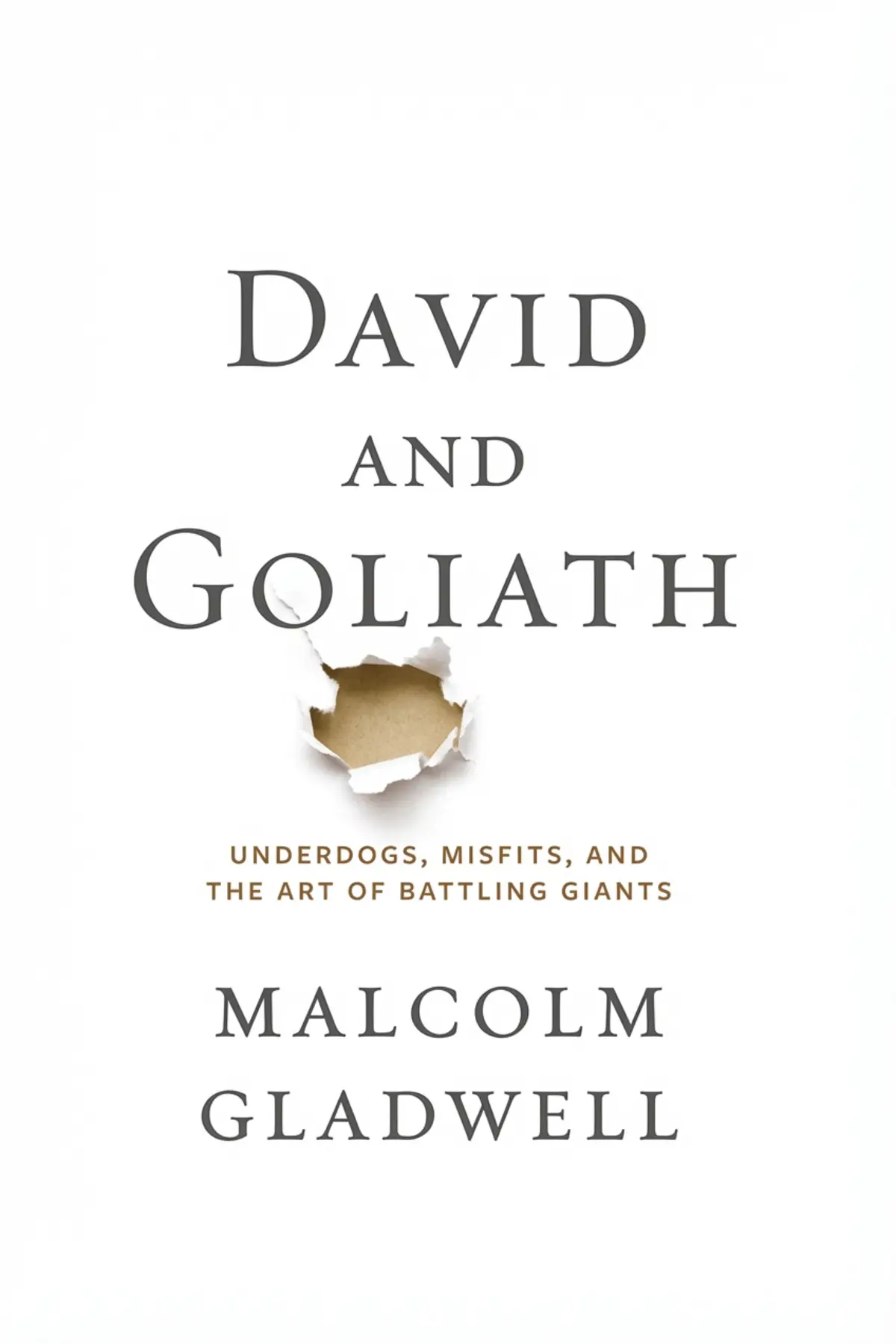
Explore the surprising power of underdogs. This summary reevaluates perceived weaknesses, showing how obstacles like learning struggles or trauma can become secret weapons for those facing life's biggest giants.
1 min 47 sec
When we think about the legendary clash between a shepherd boy named David and the massive warrior Goliath, we usually see it as a miracle. It is the ultimate story of the powerless defeating the powerful. In our cultural imagination, David is the scrawny youth with nothing but a leather strap and a stone, facing a mountain of a man clad in bronze armor. We use this story to describe any situation where a small competitor faces a massive incumbent. But what if we’ve been reading the story wrong for thousands of years? What if the very things we think made Goliath strong were actually his greatest weaknesses, and the things we think made David an underdog were actually his greatest strengths?
This is the central question we are going to explore today. We’re going to look at the world through the eyes of the ‘misfits’ and ‘underdogs’ to see how the traditional markers of success—like wealth, prestige, and physical power—can often be traps. Conversely, we’ll see how ‘desirable difficulties,’ such as learning disabilities or traumatic upbringings, can act as the catalysts for extraordinary success.
Our throughline is simple but transformative: the way we perceive advantages and disadvantages is often fundamentally flawed. By the end of this journey, you’ll understand that being a ‘giant’ comes with hidden costs, while being an ‘underdog’ provides a unique set of tools that, when used correctly, make the giant’s defeat almost inevitable. We will move through stories of art history, elite education, revolutionary science, and social justice to see how these dynamics play out in the real world. So, let’s start by looking at why being at the top of the mountain isn’t always the best place to be, and how our comparisons with others can either fuel our growth or stifle our potential.
2 min 19 sec
Discover why being a ‘small fish in a big pond’ can destroy your confidence and cause even the most talented people to quit their dreams prematurely.
2 min 07 sec
Explore how having too many resources—like excessive wealth or tiny class sizes—can actually prevent children from developing the independence they need to thrive.
1 min 55 sec
Learn why a learning disability like dyslexia can actually force a person to develop superior skills in memory and observation that others never gain.
1 min 57 sec
See how facing early life tragedies can forge an unbreakable spirit and the ambition required to achieve world-changing breakthroughs.
1 min 48 sec
Find out why small, resource-poor groups often win when they stop playing by the rules and start using unconventional strategies.
1 min 48 sec
See how the Civil Rights Movement used clever psychological tricks and media manipulation to defeat powerful systemic opposition.
1 min 41 sec
Discover why successful innovators often have to be ‘disagreeable’—willing to break social norms and ignore the disapproval of others.
1 min 49 sec
Learn why heavy-handed authority and extreme punishments often create more crime and rebellion rather than stopping it.
1 min 47 sec
Explore why people only follow rules when they feel respected, and how empathy can solve problems that force cannot.
1 min 39 sec
As we wrap up our look into the art of battling giants, it’s worth reflecting on how our world would change if we truly embraced the lessons of the underdog. We have seen that the very things we often strive for—unlimited wealth, elite status, and the removal of all obstacles—can actually be the things that hold us back. Meanwhile, the challenges we fear—disability, trauma, and lack of resources—can be the very things that give us the edge.
The core of this journey is the realization that ‘Goliath’ is often a victim of his own size and expectations, while ‘David’ is free to be nimble, creative, and bold. Success isn’t about having the most; it’s about making the most of what you have and having the courage to change the rules of the game when the old ones no longer work for you.
So, what can you take away from this? First, don’t be afraid to go your own way. If the elite ‘big pond’ is draining your confidence, find a place where you can be the big fish. Second, look at your own ‘disadvantages’ through a new lens. What hidden skills have you developed because you had to struggle? Those are your real superpowers. And finally, if you find yourself in a position of power, remember that your strength is only as good as your legitimacy. Treat those around you with fairness and empathy, or you might find yourself facing a David you never saw coming.
The world belongs to the misfits and the underdogs, not because they are lucky, but because they have learned that the only way to beat a giant is to refuse to be intimidated by him. Go out and find your own ‘sling and stone,’ and don’t ever let the giants tell you that you don’t stand a chance.
We often view the world through the lens of strength and weakness, assuming that the person with the most resources, the highest IQ, or the best education will naturally win. This book turns that assumption on its head. By revisiting the classic story of David and Goliath, we find that the giant wasn't actually the favorite, and the shepherd boy wasn't as helpless as he seemed. This core insight—that our advantages can sometimes hold us back and our disadvantages can push us forward—serves as the foundation for a series of fascinating case studies. From the way elite universities might actually hinder a student’s confidence to the secret tactics used by the Civil Rights Movement, the promise here is a total shift in perspective. You will learn why smaller class sizes aren't always better, why dyslexia can produce world-class lawyers, and how a difficult childhood can forge the resilience needed for historic breakthroughs. It’s an exploration of the 'art of battling giants' by changing the rules of the game and embracing the unique strengths that only an underdog can possess.
Malcolm Gladwell is a prominent journalist and author celebrated for his ability to uncover counterintuitive patterns within psychology and sociology. His work often bridges the gap between complex academic research and engaging storytelling. By interviewing a wide spectrum of individuals, from obscure figures to world-famous leaders, he crafts narratives that challenge conventional wisdom. Gladwell's best-selling non-fiction and motivational speeches have made him a leading voice in modern thought leadership.
Malcolm Gladwell
Malcolm Gladwell
Malcolm Gladwell
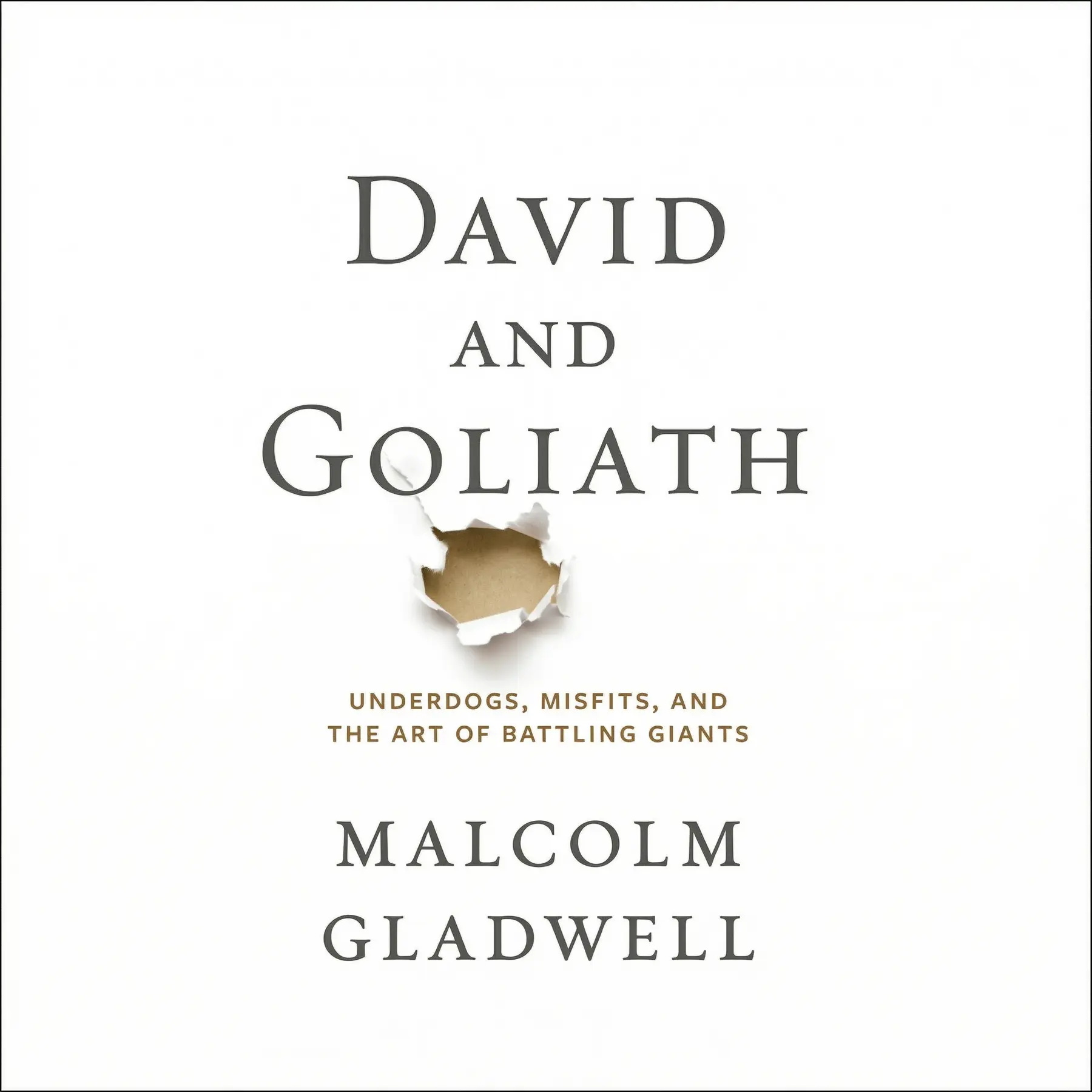
Listeners find this to be an accessible and captivating experience packed with intriguing data and moving narratives regarding actual individuals. Furthermore, the prose reflects Gladwell’s characteristic speechifying, which results in a work that is both brainy and evocative. Listeners also value the motivational aspects of the material, especially its focus on empowering the underdog within everyone and offering unexpected perspectives on common circumstances.
As a parent of a child who struggles with learning disabilities, this book felt like a breath of fresh air. Gladwell’s take on how challenges can actually forge resilience is exactly what I needed to hear right now. The story of the doctor who revolutionized leukemia treatment by being 'disagreeable' was heartbreaking yet inspiring. It reminds us that empathy isn't always soft; sometimes it requires a certain kind of toughness to find a cure. Some critics call this cherry-picking, but I call it finding meaning in the struggle. The writing style is conversational and punchy, making complex social theories feel accessible to anyone. I couldn't put it down.
Show moreWow, I never realized how much of a tactical advantage David actually had in that valley. Gladwell turns the biblical narrative on its head by explaining the physics of the slingshot and Goliath’s likely medical issues. It’s a brilliant way to kick off a book about reframing power dynamics. I loved the section on the Impressionists and how they chose to start their own show rather than begging for Salon approval. The truth is, we often spend too much time trying to fit into systems that weren't built for us. This book gives the underdog permission to stop playing by the giant's rules. It's fast-paced, insightful, and left me feeling incredibly motivated.
Show morePicked this up on a whim at the airport and ended up finishing it before my return flight. I’ve always been a fan of how Gladwell can take a dry statistic and turn it into a high-stakes drama. The 'Big Fish-Little Pond' theory is something I wish I had read before I applied to college. It explains so much about why talented students often drop out of rigorous science programs. The book is filled with these 'aha' moments that make you rethink your own life choices. While the ending felt a little abrupt, the journey through these various case studies was totally worth it. It’s an inspirational read for the 'little guy' in all of us.
Show moreFinally got around to this one and it definitely lives up to the hype for anyone who feels like an outsider. Gladwell has this way of making the underdog feel like the smartest person in the room. The stories about the Civil Rights movement and the Huguenots in France were moving and provided a fresh perspective on courage. Not gonna lie, I was skeptical about how he’d link all these things together, but it mostly works. The book is easy to digest and perfect for a quick intellectual boost. It’s the kind of writing that makes you feel smarter just by reading it. Definitely worth picking up if you like stories about triumphing over adversity.
Show moreGladwell has this incredible gift for making you look at the world sideways. In this book, he deconstructs the classic underdog story, arguing that what we perceive as weaknesses are often our greatest weapons. I particularly enjoyed the 'Big Fish-Little Pond' section regarding university choices. It makes you rethink the obsession with prestigious institutions like the Ivy League. While some of the transitions between chapters felt a bit forced, the prose remains breezy and incredibly readable. You might find yourself questioning his data sources occasionally, but the central message is undeniably empowering. It's a must-read for anyone who has ever felt like they were fighting an uphill battle.
Show moreAfter hearing Gladwell speak at a conference, I wanted to see if his writing matched his oratorical style. It absolutely does. The book reads like a series of compelling TED Talks, moving quickly from the basketball court to the civil rights movement in Alabama. I was particularly struck by the discussion on 'legitimacy' and how heavy-handed authority often backfires. His exploration of the 'three strikes' law was a bit of a rollercoaster, showing both sides in a way that was genuinely confronting. Even if you don't agree with every conclusion, you can't deny that he knows how to spark a conversation. It’s intellectually stimulating without being overly dense or academic.
Show moreEver wonder why the most successful people often come from the most harrowing backgrounds? Gladwell dives into the 'remote miss' phenomenon, showing how surviving a trauma can sometimes remove the fear of future failure. The chapter on Dr. Jay Freireich and his 'distanced' empathy during pediatric cancer trials was particularly haunting. It forces you to ask difficult questions about what it takes to actually innovate in a field where everyone else is playing it safe. Look, the book isn't a perfect scientific treatise, but it is a masterclass in narrative non-fiction. It provides surprising insights into everyday situations that you’ll find yourself quoting to friends for weeks. Truly a thought-provoking experience.
Show moreIs this rigorous science or just a collection of very well-told anecdotes? To be fair, Gladwell doesn’t claim to be writing a textbook, yet his conclusions are presented with such authority that it’s easy to get swept up. I found the chapter on class sizes fascinating but ultimately a bit contradictory. He suggests smaller classes aren't always better, then pivots to saying teachers just don't adapt. It’s classic pop-psychology: high on narrative, slightly lower on consistent logic. However, his exploration of dyslexia as a 'desirable difficulty' was genuinely thought-provoking. It’s an easy, engaging read for a weekend, though you should keep your critical thinking cap on.
Show moreTo be fair, Gladwell is a master of the 'Aha!' moment, even if those moments don't always hold up to scrutiny. In this installment, he tackles the myth of the underdog with his signature blend of anecdotes and social theory. I enjoyed the parts about how we misinterpret the David and Goliath story, but other sections felt a bit like filler. The discussion on class sizes was interesting but seemed to ignore a lot of contradictory evidence from actual educators. Still, the writing is so smooth and the stories are so engaging that it's hard to stay mad at his selective data. It’s a solid 3-star read that offers some cool cocktail party facts.
Show moreThe problem with this book is that it tries too hard to find a pattern where none exists. Frankly, I felt some of the parallels—like comparing the Troubles in Northern Ireland to a neighborhood in New York—were a massive stretch. Gladwell is a fantastic storyteller, but the way he weaves these disparate case studies together feels more like a magic trick than an analysis. He presents his theories as if they are universal laws of humanity, yet they often fall apart if you look too closely at the statistics. It’s a fun read if you enjoy 'speechifying' prose, but as a serious look at power, it lacks depth. It just felt like a repeat of his previous work.
Show more
Richard Wiseman
Steven C. Hayes
Deborah Gruenfeld
Anthony Pratkanis
AUDIO SUMMARY AVAILABLE
Get the key ideas from David and Goliath by Malcolm Gladwell, plus 5,000+ more titles in English and Thai.