
Blink: The Power of Thinking Without Thinking
Malcolm Gladwell
Discover the hidden mechanics behind social epidemics. This summary explores how specific people, sticky messages, and environmental shifts can turn a tiny idea into a global phenomenon that spreads like wildfire.
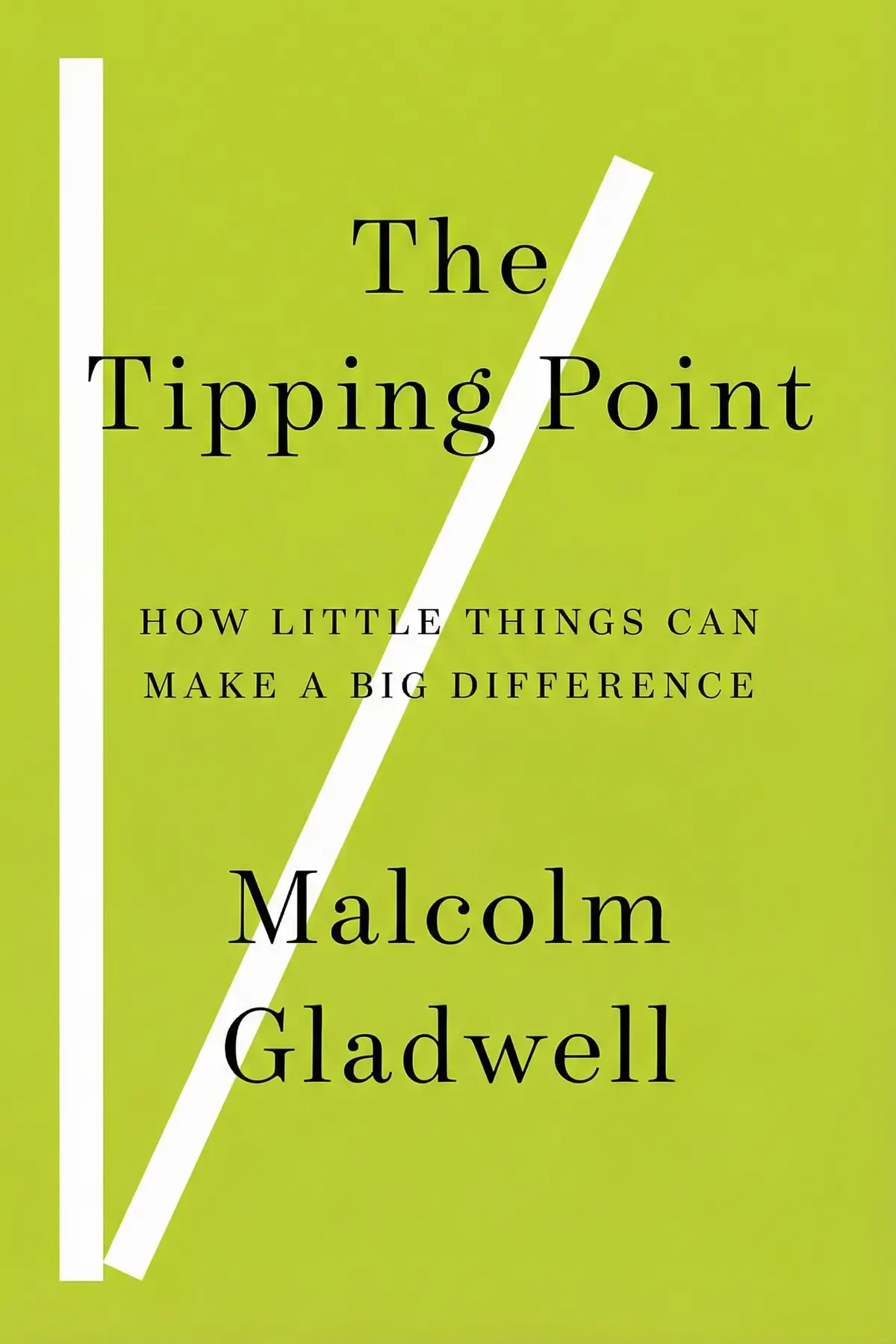
2 min 00 sec
Imagine a world where everything is on the verge of change. We often think of progress as a slow, steady climb—a predictable ladder where each step leads logically to the next. But what if social change actually looks more like a biological outbreak? Think about a virus. For a long time, it might affect only a handful of people, staying below the radar and causing little concern. Then, seemingly out of nowhere, it hits a critical mass. Within a few days or weeks, it’s everywhere. This is the central premise we are exploring today: the idea that behaviors, products, and messages can spread through a population exactly like an infectious disease.
Take the story of Hush Puppies, a brand of suede shoes that was practically dead by the mid-1990s. They were selling a measly thirty thousand pairs a year, mostly in back-alley outlets. The company was on the verge of phasing them out entirely. But then, something strange happened in the clubs of Manhattan. A few stylish young people started wearing them, not because they were being paid to, but because the shoes were ironically uncool. That tiny spark “infected” others. Within two years, sales skyrocketed to two million pairs. The company didn’t change its marketing; the world changed around the shoes.
This phenomenon is what we call a social epidemic. It’s a moment of rapid, dramatic transformation that turns a niche trend into a global must-have. These shifts are rarely accidental. They are driven by specific factors that, once understood, reveal the underlying architecture of our social world. We are going to look at the three levers that control these outbreaks: the unique people who move ideas, the quality that makes an idea stay in our minds, and the subtle environmental factors that give an idea the room to grow. By the end of this journey, you’ll see that the world is much more sensitive to small changes than you ever imagined. We are all living on the edge of a tipping point.
2 min 00 sec
What happens at the exact moment a trend turns into an unstoppable force? Discover the geometric reality of growth and why the most important changes occur at the elbow of the curve.
1 min 46 sec
Most people think everyone in a group contributes equally to a trend, but the reality is far more lopsided. Explore why a tiny fraction of the population does the heavy lifting.
1 min 45 sec
How do ideas leap from one social circle to another? Learn why your casual acquaintances are often more important than your close friends.
1 min 29 sec
Some people have an almost magical ability to convince others. Discover the non-verbal secrets of the Salesmen and how they use emotional contagion.
1 min 21 sec
Why do we trust some people’s advice more than others? Meet the Mavens, the data-obsessed helpers who fuel trends with pure knowledge.
1 min 43 sec
An idea can’t spread if it doesn’t stay. Explore how small, catchy tweaks in a message can make it unforgettable and irresistible.
1 min 46 sec
We like to think our behavior is based on our character, but the environment often pulls the strings. See how external factors dictate our choices.
1 min 49 sec
How did New York City stop a crime epidemic by cleaning up graffiti? And why is 150 the magic number for any successful group?
1 min 39 sec
As we wrap up our exploration of the Tipping Point, the most important takeaway is a sense of possibility. We often feel like the world is a massive, immovable object, and that making a real impact requires an enormous amount of force. But as we’ve seen, that simply isn’t true. The world of the social epidemic is a world where small, well-placed interventions can have massive consequences.
Think about the three rules we’ve discussed. First, there is the Law of the Few. Remember that you don’t need to win over the whole world; you just need to find the Connectors, the Salesmen, and the Mavens who can carry your torch. Second, there is the Stickiness Factor. If your message isn’t spreading, don’t just shout louder. Look for the small tweak, the catchy detail, or the slight shift in presentation that will make it impossible to forget. And finally, remember the Power of Context. We are all products of our environment. By changing the small signals in the world around us—by cleaning the graffiti or keeping our groups small—we can create the perfect conditions for a positive epidemic to take root.
Ultimately, this is a book about hope and agency. It suggests that with a little bit of insight into human nature and social dynamics, we can be the ones who tip the scales. Whether you are trying to launch a business, change a corporate culture, or simply spread a good idea in your community, remember that the smallest details often matter the most. Look for the elbow in the curve, find your key people, and don’t be afraid to experiment with the context. The next big change might be just one tiny shift away.
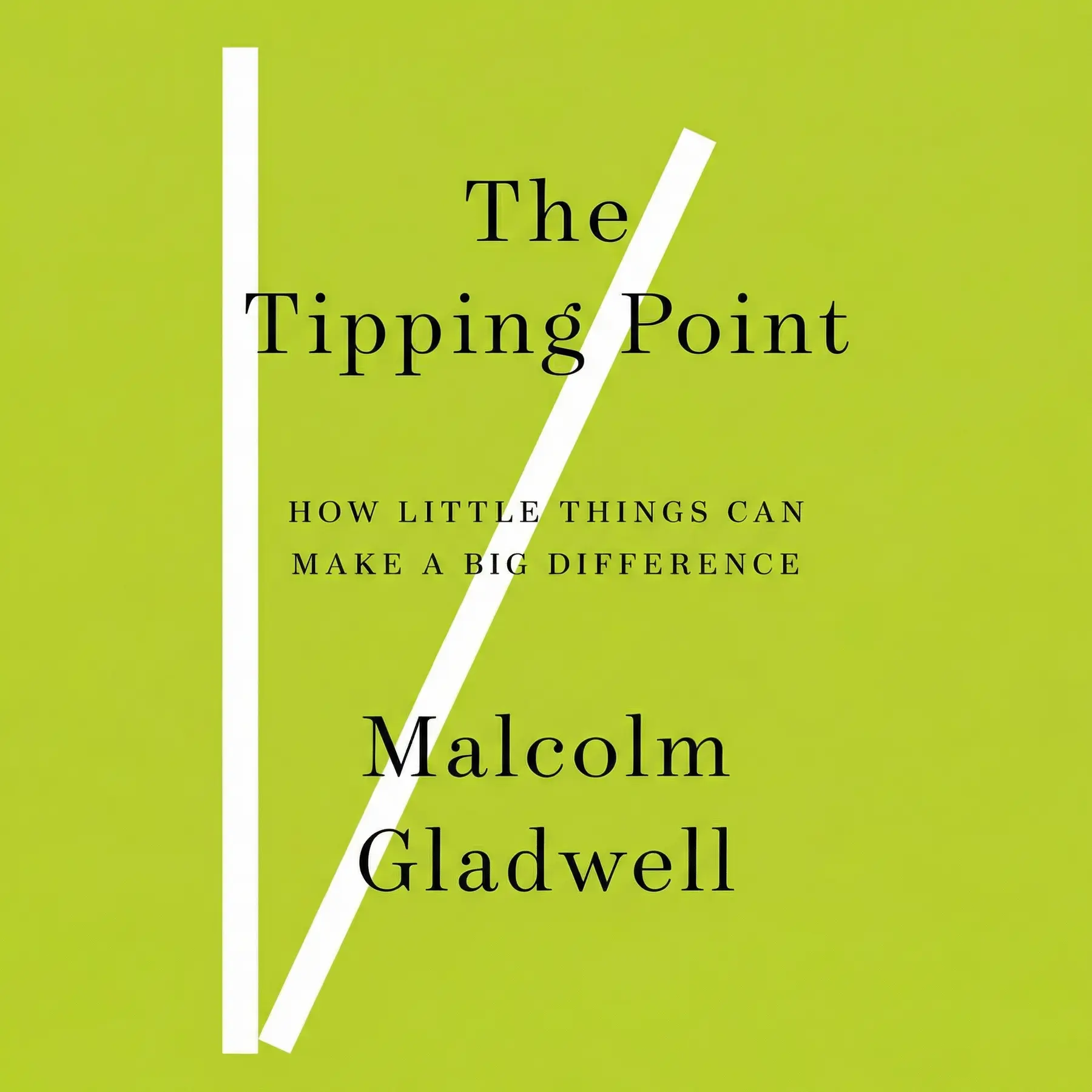
Have you ever wondered why some products become overnight sensations while others fail? The Tipping Point examines the moment when a trend crosses a threshold and explodes into a full-scale epidemic. It breaks down the three rules of epidemics: the Law of the Few, the Stickiness Factor, and the Power of Context. This exploration reveals that social change is not a gradual process but a volatile one, driven by a small number of influential people, the inherent memorability of a message, and the specific conditions of the environment. Whether it is the sudden resurgence of a shoe brand or the dramatic drop in a city's crime rate, this summary provides the framework for understanding how little things can make a massive difference in the world.
Malcolm Gladwell is a journalist and the author of five best-selling books, including Blink: The Power of Thinking Without Thinking and Outliers: The Story of Success.
Malcolm Gladwell
Malcolm Gladwell
Listeners consider this work an absorbing experience filled with deeply researched observations and stimulating ideas. The caliber of the prose receives acclaim, as one listener points out its use of anecdotes, and the facts provided are thorough and significant. They value the intriguing topics covered, with one review emphasizing its ability to link disconnected occurrences, and find the narrative style captivating, as one mentions its success in weaving various tales together to support its premise.
Ever wonder why some ideas just take off while others fizzle out instantly? This book offers a brilliant exploration of that exact phenomenon through what Gladwell calls the tipping point. I was absolutely floored by how he uncovers hidden links between seemingly disparate events, like the sudden resurgence of Hush Puppies shoes and the dramatic drop in New York City’s crime rate. The 'Power of Context' chapter is particularly intellectually resonant, explaining how our immediate environment shapes our actions more than we’d like to admit. Personally, I found the prose to be captivating and the research to be presented in a way that feels both accessible and deeply investigated. It’s rare to find a book that manages to be this informative while reading like a fast-paced mystery. Even if some critics find his theories a bit oversimplified, the sheer number of 'aha!' moments makes this a mandatory read for anyone who wants to understand modern culture.
Show moreWow, Gladwell has this incredible ability to make complex sociological concepts feel like a page-turning thriller from start to finish. I was particularly gripped by the discussion on 'transactive memory' and how we use our partners as extensions of our own brains. It’s an intellectually stimulating observation that explains so much about human relationships and why we feel so lost when they end. The book is filled with these kinds of revelations that make you stop and look at your daily life differently. From the way he explains the spread of smoking among teens to the logistics of Paul Revere's midnight ride, the storytelling is top-notch. He connects the dots between psychology, history, and economics in a way that feels completely seamless. Some might call it pop-science, but if pop-science is this engaging and well-researched, then I’m all in. I finished it in two sittings and immediately started recommending it to everyone I know.
Show moreThis book changed the way I look at the world around me by highlighting the invisible forces that drive social change. I loved the 'Law of 150' and the idea that our social groups have a natural ceiling before they start to lose their cohesion. It explains so much about why small companies feel different from large corporations. Gladwell’s ability to weave together stories about syphilis epidemics, children's TV, and colonial history is nothing short of genius. The book provides a detailed and relevant framework for understanding how a tiny push in the right place can cause a massive shift in the status quo. I found the storytelling to be incredibly engaging, and the 'stickiness' concept has stuck with me long after closing the back cover. It’s an essential read for anyone who wants to understand the 'whys' behind the trends that define our lives.
Show moreFinally got around to this classic, and I can see why it sparked so much conversation back in the day. Gladwell has a gift for taking dense sociological concepts and turning them into a narrative drive that keeps you turning pages. His breakdown of the 'Law of the Few'—specifically how Connectors and Mavens operate—really changed how I look at my own professional network. While some of the technology references feel a bit dated now that we’re in the age of TikTok and instant virality, the core psychology remains granular and applicable. To be fair, he does rely heavily on a story-first approach that sometimes glosses over the harder data in favor of a good hook. The section on the 'stickiness factor' using Sesame Street and Blue’s Clues was a highlight for me, offering a deep look into how small changes create massive impacts. It’s a compelling read for anyone interested in the mechanics of human behavior, even if you have to take the anecdotal evidence with a grain of salt.
Show moreAs someone who works in digital marketing, Gladwell's insights into the 'stickiness factor' are absolutely fascinating and surprisingly relevant. He explains why certain messages stick in our brains while others are forgotten immediately, using the evolution of children's television as a primary example. The way he compares the testing methods of Sesame Street versus Blue’s Clues provided a great framework for understanding audience engagement. Look, the book isn't perfect—it definitely shows its age when discussing how information spreads, as 'word of mouth' has changed so much since the year 2000. However, the fundamental idea that a small, targeted group of 'Salesmen' can swing public opinion is still a powerful concept to grasp. It’s a thought-provoking piece of work that forced me to rethink my own strategies. The writing style is punchy and direct, though a few chapters felt like they were stretching a single point a bit too thin.
Show morePicked this up on a recommendation, and I was immediately sucked into the narrative about how trends propagate through a population. The way Gladwell explains the 'Law of the Few' really resonated with me, especially the idea that a handful of specific people hold all the social power. It makes you realize that most of our choices are influenced by 'Mavens' we don't even know we're following. I did find the section on the 'Power of Context' regarding the NYC subway cleanup to be one of the most compelling parts of the book, even if later studies have debated those specific findings. The writing is incredibly polished, making even the more technical parts of the 'stickiness' experiments feel like an exciting discovery. My only real gripe is that he occasionally treats his hypotheses as absolute certainties, which can feel a bit patronizing. Still, the overarching themes are brilliant and definitely worth the time.
Show moreGladwell is a master at finding the hidden threads that tie our social behaviors together in ways we rarely notice. I was especially interested in the 'Salesmen' personality type and how subtle cues like facial expressions and emotional mimicry can tip a conversation in their favor. The research into Peter Jennings' facial gestures during news broadcasts was a standout example that really proved his point. In my experience, the book is at its best when it's diving into these specific, granular psychological studies. It does get a little repetitive toward the end, and the conclusion felt slightly rushed compared to the build-up of the earlier chapters. However, the afterword in the newer editions is a great touch, as it shows Gladwell is willing to refine his thinking as the world changes. It’s a solid 4-star read that offers a unique lens through which to view the 'epidemics' of everyday life.
Show moreI've been thinking about the 'tipping point' concept ever since I finished the final chapter last night. Gotta say, Gladwell knows how to close a deal and make his theories feel nearly undeniable while you're reading them. The way he links the 'stickiness factor' to the success of Blue's Clues was particularly eye-opening for me as a parent. It’s a compelling read that manages to be both informative and entertaining, which is a rare feat for non-fiction. To be fair, some of the conclusions feel a bit like they were built on a foundation of anecdotes rather than ironclad scientific laws, but the questions he raises are still incredibly valuable. It’s the kind of book that makes you want to go out and start your own minor epidemic just to see if the rules of Mavens and Connectors actually work in the real world. Despite being over twenty years old, the core message still carries a lot of weight.
Show moreThe truth is, this book feels like a long-form magazine article that was stretched into a full volume to satisfy a publishing contract. Gladwell is undeniably a master of the anecdote, and I enjoyed the stories about the 'Broken Windows' theory and the 'Law of 150' in corporate structures. But after the first hundred pages, the pattern becomes a bit too predictable: a surprising story, a catchy name for a theory, and then a quick move to the next topic. It’s a snappy little book for a weekend trip, but it lacks the depth I was hoping for in a serious sociological study. To be fair, the 'Connectors' concept is quite useful for understanding social dynamics, but I found myself wanting more data and fewer metaphors. It’s good food for thought, yet I can’t help feeling that the book’s own success is the best example of the marketing 'tipping point' it describes.
Show moreNot what I expected given all the hype surrounding this title for the last two decades. Frankly, I felt like I was being sold a collection of half-truths and clever marketing slogans disguised as actual science. Gladwell is a talented writer, but his arguments often fall into the trap of assuming correlation implies causation without providing the rigorous proof to back it up. The story about the 1950s HIV epidemic felt especially speculative and left me questioning the validity of his other case studies. It’s a very well-crafted book, but it seems more concerned with being 'sexy' and provocative than being factually sound. By the time I got to the section on Paul Revere, I was tired of the redundant examples that all seemed to point toward the same shaky conclusion. If you’re looking for a breezy read that makes you feel smart at a dinner party, this is it, but don't look too closely at the underlying logic.
Show more
Steven C. Hayes
Deborah Gruenfeld
AUDIO SUMMARY AVAILABLE
Get the key ideas from The Tipping Point by Malcolm Gladwell, plus 5,000+ more titles in English and Thai.







