
17 min 05 sec
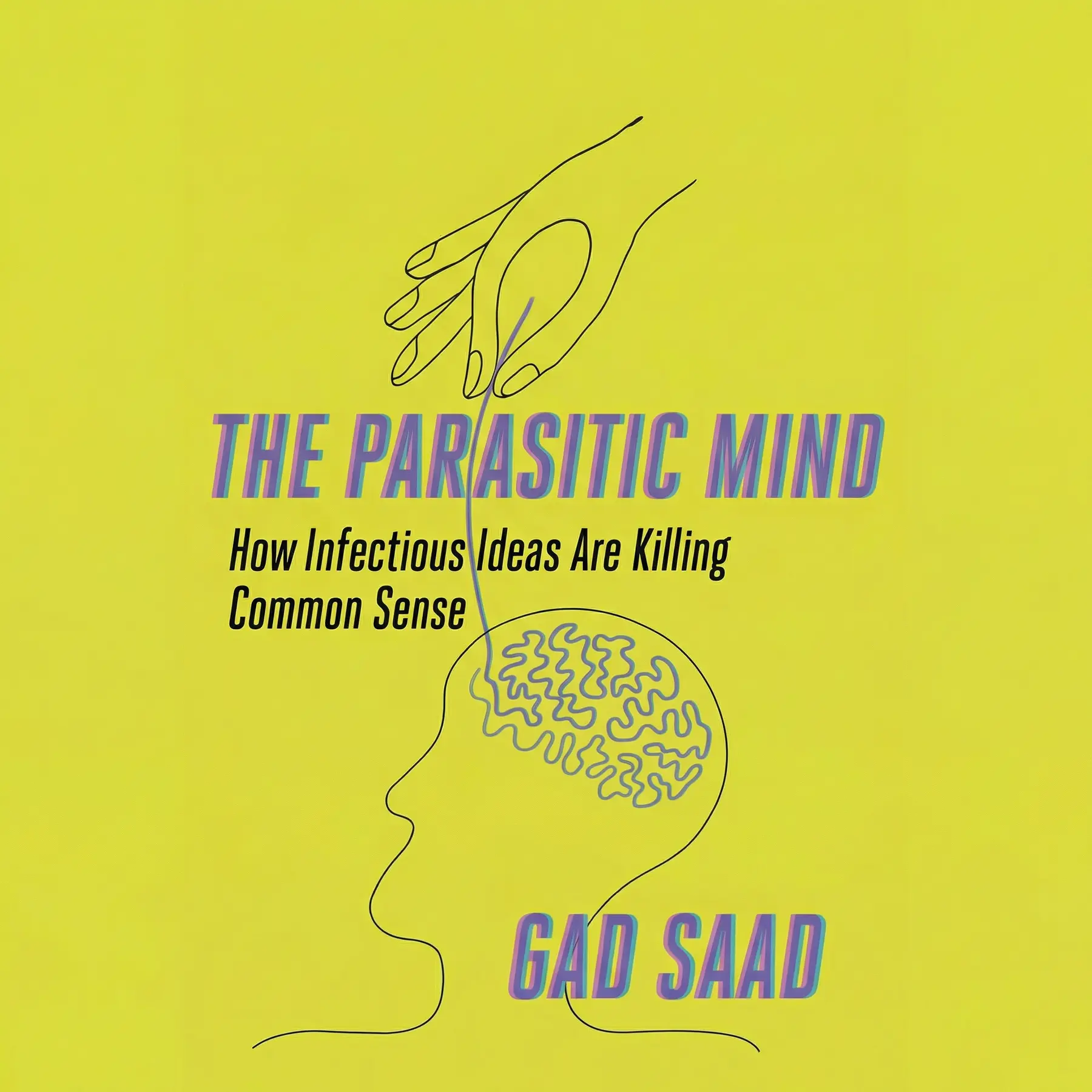
Parasitic Mind: How Infectious Ideas Are Killing Common Sense
By Gad Saad
Gad Saad explores how destructive ideologies, or idea pathogens, are currently corrupting rational thought. He argues for a return to scientific inquiry, free speech, and logic to protect the foundations of society.
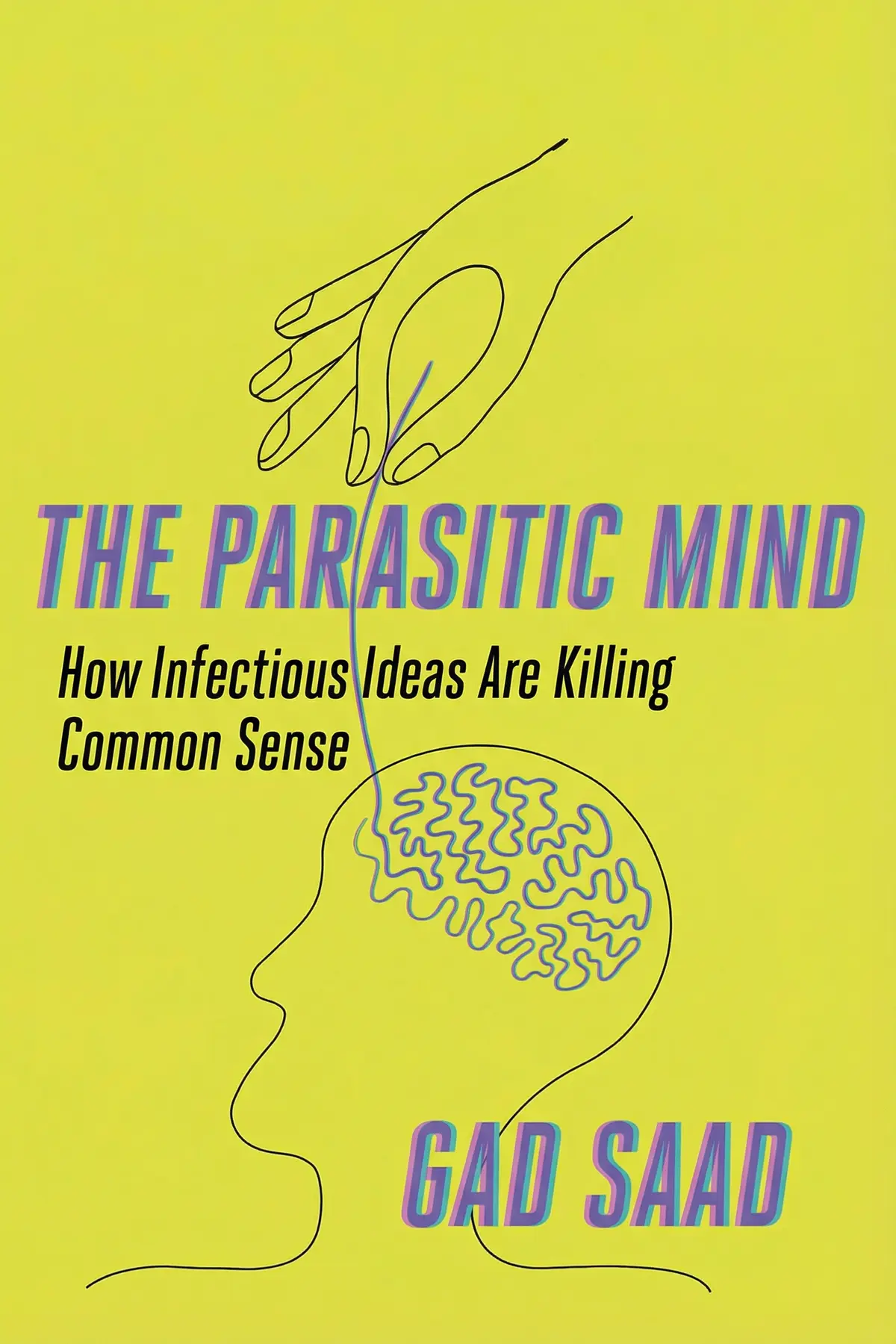
Table of Content
1. Introduction
1 min 15 sec
Imagine a world where the very institutions meant to cultivate wisdom and discover truth have instead become the primary spreaders of intellectual confusion. This is the central concern of Gad Saad, who argues that modern society is currently facing a unique kind of pandemic. This isn’t a biological crisis, but a psychological one caused by what he calls “idea pathogens.” These are ideologies that have taken root in our minds, hijacking our ability to think rationally and forcing us to prioritize feelings over facts.
In this exploration of the human intellect, we will see how these destructive ideas originated in the halls of academia before trickling down into every corner of our daily lives—from the halls of government to our social media feeds. The throughline of this journey is the urgent need to restore the principles of the Enlightenment: reason, logic, and the scientific method.
We will examine why the West is currently vulnerable to these parasitic ideas and what happens when we lose our commitment to objective truth. By the end, you’ll understand not just the nature of the threat, but also the specific tools required to vaccinate your mind against irrationality and stand up for the freedom of thought that defines a truly liberal society. Let’s look at how we can begin to reclaim common sense in an era of ideological conformity.
2. The Roots of Resistance
1 min 58 sec
Explore why a background in a war-torn environment creates a lifelong commitment to the defense of individual liberty and objective truth.
3. The Conflict Between Heart and Head
2 min 08 sec
Understand how the improper application of emotional thinking to logical problems leads to flawed societal decisions and the suppression of facts.
4. The Essential Role of Free Expression
2 min 00 sec
Discover why the absolute freedom to voice even offensive ideas is the only way to ensure the progress of human knowledge.
5. When Theory Rejects Reality
2 min 05 sec
Examine how modern academic movements like postmodernism attempt to dismantle the concept of objective truth and biological facts.
6. The Trap of Victimhood Culture
2 min 06 sec
Learn how the prioritization of fragility and grievances on university campuses is creating a generation ill-equipped for the real world.
7. The Danger of Selective Blindness
2 min 02 sec
Analyze ‘ostrich parasitic syndrome’ and the human tendency to ignore uncomfortable facts in favor of safe, ideological narratives.
8. Constructing a Network of Truth
2 min 04 sec
Discover a powerful method for overcoming bias by building ‘networks of cumulative evidence’ from diverse fields of study.
9. Conclusion
1 min 27 sec
As we conclude our journey through the ideas of Gad Saad, the message is clear: the defense of reason is not a passive activity. We are living in a time when common sense is under siege by ideologies that prioritize group identity and emotional comfort over individual liberty and objective truth. These “idea pathogens” have the power to dismantle the very foundations of Western civilization if they are left unchecked.
However, there is a way forward. By understanding the psychological mechanisms that make us vulnerable to these ideas, we can begin to build up our mental immunity. This starts with a commitment to the absolute freedom of speech—the right to offend and be offended in the pursuit of higher understanding. It involves reclaiming the scientific method and refusing to allow political narratives to dictate biological or historical facts.
But perhaps most importantly, it requires individual courage. We cannot wait for institutions or leaders to solve this problem for us. Each person has a responsibility to stop self-censoring and to speak up when they see irrationality taking hold. When you see a truth being suppressed or a lie being promoted for the sake of political correctness, don’t stay silent. Engaging in honest, evidence-based discussion is the most powerful weapon we have. By championing reason in our daily lives, we can ensure that the light of the Enlightenment continues to guide us toward a freer and more rational future.
About this book
What is this book about?
This summary explores the modern intellectual landscape, where ideologies like postmodernism and radical social justice movements are viewed as parasitic forces. Author Gad Saad suggests that these mind viruses have escaped university campuses and infected broader society, leading individuals to prioritize emotional comfort over objective truth. The text promises to equip listeners with the mental tools needed to identify logical fallacies and defend the principles of the Enlightenment. It covers essential themes such as the biological reality of sex, the critical importance of absolute free expression, and the psychological mechanisms that allow false ideas to spread. By examining the rise of victimhood culture and the dangers of self-censorship, the summary provides a roadmap for reclaiming the pursuit of truth as a primary societal value. Ultimately, it serves as a call to action for people to stop remaining silent and start championing reason, logic, and the scientific method in every facet of public life.
Book Information
About the Author
Gad Saad
Gad Saad is an evolutionary behavioral scientist and a professor of marketing at Concordia University. Known as a prominent public intellectual, he explores cultural phenomena and consumer behavior through the lens of evolutionary psychology. He is a vocal proponent of free speech and scientific inquiry, frequently addressing the impact of ideological conformity on modern discourse. His other published works include The Consuming Instinct and The Evolutionary Bases of Consumption.
Ratings & Reviews
Ratings at a glance
What people think
Listeners find this work essential for today’s world, commending its thoroughly researched, broad scope and its role as an exceptional manual for critical thought. Furthermore, they appreciate the wit, with one listener noting Gad's ability to express his ideas through a blend of intellect and humor. The book earns praise for its tempo and brief, clear arguments, while listeners value the way it prioritizes truth and freedom as core life principles. Additionally, the prose is outstanding and stimulates deep thought, with one review highlighting how it offers a logical path back to sanity.
Top reviews
Kwame
Finally got around to reading Saad's take on our current cultural climate and it didn't disappoint. He masterfully dismantles the "idea pathogens" that are currently rotting our institutions from the inside out. While his style is definitely aggressive, the core message about seeking objective truth over subjective feelings is the exact medicine we need right now. I found myself laughing out loud at his descriptions of "ostrich logic." It's a quick, punchy read that provides a much-needed logical path back to sanity. Highly recommended for anyone who feels like the world has gone mad and needs a reminder that they aren't the crazy one.
Show moreDuang
Gad Saad has written a survival manual for the 21st century that every thinking person needs on their shelf. The way he breaks down how "mental pathogens" infect the mind and lead to collective insanity is both brilliant and terrifyingly accurate. I loved the emphasis on "nomological networks of cumulative evidence"—it’s a great framework for anyone wanting to sharpen their critical thinking skills. Unlike many dry academic texts, this book is filled with humor and personality. It’s refreshing to see someone with his credentials stand up for freedom of speech with such unapologetic vigor. This isn't just a book; it's a call to action for the defense of reason.
Show moreArthit
Picked this up during a weekend trip and couldn't put it down until I finished the whole thing. It’s easily the most important book I’ve read in years. Saad has this incredible ability to take complex biological and psychological concepts and make them accessible to the average reader. The pacing is perfect, and the mixture of intellect and humor kept me engaged throughout. He perfectly captures the frustration so many of us feel about the erosion of common sense in public discourse. If you value autonomy and individualism, you need to read this. It’s a brilliant exposé on the strange scourge of wokeism that is currently sweeping the West.
Show moreGoy
As someone who has felt increasingly alienated by modern campus politics, this was a breath of fresh air. Saad uses his background in evolutionary psychology to explain why we are so prone to following herd mentalities, even when they defy common sense. Some of the anecdotes about university life are genuinely terrifying. Truth is, I didn't love the sections where he just quoted his own tweets, as it felt a bit self-indulgent. However, his concept of "testicular fortitude" is exactly what is missing from our current leadership. It’s a brave, funny, and deeply necessary defense of Western values that I've already recommended to several friends.
Show moreSuthinee
The chapter on building a sound epistemic foundation is worth the price of admission alone. Saad provides a robust defense of the scientific method and explains why we must prioritize facts over feelings if we want to progress as a species. While I found his constant self-praise a bit grating at times, the underlying message is too important to ignore. He correctly identifies that the "safe space" culture is actually making us more fragile and less capable of handling reality. It’s a provocative read that will definitely ruffle feathers, but that’s exactly the point. We need more intellectuals who aren't afraid to speak the truth, regardless of the social cost.
Show moreSamart
While the author's ego occasionally takes center stage, the underlying message regarding "idea pathogens" is hard to ignore. This book serves as an excellent guide to critical thinking in an age where groupthink is rewarded and dissent is punished. I particularly appreciated the discussion on how postmodernism has paved the way for the current "post-truth" era. To be fair, Saad can be quite hyperbolic, and his dismissive tone toward anyone he disagrees with won't win over many skeptics. However, for those of us who are tired of walking on eggshells, his call for intellectual courage is incredibly validating. It’s a thought-provoking and ultimately hopeful book for the future.
Show moreKanokwan
There’s a kernel of vital truth buried here, but you have to dig through a lot of ego to find it. I agree with Saad that cancel culture is a power grab and that "grievance studies" are damaging academia, yet his approach is often just as tribal as the people he’s criticizing. He dismisses complex issues like climate change or political opposition as simple "derangement," which feels lazy for a tenured Professor. The writing is witty in parts, but the constant self-referencing is a bit much. It’s an okay primer on the topic, but works by Haidt or Murray offer much more intellectual depth without the constant chest-beating.
Show moreNoo
Look, I agree that some PC stuff goes too far, but this book is a mess of intellectual shortcuts and sophistry. Saad spends way too much time attacking strawmen and not enough time defining his terms rigorously. He criticizes autoethnography as a "virus" while the entire book is essentially one long autoethnographic essay about how brave he is. His defense of Trump felt particularly weak, labeling any disagreement as "derangement syndrome" rather than engaging with actual policy critiques. I give it three stars because the chapter on epistemic foundations is actually quite good. The rest, unfortunately, reads more like a transcript of a right-wing talk show than a serious scholarly work.
Show moreYongyut
Is Gad Saad a genius or just a very loud academic with a chip on his shoulder? Honestly, after finishing this, I'm still not entirely sure. He makes some excellent points about how social justice ideology has corrupted the search for truth in universities. Yet, he often undermines his own authority by being so incredibly petty toward his colleagues. The middle sections of the book drag quite a bit, especially when he starts quoting his own Twitter battles as if they were historic debates. It’s an interesting read for the zeitgeist, but it lacks the polish and nuance I was expecting from a scholar of his stature. Good, but flawed.
Show moreTippawan
If I wanted to read a collection of an academic's tweets, I would have just stayed on Twitter for free. It’s hard to take a book seriously when it claims to be scientific but spends half its runtime quoting the author’s own YouTube comments and private emails. To be fair, he makes some decent points about the excesses of PC culture, but the delivery is so incredibly supercilious that it’s nearly unreadable. He paints himself as this lone hero of truth while using the same "victim" narrative he accuses the left of using. It’s essentially a 200-page "I’m just gonna say it" rant from your most opinionated boomer uncle.
Show moreReaders also enjoyed
A Higher Loyalty: Truth, Lies and Leadership
James Comey
Age of Propaganda: The Everyday Use and Abuse of Persuasion
Anthony Pratkanis



A Promised Land
Barack Obama

A River in Darkness: One Man’s Escape from North Korea
Masaji Ishikawa
A Theory of Justice
John Rawls


A Warning
Miles Taylor
AUDIO SUMMARY AVAILABLE
Listen to Parasitic Mind in 15 minutes
Get the key ideas from Parasitic Mind by Gad Saad, plus 5,000+ more titles in English and Thai.
- 5,000+ titles
- Listen as much as you want
- 7-day free trial
- Cancel anytime







