
21 min 56 sec
Pay the People!: Why Fair Pay Is Good Business and Great for America
Explore how the current American wage crisis threatens economic stability and why investing in workers, through fair pay and policy reform, is the most profitable path for businesses and the nation.
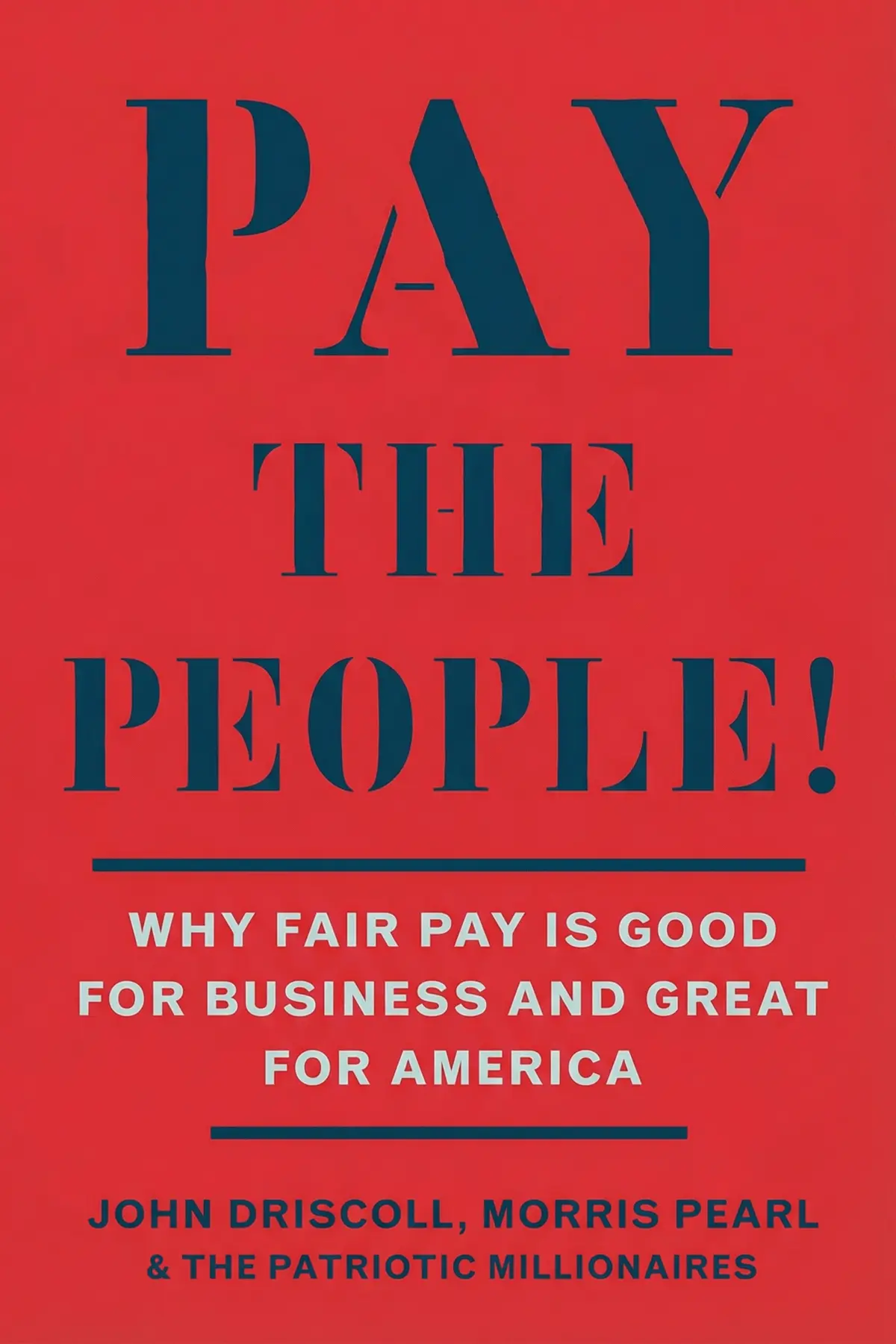
Table of Content
1. Introduction
2 min 17 sec
Back in 2015, the massive retail giant Walmart hit a wall. For years, the company had relied on a strategy of keeping labor costs as low as possible. While this looked good on a balance sheet in the short term, the long-term consequences were starting to rot the business from the inside out. Employee turnover was sky-high, meaning the company was constantly spending money to find and train new people who would inevitably leave. Customer service was suffering because the staff was overworked and under-compensated, leading to a visible decline in the shopping experience.
Instead of doubling down on austerity, Walmart’s leadership decided to pivot. They recognized that their workers weren’t just a line-item expense to be minimized; they were the engine of the company’s success. By raising wages and investing in training programs, Walmart saw a dramatic shift. Turnover slowed, customers were happier, and profits actually began to climb. This transformation served as a powerful proof of concept: treating workers well isn’t just a moral imperative; it’s a savvy business move.
This insight forms the core of Pay the People! Written by a coalition of successful business leaders and wealthy individuals known as the Patriotic Millionaires, this work argues that the current state of American wages is a ticking time bomb. These millionaires aren’t arguing from a place of pure charity. Rather, they are sounding the alarm because they realize that the very system that allowed them to become wealthy is being undermined by extreme inequality. They see an economy where the foundation is crumbling because the people at the bottom can no longer afford to participate in the market.
In the following sections, we will explore the mechanisms that have shifted trillions of dollars away from workers and into the pockets of the ultra-wealthy. We will look at the myths that keep wages low, the hidden epidemic of wage theft, and the clear data showing that when workers are paid a living wage, the entire economy grows stronger. It’s a journey through the modern labor landscape that suggests a more equitable future is not just possible, but necessary for the survival of the American economy.
2. The Instability of the Jenga Economy
2 min 46 sec
Imagine the American economy as a tower of blocks where the foundation is being stripped to build up the peak. Learn how decades of policy choices have created a precarious financial structure.
3. The Economic Engine of Fair Wages
3 min 09 sec
A surprise admission from a major restaurant chain reveals a hidden truth: higher wages actually drive business growth. Discover why the ‘bottom-up’ approach to economics is the most effective.
4. Debunking the Myths of Low-Wage Work
3 min 03 sec
Is the minimum wage just for teenagers, and will robots take every job if pay goes up? Explore the data that shatters common misconceptions about the labor market.
5. The Hidden Reality of Wage Theft
2 min 49 sec
While shoplifting makes the headlines, a much larger crime is happening behind the scenes. Learn how billions are taken from workers every year through subtle corporate tactics.
6. A Tale of Two Different Corporate Visions
3 min 06 sec
Compare the divergent paths of Walmart and Amazon to see how long-term investment in people stacks up against a model of constant worker turnover and churn.
7. Designing a Rational Wage System
2 min 55 sec
What if we took the politics out of pay? Explore how data-driven models and automatic adjustments could create a more stable and predictable economy for everyone.
8. Conclusion
1 min 51 sec
The central message of Pay the People! is that the era of prosperity through wage suppression must come to an end if we want a stable future. For too long, we have operated under the false assumption that what is bad for the worker is good for the company. But as we have seen through the experiences of major retailers and the research into state-level wage hikes, the opposite is true. An economy is only as strong as its broadest base of consumers. When we starve the bottom of the economic pyramid, we eventually starve the entire system.
The Patriotic Millionaires remind us that extreme inequality is not an inevitable law of nature; it is a policy choice. We can choose to continue moving pieces to the top of the Jenga tower until it collapses, or we can choose to rebuild a solid foundation. This means raising the minimum wage, indexing it to inflation to ensure it never loses its value again, and aggressively cracking down on the theft of worker wages. It means shifting our perspective to see labor not as a cost to be minimized, but as a vital investment in our collective future.
Ultimately, paying people a living wage is about more than just economics; it’s about the kind of society we want to live in. It’s about ensuring that work is rewarded with dignity and that the American dream remains a possibility for everyone, not just those at the very top. When the people are paid fairly, they spend, they invest, and they participate. That is the true engine of American greatness, and it’s time we started fueling it properly again. By aligning our business practices with our national values of fairness and opportunity, we can build an economy that is not only more equitable but also more resilient and more profitable for everyone in the long run.
About this book
What is this book about?
Pay the People! examines the widening gap between productivity and pay in the United States, arguing that the long-standing focus on low-cost labor has become a liability for the economy. The book highlights the perspective of the Patriotic Millionaires—a group of high-net-worth individuals who believe that extreme inequality is unsustainable. By contrasting the corporate strategies of major retailers and analyzing the success of states that have raised the minimum wage, the text demonstrates that higher pay leads to increased consumer spending, lower turnover, and overall economic health. The promise of this work is a practical roadmap for economic revitalization. It moves beyond political rhetoric to offer data-driven solutions, such as automatic wage indexing and regional cost-of-living adjustments. Readers will learn how the current system of wage suppression and the lack of enforcement against wage theft ultimately drain the economy. The book makes a compelling case that when workers have enough to participate in the consumer economy, businesses thrive, society stabilizes, and the American dream becomes more attainable for everyone.
Book Information
About the Author
John Driscoll
John Driscoll is the leader of Magnit Global, an international staffing firm that manages a workforce of 700,000 employees. He also serves as the chair of Waystar Corporation. Morris Pearl previously served as a managing director at BlackRock and is the author of Tax the Rich. The Patriotic Millionaires is an organization comprising wealthy Americans who advocate for fair taxation of corporations and high-net-worth individuals, arguing that a more equitable tax system is essential for a stable society.
Ratings & Reviews
Ratings at a glance
What people think
Listeners find the work thoroughly documented and extensive in its examination of economic principles, ensuring it remains accessible without being overly complex or too simplistic. Furthermore, the text offers actionable insights on how equitable wages for employees advantage everyone, as one listener points out its optimistic outlook for a more stable economic future. Beyond this, the caliber of the prose is commended, and listeners value the case made against stagnant pay and corporate excess.
Top reviews
Arm
This book is a loud wake-up call for anyone who thinks the current economic status quo is sustainable. Driscoll and Pearl make a compelling case that paying a living wage isn't just a moral imperative, but a practical necessity for a thriving consumer economy. I loved how they dismantled the myth that higher wages kill jobs, showing instead how they fuel growth and employee retention. It's refreshing to see millionaires calling for higher taxes on themselves and better pay for their staff. This isn't just theory; it’s a blueprint for a more equitable future that benefits everyone from the bottom up. The writing is sharp and the message is vital.
Show moreAudrey
Picked this up on a recommendation from a colleague in HR, and it totally changed my perspective on compensation strategies. The Patriotic Millionaires argue that when we pay people enough to actually live, they spend that money back into the local economy, creating a virtuous cycle. It was fascinating to see the historical data on how previous wage increases didn't lead to the mass unemployment that critics always predict. The writing is accessible and avoids overly dense jargon, making it a great read for business leaders and curious citizens alike. This book proves that a fair wage is the ultimate strategic tool for success.
Show moreKob
Wow, this was a powerful and surprisingly emotional look at the reality of being a low-wage worker in America today. We often talk about economics in the abstract, but the authors bring it down to the human level by discussing things like the struggle of tipped employees. I was unaware of how some companies use 'manager' titles just to avoid paying overtime, which feels incredibly predatory when laid out like this. The argument for raising the floor to lift everyone up, including those already making above minimum wage, is logically sound. It’s a hopeful book that offers real solutions for a more balanced and fair economy.
Show moreVarinee
Personally, I found the analysis of the productivity-pay gap to be the most compelling part of this entire book. The authors show that while workers are doing more than ever, their compensation has remained virtually flat for decades, which is a recipe for social instability. Look, the book isn't perfect; some of the charts are a bit small and hard to read without a magnifying glass. Still, the core message that a healthy middle class requires a solid foundation of fair pay is something that both parties should listen to. It’s a call to action for institutions to stop prioritizing short-term gains over long-term viability.
Show moreRodrigo
The chapter on tipped wages alone is worth the price of the book, as it exposes a system that essentially legalizes poverty wages. As someone who has worked in the service industry, I found the authors’ defense of one fair wage to be incredibly validating and well-researched. They don't just complain about the problem; they provide practical ideas for how we can transition to a better model without crashing the economy. It’s a quick read, but the information stays with you long after you put it down. I’ll definitely be passing my copy along to friends who still think minimum wage increases are bad for the business world.
Show moreNathan
Ever wonder why the federal minimum wage has been stuck at $7.25 since the year 2009? Pay the People! dives deep into this stagnation, illustrating how the disconnect between productivity and pay has reached a breaking point for the American worker. The authors use a lot of stats to back up their claims, which can get a bit dry at times, but the core message remains powerful and clear. I found the sections on how low wages actually cost the taxpayers more in the long run quite eye-opening. While some graphs were a little cluttered and needed better explanation, the overall argument for economic justice is undeniable.
Show moreSau
Not what I expected when I first picked this up, but I appreciate the passion behind the project. While the authors are clearly experts, the text felt a bit repetitive in the middle chapters as they hammered home the same points about corporate greed. To be fair, the examples regarding 'fake manager' titles and tipped workers being exploited were shocking and well-documented. However, I felt the political attacks on specific senators were a bit distracting from the actual economic data being presented. It serves as a decent reference book, but the editing could have been tighter to keep the momentum going.
Show moreLaddawan
Finally got around to reading this, and frankly, it should be required reading for anyone in a leadership position. The book shines a light on some truly horrifying practices, like the 'school lunch debt' shaming and the loophole where tipped workers earn less than the minimum wage. Driscoll’s writing style is punchy and direct, even if a few of the proofreading errors—like the flipped years for inflation—snuck through into the final copy. I appreciated the specific examples of companies that already pay living wages and are thriving because of it. It’s an enlightening look at why our current system is failing so many people.
Show moreHassan
After hearing Morris Pearl speak on a podcast, I knew I had to check out Pay the People! for myself. The truth is, we are living through an era of unprecedented corporate wealth while the people actually doing the work are struggling to buy groceries. This book cuts through the noise and explains why it's in everyone's best interest to raise the federal minimum wage immediately. It’s written with a sense of urgency and clarity that you don't often find in books about economics. If you want to understand the fight for a living wage in America, this is a great place to start your research.
Show morePear
I really wanted to like this more, but I found it a bit too confusing with the way the statistics were listed throughout. While I agree with the premise that people deserve a living wage, the book felt more like a collection of political grievances than a cohesive economic study. Many of the graphs were presented with very little explanation, leaving me to guess at what the data was actually trying to show. The repetition of certain talking points made it feel twice as long as it needed to be. It’s an important topic, but the delivery and the lack of professional editing just didn't work for me as a reader.
Show moreReaders also enjoyed

A Biography of Loneliness: The History of an Emotion
Fay Bound Alberti
A Force for Good: The Dalai Lama's Vision for Our World
Daniel Goleman
1929: Inside the Greatest Crash in Wall Street History--and How It
Andrew Ross Sorkin
A Room of One’s Own
Virginia Woolf
23 Things They Don’t Tell You About Capitalism
Ha-Joon Chang
Abolish Rent: How Tenants Can End the Housing Crisis
Tracy Rosenthal
AUDIO SUMMARY AVAILABLE
Listen to Pay the People! in 15 minutes
Get the key ideas from Pay the People! by John Driscoll, plus 5,000+ more titles in English and Thai.
- 5,000+ titles
- Listen as much as you want
- 7-day free trial
- Cancel anytime







