
20 min 42 sec
Phantoms in the Brain: Probing the Mysteries of the Human Mind
Phantoms in the Brain explores the strange world of neurological anomalies to uncover how the human mind constructs reality, perception, and the self through the study of patients with bizarre brain disorders.
Table of Content
1. Introduction
1 min 47 sec
Consider for a moment the sheer complexity of the organ sitting inside your skull. It is a three-pound mass of tissue that manages to curate every single thought, feeling, and sensation you have ever experienced. But most of the time, we are entirely unaware of the machinery working behind the scenes. We assume that our eyes see the world exactly as it is, that our bodies belong to us inherently, and that our memories are faithful recordings of the past. It is only when something goes wrong—when a stroke, an injury, or a genetic quirk disrupts the delicate wiring of the brain—that the curtain is pulled back.
In this exploration of Phantoms in the Brain, we are invited to look at the human mind through the lens of the exceptional. We will meet individuals who live in realities that seem impossible. We’ll encounter a woman who ignores half of her universe and a man who believes his own parents have been replaced by body doubles. These stories might sound like they belong in a work of surrealist fiction, but they are very real medical cases.
Why do we study these anomalies? Because the broken brain is a window into the healthy one. By observing how specific damage leads to specific behavioral changes, neuroscientists can map out the geography of human nature. This journey isn’t just about understanding medical conditions; it’s about understanding the ‘phantom’ reality that your own brain is currently constructing for you. As we walk through these clinical cases, we will discover the biological roots of our most profound human traits: our laughter, our sense of self, and even our connection to the divine. This is the story of how the brain creates the world, one neuron at a time.
2. Mapping the Architecture of the Mind
2 min 23 sec
How can a simple magnetic pulse or a tragic surgical error reveal the hidden geography of our brains and the specialized roles of each hemisphere?
3. The Ghost in the Machine and Body Image
2 min 14 sec
What happens when your brain continues to feel a limb that has been physically removed, and what does this reveal about our internal sense of self?
4. The Searchlight of Attention and Blind Spots
2 min 04 sec
Discover the strange world of hemi-neglect, where the brain simply deletes an entire side of the universe from a person’s conscious awareness.
5. When Faces Lose Their Emotional Warmth
2 min 05 sec
How a tiny disconnect between the visual and emotional centers of the brain can lead someone to believe their parents are clones.
6. The Brain’s Ability to Deny the Obvious
1 min 59 sec
What if denial wasn’t just a psychological choice, but a physical result of a brain that can no longer process the truth about its own body?
7. The Neural Circuitry of Spiritual Ecstasy
2 min 07 sec
Could our most profound spiritual moments be the result of specific electrical activity in the temporal lobes of our brains?
8. Laughter as an Evolutionary Safety Signal
2 min 00 sec
Why do we laugh at funerals or inappropriate jokes? The answer may lie in a primitive ‘false alarm’ system buried in our biology.
9. The Profound Bridge Between Mind and Body
2 min 08 sec
How a woman’s deep desire to have a child can cause her body to mimic every physical symptom of pregnancy, even without a fetus.
10. Conclusion
1 min 55 sec
As we look back at these extraordinary cases, a clear and consistent theme emerges: the world we live in is a construction of our own making. We think we are seeing the objective truth, but we are actually seeing what our brains allow us to see. We think our ‘self’ is a solid, unchangeable thing, but we’ve seen how easily it can be fragmented. Whether it is a phantom limb that refuses to disappear, a face that loses its emotional meaning, or a body that mimics a pregnancy that isn’t there, these ‘phantoms’ show us the hidden scaffolding of the human mind.
What does this mean for you? It means that your brain is much more than a passive observer. It is an active storyteller, constantly weaving together sensory data, emotions, and memories to create the narrative of your life. It also means that we should have a profound sense of empathy for those whose brains have taken them to different realities. Their experiences aren’t ‘fake’; they are simply the result of a different set of neurological instructions.
The most important takeaway is the power of the mind-body connection. Your thoughts and perceptions aren’t just ‘in your head’—they are signals that can change your physical state. By understanding the mysteries of the brain, we gain more than just scientific knowledge; we gain a deeper appreciation for the miracle of our own consciousness. The next time you see a loved one, laugh at a joke, or simply move your arm, remember that there is a complex, beautiful, and sometimes fragile world of neurological ‘phantoms’ making it all possible. The brain is truly the final frontier, and as we continue to probe its mysteries, we find that the most incredible thing about it is simply how it allows us to be us.
About this book
What is this book about?
What happens when the brain’s internal map of the world stops matching reality? Phantoms in the Brain takes listeners into the consulting room of one of the world’s leading neuroscientists to examine cases that seem like fiction but are entirely real. From patients who feel limbs that are no longer there to individuals who believe their loved ones are imposters, these stories are more than just medical curiosities. They are the keys to understanding how every one of us experiences the world. This summary provides a deep dive into the architecture of the human mind, explaining how specialized regions of the brain handle everything from our sense of humor to our spiritual experiences. It promises to transform how you view your own consciousness by showing that our sense of identity and perception are actually fragile constructs generated by a complex biological machine. By looking at what happens when the brain breaks, we gain an unprecedented view of how it works when it is whole.
Book Information
About the Author
V. S. Ramachandran
V. S. Ramachandran is an internationally celebrated neuroscientist and a professor at the University of California, San Diego. He is widely recognized for inventing mirror therapy, a groundbreaking treatment for phantom limb pain, and has written several popular science books, including The Tell-Tale Brain. Sandra Blakeslee is a distinguished, award-winning science writer for the New York Times, focusing on the field of neuroscience. She has coauthored several books, including the national bestseller Second Chances and The Good Marriage.
Ratings & Reviews
Ratings at a glance
What people think
Listeners find this book engrossing and expertly composed, with one individual mentioning how simply it clarifies brain mechanics. It delivers remarkable details about the mind, aiding listeners in understanding neural circuits, and contains gripping case studies that make for a compelling experience. Listeners value the humor and prose, with one person likening it to a detective story, while another notes its usefulness for gaining perspective on neurological disorders.
Top reviews
New
This book reads like a high-stakes medical detective story where the culprit is always a misfiring synapse or a remapped brain circuit. Ramachandran adopts a Sherlock Holmes persona, meticulously tracking down the roots of bizarre neurological phenomena like phantom limbs and blindsight. While he is certainly more clinical than Oliver Sacks, his scientific rigor adds a layer of credibility that makes the stories even more impactfull. The way he describes using a simple mirror box to treat agonizing phantom pain is nothing short of brilliant. It is a perfect antidote to dry, technical academic writing. I found myself fascinated by the 'filling in' process of our blind spots, which proves how much of our reality is essentially a construction. The prose is lucid, charismatic, and packed with an infectious sense of wonder. If you want to understand the 'Astonishing Hypothesis' of the human mind, start here.
Show morePatchara
After hearing so many comparisons to Sacks, I was eager to see if Ramachandran could live up to the hype, and he absolutely does. He explores the deep end of cognitive neuroscience with a focus on patients who have lost their sense of self or reality. The cases of Capgras syndrome—where people think their loved ones are imposters—are genuinely haunting and philosophically rich. I appreciated how the author bridges the gap between hard science and neurophilosophy, touching on the nature of consciousness itself. To be fair, he can occasionally seem a bit detached from the emotional plight of his patients compared to other authors, but his insights are too profound to ignore. His exploration of the 'how' and 'what' visual pathways changed how I perceive my own sight. This is a foundational text for anyone interested in the brain's stranger-than-fiction capabilities.
Show moreMarasri
Picked this up on a recommendation and it blew my mind within the first fifty pages. The concept that our brains are constantly in flux, with neurons invading adjacent territories after an injury, is just wild. Ramachandran’s work with phantom limb sufferers is legendary for a reason—the mirror box experiment is such an elegant, low-tech solution to a high-concept neurological problem. Truth is, I expected something much drier, but the author’s wit and use of Shakespearean references keep the narrative moving quickly. He really captures that sense of childhood curiosity about the universe. The discussion on the neurological underpinnings of religious visions was a highlight for me, offering a grounded perspective on experiences usually left to mystics. It’s a dense book but incredibly rewarding if you’re willing to sit with the big questions. I can't recommend it enough for science buffs.
Show moreCarter
Wow, the sheer variety of syndromes covered in this work is enough to make your head spin. From people who neglect an entire side of their body to those who laugh themselves to death, every page offers a new mystery. Ramachandran’s style is erudite yet conversational, often dropping historical or philosophical anecdotes that illuminate the science. The 'Astonishing Hypothesis'—the idea that our entire existence is just clusters of neurons—is explored with such vigor here. I was especially struck by the case studies involving the limbic system and how it governs our emotional response to faces. The book manages to be both a humanitarian service to those suffering and a brilliant piece of pop-science literature. It captures the 'detective' aspect of neurology perfectly. It is a stunning feat of writing that remains relevant years after its initial publication.
Show moreYanin
The chapter regarding religious ecstasy and the temporal lobes is probably the most thought-provoking piece of science writing I have encountered. It’s fascinating to see how certain types of epilepsy can trigger profound spiritual revelations that feel more real than reality itself. Ramachandran handles these sensitive topics with a graceful curiosity that is never dismissive. Personally, I found the explanation of 'blindsight' to be the most technically impressive part of the book; the idea that we can 'see' without conscious awareness is a total game-changer. The prose is rich with metaphors and lucid explanations that help you visualize the brain's internal architecture. Even if you aren't a science nerd, the human stories here are enough to keep you hooked. It’s a brilliant exploration of the phantoms lurking in all our minds.
Show moreLucas
Finally got around to reading this classic and it still holds up as one of the best books on the brain ever written. The way Ramachandran explains 'learned paralysis' and how to unlearn it through visual feedback is simply masterclass. It’s a rare book that can make you laugh, make your jaw drop, and make you ponder the nature of your own soul all in one chapter. He avoids the trap of being 'touchy-feely' and instead gives you the raw, beautiful mechanics of how we function. The collaboration with Sandra Blakeslee clearly paid off because the narrative flow is seamless and the humor is well-timed. Whether he’s talking about phantom penises or the neurological basis of the self, he remains engaging and profoundly sane. This is essential reading for anyone who wants to know what's actually going on inside their skull.
Show moreSiriporn
Ever wonder how someone can be convinced they are actually dead or rotting away? The sections on Cotard’s syndrome were deeply unsettling but handled with a level of scientific curiosity that kept me turning the pages. Ramachandran does a fantastic job making complex topics like the Penfield homunculus accessible to a layperson without ever dumbing it down. Look, the book is a bit older now, so some of the 'cutting edge' theories might have evolved, but the core logic remains incredibly sound. I particularly enjoyed the chapter on the origins of laughter and humor as a 'false alarm' signal. My only minor gripe is that he occasionally repeats himself when explaining the neural pathways, but it helps cement the information. It’s a captivating read that makes you realize how fragile our perception of the world truly is. Definitely worth the time.
Show moreAom
As someone who has always been fascinated by the mind-body connection, I found the chapter on phantom pregnancies particularly enlightening. It’s amazing how the brain can trigger physical symptoms as complex as morning sickness and abdominal swelling based on a psychological state. Ramachandran isn't afraid to venture into 'esoteric' territory while keeping one foot firmly planted in scientific scrutiny. I like that he gives Freud some credit for early intuitions while providing a more modern, neurological framework for why we behave the way we do. Frankly, the writing is much more accessible than your average textbook, though it does require some concentration during the parts about the temporal lobes. It isn't quite as 'warm' as a Sacks book, but the sheer volume of information is staggering. It’s a great deep dive into the circuits that make us human.
Show moreRung
Not what I expected given the rave reviews I've seen online. I'll admit the mirror box and phantom limb stuff is genuinely cool, but I felt like the book dragged in the middle sections. The detailed descriptions of brain maps and synaptic connections started to feel repetitive after a while. To be fair, the author is clearly a genius and his 'detective' approach is unique, but it can be a bit of a slog if you aren't already well-versed in biology. I also found some of the sexual innuendos and Freudian critiques a bit distracting from the main scientific points he was trying to make. It’s a good book, don’t get me wrong, and the information on Capgras syndrome is top-tier. I just think it could have been about fifty pages shorter without losing much of its impact.
Show moreIvan
Truth is, I struggled with the tone of this one despite the very interesting subject matter. While the cases themselves are undeniably fascinating, the author’s approach felt a bit too cold and clinical for my taste. He frequently refers to the people he treats as 'patients' or 'cases' in a way that feels somewhat detached, especially compared to the empathy you find in Oliver Sacks' writing. There is a certain arrogance in the prose—almost a 'look how smart I am for solving this' vibe—that rubbed me the wrong way. Also, be warned that some of the terminology is quite dense; I found myself having to re-read paragraphs multiple times just to grasp the basic anatomy of the parietal lobes. If you want a purely scientific breakdown, this might work for you, but I was looking for something with a bit more heart.
Show moreReaders also enjoyed


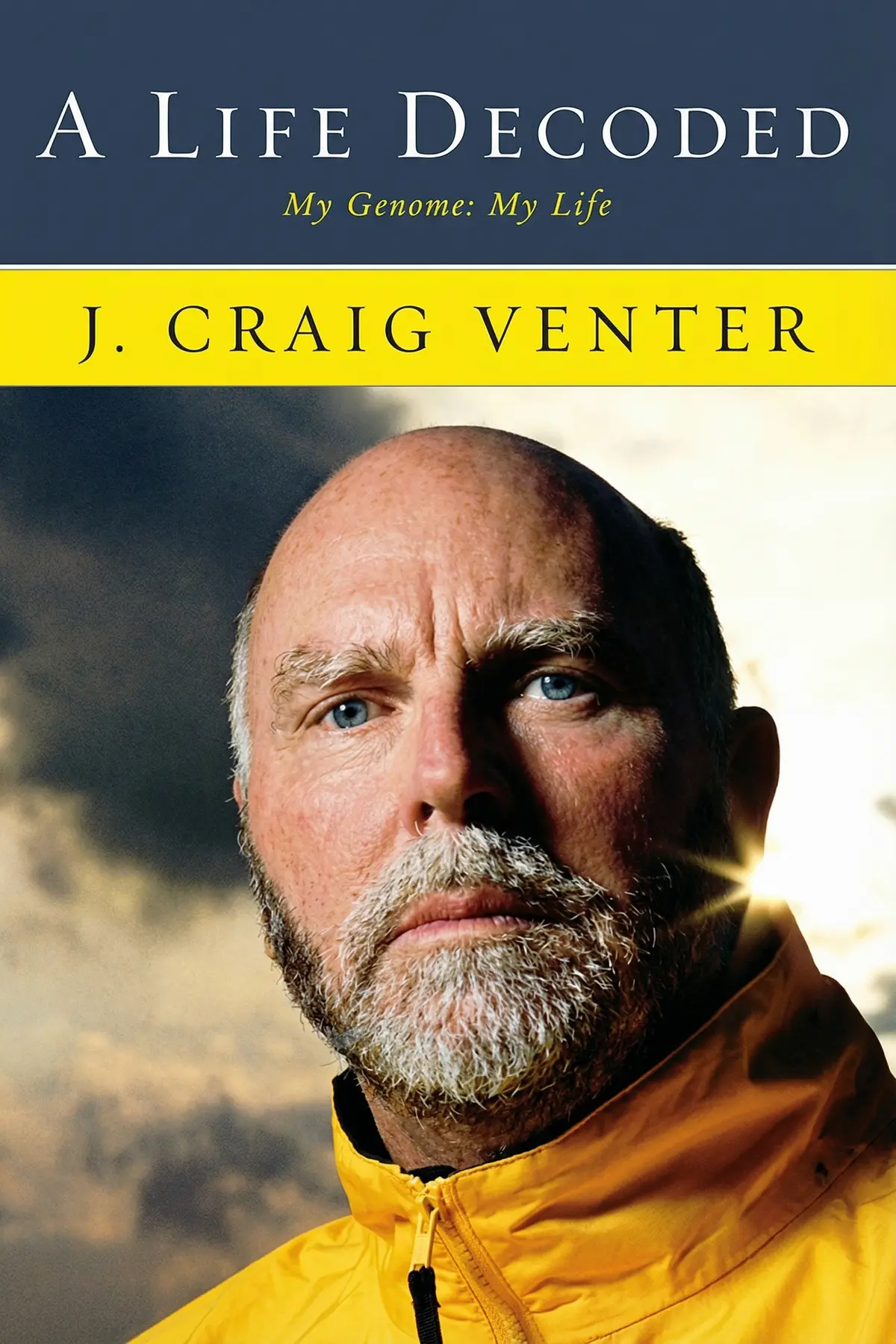
A Life Decoded: My Genome: My Life
J. Craig Venter
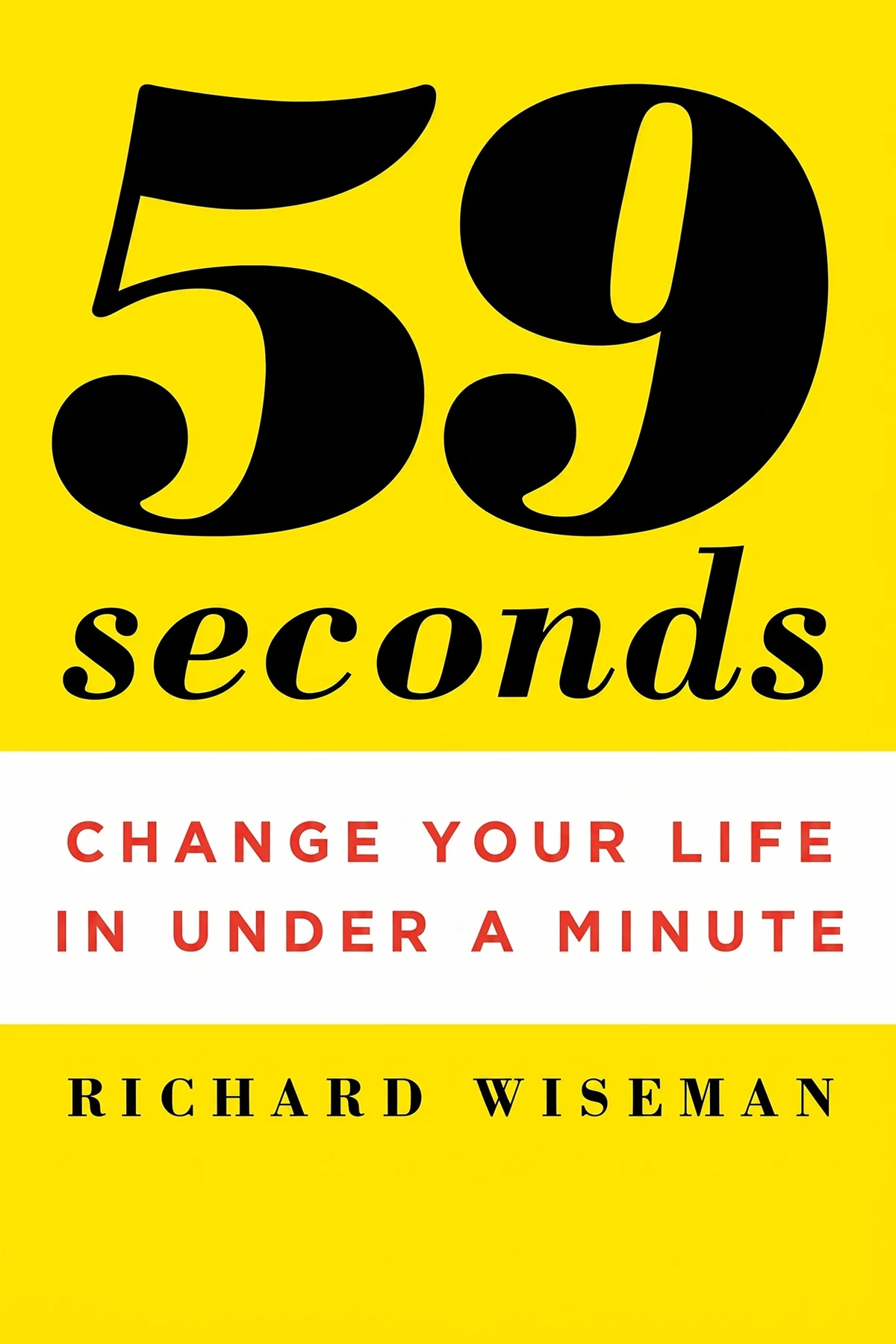
59 Seconds: Change Your Life in Under a Minute
Richard Wiseman
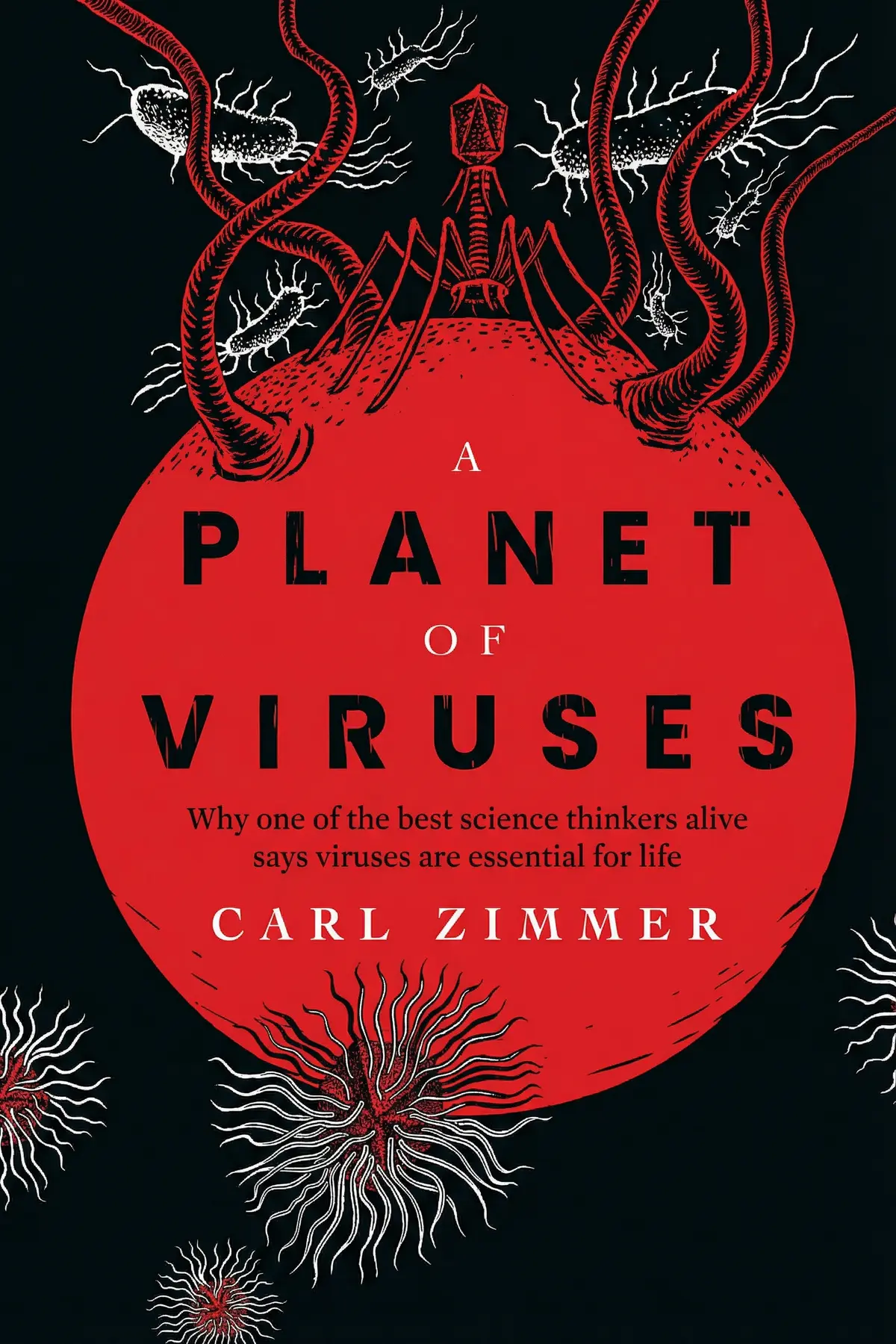
A Planet of Viruses
Carl Zimmer
AUDIO SUMMARY AVAILABLE
Listen to Phantoms in the Brain in 15 minutes
Get the key ideas from Phantoms in the Brain by V. S. Ramachandran, plus 5,000+ more titles in English and Thai.
- 5,000+ titles
- Listen as much as you want
- 7-day free trial
- Cancel anytime







