All About Love: New Visions
bell hooks
Explore how attachment theory provides a framework for navigating consensual nonmonogamy. This guide offers tools to build secure, healthy connections with multiple partners while fostering a strong relationship with yourself.
2 min 02 sec
Think about the way you behave when you are in a relationship. When you are together with your partner, do you feel a sense of ease and engagement? Are you able to navigate the landscape of your own emotions and theirs, discussing them openly and honestly? And consider the moments when you are apart. Does a sense of longing fill the space, or do you find yourself moving through your day with a sense of calm independence? Perhaps you feel a nagging sense of worry whenever they are out of sight.
Every relationship is a unique ecosystem, but there is a psychological framework that can help make sense of these dynamics. It is called attachment theory. By understanding the four primary attachment styles, we can gain a profound look at why we interact with others the way we do. This isn’t just about labeling our behavior; it’s about identifying the habits that prevent us from feeling truly safe and secure, and then learning how to build better ones.
But here is where things get even more interesting. What happens to these attachment dynamics when you add more people into the mix? If you have ever been in a relationship, you know they are emotionally intensive. Now, imagine balancing those intense emotional needs across two, three, or even more partners. Consensual nonmonogamy is an increasingly popular way of life for many, but it brings a specific set of challenges that traditional relationship advice often overlooks.
In this exploration, we are going to look at the intersection of attachment theory and polyamory. We will start with the foundational concepts of how we form bonds and how early life experiences shape our adult selves. Then, we will look at how these styles manifest in nonmonogamous settings. Most importantly, we will dive into a practical framework for becoming polysecure—learning how to maintain a core of stability and safety while navigating multiple romantic connections. This journey is about more than just managing schedules; it is about deeply understanding your own heart and how to share it with others responsibly.
3 min 05 sec
Our adult relationship patterns often stem from early childhood interactions. By revisiting a classic psychological experiment, we can identify the four distinct styles of human bonding.
3 min 02 sec
Consensual nonmonogamy is often misunderstood, but research suggests that those who choose this path may actually have a unique advantage in emotional security.
2 min 22 sec
Building security across multiple relationships requires a specific set of tools. The first steps involve being truly present and learning to celebrate your partner’s joy with others.
2 min 50 sec
The middle of the HEARTS model focuses on the day-to-day work of keeping relationships healthy through active listening, routines, and effective conflict resolution.
2 min 42 sec
The final component of being polysecure isn’t about how you treat your partners, but how you relate to yourself. Internal security is the foundation of all external bonds.
1 min 33 sec
As we wrap up our exploration of these ideas, it’s clear that the journey to becoming polysecure is both a psychological and a practical endeavor. We’ve seen how the roots of our relational behavior stretch back to our earliest days, and how those patterns—whether they are secure, anxious, or avoidant—continue to play out in our adult lives. Attachment theory provides us with a map, but it is not a fixed destiny. By understanding the specific challenges that consensual nonmonogamy presents, we can use tools like the HEARTS framework to build bridges of trust and understanding across multiple connections.
Remember that the goal isn’t to eliminate all feelings of jealousy or insecurity. Those are natural human emotions. Instead, the goal is to develop the resilience and the communication skills to navigate those feelings when they arise. By prioritizing presence, expressing delight in our partners’ growth, attuning to their needs, maintaining rituals, and turning toward each other in times of conflict, we create an environment where love can flourish in all its forms.
But above all, never forget that the most enduring relationship you will ever have is the one you have with yourself. By doing the inner work to heal old wounds and cultivate self-security, you provide the stability that all your other relationships need to thrive. Whether you are in one relationship or many, the path to security starts with the courage to look inward and the commitment to showing up—for your partners, and for yourself—with honesty and heart.
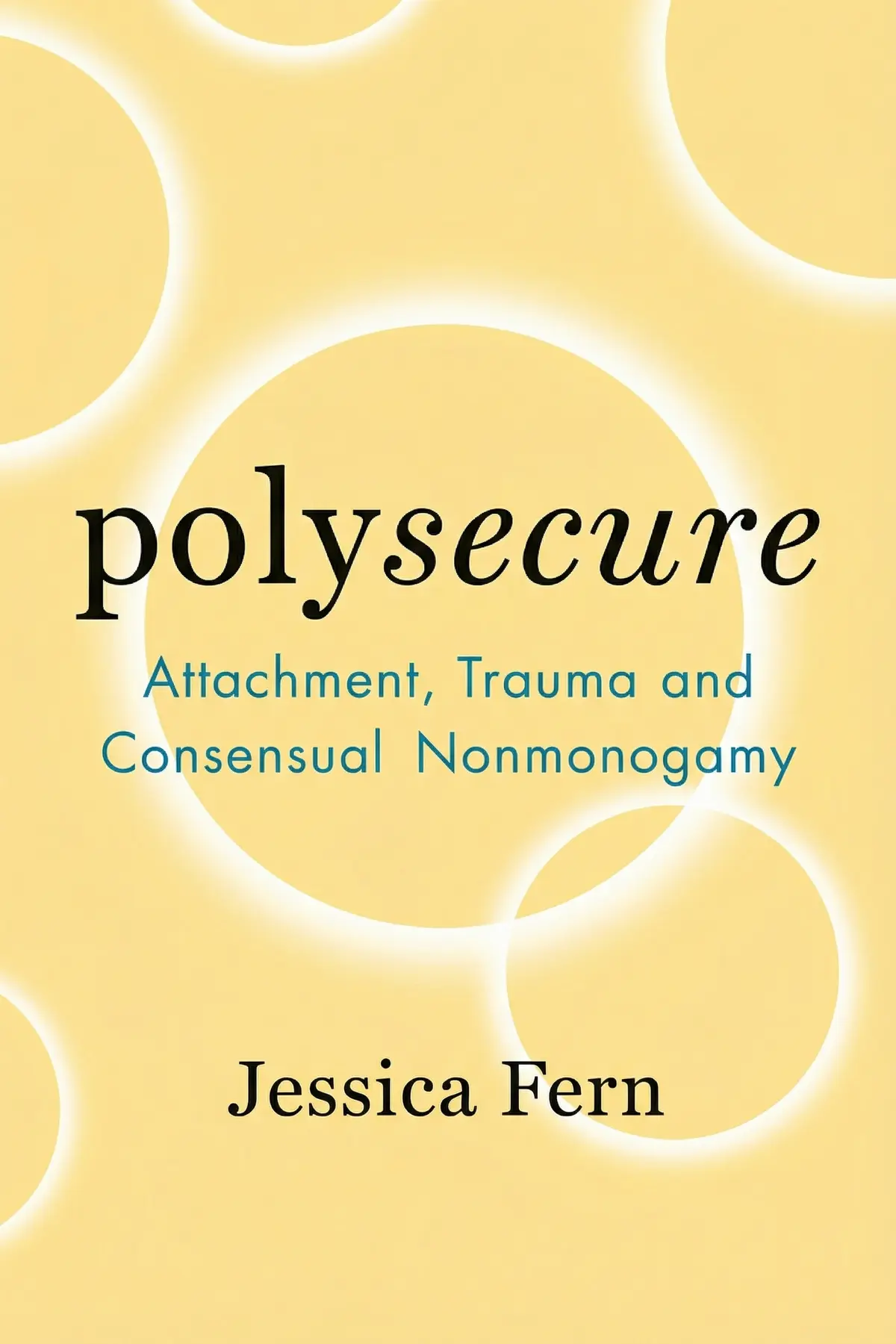
Polysecure examines the intersection of psychological attachment theory and modern relationship structures, specifically consensual nonmonogamy. It begins by grounding the reader in the fundamentals of how we form bonds, tracing the origins of our relational habits back to early childhood experiences and the various forms of trauma that can disrupt our sense of safety. The book promises to move beyond traditional monogamous models, showing that emotional security is not a zero-sum game limited to a single partner. By introducing the HEARTS framework, it provides actionable strategies for maintaining intimacy, presence, and repair across multiple romantic connections. Ultimately, it emphasizes that the foundation of any healthy polyamorous network is the secure attachment one cultivates with themselves, offering a roadmap for navigating the complexities of multiple loves without losing one's center.
Jessica Fern is a professional psychotherapist and an engaging public speaker. Her professional focus is dedicated to the complex intersections of trauma and human relationships, with a particular specialization in the field of nonmonogamy. Polysecure marks her debut as an author, establishing her voice in the relationship literature space.
Listeners find the book remarkably educational, featuring helpful exercises and a superb analysis of attachment theory. They value how it explores every kind of relationship and provides a nested model of attachment, with one listener highlighting its role in learning to respect thoughts. The guide earns praise for its depth and trauma awareness, with one listener mentioning how it helped them address traumas. While listeners find the content interesting, perspectives on the difficulty level are mixed; some claim it is not tedious, whereas others find it a struggle to complete.
How do you maintain a sense of safety when your partner is falling in love with someone else? This book provides a brilliant roadmap for navigating the complex emotional terrain of non-monogamy through the lens of attachment theory. Jessica Fern introduces the 'nested model' of attachment, which looks beyond the individual to consider how our environment and history shape our relational needs. Personally, I found the HEARTS model to be an incredibly practical framework for building security across multiple partnerships. It’s not just a theoretical text; it’s a manual for emotional resilience. The writing can be quite dense at times, but the depth of insight into trauma and self-soothing makes the effort worthwhile. For anyone who has felt that standard attachment books are too monogamy-centric, this is the resource you have been waiting for. It shifts the focus from 'fixing' yourself to understanding the intricate dance of human connection.
Show moreJessica Fern has written the definitive guide for anyone trying to navigate multiple committed relationships without losing their mind. Truth is, most polyamory resources focus on the 'how-to' of scheduling and boundaries, but Polysecure dives deep into the 'why' of our emotional triggers. The way she bridges the gap between infant-caregiver attachment and adult romantic autonomy is fascinating and deeply healing. I appreciated how she addressed trauma without making it feel like a terminal diagnosis or a defect to be hidden. The sections on developing a 'warm shelter' within oneself are particularly moving and provide a necessary anchor for those of us prone to anxious attachment. While the academic tone might be a bit much for some, the practical questions at the end of the chapters offer real-world application. This isn't just a book for poly people; it’s a book for anyone who wants to understand the architecture of human intimacy.
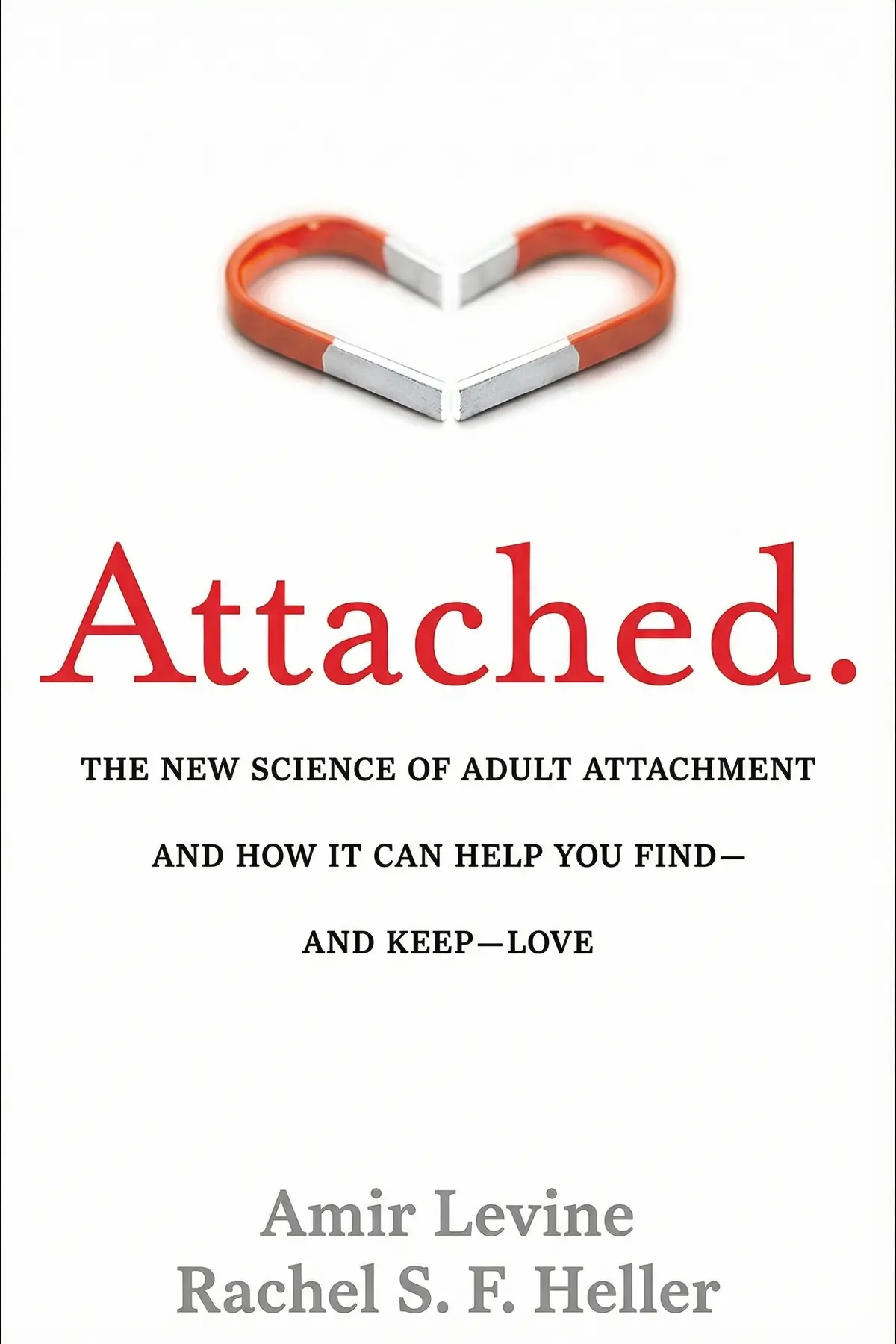
Show moreWow. This was exactly the toolkit I didn't know I needed for my relationship journey. I’ve read 'Attached' before, but it always felt like it was telling me that my desire for multiple partners was just a sign of avoidant attachment. Fern flips that script entirely. She validates the polyamorous experience while still holding us accountable for the work required to build security. The focus on 'self-attachment' was a revelation; it reminded me that I am the primary constant in my own life. The HEARTS framework—incorporating things like expressed delight and ritual—is so much more helpful than just talking about 'boundaries' all the time. Frankly, it’s rare to find a book that feels both intellectually stimulating and emotionally resonant. It helped me address some long-standing traumas that were manifesting as irrational jealousy. Every polycule should have a copy of this on their shared bookshelf.
Show moreFinally got around to reading this after hearing every single person in my local poly meetup group rave about it for months. I can see why it’s become the new 'bible' for the community. Fern manages to destigmatize consensual non-monogamy by framing it through the very human need for secure connection. The practical questions she poses are tough but necessary, forcing you to look at your own patterns without shame. I especially loved the emphasis on how systemic issues like racism and patriarchy impact our ability to feel safe in our bodies and relationships. It’s a holistic view that most self-help books completely ignore. The text is very trauma-informed, which is crucial when you're dealing with the vulnerability of opening up a relationship. It’s a dense read, so don't expect to fly through it in one sitting. Take your time, do the exercises, and let the concepts sink in.
Show morePicked this up during a particularly rocky transition in my triad, and the clarity it provided was immediate and profound. We were all struggling with different triggers, and Fern’s explanation of how 'insecure' behaviors are often just survival strategies from our past helped us stop blaming each other. Not gonna lie, some of the exercises were emotionally exhausting, but they led to the most honest conversations we’ve ever had. The way she breaks down the HEARTS acronym makes building security feel like a series of small, manageable actions rather than an impossible mountain to climb. It’s a very deep dive into the psychology of connection. I appreciated the lack of judgment throughout the book; Fern never makes you feel 'broken' for having an insecure attachment style. Instead, she shows you how to work with it. This is a must-read for anyone serious about making non-monogamy work for the long haul.
Show moreIn my experience, most relationship books assume that 'secure' equals 'exclusive,' which leaves those of us in the CNM community feeling defective by default. This book is the first time I’ve felt truly seen and understood by a psychological framework. Fern’s writing is accessible yet intellectually rigorous, providing a nested model that accounts for self, partner, and society. The idea of being a 'warm shelter' for yourself is a beautiful metaphor that I’ve shared with almost all my friends. It really helps with learning to respect your own thoughts and feelings rather than just reacting to them. While some parts are a bit hard to get through because of the technical language, the practical questions are incredibly helpful for self-reflection. It’s a trauma-aware masterpiece that has significantly improved my emotional vocabulary. If you are struggling with jealousy or instability in your poly relationships, do yourself a favor and read this. It’s life-changing.
Show moreAs a long-time practitioner of ENM, I've struggled to find resources that don't just treat non-monogamy as a 'lifestyle choice' but as a deep relational structure. This book finally bridges that gap. The analytical approach to secure attachment in a non-exclusive context is refreshing and long overdue. Gotta say, the first half is a bit of a slog if you already know the basics of attachment theory, as it covers a lot of introductory ground. However, once you get to the second half, the insights into how multiple attachments can coexist and even strengthen one another are golden. I did find some of the prose a bit repetitive, and there were moments where the academic jargon felt slightly unnecessary. Despite those minor gripes, the nested model of attachment is a significant contribution to the field. It’s a solid 4-star read that I’ll likely revisit whenever my relationships hit a turbulent patch.
Show moreLook, I’ll be the first to admit that self-help books usually make me want to roll my eyes into the back of my head. Most of them are filled with trite platitudes that don't help when you're actually crying on the bathroom floor. Polysecure is different because it feels grounded in clinical reality. The breakdown of how avoidant and anxious styles interact in a polyamorous dynamic was eye-opening for me and my partners. We’ve been using the prompts to facilitate our check-ins, and it’s helped us move away from a hierarchy of fear toward a hierarchy of needs. My only real complaint is that the author can be a bit repetitive, hammering home the same points multiple times. It could have been about 50 pages shorter without losing any substance. Still, the core message about building a secure base within yourself is something I think every person—poly or not—needs to hear.
Show moreThe chapter on developing a secure attachment with yourself was a total game-changer for me during a rough breakup. It’s easy to get lost in the needs of your partners and forget that your relationship with yourself is the foundation for everything else. Jessica Fern writes with a lot of compassion, and her background as a therapist really shines through in the way she handles sensitive topics like trauma and betrayal. The book is very informative and provides an excellent breakdown of how our early childhood experiences color our adult romantic choices. I did feel that the section on structural violence was a bit weak and could have been integrated better into the rest of the theory. It felt a little 'tacked on' at times. Regardless, the nested model is a great way to visualize the different layers of security we need to thrive. It’s a thoughtful, well-researched guide that offers plenty of food for thought.
Show moreNot what I expected given the massive hype surrounding it in certain circles. To be fair, the glossary is helpful for beginners, but the rest of the book felt like an oversimplification of complex psychological research. Fern relies heavily on a quadrant model of attachment that doesn't always align with the actual science of Mary Ainsworth’s work. It felt like she was trying to force a square peg into a round hole to make attachment theory fit the poly narrative. Additionally, the book seems written for a very specific demographic—largely white, urban, and middle-class. It glosses over the material realities of people who aren't financially independent or who face systemic transphobia. I found her personal anecdotes a bit self-indulgent, and the writing style was often clunky and obscure. If you want a rigorous look at attachment, there are better academic texts out there. This felt more like pop-psychology than a revolutionary breakthrough.
Show moreAUDIO SUMMARY AVAILABLE
Get the key ideas from Polysecure by Jessica Fern, plus 5,000+ more titles in English and Thai.