
A Long Way Gone: Memoirs of a Boy Soldier
Ishmael Beah
A visceral journey through Britain’s marginalized communities, exploring how systemic deprivation and personal trauma collide. Darren McGarvey challenges our perceptions of the underclass and offers a path toward individual and collective healing.
1 min 47 sec
In recent years, the political landscape of Britain has undergone seismic shifts, often fueled by a deep-seated frustration simmering within the working class. While certain segments of the population enjoy unprecedented prosperity, there is a vast, often invisible underclass that feels fundamentally excluded from the national narrative. This isn’t just about a lack of money; it’s about a lack of voice, a lack of agency, and a growing sense that the system is rigged against those at the bottom. To truly understand this anger, one must move beyond the sanitized statistics and political talking points. One must take a journey into the heart of the communities that the rest of society usually only views from a safe, detached distance.
This exploration isn’t a mere academic exercise. It is a lived experience, captured with unflinching honesty by someone who survived the very cycles he describes. We are looking at a world of underfunded housing, the harrowing grip of addiction, and the psychological toll of growing up in an environment where violence is as common as the gray Scottish drizzle. It is a story that bridges the gap between the personal and the political, showing how the trauma of an individual is often a reflection of the failures of the state.
Through these insights, you will discover the gritty realities that define life for many in the UK today. You will learn how systemic poverty shapes a person’s worldview long before they are old enough to vote, and why the institutions meant to alleviate suffering often end up perpetuating it. This is an invitation to see the world through the eyes of the marginalized—not to satisfy curiosity, but to foster the kind of radical empathy that is necessary for any real social change. It is a throughline that connects the chaos of a difficult childhood to the broader tensions currently pulling at the fabric of modern society.
2 min 04 sec
Discover how the constant threat of conflict in impoverished neighborhoods shapes the psyche of the youth, turning survival instincts into permanent personality traits.
2 min 04 sec
Explore the stark contrast in how the media and government treat the concerns of the wealthy versus the struggles of the working class.
2 min 01 sec
Learn how the same social circles that offer solidarity and empowerment can also lead individuals down a path of self-destruction.
1 min 56 sec
Uncover the hidden costs of gentrification and why top-down social programs often fail to connect with the people they aim to serve.
2 min 08 sec
See the world through the eyes of an activist who discovers that the media is more interested in his trauma than his solutions.
2 min 11 sec
Understand why shouting down differing opinions can be counterproductive and how class solidarity is being lost in modern discourse.
2 min 01 sec
Witness the powerful moment of clarity that forced McGarvey to stop blaming the system and start taking ownership of his own survival.
1 min 56 sec
Learn how the author transformed his outrage into a more constructive philosophy of forgiveness and local action.
1 min 34 sec
The journey through the realities of poverty is not an easy one, but it is necessary if we are to move toward a more cohesive society. We have seen how the environment we are born into can set the stage for a lifetime of struggle, creating cycles of violence and addiction that feel inescapable. We have explored the way our cities and our media often exclude the voices of those who are most in need of being heard, and how even our attempts to help can sometimes do more harm than good by stripping people of their dignity and agency.
Yet, through the personal evolution of Darren McGarvey, there is a clear throughline of hope. The key takeaway is that while systemic forces are undeniably powerful, they are not all-powerful. Real change begins when we stop treating the marginalized as subjects of a ‘safari’ and start treating them as partners in a shared future. It requires us to move beyond the easy comfort of resentment and toward the difficult work of empathy and personal responsibility.
As you reflect on these insights, consider the neighborhoods you usually pass by without a second thought. Think about the people behind the statistics and the complex lives they lead. The anger that often defines the working-class experience today is a call for engagement, not an invitation to turn away. By taking ownership of our own actions and extending true understanding to others, we can begin to bridge the deep divides that have defined our modern era. The challenge is to stop observing the struggle from a distance and to start participating in the quiet, local work of healing and connection.
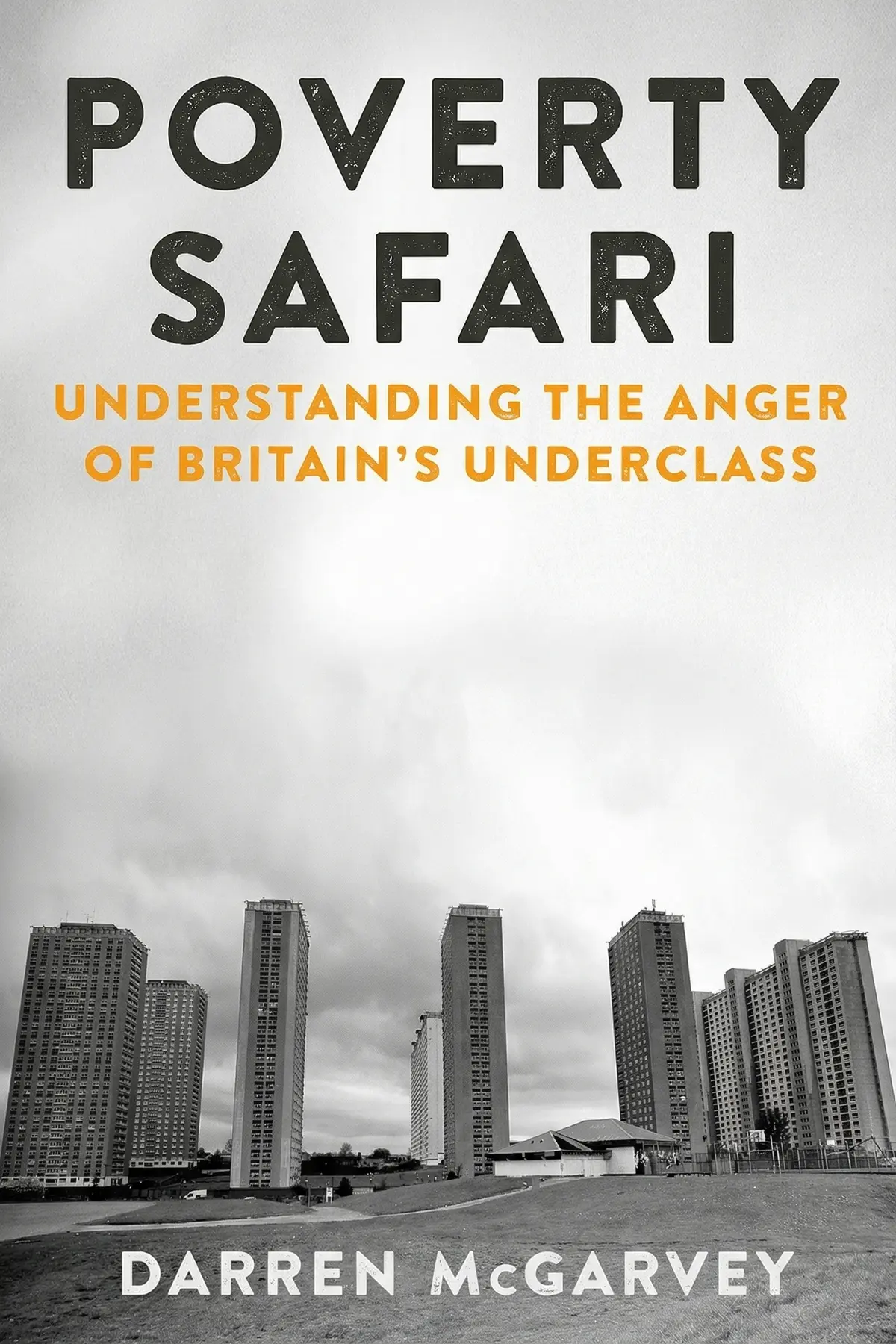
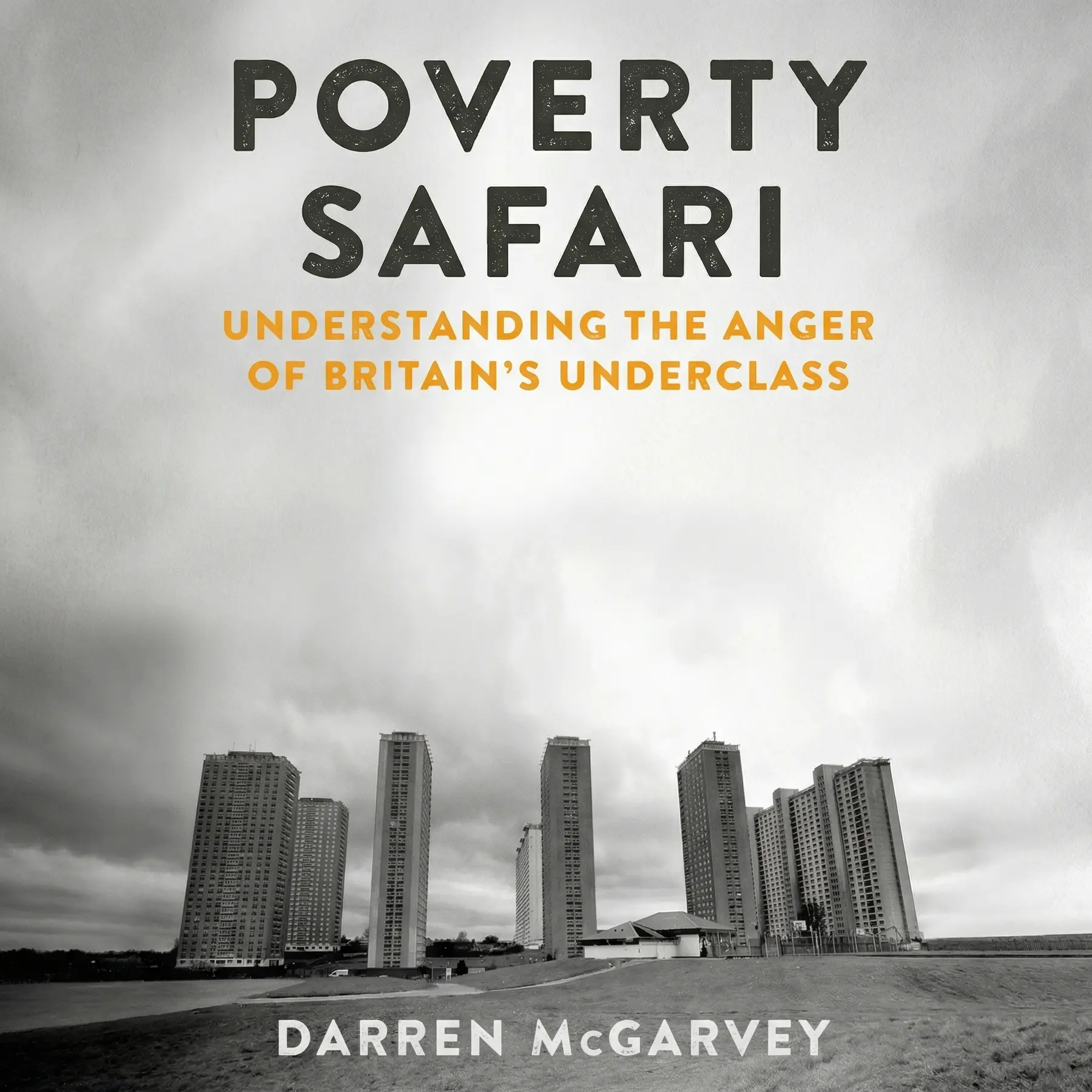
Darren McGarvey’s Poverty Safari is a deeply personal and politically charged exploration of life on the fringes of British society. Drawing from his own upbringing in the deprived Pollok area of Glasgow, McGarvey—also known as the rapper Loki—provides a raw account of the cycle of poverty, addiction, and violence that traps so many. This isn't just a memoir; it is a sharp critique of the systems designed to help the poor, which often end up alienating them further. The book promises to peel back the layers of the poverty industry, showing how media narratives and bureaucratic interventions often miss the mark. McGarvey moves beyond mere complaint, however, and invites readers to consider the power of personal responsibility and the necessity of true empathy. It is a call to look past the surface of social statistics and see the human beings living behind the headlines, offering a roadmap for bridging the widening gap between the haves and the have-nots.
Darren McGarvey is a writer, activist, and hip-hop artist best known by his stage name, Loki. In addition to producing acclaimed albums, McGarvey has been active in addressing poverty in the UK, serving as the rapper-in-residence at Police Scotland’s Violence Reduction Unit, and presenting eight programs for BBC Scotland.
Listeners characterize this work as a deeply sincere and stimulating examination that provides a gritty, direct look at the intricacies of class and deprivation. Although some listeners find the organization somewhat fragmented at times, they value the author's eloquent prose and his avoidance of reductive political clichés. Furthermore, they prize the emphasis on individual accountability and the psychological effects of trauma, with one listener noting the text is a "feast" for those seeking genuine food for thought. They also highlight how the storytelling effectively confronts the listener’s own assumptions and social biases.
Finally got around to reading this, and it’s easily one of the most visceral accounts of modern Britain I’ve encountered. McGarvey doesn't just describe poverty; he dissects the psychological machinery of trauma and how it replicates through generations. Growing up in Glasgow, his perspective is raw and unapologetic, specifically when he talks about his mother or his own struggles with addiction. Some might find the structure a bit chaotic, but I think that mirrors the "stress condition" he describes perfectly. It’s a feast of ideas that forces you to check your own ego at the door. Personally, I was struck by his refusal to blame 'the system' exclusively, opting instead for a complicated look at personal agency. It’s not a comfortable read, but it’s an essential one for anyone who thinks they understand the working class.
Show moreA profoundly uncomfortable but necessary read that shifts the conversation away from partisan bickering toward something much more human. The way McGarvey explores the link between domestic dysfunction and systemic poverty is masterfully done, even if he says he had to 'trick' people into reading it by using the misery memoir trope. Truth is, his insights into personal responsibility are the most radical part of the book. He throws down a gauntlet, suggesting that waiting for a political revolution is a form of self-sabotage. That’s a hard pill to swallow for some, but his arguments are grounded in the lived reality of addiction and recovery. The prose is punchy, shifting from academic 'big words' to the grit of the Glasgow streets seamlessly. It’s a book that invites you to be honest with yourself, and for me, it was a total game-changer.
Show moreThe chapter on the 'Poverty Safari' concept alone is worth the price of admission. It perfectly articulates that feeling of being a specimen under a microscope for the entertainment of the middle class. McGarvey’s writing is sharp, witty, and deeply self-aware, especially when he admits to his own contradictions. He doesn't let anyone off the hook—not the politicians, not the voters, and certainly not himself. The discussion on cognitive dissonance and how we filter information to suit our biases was particularly impressive, especially since he avoids using the heavy-handed academic terms for them. It’s a book about taking control of your own narrative in a world that wants to pigeonhole you. If you want to understand the anger currently simmering in Britain’s 'lower classes,' you need to read this book.
Show moreWow. I wasn't expecting to be this challenged by a book about social issues. McGarvey has a way of cutting through the noise and getting to the heart of why we are so divided. His take on personal responsibility is incredibly brave, particularly given the political climate where everyone wants to blame someone else. The description of his childhood—the violence, the instability, the neglect—is heart-wrenching, but he uses it to build a bridge rather than a wall. He asks us to look at our own biases and acknowledge the privileges that helped us get where we are. It’s a raw, intelligent, and deeply human look at the grinding reality of being poor in a rich country. Forget the political labels; just read it for the insight into the human condition.
Show moreMcGarvey has written a book that acts as a mirror, and many readers—especially those from the comfortable middle class—might not like what they see reflecting back. The truth is, his critique of the 'poverty industry' and the well-meaning campaigners who use academic language to alienate the very people they want to help is spot on. I appreciated his honesty about the tribal nature of politics. He admits he doesn't have all the answers, which is refreshing in an era of silver-bullet solutions. However, the book does feel like a collection of rants at times, jumping from sociological theory to deeply personal memoir without much transition. This ramshackle nature is a slight weakness, yet the writing is so articulate that you keep turning the pages. It’s a bold challenge to our collective assumptions.
Show moreThis isn't your typical political manifesto, and that is exactly why it works. McGarvey avoids the trap of casting heroes and villains, instead focusing on the messy reality of life in deprived schemes. Look, the structure is definitely all over the place; you’ll be reading about a youth club one minute and the failings of the BBC the next. But the lack of a 'silver bullet' solution is actually a strength. He captures the exhaustion of poverty—the way stress makes you crave sugar, alcohol, and quick relief. It reminded me that the impacts of a disadvantaged background are rarely just about money. My only gripe is that he occasionally tries too hard to impress with his vocabulary, which contradicts his own advice to campaigners. Still, for anyone wanting to move beyond soundbites, this is a very worthy read.
Show moreAs someone who works in social services, I found McGarvey’s critique of the 'top-down' approach to poverty incredibly sobering. He highlights how well-meaning professionals often parachute into communities without actually listening to the people living there. The book is at its best when he’s being a rapper figure, talking to kids in schools and trying to bridge the gap between theory and reality. I did wish there were more of those moments—actual interactions with people rather than long stretches of abstract theory. He tends to generalize his specific experiences in Glasgow to the entire country, which doesn't always land. However, his focus on the psychological toll of trauma is something that is far too often ignored in policy debates. It’s a gritty, honest, and valuable contribution to the field.
Show moreWhile I admire the raw honesty McGarvey brings to his childhood trauma, I found the actual execution of the 'safari' concept a bit lacking. He warns the reader that he doesn’t read much, and unfortunately, it shows in the way he ignores decades of established sociological work. The book oscillates between being a 'misery memoir' and a political treatise, but the two never quite fuse into a cohesive argument. I was particularly bothered by his dismissive attitude toward support workers; he assumes they are all middle-class outsiders, ignoring those who might share his background. There are flashes of brilliance, especially regarding the physical impact of stress and sugar, but it’s buried under a lot of repetitive philosophizing. It’s an interesting perspective, but I expected more concrete examples of community life rather than just his internal monologue.
Show moreDid I like it? Mostly, though it’s a difficult book to pin down. On one hand, McGarvey is a fantastic writer who can turn a phrase beautifully. On the other, the book is a jumbled mess of ideas that don't always connect. He spends ages explaining why he doesn't read, which feels like a strange flex for someone writing a book. Then there are the moments where he gets quite defensive about his background while simultaneously criticizing everyone else’s. The misery memoir sections were harrowing, but they felt disconnected from the later chapters on political strategy. I think he’s a brilliant thinker, but this debut could have used a much stronger editor to trim the rants and focus the argument. It’s an interesting perspective, just a bit unpolished.
Show moreTo be frank, I found this quite frustrating and ultimately narcissistic. McGarvey spends a significant amount of time raging against 'the cultural left' and the Guardian, despite those very entities giving him the platform he now stands on. His assertion that ADHD is just a 'stress condition' is factually wrong and dangerous misinformation that undermines people with neurodevelopmental disorders. While his personal story is undeniably tragic, he uses it to validate a 'pull yourself up by your bootstraps' narrative that feels suspiciously tailored to please right-wing commentators. He claims to represent the working class, but his disdain for them—calling them lazy or aggressive—is palpable throughout his critiques. It felt less like an analysis of poverty and more like a public therapy session that wasn't quite finished yet. I’m swimming against the tide of praise here, but I found it disjointed and problematic.
Show moreIshmael Beah

James Herriot

Barack Obama
Masaji Ishikawa

Ben Macintyre

Fay Bound Alberti

AUDIO SUMMARY AVAILABLE
Get the key ideas from Poverty Safari by Darren McGarvey, plus 5,000+ more titles in English and Thai.







