
16 min 21 sec
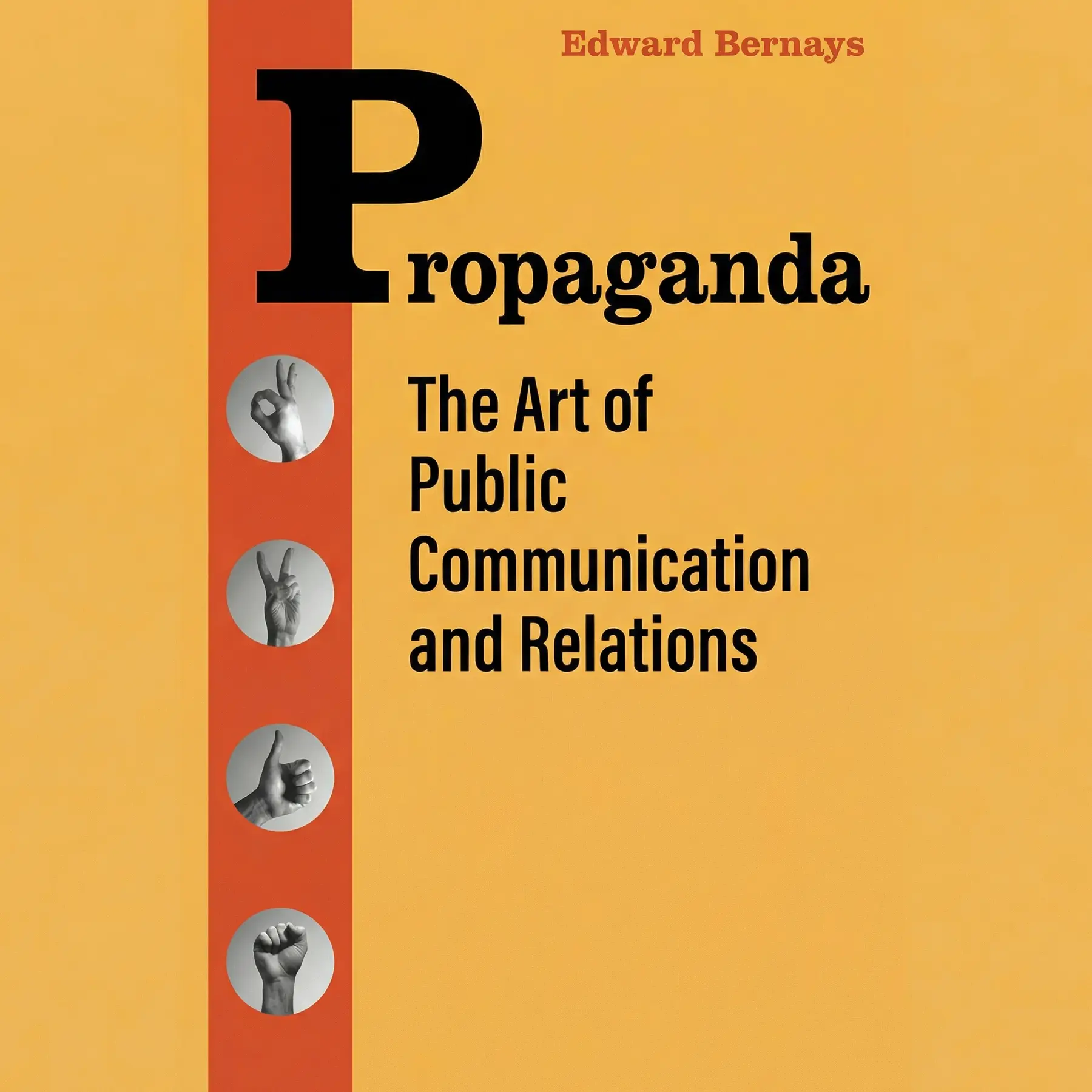
Propaganda
Edward Bernays examines the invisible forces that shape public opinion, arguing that the strategic manipulation of collective emotions is a necessary component of maintaining order and direction within a modern democratic society.
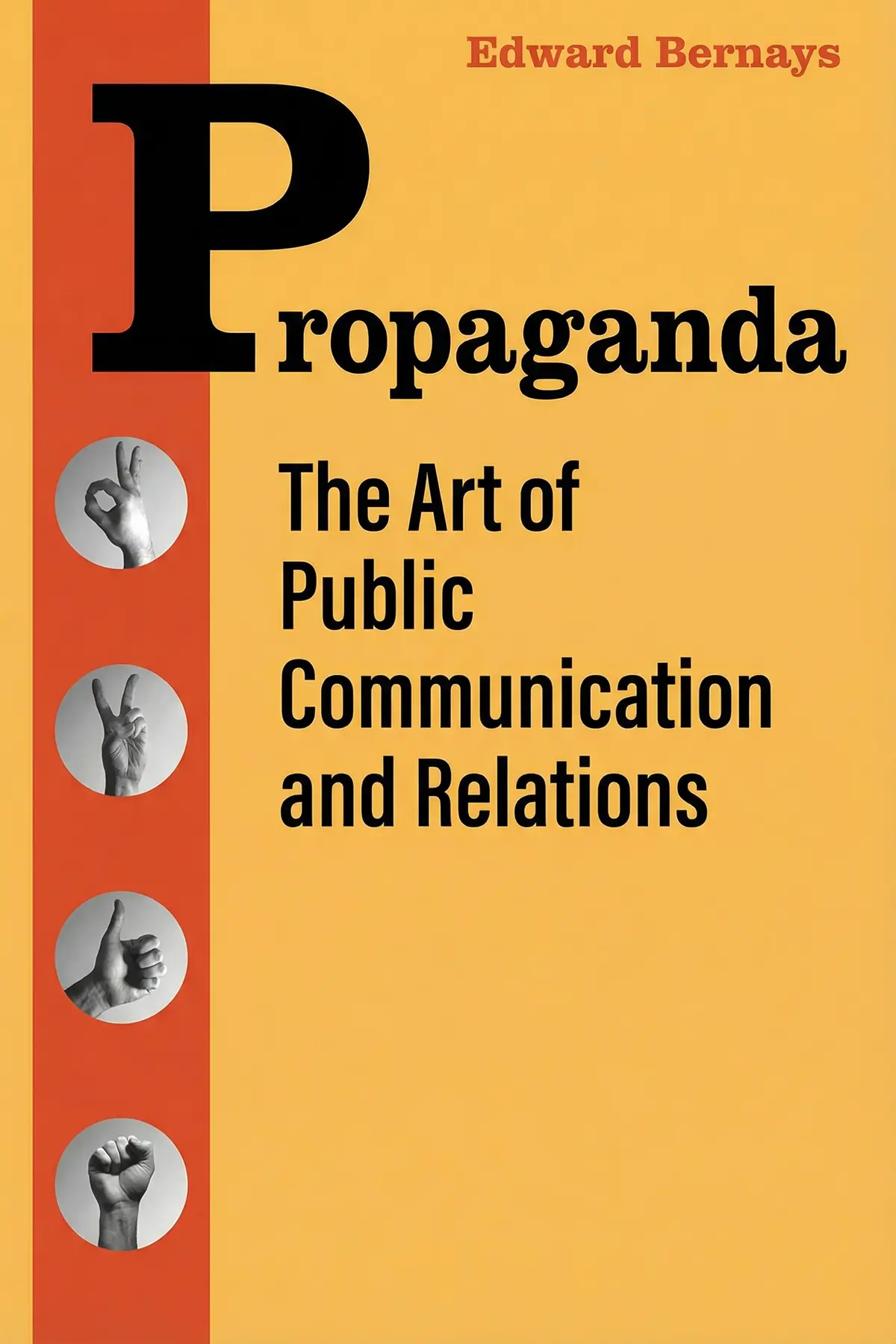
Table of Content
1. Introduction
2 min 00 sec
Think for a moment about the dozens of small choices you have already made today. You chose a specific brand of cereal, a particular style of clothing, and perhaps a specific route to work. You might feel that these decisions were the result of your own unique taste and rational deliberation. However, if Edward Bernays were standing next to you, he would likely offer a different perspective. He would argue that your choices were not entirely your own. Instead, they were the end products of a sophisticated system of influence designed to make you feel as though you were acting on your own initiative while actually following a pre-set path.
Bernays was a man who embraced a role many would find uncomfortable: he was a professional in the art of manipulation. But he didn’t see himself as a villain. To him, the term propaganda wasn’t a dirty word. In fact, he considered himself a dedicated advocate for its use. This perspective was partially a family trait. As the nephew of the famed psychoanalyst Sigmund Freud, Bernays was deeply influenced by the idea that human beings are driven by irrational, hidden forces rather than cold logic. While Freud applied this knowledge to the individual patient on the couch, Bernays applied it to the entire population.
He believed that if we understand the hidden mechanisms that drive the human mind, we can use that knowledge to organize society more effectively. During the First World War, he saw how governments could mobilize millions of people toward a single goal. After the war, he wondered why these same techniques couldn’t be used to promote stability and prosperity during peacetime. In the pages that follow, we will explore the logic behind this controversial vision. We will look at how the chaos of a modern world necessitates a guiding hand, how the marketing of a breakfast food is fundamentally similar to the marketing of a war, and why Bernays believed that an invisible government is the only thing standing between a functioning democracy and total social breakdown. It is a journey into the heart of how we think, how we are led, and the unseen forces that define our reality.
2. The Birth of Modern Manipulation in the Fires of Total War
2 min 31 sec
Discover how the unique demands of global conflict forced governments to develop new ways of managing the minds and actions of their own citizens.
3. Redefining a Word with a Tainted Reputation
2 min 53 sec
Explore the true meaning of a controversial term and learn why its creator believed it was an ethically neutral tool for social progress.
4. The Psychological Reality of the Human Herd
2 min 32 sec
Learn why the dream of the perfectly rational citizen is a myth and how our collective instincts often override our individual logic.
5. Engineering Consent Through the Power of Influence
2 min 34 sec
See how the same psychological tricks used to sell everyday products can be used to manufacture support for complex political ideologies.
6. The Necessity of an Invisible Government
2 min 41 sec
Discover why the complexity of modern life makes it impossible for the average person to truly be free and why we secretly prefer to be led.
7. Conclusion
1 min 10 sec
The legacy of Edward Bernays is as profound as it is controversial. He provided us with a roadmap for understanding the invisible forces that govern our lives. His central argument remains a challenge to our most cherished beliefs about personal autonomy and democratic participation. He suggests that in a world of massive populations and endless information, the idea of the completely independent individual is a myth. We are, by our very nature, social creatures who look to the herd for direction, and we are constantly being steered by those who understand the mechanics of our minds.
Whether you find this vision to be a necessary practical reality or a deeply cynical manipulation, it is impossible to ignore the impact of his techniques. The world of modern advertising, political spin, and public relations is built directly on the foundation he laid. The most important lesson to take away is a newfound awareness. By understanding how the ‘invisible government’ operates, we can begin to see the strings that pull our own decisions. We can start to recognize when a message is designed to trigger our emotions rather than our logic. In a world shaped by propaganda, the first step toward true independence is understanding exactly how you are being led.
About this book
What is this book about?
This exploration into the mechanics of social influence reveals how a small, elite group of strategists can steer the behavior and thoughts of the general population. The work suggests that our daily choices—from the products we purchase to the political leaders we support—are rarely as independent as we believe. Instead, they are the result of carefully crafted campaigns that tap into our deepest, often unconscious, desires. By examining the history of mass mobilization during times of conflict and peace, the book promises to uncover the techniques used to manufacture consent. It moves beyond the simple idea of advertising to show how psychological insights are applied to every facet of public life. Ultimately, the narrative presents a provocative defense of what it calls the invisible government, suggesting that without the guiding hand of the expert communicator, a large-scale society would dissolve into a chaotic mess of competing impulses.
Book Information
About the Author
Edward Bernays
Edward Bernays was a pivotal figure in the development of modern public relations, often referred to as the father of his field. Born in 1891, he spent his early career as a press agent and served the American government during the First World War. He successfully adapted psychological theories—many influenced by his uncle, Sigmund Freud—to create a scientific approach to influencing public opinion for both political and commercial ends. By his death in 1995, Bernays had left an indelible mark on the landscape of American public communication.
Ratings & Reviews
Ratings at a glance
What people think
Listeners find this work to be a brief, educational read that offers deep perspectives on marketing and advertising strategies, making it vital for exploring propaganda. They also value the succinct breakdown of methods and consider the material eye-opening, with one listener mentioning how it makes one aware of weaknesses in human thought patterns. On the other hand, its historical significance draws varied reactions; some hail it as a definitive classic while others deem it behind the times. Furthermore, several listeners note the presence of numerous typos, though they still feel it is worth the cost.
Top reviews
Pierre
Bernays was terrifyingly ahead of his time. This short book lays out how the 'invisible government' actually functions by pulling the strings of the masses through subconscious triggers. It is fascinating to see how the nephew of Sigmund Freud applied psychoanalysis to the world of commerce and politics. While the writing style is a bit stiff and reflects its 1928 publication date, the insights into human behavior remain shockingly relevant today. You start to see his fingerprints on every billboard and political speech you encounter. It’s an essential read for anyone who wants to understand why society feels so manufactured and controlled.
Show moreGrace
Finally got around to reading the book that essentially invented the modern world, for better or worse. Bernays describes a world where an 'invisible government' controls the habits of the people, and reading it today makes you realize he wasn't just guessing—he was planning it. The way he breaks down the manipulation of symbols and cliches is masterclass-level strategy. It's a short read, but every paragraph is packed with information about the psychology of the group mind. If you want to understand the origin of every marketing campaign you’ve ever seen, this is the book. It’s eye-opening, scary, and absolutely essential for anyone living in the 21st century.
Show moreThitima
As a marketing professional, I found this to be the ultimate 'behind the curtain' look at how our industry was built. Bernays doesn't hide behind buzzwords; he explains exactly how to manufacture demand and sway public opinion through the engineering of consent. The book is quite short and moves quickly through different sectors like business, education, and politics. It’s eye-opening to realize that our freedom of choice is often just a reaction to carefully placed stimuli. My only gripe is that the examples are very rooted in the early 20th century. However, once you swap out 'radio' for 'social media,' the playbook is exactly the same.
Show moreChee
Ever wonder why you want the things you want? This book explains the psychological mechanisms that advertisers use to bypass your rational mind and target your emotions directly. It makes you hyper-aware of your own weaknesses in thought patterns, which is both empowering and slightly depressing. Bernays is incredibly open about how he views the public as a 'herd' to be managed by an intelligent elite. While some of the chapters on social work and art feel like filler, the core sections on political and corporate propaganda are brilliant. It's a foundational text that explains the invisible mechanism of our society with chilling precision.
Show moreWoravit
Picked this up after hearing about the author's connection to Sigmund Freud and the disturbing way his ideas were later used in WWII. It is a concise and informative read that provides a bridge between psychology and the birth of modern advertising. You can see why people like Goebbels were such big fans of this work, even if Bernays himself claims he intended it for benevolent ends. The book is definitely a classic, but the age shows in the specific examples used. Regardless, it remains a must-read for anyone interested in how invisible rulers shape the world we live in. It’s a quick but heavy read that stays with you.
Show moreLogan
The 'engineering of consent' is a phrase that will stick with me long after I've finished these pages. Bernays explains that because the public is too busy to make informed decisions on everything, they require a clique of leaders to provide them with shortcuts. It’s a condescending view, but when you look at how modern marketing works, it’s hard to argue that he was wrong. This book serves as a perfect introduction to the tactics used to mold our tastes and suggest our ideas. It’s eye-opening to see how old these 'new' advertising strategies actually are. I wish there was more depth on the ethics, but that clearly wasn't Bernays' priority.
Show moreSai
The historical significance here is undeniable, but the physical quality of this specific edition is a mess. I found numerous typos and formatting errors that made the reading experience much more frustrating than it needed to be. As for the content, it feels like a dated PR manual in many places, yet the core concepts are still active in modern advertising. Frankly, Bernays’ unapologetic stance on manipulation is hard to stomach, even if you appreciate the honesty of his era. It provides a decent look at marketing tactics, but you have to slog through some repetitive sections. I’d recommend it for the history, but keep your expectations for the prose fairly low.
Show moreJack
Truth is, this reads more like an old instruction manual for a machine that's still running today. It’s a very short book, which is great if you just want the highlights of Bernays’ theory without a lot of fluff. However, I felt like the discussion of specific techniques was a bit surface-level compared to modern psychological studies. The writing is dry and professional, lacking the narrative hook you might find in a more contemporary analysis of propaganda. It’s a solid primary source for students of history, but general readers might find it a bit too academic and dated. Also, the typos in this version are quite distracting at times.
Show moreLaddawan
To be fair, Bernays tries really hard to frame propaganda as a positive tool for a functioning democracy. He views the 'intelligent manipulation' of the masses as a way to bring order out of the chaos of modern life. I found this argument to be a bit of a stretch, but it’s interesting to see how he justifies his career. The book provides great insight into the early days of PR, though it is plagued by some repetitive phrasing and outdated social views. It’s worth the money for the historical perspective alone, but don't expect a thrilling page-turner. It’s a dry, tactical essay on how to control the public mind.
Show moreNathan
I can't in good conscience give this more than one star because the philosophy it promotes is fundamentally manipulative and dark. Reading this felt like studying the playbook of an enemy who has already won the game. Bernays argues that an elite few should direct the habits of the masses, which is an insulting view of human agency and democracy. Even if the book is important for historical reasons, the arrogance dripping from every page is nauseating. It’s a blueprint for the very things that make modern life feel hollow and commercialized. I hated the vision he presents, even if it has unfortunately come true in our current reality.
Show moreReaders also enjoyed
Abolish Rent: How Tenants Can End the Housing Crisis
Tracy Rosenthal
Abortion: Our Bodies, Their Lies, and the Truths We Use to
Jessica Valenti
Adults in The Room: My Battle With Europe’s Deep Establishment
Yanis Varoufakis
21 Lessons for the 21st Century
Yuval Noah Harari
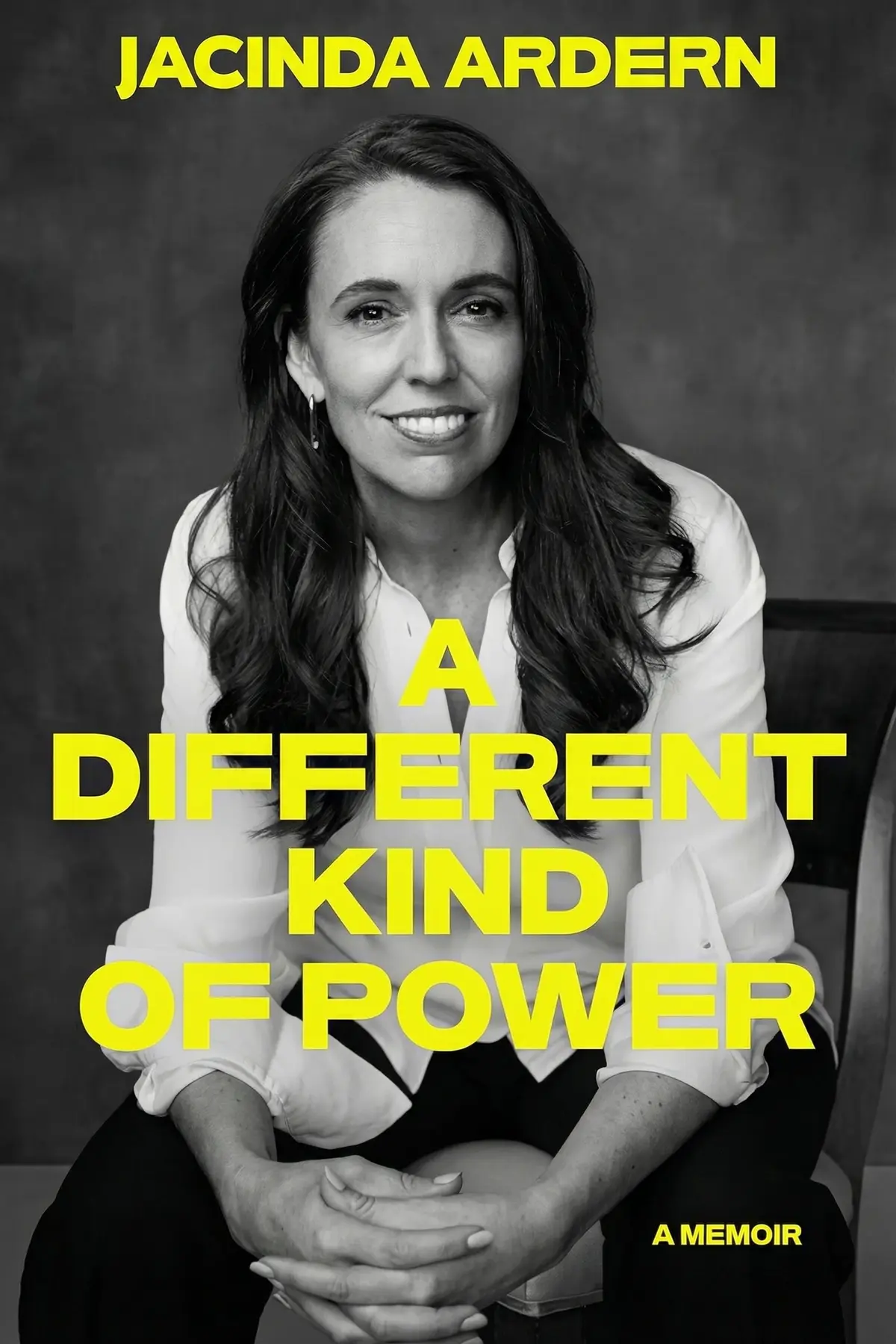
A Different Kind of Power: A Memoir
Jacinda Ardern
Age of Anger: A History of the Present
Pankaj Mishra
A Higher Loyalty: Truth, Lies and Leadership
James Comey
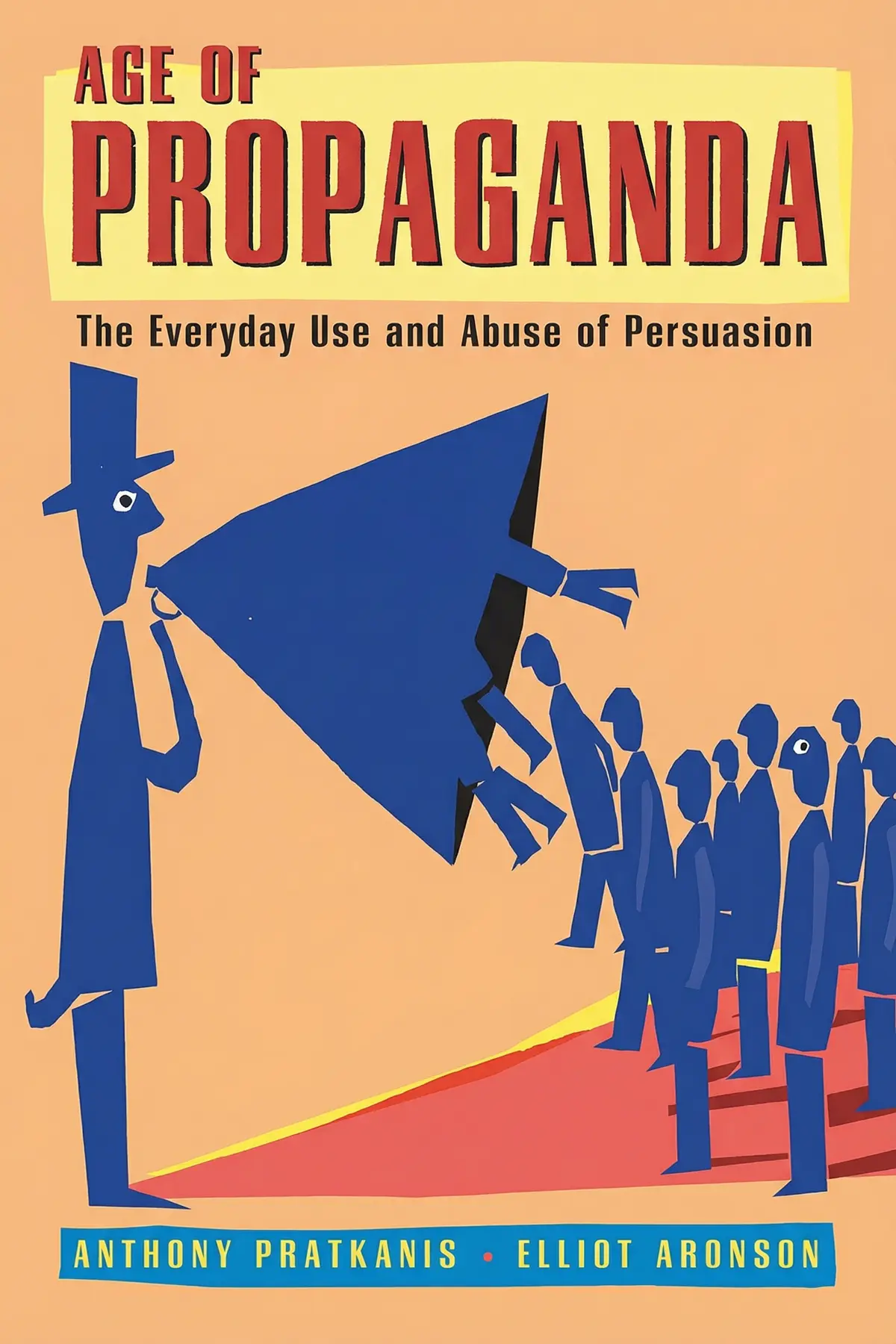
Age of Propaganda: The Everyday Use and Abuse of Persuasion
Anthony Pratkanis
AUDIO SUMMARY AVAILABLE
Listen to Propaganda in 15 minutes
Get the key ideas from Propaganda by Edward Bernays, plus 5,000+ more titles in English and Thai.
- 5,000+ titles
- Listen as much as you want
- 7-day free trial
- Cancel anytime







