
21 min
Putin’s People: How the KGB Took Back Russia and Then Took On the West
An investigative look at how Vladimir Putin and a network of KGB agents dismantled Russian democracy, seized the nation's vast wealth, and launched a sophisticated campaign to influence Western political systems.
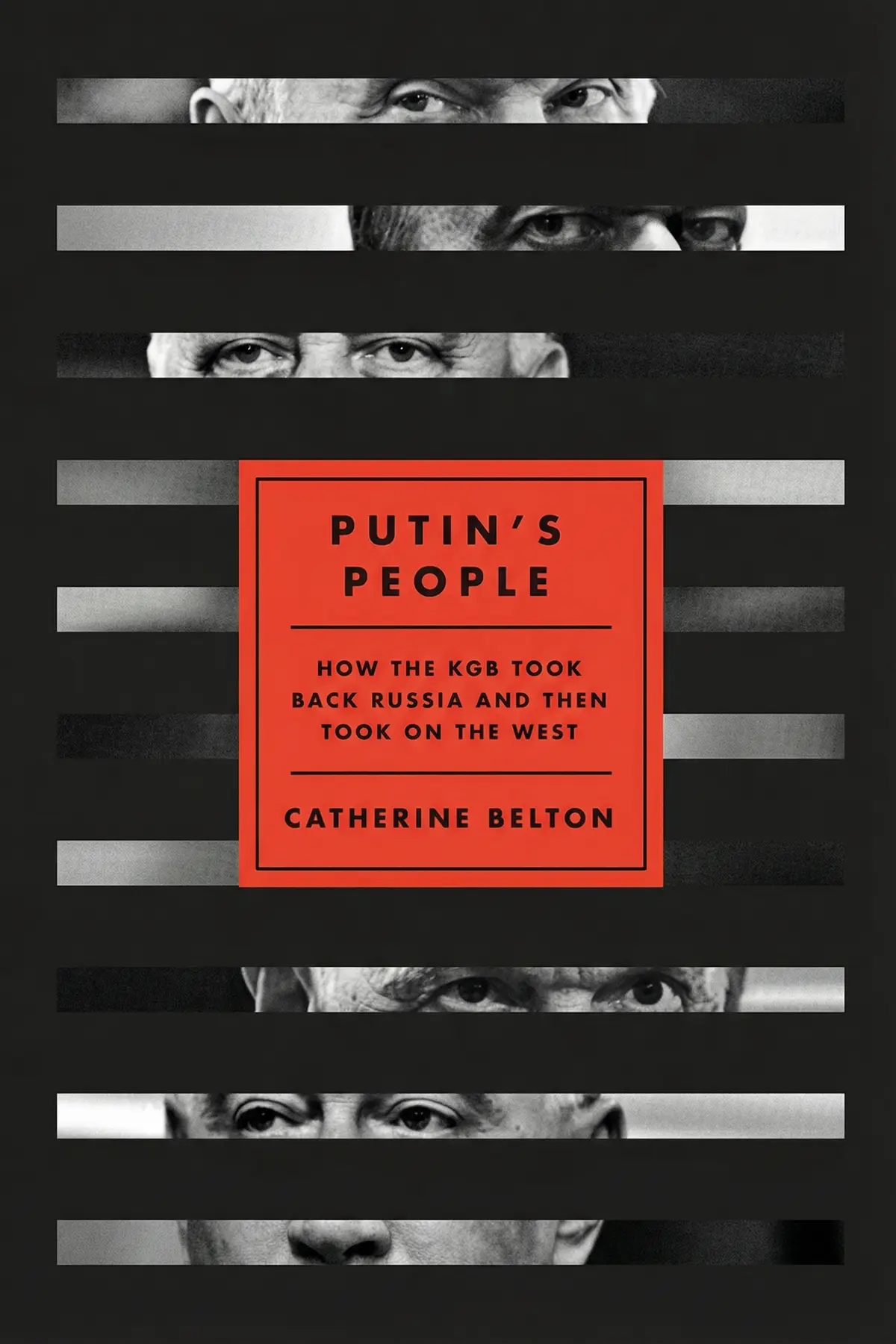
Table of Content
1. Introduction
2 min 28 sec
In the closing years of the twentieth century, the world watched as Russia seemed to emerge from the shadow of the Soviet Union. To many observers, it looked like a transition toward a more open, capitalist, and perhaps even democratic society. But behind the scenes, a different kind of story was being written. It was a story not of progress, but of a quiet, methodical reclamation of power by the very individuals who had once been the iron fist of the Soviet state: the KGB. At the center of this resurgence was a man who seemed to appear out of nowhere, an unassuming bureaucrat with a penchant for gray suits and a background in secret intelligence.
Vladimir Putin has often been framed as a leader who reached the pinnacle of Russian power by a series of fortunate accidents. When Boris Yeltsin named him as a successor, many in the West and even within Russia saw him as a blank slate—a loyal servant who would maintain the status quo while the new class of wealthy businessmen, the oligarchs, continued to run the country. This narrative, however, ignores the deep, systemic roots of Putin’s ascension. Far from being a lucky outsider, he was the product of a long-standing network of intelligence officers who had been searching for a way to restore the state’s dominance and reclaim the wealth they felt had been stolen during the chaotic reforms of the 1990s.
To understand the Russia we see today, we have to look back at the environments that shaped Putin’s worldview. We must look at the damp offices of Dresden where he served as a middle-tier agent, and the rugged, lawless docks of St. Petersburg where he first learned how to bridge the gap between official government policy and the shadowy world of organized crime. What follows is a throughline of power, showing how a small circle of security officials used every tool at their disposal—from controlled media and state-sponsored energy companies to strategic alliances with the underworld—to seize the levers of the Russian economy.
But this isn’t just a domestic story about a single nation. As the state regained control over its resources, it didn’t just stop at its own borders. The wealth accumulated by this network was funneled into a massive shadow economy, designed to exert influence far beyond the Kremlin. We are going to explore how this system infiltrated Western financial hubs, how it used sports and real estate to gain social legitimacy, and how it eventually began to test the very foundations of Western democracy. This is the account of how the KGB didn’t just survive the collapse of the Soviet Union—they thrived, using the tools of global capitalism to build a new kind of empire.
2. The Dresden Training Ground and Operation Luch
2 min 32 sec
Explore the shadowy origins of a future leader in East Germany, where clandestine missions and deep-state survival tactics formed the blueprint for reclaiming Russian power.
3. The St. Petersburg Laboratory of Corruption
2 min 19 sec
Witness the transformation of a port city into a testing ground for a new alliance between government officials and the criminal underworld.
4. Rising Through the Moscow Ranks via Crisis
2 min 23 sec
Follow the rapid ascent of an unassuming bureaucrat as he leverages national tragedy and security fears to cement his grip on the Russian presidency.
5. The Destruction of Independent Media and the Oil Giants
2 min 27 sec
Witness the systematic dismantling of opposition as the new regime targets the power of the press and the nation’s most valuable resource companies.
6. The Global Expansion of the Shadow Slush Fund
2 min 10 sec
Uncover the intricate financial network used to bypass international scrutiny and bankroll secret operations across the globe.
7. Londongrad and the Infiltration of Western Institutions
2 min 20 sec
Discover how the British capital became a haven for Russian billions, compromising legal and financial systems in exchange for immense wealth.
8. Exporting Instability and the Ideology of Grievance
2 min 30 sec
Examine the tactical use of religion, soft power, and political disruption to weaken international alliances and challenge democratic stability.
9. Conclusion
1 min 51 sec
The story of Vladimir Putin and his circle is a reminder that the collapse of a political system does not necessarily mean the disappearance of its most powerful actors. The KGB did not vanish with the fall of the Soviet Union; it merely adapted to a new environment, trading its communist ideology for a predatory form of state capitalism. By seizing control of Russia’s vast energy resources and dismantling the independent media, this network managed to rebuild a centralized and authoritarian state that is far more financially sophisticated than its predecessor ever was.
As we have seen, the influence of this system is not confined to Russia’s borders. It has exploited the global financial system to move black cash into the heart of Western capitals, compromising institutions and individuals along the way. Whether through the manipulation of energy markets, the strategic use of sports and culture, or the promotion of political discord, the goal remains the same: to weaken rivals and ensure the survival and enrichment of the ruling elite. The ‘obschak’ system that began in the backstreets of St. Petersburg has grown into a global network of influence that challenges the stability of the international order.
For the listener, the key takeaway is the importance of vigilance and transparency. The methods used by Putin’s people rely on the shadows and the willingness of the West to look the other way in exchange for economic gain. Understanding the roots of this power and the clandestine architecture that supports it is the first step in addressing the challenges it poses. The history of modern Russia is a cautionary tale about what happens when the security apparatus of a nation takes control of its economy, and it serves as a call to protect the democratic institutions that are the target of its disruptive efforts. By illuminating these hidden connections, we can begin to see the world as it truly is, rather than how the masters of the Kremlin would prefer us to perceive it.
About this book
What is this book about?
This account traces the transformation of Russia from a fledgling democracy in the 1990s back into a state controlled by its security apparatus. It details how Vladimir Putin, an unassuming former KGB officer, rose through the ranks to consolidate absolute power. The narrative reveals the methods used to neutralize opposition, from the early seizure of independent media outlets to the high-profile dismantling of the oil giant Yukos. The book further explores the international reach of this network, illustrating how Russian black cash flowed into Western capitals like London to buy influence and legitimacy. It also examines the strategic use of energy resources as political leverage and the sponsorship of divisive movements across Europe and America. Ultimately, the work promises to expose the hidden architecture of the modern Russian state and explains why the legacy of the Soviet secret police continues to shape global events today through a combination of financial pressure and clandestine operations.
Book Information
About the Author
Catherine Belton
Catherine Belton is a skilled investigative reporter who has spent years uncovering Russian political secrets. She is currently a special correspondent for Reuters and previously worked as the Moscow and legal correspondent for the Financial Times. Her deep expertise was recognized when she was shortlisted for Business Journalist of the Year at the British Press Awards in 2008.
Ratings & Reviews
Ratings at a glance
What people think
Listeners find the work extensively researched and well crafted, with one individual highlighting how it cuts through fear and paranoia. The author’s prose also receives favorable mentions. However, listeners differ on the book's overall readability; some find it quite manageable, while others claim it is a difficult read. There are similarly mixed reviews concerning the character studies, as one listener enjoys the high number of influential figures while another finds the cast daunting. Finally, listeners provide varied perspectives on the book’s objectivity, with one describing it as an extremely biased piece of journalism.
Top reviews
Amara
Catherine Belton has managed the impossible by mapping out the labyrinthine web of 'KGB capitalism' that defines modern Russia. This isn't just a biography; it is a forensic deep-dive into how the collapse of the Soviet Union was actually a regrouping phase for the security services. Her research is staggering. She tracks how billions were funneled out of the country to create a shadow economy that eventually bought off Western politicians and institutions. To be fair, the level of detail is intense, and you might find yourself needing a notepad to keep the different oligarchs straight. However, the payoff is a frighteningly cohesive picture of a regime that uses wealth as a weapon of war rather than a tool for domestic prosperity. It is a chilling, essential read.
Show moreSaovapa
Wow, this reads like a high-stakes espionage thriller, except the body count and the laundered billions are chillingly real. I found myself checking my front door locks while reading about the various 'accidents' that befell those who crossed the inner circle. Belton cuts through the fear and paranoia to show how the FSB took over the judicial system and used the law as a blunt instrument to crush dissent. The writing is sharp and evocative, never letting the reader forget the human cost of this 'KGB capitalism'. It is a bleak look at the 21st century, but ignoring these facts won't make them go away. If you want to know how global politics actually works behind the curtain, you need to read this book immediately.
Show moreBank
The section on the London Stock Exchange and the infiltration of 'dirty money' into our own banking systems was a total eye-opener for me. We often think of Russia as a separate, isolated entity, but Belton proves that their tentacles are deeply embedded in the heart of Western capitalism. The way Russian 'black cash' has been used to fund everything from Brexit campaigns to real estate deals is nothing short of scandalous. Personally, I think this should be required reading for every politician in the West. It exposes a level of corruption that we have ignored for far too long simply because it was profitable. The detail is meticulous, the tone is urgent, and the evidence is, frankly, overwhelming. It’s easily the best book on the subject I’ve ever found.
Show moreJulian
After hearing so much buzz about this title, I finally dove in and was stunned by the depth of the primary source interviews Belton secured. Getting people like Sergei Pugachev to go on the record provides a level of insight that most journalists can only dream of. The book exposes the 'feudal system' that Putin created, where everyone’s wealth is entirely dependent on their loyalty to the Tsar. It’s a fascinating, if depressing, look at how power is maintained through a mixture of state-sponsored terror and economic coercion. The narrative moves at a good clip once you get past the initial setup. I appreciate how she doesn't just focus on the headlines but goes into the mechanics of how the FSB actually operates on the ground.
Show moreFelix
This book is a necessary wake-up call for those who believe the fall of the USSR ended the era of 'active measures.' Putin’s People demonstrates that the Cold War never truly ended; it just moved into the boardroom. Belton’s writing is exceptionally well-researched, and she manages to connect the dots between the 1980s Stasi operations and the 2016 US election interference with remarkable clarity. Got to say, the implications for the future are pretty bleak if we don't start paying attention to where the money is coming from. While some might find the detail exhaustive, I found it necessary to prove such a massive series of allegations. It is a brilliant, unsettling achievement in investigative reporting that everyone should read.
Show moreGift
Picked this up after the news cycles became too confusing to follow without deeper context. Belton’s background as a Financial Times correspondent shines through here, especially when she dissects the complex money-laundering schemes used to project Russian influence abroad. The chapters detailing Putin’s early years in St. Petersburg were particularly illuminating for me. It shows a man who was less of a mastermind and more of a lucky beneficiary of a system that needed a malleable face for the KGB’s return to power. Look, the book is quite long and the middle sections can feel a bit repetitive with the endless parade of billionaires. Still, it provides a vital framework for understanding how the West's own greed made us complicit in the rise of this new autocracy.
Show moreIff
Ever wonder how a mid-level officer in Dresden transformed into the ultimate arbiter of Russian power? This book provides as close to an answer as we are likely to get. The narrative flow is impressive despite the massive amount of financial data included. I was particularly struck by the description of the 'Non-Participation Pact'—the idea that the Russian public traded their political voice for a modicum of stability. It’s a tragic trade-off. My only real gripe is that the book can be a struggle to finish due to the sheer density of names and shell companies. At times, the characters bleed into one another, making it hard to track the specific motivations of each player. However, as a historical document of our current era, it is undeniably important.
Show moreSarawut
Frankly, it's terrifying to see how the KGB playbook from the Cold War has been modernized for the era of global markets. Belton shows that the goal wasn't just to make Putin's friends rich, but to use that wealth to destabilize the very foundations of democracy. The book builds a compelling case, though I wish there was a bit more focus on the internal Russian experience rather than just the elite power struggles. The sentence structures are sometimes long and complex, reflecting the complicated nature of the subject matter. It isn't an easy beach read. However, for those willing to put in the effort, it provides a masterclass in investigative journalism. It’s a solid 4-star effort that deserves all the praise it has received for its bravery.
Show moreRafael
While I can't fault the sheer volume of research, the narrative often feels like it's hunting for a specific conclusion rather than letting the facts speak for themselves. The truth is that Belton starts with the assumption that every move by the Kremlin is part of a grand, nefarious conspiracy. This leads to a bit of confirmation bias. I wanted more analysis of how the West failed Russia in the 1990s, essentially pushing them toward this path. Instead, the book often feels like a 'Putin = bad' manifesto. Granted, he isn't a hero, but the geopolitical reality is more nuanced than a simple black-and-white morality play. It's a dense, informative book for sure, but be prepared for a very specific, Western-centric ideological lens that overlooks our own responsibility in this mess.
Show moreCamila
Not what I expected at all, as the text frequently drowns in a sea of names and financial minutiae that makes it a struggle to finish. I was hoping for a deep psychological character study of Putin himself, but he remains an enigma throughout most of the book. Instead, we get endless pages about offshore accounts and obscure banking transactions. To be honest, I found it incredibly daunting to keep track of the twenty-plus 'people' mentioned in the introduction. The writing style is competent, but the pacing is glacial. Unless you are a hardcore student of international finance or Russian history, this might feel more like homework than an engaging read. It’s a very biased piece of journalism that lacks the balanced perspective I was looking for.
Show moreReaders also enjoyed
A Warning
Miles Taylor
Abolish Rent: How Tenants Can End the Housing Crisis
Tracy Rosenthal
Abortion: Our Bodies, Their Lies, and the Truths We Use to
Jessica Valenti
Adults in The Room: My Battle With Europe’s Deep Establishment
Yanis Varoufakis
21 Lessons for the 21st Century
Yuval Noah Harari
A Different Kind of Power: A Memoir
Jacinda Ardern
AUDIO SUMMARY AVAILABLE
Listen to Putin’s People in 15 minutes
Get the key ideas from Putin’s People by Catherine Belton, plus 5,000+ more titles in English and Thai.
- 5,000+ titles
- Listen as much as you want
- 7-day free trial
- Cancel anytime







